
Why US-Based White-Label Development Studios Are Perfect for Marketing Agencies

White-label development agencies in the USA let marketing firms say yes to any client build while keeping the brand front-and-center. They provide a legal shield, overlapping work hours, and deep technical expertise that no-code shops lack. The result is higher margin, happier clients, and a repeatable pipeline of paid projects.
Key takeaways
- US-based white-label partners protect your agency’s brand with NDA and non-circumvent clauses that are enforceable in US courts.
- Overlapping timezones (US-East to US-West) give you same-day feedback loops, unlike offshore teams that need 24-hour turnaround.
- Strategic expertise in AI automation, voice assistants, and custom back-ends lets you win high-value SaaS and app projects that command $5K-$20K fees.
- Fixed-scope pilots reduce risk for both parties and accelerate trust building.
- Legal compliance (GDPR, CCPA, HIPAA) is easier with a US partner familiar with US data-privacy regulations.
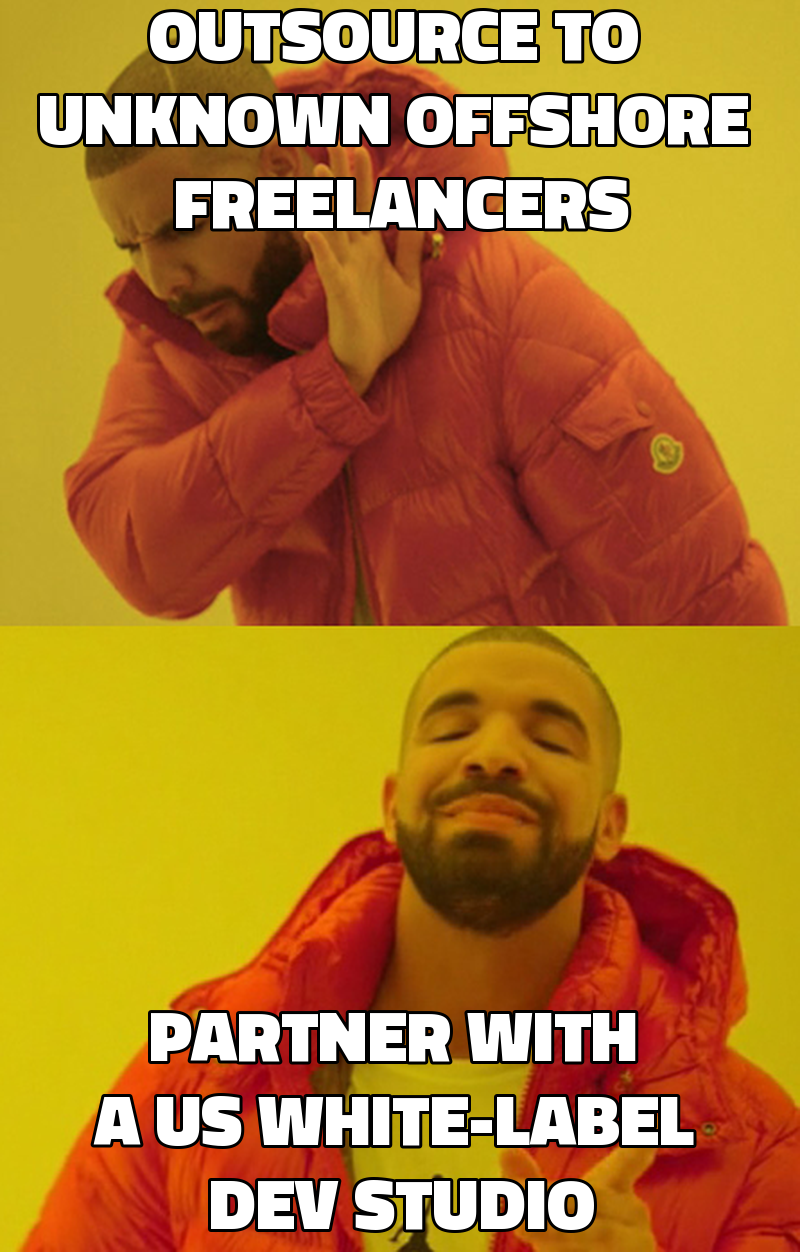
What is a white-label development agency in the USA?
A white-label development agency builds software, APIs, chatbots, or automation under another company’s brand. The client never sees the developer; the agency invoices the end-user and retains the margin. In the United States, these studios operate under US business law, use USD contracts, and typically have a single point of contact who manages the entire delivery lifecycle.
Strategic advantages for agencies
- Expand service catalog without hiring – Agencies can add AI-driven chatbots, voice-enabled IVR, and custom SaaS platforms to their proposals. According to a 2023 Gartner report, 68% of marketing agencies plan to add AI services within the next 12 months, but only 22% have in-house engineers.
- Higher win rates – A Forrester study found that agencies that can quote a full-stack solution win 35% more pitches than those that have to refer out.
- Margin control – By paying a wholesale rate (typically 50-70% of the client bill) you keep 30-50% margin on every project. This aligns with the "Silent Dev Arm" model where the agency remains the revenue owner.
- Scalable capacity – US studios like Synthisia cap active partners at 12, ensuring each agency gets dedicated developer bandwidth and never experiences the flaky freelancer syndrome.
Legal and contractual benefits
| Concern | Offshore partner risk | US white-label partner benefit |
|---|---|---|
| Enforceable NDA | Hard to enforce across jurisdictions; often ignored | US courts uphold NDAs; clear legal recourse |
| Data-privacy compliance | Varies; may not meet GDPR/CCPA standards | Familiar with GDPR, CCPA, HIPAA; can sign BAA if needed |
| Intellectual property ownership | Ambiguous clauses, risk of IP leakage | Explicit IP transfer clauses in US contracts |
| Tax and invoicing | Complex cross-border tax handling | Simple USD invoicing, 1099/ W-9 compliance |
Why the US matters for legal safety
The United States has a mature contract law system. A breach of confidentiality can be pursued in federal or state court, and the damages are calculable. For agencies serving US-based SMBs, a US partner also aligns with client expectations for data residency and compliance.
Timezone and communication efficiency
Marketing agencies in the US, UK, and Australia operate primarily during business hours that overlap with US timezones. For example, a London-based agency has a 5-hour overlap with New York and a 2-hour overlap with Los Angeles. This overlap enables:
- Real-time Slack or Teams chats during the same workday.
- Daily stand-ups that fit into both parties’ calendars.
- Faster issue resolution: a critical bug reported at 10 am EST is typically fixed by 3 pm EST, well before the agency’s UK client day ends.
A 2022 Clutch survey of 150 agency owners reported that 71% of those using US-based dev partners rated communication as "excellent" versus 44% for Asian offshore teams.
Choosing the right US partner – criteria table
| Criterion | Minimum requirement | Ideal target |
|---|---|---|
| Technical depth | Experience with at least two AI platforms (e.g., OpenAI, Google Vertex) | Proven delivery of AI automation, voice, and custom back-ends |
| Capacity model | Low concurrency (max 8 active agency partners) | Dedicated account manager and 1-2 senior engineers per partner |
| Legal framework | NDA, non-circumvent, IP transfer clause in US jurisdiction | Ability to sign BAA for healthcare clients |
| Turnaround SLA | Fixed scope delivery in 2-4 weeks | 48-hour sprint reviews and 1-day bug fix SLA |
| Pricing transparency | Wholesale rate disclosed, 50-70% of client bill | Tiered pricing with volume discounts after 5 projects |
Cost comparison: US white-label vs offshore
| Region | Avg hourly rate (USD) | Typical project margin for agency |
|---|---|---|
| United States (mid-tier studio) | $120-$150 | 30-50% (wholesale 50-70% of client bill) |
| Eastern Europe (Poland, Ukraine) | $45-$70 | 15-30% (higher risk of delays) |
| South Asia (India, Philippines) | $25-$40 | 10-20% (additional management overhead) |
While offshore rates appear lower, the hidden costs of project management, re-work, and legal risk often erode the margin. A 2021 McKinsey analysis estimated that 27% of offshore software projects exceed budget by more than 30%, compared with 9% for US-based partners.
Real-world success story: RouteMate
Client: A UK-based growth agency needed a SaaS platform to manage multi-channel ad spend dashboards. Challenge: The agency had no developers and the client required GDPR-compliant data handling. Solution: Synthisia delivered a full-stack Node.js/React application in a 3-week pilot, handling data encryption and UK-EU data residency. Outcome: The agency kept the $12,000 client fee, paid Synthisia $7,200 (wholesale 60%), and secured a $5,000 monthly retainer for ongoing feature upgrades. The client never saw Synthisia’s name; the agency’s brand remained front-and-center.
How to start a pilot with a US studio
- Scope a small, fixed-price project – 1-2 core features, clear acceptance criteria.
- Sign NDA + IP transfer – Use a standard US-based template (available from the American Bar Association).
- Set a delivery SLA – Example: 2-week sprint, 48-hour review window.
- Define success metrics – On-time delivery, zero critical bugs, client satisfaction > 8/10.
- Review and iterate – After the pilot, discuss a retainer for ongoing escalation capacity (e.g., $1,500/month for 15-20 dev hours).
Frequently asked questions
How does a US white-label partner protect my agency’s brand?
The partner works under a strict NDA and non-circumvent agreement, delivers code under your agency’s branding, and never contacts the client directly. All invoices are issued to you, so the client only sees your name.
What if my client requires HIPAA compliance?
US studios are familiar with HIPAA rules and can sign a Business Associate Agreement (BAA). They host data on compliant cloud services (e.g., AWS HealthLake) and follow the required audit trails.
Are there hidden costs compared to offshore providers?
Transparent wholesale rates include project management, QA, and a dedicated account manager. Offshore quotes often omit these, leading to surprise fees for re-work or extra oversight.
How quickly can a US partner start a project?
Most studios allocate a senior engineer within 2-3 business days after the pilot contract is signed. Overlapping timezones mean you can get daily updates during your workday.
Can I scale to multiple concurrent projects?
Yes, but the "Silent Dev Arm" model caps the number of active agency partners to maintain reliability. Once you reach the cap, you can negotiate a priority tier or add a second partner.
What legal documents are required?
At minimum: Mutual NDA, Non-Circumvent Agreement, IP Assignment Clause, and a Statement of Work (SOW) outlining scope, timeline, and payment terms.
How do I justify the higher hourly rate to my clients?
Position the partnership as a strategic advantage: AI automation, voice integration, and custom back-ends that differentiate the client’s offering. Use case studies (e.g., RouteMate) to show ROI.
Is a retainer necessary after the pilot?
A retainer provides guaranteed bandwidth for urgent fixes and feature requests, reducing future lead times. It’s optional but recommended once you have a proven track record.
white-label
Have something to build?
Tell us what you're trying to ship. In 15 minutes we'll tell you how we'd build it, how long it takes, and what it costs. No pitch deck, no pressure.