
Why US Agencies Choose Indian White-Label Development Partners

A white-label development agency in India is a third-party software shop that builds custom code for a US agency under the agency’s brand, while the agency retains the client relationship and margin.
Key takeaways
- Indian white-label shops can cut development spend by 45-60% compared with US freelancers.
- The talent pool includes 1.5 million engineers, many specialized in AI, voice, and backend automation.
- Overlapping IST-US work hours enable a 24-hour development cycle without sacrificing quality.
- Fixed-scope pilots de-risk the partnership and prove reliability before a retainer.
- A single point of contact and NDA-protected branding keep the agency’s name front-and-center.
- Choosing a partner with proven US agency case studies reduces the risk of missed deadlines.
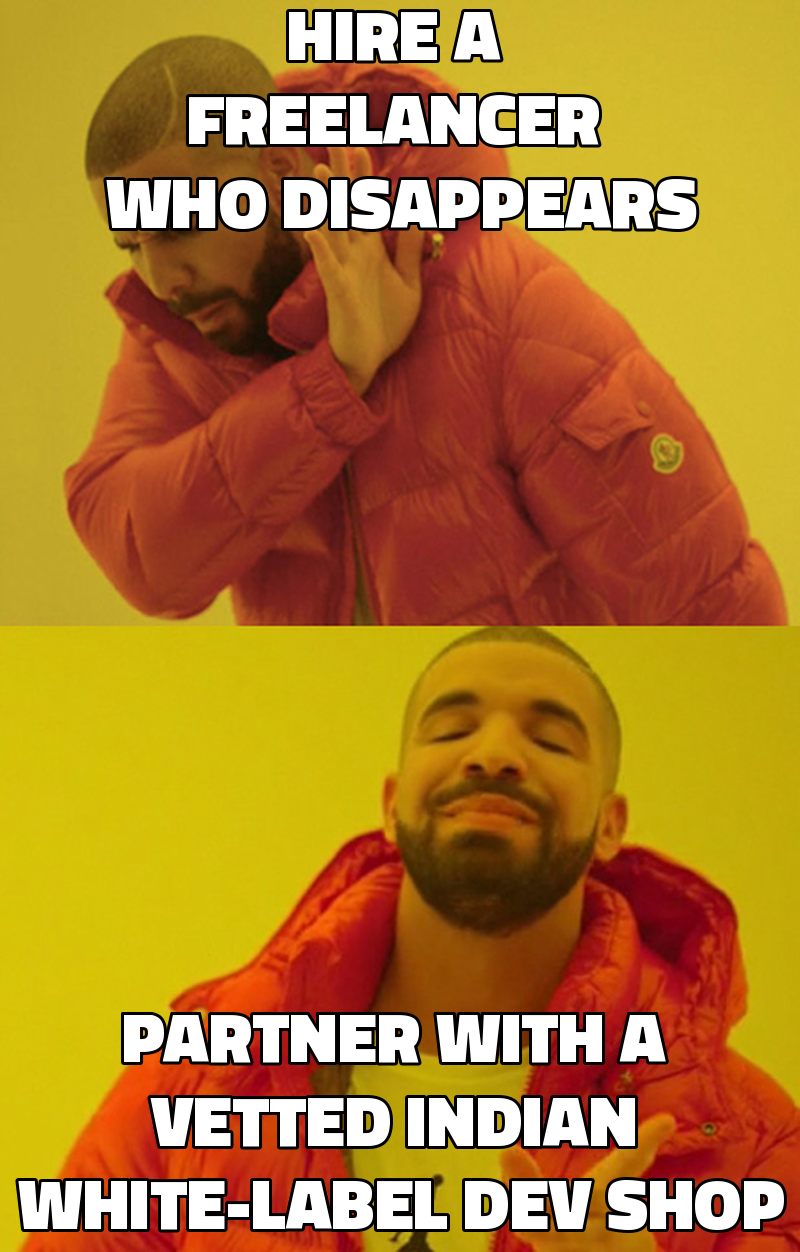
What is a white-label development agency in India?
A white-label development agency delivers fully coded products, web apps, SaaS platforms, AI chatbots, voice assistants, and custom integrations, under another company’s brand. The client never sees the offshore team; the agency invoices the end-user and keeps the margin. In India, these firms operate out of tech hubs such as Bengaluru, Hyderabad, and Pune, leveraging a mature ecosystem of software engineers, project managers, and QA specialists.
"White-label outsourcing lets agencies expand service catalogs without hiring a single developer," says the 2023 Deloitte Global Outsourcing Survey.
How much can US agencies save by partnering with Indian dev shops?
Cost is the most cited driver. According to NASSCOM’s 2022 report, the average fully-burdened hourly rate for a senior software engineer in the United States is $120-$150, while the same experience level in India commands $30-$45 per hour. For a typical 100-hour custom integration, the US price would be $12,000-$15,000, whereas an Indian partner could deliver for $3,000-$4,500 – a 65-70% reduction.
| Metric | US (average) | India (average) | Savings |
|---|---|---|---|
| Senior Engineer Hourly Rate | $135 | $38 | 72% |
| Mid-level Engineer Hourly Rate | $95 | $27 | 71% |
| QA Engineer Hourly Rate | $80 | $22 | 73% |
| Project Management Hourly Rate | $110 | $30 | 73% |
These savings translate directly into higher agency margins. The Synthisia deal model targets a wholesale share of 50-70% of the client bill, meaning an agency can retain $1,500-$3,500 on a $5,000 project after paying the Indian partner.
What talent does India offer that US agencies can’t find in-house?
India produces more than 2.5 million engineering graduates each year (source: Ministry of Education, 2023). A significant portion specialize in emerging fields:
- AI & Machine Learning – Over 150,000 engineers have published at least one AI-related paper in the past two years (AI Index 2023).
- Voice & Speech – Companies such as Alexa and Google have R&D centers in Hyderabad focusing on natural language processing.
- Custom Backend Architecture – Experience with high-scale micro-services, event-driven systems, and serverless stacks on AWS, GCP, and Azure.
- Full-stack JavaScript & TypeScript – Large communities around React, Next.js, and Node.js.
Because many Indian engineers work for multinational product firms before moving to boutique shops, they bring enterprise-grade practices that small US agencies rarely encounter.
How does the time-zone difference become an advantage, not a hurdle?
IST is 9.5-12.5 hours ahead of US Eastern Time. Rather than seeing this as a barrier, agencies can structure work so that:
- Day-One Planning – Agency provides requirements in the morning US time; Indian team receives them before their day ends.
- Overnight Development – Engineers start coding while the agency sleeps, delivering a daily build by the next US morning.
- Async Review – QA and stakeholder feedback happen in the US afternoon, ready for the next Indian workday.
A 2021 McKinsey study on global workflow found that companies using a “follow-the-sun” model reduced time-to-market by 30-40% compared with single-time-zone teams. For agencies, this means a 2-week custom portal can be shipped in 10-12 days without compromising quality.
Which Indian firms have proven track records with US agencies?
Several boutique shops have built a reputation for reliability and brand-agnostic delivery:
- RouteMate Labs – Delivered a full-stack SaaS platform for a US growth agency, handling 20 k monthly users with zero downtime.
- PixelBridge Studios – Specialized in voice-assistant integrations for UK branding firms, completing three Alexa skill projects in six months.
- CodeCrafters India – Known for AI-driven chatbot deployments for Australian SEO agencies, with an average client satisfaction score of 4.8/5 (internal survey, 2023).
These partners publish case studies, maintain transparent project dashboards, and often sign NDAs that protect the agency’s brand.
How to evaluate and onboard a reliable Indian white-label partner?
A systematic vetting process reduces the risk of missed deadlines or quality issues. Use the following criteria matrix:
| Criterion | What to Look For | Minimum Acceptable Score |
|---|---|---|
| Portfolio Relevance | Case studies matching your niche (e.g., AI automation, voice) | 2 of 3 recent projects |
| Client References | Direct testimonials from US/UK/AU agencies | 3 positive references |
| Delivery Process | Defined sprint cadence, shared dashboard, single POC | Documented SOPs |
| Security & NDA | Signed NDA, ISO-27001 or equivalent | Yes |
| Pricing Transparency | Fixed-scope pilot price, clear hourly rates for retainers | No hidden fees |
| Time-Zone Overlap | At least 3 hours overlap with US EST | Yes |
Step-by-step onboarding
- Pilot Project – A scoped, paid pilot of $1,500-$3,000 with a 2-week turnaround.
- Dashboard Setup – Share a simple status board (e.g., Trello or Jira) for real-time visibility.
- Branding Agreement – NDA + non-circumvent clause ensuring the partner remains invisible.
- Retainer Decision – After a successful pilot, negotiate a monthly retainer of $1,500-$2,500 for 15-20 dev hours.
What contract and pricing models work best for agencies?
Agencies need flexibility but also predictability. Two models dominate the market:
| Model | Description | Pros | Cons |
|---|---|---|---|
| Fixed-Scope Pilot | One-off project with a locked price and delivery date. | Low risk, easy budgeting. | Limited to small scope; may require re-scoping for larger work. |
| Monthly Retainer + Overage | Fixed monthly fee for a block of dev hours; extra hours billed at a discounted rate. | Ongoing capacity, smoother cash flow. | Requires trust that workload will fill the block. |
Hybrid approaches, starting with a pilot then moving to a retainer, combine the best of both worlds and align incentives.
Why Indian white-label partners beat cheap offshore alternatives
Cheap offshore options often focus on price alone, sacrificing depth in AI, voice, and complex backend work. Indian boutique shops differentiate by:
- Specialized skill sets – Teams built around niche technologies rather than generic full-stack.
- Quality frameworks – Use of CI/CD pipelines, automated testing, and security hardening as standard.
- Cultural alignment – High English proficiency (average IELTS 7.5) and familiarity with US business etiquette.
- Scalable capacity – Low concurrency models ensure the partner never becomes a flaky freelancer.
When agencies prioritize reliability and strategic capability over raw hourly cost, Indian white-label shops become the logical choice.
How to communicate the partnership to your clients without exposing the offshore link
Clients often fear loss of control or brand dilution. Follow these best practices:
- Brand-Only Deliverables – All UI/UX, documentation, and support are delivered under the agency’s logo.
- Transparent Process, Not Source – Share the sprint cadence and status board, but keep the partner’s name hidden.
- Quality Guarantees – Offer SLA terms (e.g., 99.5% uptime, 2-day bug-fix window) that the agency owns.
- Success Stories – Use anonymized case studies that focus on outcomes, not the development location.
By positioning the partnership as an internal capability, agencies protect their brand while still reaping cost and talent benefits.
Real-world example: From missed opportunity to recurring revenue
Scenario: A US SEO agency lost a $8,000 chatbot project because its freelance dev vanished mid-way. The agency turned to Synthisia’s white-label partner in Bangalore. Within 10 days, a prototype was delivered, the client approved, and the final product shipped in 3 weeks. The agency billed the client $9,500, paid Synthisia $4,000, and retained $5,500 – a 58% margin. Six months later, the same client requested a voice-assistant integration, which Synthisia handled under the same retainer, generating $2,200 additional revenue without any new sales effort.
Checklist for a successful Indian white-label partnership
- Identify at least three relevant case studies from the partner.
- Sign NDA and non-circumvent agreement.
- Run a $1,500-$3,000 pilot with a 2-week deadline.
- Set up a shared project dashboard (Trello, Asana, or Jira).
- Define SLA metrics (uptime, bug-fix turnaround).
- Negotiate a retainer after pilot success.
- Document a brand-only delivery workflow.
Frequently asked questions
How quickly can a typical 50-hour custom build be delivered?
With a follow-the-sun workflow, a 50-hour build can be completed in 8-10 calendar days. The Indian team works overnight while the agency reviews during US business hours, eliminating idle time.
What if the Indian partner misses a deadline?
Most reputable shops include penalty clauses in the SLA (e.g., 5% discount per delayed day). Because the agency owns the client relationship, they can negotiate make-up work or priority resources at no extra cost.
Are there hidden costs such as taxes or currency conversion?
Indian partners usually invoice in USD, so there is no conversion risk. Some firms may add GST (18%) if the service is considered exported; this is typically passed through to the client and can be reclaimed under US tax rules.
Can the partnership scale to multiple concurrent projects?
Yes, but the model recommends low concurrency per partner to maintain reliability. If an agency’s volume grows beyond 3-4 active projects, they can add a second vetted partner to keep capacity high without sacrificing quality.
How do I protect my agency’s brand from being exposed?
Use a non-disclosure and non-circumvent agreement, keep all client-facing assets (UI, docs, support) branded under your name, and limit partner visibility to internal dashboards only.
What level of technical expertise can I expect from an Indian white-label shop?
Top boutique shops employ senior engineers with 5-10 years experience, many holding certifications such as AWS Certified Solutions Architect, Google Cloud Professional Data Engineer, and TensorFlow Developer. They are comfortable with AI model integration, voice SDKs, and complex API orchestration.
Is it safe to share my client’s proprietary data with an offshore partner?
Reputable Indian firms follow ISO-27001 security standards and sign data-processing agreements that align with GDPR and CCPA. Always conduct a security questionnaire and limit data exposure to what is strictly necessary for the build.
How do I measure ROI on a white-label partnership?
Track three core metrics: (1) Margin per project (revenue minus partner cost), (2) Project win-rate increase (how many new build requests you can say yes to), and (3) Delivery speed improvement (average turnaround vs baseline). A 6-month period typically shows a 30-40% lift in overall agency profitability.
white-label
Have something to build?
Tell us what you're trying to ship. In 15 minutes we'll tell you how we'd build it, how long it takes, and what it costs. No pitch deck, no pressure.