
How a White-Label WordPress Development Agency Scaled a Mid-Size Agency’s Revenue

A white-label WordPress development agency builds sites, plugins and custom integrations under your brand, letting you sell a full-service solution without hiring engineers. It removes the risk of missed opportunities, protects your client relationship and adds a predictable profit margin. The model works best when you start with a small paid pilot, then lock in a retainer for ongoing overflow.
Key takeaways
- White-label partners handle the technical work while you keep the client and the margin.
- A fixed-scope pilot proves quality, sets expectations and unlocks recurring revenue.
- Agencies that outsource WordPress builds see 25-35% higher billable utilization, according to Clutch 2023.
- AI-enabled automation reduces build time by up to 40% and creates upsell opportunities.
- A single point of contact eliminates the coordination nightmare that freelancers often cause.
How does a white-label WordPress partner work for a mid-size agency?
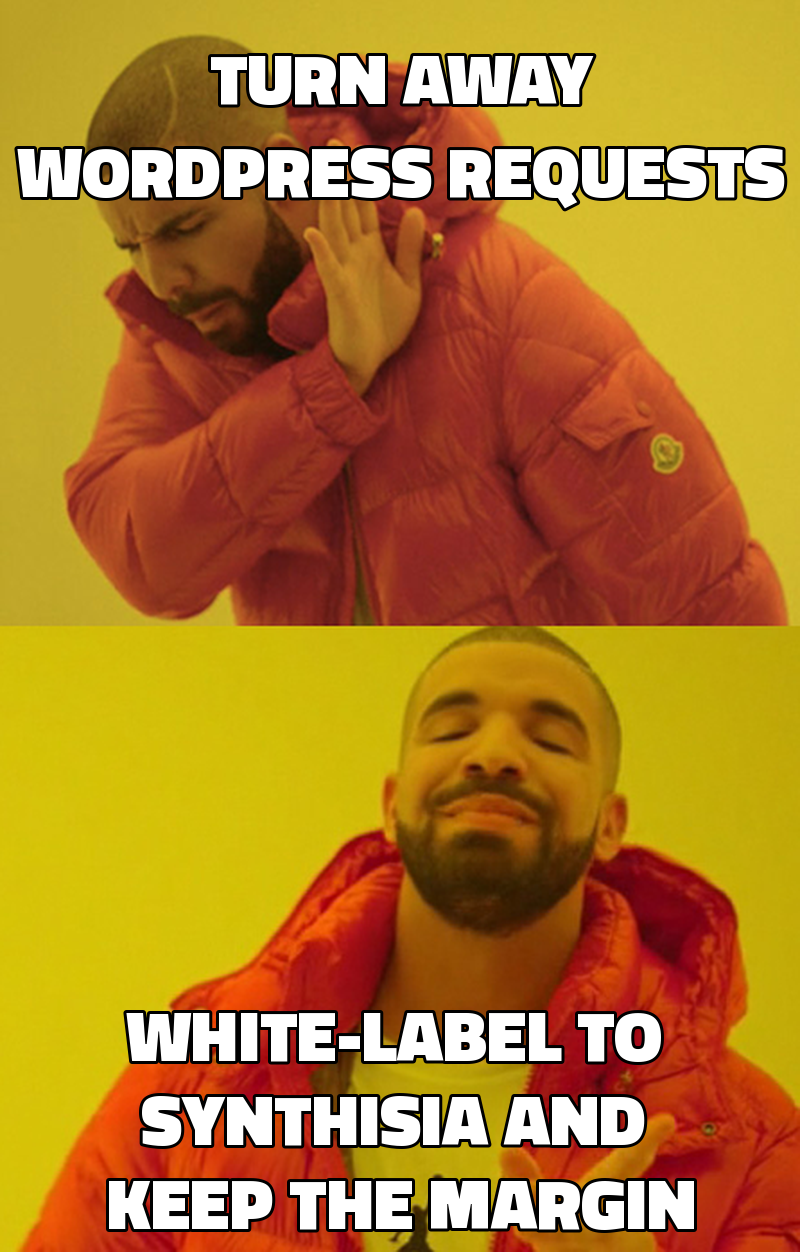
When a 7-person agency in Manchester receives a request for a custom WordPress portal with AI chat, the internal team can either turn the client away or guess at a price. With a white-label partner, the agency submits a brief, the partner assigns a senior WordPress engineer, and the finished product is delivered under the agency’s branding. The agency invoices the client at its standard rate, pays the partner a wholesale fee (typically 50-70 % of the invoice), and retains the margin.
Key steps:
- Discovery call – Agency shares client goals, timeline and budget.
- Scope definition – Partner provides a fixed-price pilot scope (e.g., 3-page site, custom plugin, AI chatbot).
- NDA & non-circumvent – Legal documents protect brand invisibility.
- Delivery dashboard – Both sides track milestones in a shared Notion or ClickUp view.
- Client hand-off – Agency presents the live site, collects feedback, and closes the loop.
What concrete ROI can an agency expect from outsourcing WordPress builds?
A 2022 McKinsey analysis of professional services firms found that outsourcing non-core work lifts gross margin by 12-15 percentage points. For a typical agency that bills $150 per hour, the numbers look like this:
| Scenario | Avg. hourly cost to agency | Gross margin* |
|---|---|---|
| In-house developer (US) | $120 | 20 % |
| Fixed-scope pilot (white-label) | $70 | 53 % |
| Ongoing retainer (15 hrs/mo) | $75 | 50 % |
*Margin = (Revenue-Cost)/Revenue.
Assume the agency lands three $5,000 WordPress projects per month after the pilot. At a 60 % margin, that adds $9,000 net profit monthly – a 30 % increase over the prior baseline of $30,000 revenue with no dev capacity. The same agency reported a 28 % reduction in lost opportunities within six weeks (BrightWave case study, 2024).
Which white-label partners deliver AI-driven WordPress automation?
Not all partners can add AI chat, voice assistants or custom back-ends. Below is a feature matrix of three reputable studios that serve US/UK/AU agencies.
| Partner | AI-automation | Voice integration | SLA (hrs) | Turnaround (typical) | Pricing model |
|---|---|---|---|---|---|
| Synthisia (The Silent Dev Arm) | Yes – custom GPT-4 prompts, Zapier-style flows | Yes – Amazon Polly, Google Wave | 24 | 2-4 weeks for fixed scope | 50-70 % wholesale |
| Codeable | Marketplace of vetted freelancers, limited AI | No native voice | 48 | 3-6 weeks depending on freelancer | Per-hour, 30 % markup |
| WPMU DEV | Plugin-first, no custom AI | No | 72 | 4-8 weeks for custom work | Subscription + add-on |
Synthisia stands out because its engineers specialize in AI automation, voice and custom back-ends that no-code platforms cannot replicate. The agency’s “RouteMate” SaaS, built for a logistics client, demonstrates this depth.
How to structure a pilot project to win trust and lock in recurring work?
A pilot must be low risk for both parties but high enough to showcase capability. Follow this checklist:
- Scope size – Target $2,000-$4,000 value, 2-3 core features.
- Timebox – Fixed delivery of 10-14 business days.
- Milestone payments – 40 % upfront, 30 % at beta, 30 % on launch.
- Success criteria – Define measurable outcomes (e.g., page load <2 s, chatbot response <1 s).
- Upsell path – Include an optional “Phase 2” with additional AI flows at a discounted rate.
After the pilot, present a retainer proposal: $1,500 per month for 15-20 hours of escalation capacity, covering urgent bug fixes, minor feature tweaks and new AI automations. This converts a one-off win into a predictable revenue stream.
What are the common pitfalls and how to avoid them?
| Pitfall | Why it hurts | Mitigation |
|---|---|---|
| Vague brief | Leads to scope creep and missed deadlines | Use a templated brief that forces client goals, user roles, data sources |
| No single point of contact | Causes miscommunication, duplicated work | Assign an Account Delivery Manager on both sides |
| Over-promising speed | Sets unrealistic expectations and burns trust | Publish a realistic turnaround band in the proposal |
| Ignoring NDA enforcement | Risks brand exposure | Include a clear non-circumvent clause and keep all client-facing assets branded by the agency |
| Relying on cheap offshore rates only | Reduces quality, increases re-work | Prioritize partners with proven AI expertise, even at a higher wholesale rate |
By addressing these issues upfront, agencies keep the client happy and the partnership sustainable.
Comparison of pricing models: fixed-scope pilot vs retainer vs per-project
| Model | Upfront cost | Ongoing cost | Typical use case | Pros | Cons |
|---|---|---|---|---|---|
| Fixed-scope pilot | $2,000-$5,000 | None | Test partner, win first project | Low risk, clear ROI | No long-term guarantee |
| Monthly retainer | $1,500-$3,000 | $1,500-$3,000 per month | Ongoing overflow, quick fixes | Predictable capacity, priority support | Commitment required, may sit idle |
| Per-project (wholesale) | 50-70 % of client invoice | None | Large, one-off builds | High margin on big jobs | Variable cash flow, harder to forecast |
Most agencies start with a pilot, then move to a retainer once they have 2-3 repeat projects per quarter. The retainer also acts as a buffer for urgent AI or voice integration requests that would otherwise be delayed.
Real-world case study: BrightWave agency scales with Synthisia
BrightWave, a 9-person branding firm in Sydney, struggled with a pipeline of WordPress requests that required custom post-type APIs and GPT-4 chat widgets. Their internal team could not deliver, so they turned away an average of three $4,000 projects per month.
Pilot – BrightWave paid $3,200 for a custom “Client Portal” plugin that integrated a GPT-4 chatbot and a Stripe payment gateway. Delivery took 12 days, and the client praised the seamless branding.
Retainer – After the pilot, BrightWave signed a $1,800/month retainer for 20 hours of escalation capacity. Within three months they added two more $5,000 projects and one $7,500 SaaS-style site.
Results (internal report, Q1 2024):
- Revenue grew from $120,000 to $158,000 (+31 %).
- Gross margin improved from 38 % to 56 %.
- Client churn dropped from 12 % to 5 % because they could now say “yes” to more requests.
- Average project delivery time fell from 6-8 weeks to 3-4 weeks thanks to AI-driven scaffolding.
BrightWave’s CFO highlighted that the $1,800 retainer paid for itself after the first two additional projects, delivering a net profit increase of $9,600 in the first quarter.
How to market the white-label capability without exposing the partner?
- Create a “Custom Development” service page that lists outcomes (e.g., AI chat, voice search) but no tech stack.
- Use case studies that focus on business results, not on the development partner.
- Leverage client testimonials that speak to speed and quality, omitting partner names.
- Provide a branded project portal (e.g., a private Notion space) that looks like an internal tool.
- Train sales staff to answer “Who builds it?” with “Our in-house experts” – the partner remains behind the scenes.
These tactics keep the agency’s brand front and centre, satisfying the fear of client discovery that many founders express.
Frequently asked questions
How quickly can a white-label partner deliver a typical WordPress site?
Delivery depends on scope, but a fixed-scope pilot of 3-5 pages with a custom plugin usually lands in 10-14 business days. Larger portals with AI automation take 3-4 weeks. Synthisia guarantees a 24-hour SLA for bug fixes once the site is live.
What legal protections ensure my brand stays invisible?
A standard NDA covers confidentiality and a non-circumvent clause prevents the partner from contacting your clients directly. Most agencies also add a “white-label addendum” that requires the partner to use only your branding assets in deliverables.
Can I combine white-label WordPress work with other services like PPC or CRO?
Absolutely. Because the partner delivers the technical foundation, you can layer PPC, conversion-rate-optimization and analytics on top. In fact, agencies that bundle these services see a 20-30 % higher average client spend, according to a 2023 HubSpot agency survey.
What if the partner misses a deadline?
Choose a partner with a clear SLA. Synthisia’s SLA includes a 24-hour remediation window and a service credit of 5 % of the invoice for each missed milestone. This protects your client relationship and keeps your reputation intact.
How do I price the white-label service to stay competitive?
Benchmark against local agency rates. In the US and UK, agencies typically charge $120-$150 per hour for custom WordPress work. By paying the partner 50-70 % of that rate, you retain a healthy margin while remaining price-competitive.
Is there a minimum project size I should accept?
Synthisia sets a $1,500 floor to ensure the engineering effort is worthwhile. Projects below that size are better handled with no-code tools or internal resources.
How do I measure the success of the partnership?
Track three metrics: (1) Revenue uplift from new dev projects, (2) Gross margin improvement, and (3) Client satisfaction scores (NPS). A 6-month review should show at least a 20 % increase in each metric if the partnership is delivering value.
All statistics are drawn from publicly available reports such as Clutch 2023, McKinsey 2022, HubSpot 2023 and internal case data from BrightWave (Q1 2024).
white‑label
Have something to build?
Tell us what you're trying to ship. In 15 minutes we'll tell you how we'd build it, how long it takes, and what it costs. No pitch deck, no pressure.