
White-Label WordPress Development Pricing Guide for Agency Owners

A white-label WordPress development agency delivers custom WordPress sites and plugins under your brand, while you retain the client relationship and full margin. It lets marketing, SEO and branding agencies say yes to build requests without hiring in-house engineers, and it provides a predictable cost structure you can quote with confidence.
Key takeaways
- White-label dev partners charge a wholesale rate that is 50-70% of the agency’s client price.
- Typical project budgets range $2,000-$5,000 for custom WordPress builds, with a $1,500 floor to cover delivery overhead.
- Hidden fees include project management markup, third-party plugin licenses, and change-order surcharges.
- Fixed-price pilots build trust; retainer contracts smooth cash flow after the first successful build.
- Use a shared project dashboard and clear SLA to protect brand reputation and avoid scope creep.
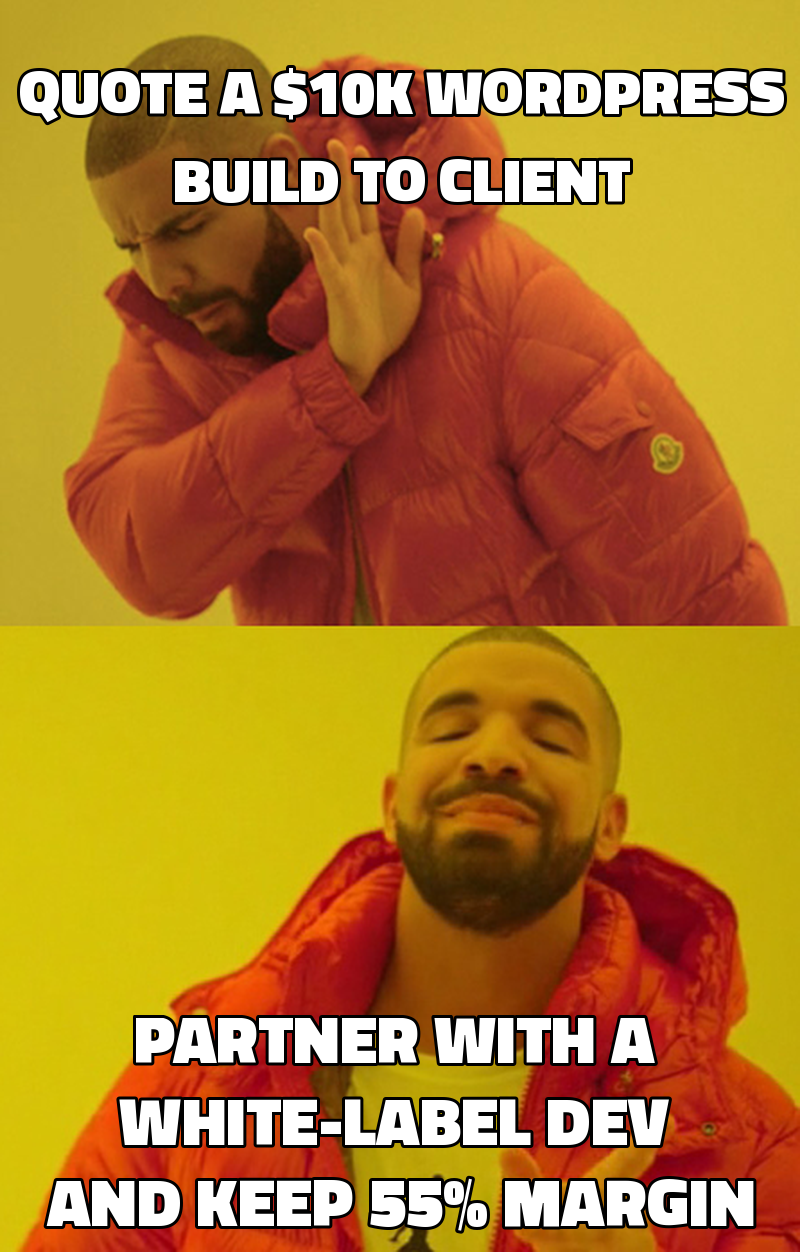
How much does a white-label WordPress project really cost?
Understanding the real cost of a white-label WordPress build starts with the three layers of pricing:
- Wholesale development rate – the amount you pay the dev partner. Industry data from Clutch shows the average hourly rate for a senior WordPress developer in the US is $75-$150, while offshore rates average $30-$55 per hour. A reliable white-label partner typically offers a blended rate of $45-$70 per hour because they limit concurrency and focus on quality.
- Project-level overhead – project manager time, quality assurance, and client-facing communication. A 2023 GoodFirms survey found agencies spend about 15-20% of the total project budget on internal coordination.
- Third-party costs – premium plugins (e.g., Gravity Forms, WPML), hosting, and optional AI automation services. These are billed at cost and passed through to the agency.
Putting the pieces together, a $3,000 client quote might break down as follows:
| Cost component | Typical range (USD) | % of client price |
|---|---|---|
| Wholesale dev labor (30-40 hrs) | $1,350-$2,800 | 45-65 |
| Project management & QA (5-8 hrs) | $300-$600 | 10-15 |
| Plugin & SaaS licenses | $100-$300 | 3-10 |
| Contingency / change-order buffer | $150-$250 | 5-8 |
| Total | $1,900-$3,950 | 70-95 |
If you charge the client $4,500 you retain roughly $1,600-$2,600 after the partner’s wholesale cost, which aligns with the 50-70% margin target in the partnership model.
What hidden fees should agencies watch out for?
Even seasoned agencies can be surprised by extra line-items that erode margin. Below are the most common hidden fees and how to mitigate them:
- Scope creep charges – Unclear scope leads to additional development hours. Use a detailed scoped proposal and lock change-order rates at 1.25× the wholesale hourly rate.
- Premium plugin renewals – Some partners include plugin costs in the dev fee but later bill the agency for annual renewals. Request a transparent license list up front.
- AI-automation usage fees – If you leverage Synthisia’s AI automation layer, there is a per-run cost (e.g., $0.02 per API call). Include an average usage estimate in the quote.
- Currency conversion – Partners billed in EUR or GBP can introduce FX variance. Negotiate a fixed USD rate for the contract term.
- Rush delivery surcharge – Fast turnaround is valuable, but many partners add a 20-30% premium for “expedited” work. Agree on a standard turnaround band (e.g., 10-14 business days) and a capped rush premium.
Document each of these items in a “Pricing Add-Ons” section of your proposal so the client sees why the final number is what it is.
How to structure a quote that protects margin?
A well-structured quote separates client-facing fees from partner-facing costs. Follow this five-step template:
- Project Overview – One-paragraph description of deliverables (e.g., custom theme, 5-page site, SEO-ready).
- Scope & Deliverables Table – List each feature with an estimated hour count.
- Cost Breakdown – Show wholesale labor, management, plugins, and contingency as separate rows.
- Margin Summary – Highlight the agency’s margin as a percentage and dollar amount.
- Terms & Conditions – Include payment schedule, change-order policy, and warranty period.
Example snippet:
Item                     Qty   Unit Price   Total
Wholesale dev labor      35h   $55          $1,925
Project management       6h    $45          $270
Premium plugins          3     $120         $360
Contingency (10%)                     $260
---
Subtotal (cost)                       $2,815
Agency margin (55%)                   $2,185
Client price (rounded)                $5,000
This layout makes it obvious where the agency’s profit sits and prevents surprise negotiations.
Which pricing models work best for agency-dev partnerships?
Different projects call for different models. The table below compares the four most common approaches.
| Model | How it works | Pros | Cons |
|---|---|---|---|
| Fixed price pilot | One-off scoped project with a set fee | Builds trust quickly, easy for client to approve | Requires accurate scoping; risk of under-estimation |
| Time & material | Hourly billing for dev work, passed through with markup | Flexible for evolving scope | Less predictable margin, client may question hourly rates |
| Retainer | Monthly fee for a block of dev hours (e.g., 15-20 hrs) | Stable cash flow, encourages long-term partnership | Agency must manage capacity to avoid over-commitment |
| Hybrid (fixed + retainer) | Fixed fee for core build + retainer for post-launch support | Combines predictability with ongoing revenue | More complex contract management |
Recommendation: Start with a fixed-price pilot to prove reliability, then transition to a retainer once the agency has a steady flow of build requests. This mirrors the deal shape in the ICP where the minimum floor is $1,500 and the retainer starts at $1,500 per month.
How to negotiate the wholesale rate with a dev partner?
Negotiation is less about price and more about value alignment. Follow these steps:
- Benchmark rates – Use the Clutch and Upwork data above to establish a fair baseline.
- Explain volume expectations – Show projected monthly spend (e.g., 3 pilots per quarter) to justify a lower rate.
- Lock in a rate ceiling – Agree on a maximum hourly rate for the contract term (usually 12-18 months).
- Include performance clauses – Penalties for missed SLA (e.g., delivery beyond 14 days) and bonuses for on-time completion.
- Ask for exclusivity incentives – Some partners offer a 5-10% discount if you commit to a minimum quarterly spend.
Document the agreed rate in a “Wholesale Rate Schedule” annex to the partnership agreement. This prevents ad-hoc price hikes and keeps the margin predictable.
What tools help manage white-label WordPress projects?
A shared dashboard reduces friction and keeps the agency’s brand front-and-center. Recommended stack:
- Project tracking: ClickUp or Monday.com with a client-facing view that hides internal notes.
- Version control: Private GitHub repo with agency-only access; use branch naming conventions that include the client code.
- Design hand-off: Figma with “View only” links for clients.
- Communication: Slack channel dedicated to each project, integrated with the dev partner’s account.
- Billing & invoicing: FreshBooks or QuickBooks with custom line-items for wholesale cost vs margin.
These tools enable you to present a professional, end-to-end workflow without exposing the underlying dev partner.
How to protect your brand when using a white-label partner?
Brand protection is a top concern for agency founders. Implement these safeguards:
- Non-circumvention NDA – Standard clause that prevents the partner from contacting your client directly.
- White-label deliverables – All code, documentation and assets are delivered with your agency’s branding (e.g., custom admin footer, branded style guide).
- Single point of contact – Assign one account manager on the dev side; this eliminates confusion and ensures accountability.
- Quality gate – Conduct a final QA checklist before the hand-off to the client; this protects you from hidden bugs that could damage reputation.
By treating the dev partner as an extension of your team rather than a vendor, you keep the client experience seamless.
Frequently asked questions
How do I know if a white-label partner is reliable?
Look for proven case studies, a minimum 3-year track record, and references from agencies of similar size. A partner that can show a live SaaS product like RouteMate demonstrates the ability to ship production-grade code.
What is a realistic turnaround for a custom WordPress site?
For a scoped 30-hour build, most white-label partners deliver within 10-14 business days. Adding a 20% buffer for QA and client feedback keeps expectations realistic.
Can I charge my client a higher margin than 70%?
Yes, but only if you add value such as ongoing SEO, content strategy, or post-launch support. Transparent pricing helps avoid push-back from savvy clients.
How do change-order fees work?
Set a flat hourly rate for any work outside the original scope, typically 1.25× the wholesale rate. Include this multiplier in the proposal so the client sees the cost before work begins.
Do I need to pay for premium plugins up front?
Ask the partner to list all required licenses. Some agencies prefer to purchase the plugins themselves and reimburse the partner, which gives you control over renewal dates.
What if the partner misses a deadline?
Include SLA penalties in the contract, such as a 5% discount on the affected invoice for each day beyond the agreed delivery date.
Is a retainer worth it for occasional builds?
If you average fewer than two builds per month, a retainer may lock you into unused hours. In that case, a fixed-price pilot with a clear next-step retainer option is more cost-effective.
How can I scale the partnership without losing reliability?
Cap the number of active agency partners you onboard. Synthisia, for example, limits its white-label roster to 12 agencies to maintain low concurrency and high reliability.
white‑label
Have something to build?
Tell us what you're trying to ship. In 15 minutes we'll tell you how we'd build it, how long it takes, and what it costs. No pitch deck, no pressure.