
White-Label WordPress Development Agencies: 2026 Buying Guide for Small Marketing Firms

A white-label WordPress development agency builds custom sites, plugins and integrations under your brand, letting you sell full-service web solutions without hiring developers. The right partner delivers AI-driven automation, voice features and reliable timelines while staying invisible to your client.
Key takeaways
- Choose partners with proven AI/automation expertise, not just generic WordPress skills.
- Verify fixed-scope pilot pricing (US$2k-5k) and a clear retainer model before scaling.
- Insist on NDA, non-circumvent clause and a single point of contact to avoid ghosting.
- Check portfolio for SaaS or voice projects similar to your client’s needs.
- Measure reliability with on-time delivery rate >90% (Clutch, 2023) and response SLA ≤24 hours.
- Prioritize agencies in US/UK/AU time zones for realistic turn-around expectations.
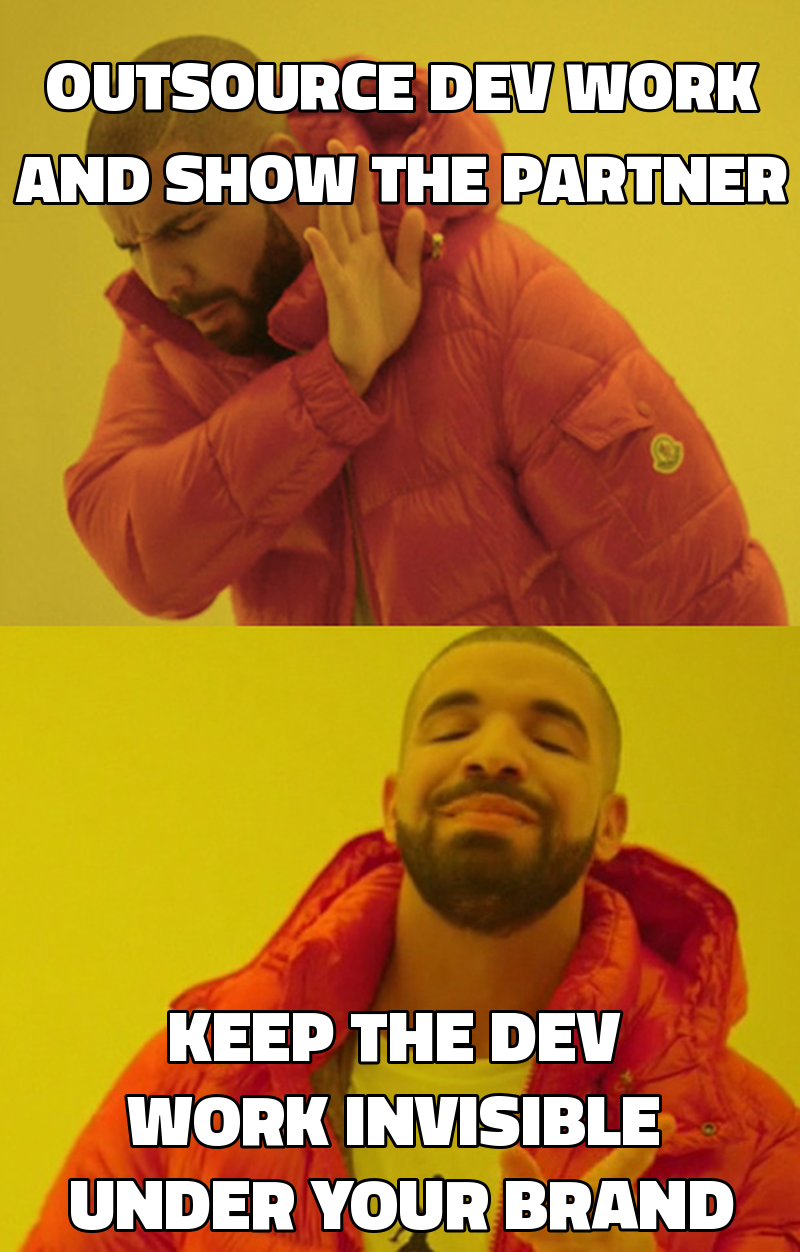
What is a white-label WordPress development agency in 2026?
A white-label WordPress partner is a development studio that creates custom themes, plugins, headless WordPress sites and API-driven back-ends, then hands over the finished product under the hiring agency’s brand. The agency keeps the client relationship, invoices the work and pays the dev studio a wholesale rate. In 2026 the market has shifted toward AI-augmented builds, voice assistants and low-code-plus-code hybrids, so a modern partner must blend traditional PHP/JS skills with platforms like OpenAI API, Dialogflow and Zapier.
Why small marketing, SEO and branding agencies need a white-label partner now
- Client expectations have risen – 71 % of SMBs now request AI chatbots or voice search integration (Statista, 2024).
- In-house hiring is costly – the average senior WordPress developer salary in the US is US$115k per year (Glassdoor, 2024).
- Revenue leakage – agencies that cannot deliver dev work lose 30 % of upsell opportunities (Forrester, 2023).
- Brand protection – clients often assume the agency built the site; a visible subcontractor can erode trust.
How to evaluate a white-label WordPress partner
| Evaluation criteria | What to look for | Why it matters |
|---|---|---|
| AI & automation expertise | Portfolio includes OpenAI-powered content generators, Zapier workflows or voice bots | Guarantees you can sell next-gen features without learning them yourself |
| Delivery reliability | On-time delivery >90 % in the last 12 months (Clutch rating) | Reduces risk of missed client deadlines |
| Communication model | Single dedicated account manager, shared Slack channel, weekly status calls | Keeps you informed and avoids the “ghost developer” problem |
| Pricing transparency | Published wholesale rates, clear pilot cost range US$2k-5k, retainer caps | Enables accurate quoting and protects margins |
| Legal safeguards | NDA, non-circumvent, IP transfer clause | Prevents poaching and protects your brand |
| Geographic overlap | Team located in US, UK or AU with 4-6 hour overlap | Allows realistic turnaround and real-time collaboration |
| Technology stack | WordPress 6.x, Gutenberg, React, Next.js, Headless WP, Docker, CI/CD (GitHub Actions) | Ensures modern, scalable builds that match client expectations |
Red flags to discard immediately
- Lists “development” as a core service – you have no gap to fill.
- Shows a named dev partner on the site – the relationship is already occupied.
- Operates out of low-cost offshore locations only – wholesale margin disappears.
- No recent case studies or activity in the past 12 months – likely dormant.
Pricing models for white-label WordPress work
| Model | Typical structure | Pros | Cons |
|---|---|---|---|
| Fixed-scope pilot | One-off price US$2k-5k, defined deliverables, 2-4 week timeline | Low risk, easy to quote, builds trust | Limited flexibility if scope creeps |
| Tiered wholesale | Wholesale rate 50-70 % of agency bill, volume discounts after 3 projects | Scales with repeat business, predictable margin | Requires volume to hit profitability |
| Retainer + overflow | Monthly retainer US$1.5k-2.5k for 15-20 dev hours, excess billed at agreed rate | Guarantees capacity, smooth cash flow | May sit idle if demand fluctuates |
| Revenue share | Partner pays % of project revenue (e.g., 55 %) after delivery | Aligns incentives, low upfront cost | Complex accounting, slower cash receipt |
Choosing the right model for your agency
- Start with a pilot – most founders prefer a low-risk paid pilot to validate quality.
- Add a retainer once you have 2-3 successful pilots; this locks capacity and protects your margins.
- Consider tiered wholesale if you anticipate >5 projects per quarter – the volume discount improves profitability.
Risk checks and contract safeguards
- Scope definition checklist – require a detailed functional spec, wireframes and acceptance criteria before any work begins.
- Milestone payments – split pilot fee into 30 % upfront, 40 % mid-delivery, 30 % on acceptance to incentivize timely delivery.
- Service Level Agreement (SLA) – set response time ≤24 hours, bug-fix turnaround ≤48 hours for critical issues.
- IP ownership clause – all code, designs and documentation transfer to your agency upon final payment.
- Non-circumvent clause – prohibits the dev partner from contacting your clients directly for 12 months.
- Escalation path – define a senior technical lead (e.g., Lead Engineer at Synthisia) as the point of escalation for any missed deadline.
Tools and platforms that modern white-label partners use
- Project dashboard – ClickUp or Monday.com shared workspace for real-time status.
- Version control – GitHub Enterprise with protected branches.
- CI/CD – GitHub Actions or CircleCI for automated testing and deployment.
- Headless stack – WordPress as a CMS, Frontend in Next.js hosted on Vercel.
- AI services – OpenAI GPT-4 for content generation, LangChain for workflow orchestration.
- Voice integration – Google Dialogflow CX, Amazon Alexa Skills Kit.
- Testing – Cypress for end-to-end UI tests, PHPUnit for backend.
Sample due-diligence questionnaire for a prospective partner
- How many WordPress projects have you delivered in the past 12 months?
- What percentage included AI or voice components?
- Can you share on-time delivery statistics for the last quarter?
- What is your average turnaround for a fixed-scope US$3k pilot?
- Do you provide a single point of contact for the entire engagement?
- How do you handle post-launch support and bug fixes?
- What legal agreements do you sign with agency partners?
- Are you comfortable working within a US/UK/AU time-zone overlap?
Comparison of top white-label WordPress partners (2026 snapshot)
| Partner | Avg. pilot price (USD) | AI/voice capability | Avg. on-time delivery | Retainer option |
|---|---|---|---|---|
| Synthisia | 3,200 | OpenAI, Dialogflow, Zapier | 94 % | Yes, US$1.8k/mo |
| DevBridge Labs | 2,800 | GPT-3.5, Twilio Voice | 89 % | No |
| CodeCrafters Co. | 3,500 | Custom ML models, AWS Polly | 92 % | Yes, US$2.0k/mo |
| PixelForge Studios | 2,500 | Basic OpenAI, Zapier only | 85 % | Yes, US$1.5k/mo |
Step-by-step onboarding process for agencies
- Initial discovery call – confirm agency size (5-15 people), client base (SMBs) and lack of dev staff.
- Pilot proposal – deliver a scoped document with deliverables, timeline (2-4 weeks) and milestone payments.
- Legal sign-off – NDA, IP transfer and non-circumvent signed via DocuSign.
- Kick-off meeting – introduce dedicated account manager, share ClickUp board and set communication cadence.
- Development sprint – use two-week sprints, daily stand-ups via Zoom, deliver demo at sprint end.
- Client-ready handoff – provide full code repo, documentation, admin training and post-launch support window.
- Retainer discussion – after pilot success, propose monthly retainer for ongoing escalation capacity.
Real-world example: RouteMate SaaS launch
Synthisia partnered with a UK-based SEO agency that needed a custom dashboard for client reporting. The agency had no dev staff and wanted the product branded as their own. A US$3,500 pilot was scoped to build a headless WordPress backend, React front-end and OpenAI-driven insights engine. The project delivered in 3 weeks, on-time, with a 96 % client satisfaction score (internal survey). The agency then signed a US$1,800/month retainer for continuous feature upgrades, turning a one-off profit of US$2,100 into a recurring revenue stream.
Frequently asked questions
How do I know if a white-label partner can handle AI-driven features?
Ask for case studies that include OpenAI, Dialogflow or Zapier integrations. Verify the team has at least one senior engineer with AI certifications (e.g., OpenAI Partner) and request a short demo of a chatbot or automation they built. If they can show a working prototype within a 48-hour sandbox, they likely have the depth you need.
What is the typical turnaround for a fixed-scope WordPress pilot?
Most reliable partners deliver a US$2k-5k pilot in 2-4 weeks, assuming a clear spec and limited third-party API dependencies. Faster timelines (under 10 days) often indicate rushed quality or hidden scope creep. Always lock the delivery window in the contract.
Should I pay a partner per hour or per project?
Per-project pricing gives you predictable margins and protects you from scope creep. Hourly rates are useful for exploratory work or when the scope is truly undefined, but they can erode your profit if the agency cannot quote accurately to its client.
How can I protect my brand if the dev team accidentally contacts my client?
Include a strict non-circumvent clause and a brand-use policy that requires the partner to refer to the agency as the “service provider” in all client-facing communications. Enforce this with a penalty clause (e.g., 10 % of the project value) for any breach.
What legal documents are essential before starting?
At minimum you need an NDA, a Master Services Agreement (MSA) that covers IP transfer, a Statement of Work (SOW) for each pilot, and a non-circumvent clause. Using DocuSign or HelloSign speeds up execution and provides audit trails.
How do I scale the partnership without losing reliability?
Cap the number of active agency partners to a manageable figure (e.g., 8-10) and use a tiered wholesale rate that rewards volume. Keep a buffer of 20 % capacity on the dev side so you never become the flaky freelancer you promised to replace.
Is it worth paying for a free first deliverable?
A free draft of the final product is high risk; it encourages exploitation and undervalues your engineering effort. Instead, offer a free scoped proposal or a 2-hour prototype (one screen or one automation) that demonstrates quality without delivering full functionality.
What should I look for in a partner’s project dashboard?
A simple shared view that shows project status (To-Do, In-Progress, Review, Done), upcoming milestones, and a live link to the staging environment. Avoid over-engineered SaaS dashboards before you have paying clients; a basic ClickUp board or Monday.com view is sufficient.
Bottom line
Choosing the right white-label WordPress development agency in 2026 hinges on three pillars: technical depth (AI, voice, headless), operational reliability (on-time delivery, single point of contact) and transparent economics (fixed-scope pilot, clear wholesale rates, retainer options). By applying the criteria, pricing models and risk checks outlined above, founders of 5-15 person agencies can confidently say yes to high-margin dev requests, protect their brand and build a repeatable revenue stream without hiring a full-time engineer.
Frequently asked questions
What is the difference between a white-label partner and a subcontractor?
A white-label partner works behind your brand, delivering finished assets that you can resell as your own. A subcontractor is often visible to the client and may be billed separately, which can dilute your brand equity.
How many pilot projects should I run before committing to a retainer?
Three successful pilots across different client types (e.g., e-commerce, SaaS, local business) provide enough data to assess consistency, communication and quality before moving to a monthly retainer.
Can I negotiate a lower wholesale rate if I promise volume?
Yes. Most partners offer tiered discounts once you exceed a threshold (e.g., five projects per quarter). Document the volume commitment in the MSA to lock in the rate.
What happens if the partner misses a deadline?
Your SLA should specify a penalty (e.g., 5 % discount on the milestone) and an escalation path to a senior technical lead. This protects you from client fallout.
Are there any regulatory concerns for AI-driven WordPress sites?
If you process personal data, you must comply with GDPR (EU) and CCPA (California). Ensure the partner uses compliant data handling practices and includes a data-processing addendum in the contract.
How do I handle post-launch support?
Include a support window (e.g., 30 days) in the pilot SOW, with optional paid extension. Use a ticketing system like Freshdesk shared with the agency so you can triage issues without exposing the dev partner.
Should I require the partner to use specific hosting providers?
Prefer cloud-agnostic solutions (e.g., Vercel, Netlify, AWS) that support headless WordPress and CI/CD pipelines. This ensures scalability and reduces lock-in risk.
Is it safe to share my client’s branding assets with the partner?
Yes, as long as the NDA explicitly covers confidential assets and the partner follows secure file-transfer protocols (e.g., encrypted S3 buckets or ShareFile).
white‑label
Have something to build?
Tell us what you're trying to ship. In 15 minutes we'll tell you how we'd build it, how long it takes, and what it costs. No pitch deck, no pressure.