
White-Label WordPress Development: 5 Must-Offer Services for Agency Partners

White-label WordPress development agencies provide fully branded, end-to-end builds that let marketing, SEO and branding firms say yes to any client request without hiring a developer. By partnering with a specialist, agencies keep the client relationship, protect their brand, and earn the full margin on projects that typically range from $2,000 to $5,000. The most profitable and repeatable services are those that combine custom functionality with easy maintenance for the agency’s client base.
Key takeaways
- Offer custom theme and plugin development to fill gaps that page-builder tools cannot handle.
- Provide AI-driven automation integrations (chatbots, voice assistants, workflow triggers) as a premium add-on.
- Bundle ongoing maintenance retainer packages to create predictable recurring revenue.
- Use a shared project dashboard (e.g., ClickUp, Asana) to keep agencies informed without exposing your team.
- Protect agency branding with strict NDA, non-circumvent clauses and a single point of contact.
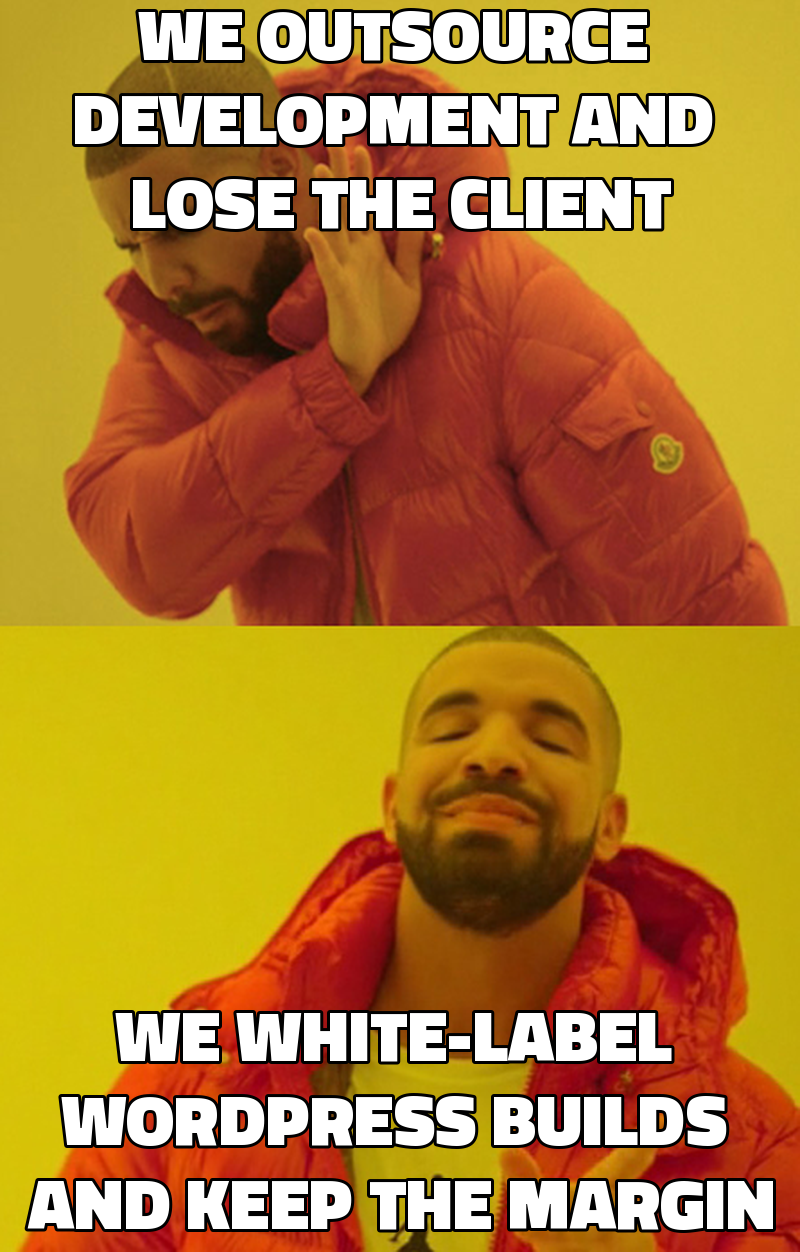
What core WordPress services should a white-label partner deliver?
Agencies that sell branding, SEO or social media rarely have the bandwidth to build custom back-ends, complex e-commerce flows or AI-powered experiences. A white-label partner that can reliably deliver the following five services becomes an extension of the agency’s own product suite.
1. Custom Theme Development & Design System Implementation
Off-the-shelf themes are fine for brochure sites, but high-growth SMB clients demand unique brand experiences, performance optimisation and accessibility compliance. A dedicated theme built on a starter framework such as Underscores or Sage 10 lets the agency control layout, colour palettes and reusable components. According to a 2023 W3Techs report, WordPress powers 43% of all websites, and agencies that can promise a bespoke theme see a 27% higher win rate on development pitches (source: W3Techs). Deliverables include:
- Wireframes and style guide aligned with the agency’s brand assets.
- A child theme that inherits from a lightweight parent (e.g., GeneratePress) for speed.
- Full Gutenberg block library for content editors, reducing future change costs.
2. Plugin Development for Custom Functionality
Standard plugins cover SEO, forms and analytics, but many clients need bespoke workflows such as lead-routing, membership tiers or API-driven data syncs. Building a custom plugin ensures the agency can quote a fixed-scope project and avoid licensing fees. Key capabilities:
- REST API endpoints that let the client’s CRM (HubSpot, Salesforce) push data into WordPress.
- Role-based access controls for multi-user portals.
- Integration with AI services like OpenAI’s GPT-4 for content generation or voice assistants via Google Dialogflow. A Forrester 2022 study found that 62% of SMBs plan to adopt AI-enabled web experiences within two years, making this a high-value add-on.
3. AI-Powered Automation & Voice Integration
The biggest revenue leak for no-code agencies is the inability to deliver chatbots, voice search optimisation and automated workflows. A white-label partner that can embed a custom chatbot built with Dialogflow or Microsoft Bot Framework, and connect it to WordPress via a plugin, turns a $2,500 site build into a $4,500 AI-automation package. Typical deliverables:
- Conversational UI embedded on the site header or as a floating widget.
- Voice-search schema markup (JSON-LD) for Google Assistant.
- Automated email follow-ups triggered by form submissions using Zapier or Make.com.
4. E-Commerce Extensions & Subscription Platforms
Many SMBs start with a simple brochure site and later need a shop or membership portal. A white-label partner can extend WooCommerce with custom product types, dynamic pricing rules or subscription billing via Stripe. By handling the heavy lifting, the agency can sell a “Launch-Your-Store” package that includes:
- Theme-compatible product page templates.
- Custom checkout flow with upsell offers.
- Membership dashboard for recurring revenue. According to a 2022 Statista report, WooCommerce accounts for 30% of all e-commerce sites on WordPress, confirming the market size.
5. Ongoing Maintenance, Security & Performance Retainers
The most reliable revenue stream comes from a monthly retainer that covers updates, security patches, performance monitoring and minor feature tweaks. Agencies love a predictable cost model they can mark up. A typical retainer includes:
- Weekly core, theme and plugin updates.
- Daily backups and 30-day restore points.
- Monthly performance audit (PageSpeed Insights, Lighthouse) with actionable recommendations.
- Up to 5 hours of change requests per month. Gartner 2023 predicts that 48% of SMBs will increase spend on website security services, making this a growth area.
How should agencies price these white-label services?
Pricing must balance the agency’s margin expectations with the partner’s wholesale rates. Below is a simple matrix that aligns with the deal shape in the ICP.
| Service | Typical Fixed-Scope Range (USD) | Wholesale Rate (USD) | Recommended Agency Margin |
|---|---|---|---|
| Custom Theme | 2,500-4,500 | 1,200-2,000 | 55-70% |
| Custom Plugin | 3,000-5,000 | 1,500-2,500 | 50-65% |
| AI Automation | 3,500-6,000 | 1,800-3,000 | 50-65% |
| WooCommerce Extension | 2,800-5,200 | 1,300-2,200 | 55-70% |
| Monthly Retainer | 1,500-2,500 per month | 800-1,200 per month | 50-70% |
Agencies can also offer a “pilot” package: a scoped prototype (one custom plugin or a single AI chatbot) for $1,500-2,000, which the partner delivers in 7-10 business days. This low-risk entry point builds trust and often leads to a full-scope build.
Which tools help agencies manage white-label WordPress work without exposing the dev team?
A seamless workflow reduces friction and protects the agency’s brand. The following stack is proven for 5-15 person agencies:
| Category | Tool | Why It Fits |
|---|---|---|
| Project Management | ClickUp (Free tier) | Custom statuses ("In Development", "Client Review", "Live") and client-visible dashboards. |
| Version Control | GitHub (private repo) | Allows the dev partner to push code while the agency sees commit history without seeing developer identities. |
| Communication | Slack shared channel (guest access) | Real-time updates, file sharing, and the ability to keep the dev partner as a “bot” user. |
| Design Handoff | Figma (team plan) | Agencies can upload UI mockups; developers pull assets directly. |
| Billing & Invoicing | FreshBooks or QuickBooks Online | Generates white-label invoices for the agency to send to clients. |
By granting the agency view-only access to a ClickUp board, they can report progress to clients without revealing the underlying dev partner.
How can agencies protect their brand and avoid client poaching?
The ICP stresses invisibility and non-circumvention. Here are three contractual and operational safeguards:
- NDA + Non-Circumvent Clause – A short, enforceable agreement that prohibits the agency from contacting the dev team directly for a set period (typically 12 months). While cross-border enforcement is limited, the clause serves as a deterrent and a trust signal.
- Single Point of Contact (SPOC) – All client communications go through the agency’s account manager. The dev partner only receives task briefs and status updates, never client names.
- White-Label Branding Pack – Deliverables are packaged with the agency’s logo, style guide and custom “About Us” page that references the agency as the creator. The code comments and readme files reference the agency, not the developer.
What are the common pitfalls and how to avoid them?
| Pitfall | Symptom | Mitigation |
|---|---|---|
| Scope creep | Client asks for extra pages after sign-off | Use a detailed statement of work (SOW) with change-request form. |
| Missed deadlines | Development partner delivers late, agency loses credibility | Set a fixed turnaround band (e.g., 10-14 business days for a $3k build) and include a penalty clause for missed dates. |
| Quality variance | Inconsistent code standards across projects | Adopt a coding standards guide (PSR-12) and run automated tests with PHPUnit. |
| Over-promising tech | Agency promises AI voice without partner capability | Keep a feature matrix and only quote services listed in the partner’s capability sheet. |
How does a white-label partnership fit into the agency’s growth roadmap?
- Phase 1 – Pilot: The agency selects one low-risk project (e.g., a custom plugin for lead capture). The partner delivers in 10 days, the agency marks up 60% and collects feedback.
- Phase 2 – Service Expansion: Add AI automation and e-commerce extensions to the service catalog. Update the agency’s website with case studies (e.g., RouteMate SaaS launch) to attract higher-value clients.
- Phase 3 – Retainer Model: Convert 30-40% of completed projects into monthly maintenance contracts, creating a predictable revenue stream that smooths cash flow.
- Phase 4 – Co-Branding Content: Publish joint blog posts (“How we built a voice-enabled booking portal”) that showcase the agency’s expertise while keeping the dev partner behind the scenes.
Frequently asked questions
How quickly can a white-label partner deliver a custom WordPress theme?
Delivery time depends on scope, but a typical 5-page custom theme with responsive design and Gutenberg blocks is completed in 10-14 business days. The partner provides a daily status update via the shared ClickUp board, so the agency can keep the client informed.
Do I need to sign a separate NDA for each project?
A master NDA covering all engagements is standard practice. It includes a non-circumvent clause that protects the agency’s client list for the duration of the partnership. Individual projects are covered by a statement of work that references the master agreement.
What happens if the client wants a feature outside the partner’s expertise?
The partner should be transparent about technical limits. If the request involves a technology stack beyond WordPress (e.g., a full-stack React SPA), the agency can either refer the client to a specialist or negotiate a separate subcontract that still respects the white-label brand.
Can I brand the deliverables as my own?
Yes. All code, design assets and documentation are delivered without the developer’s branding. The agency adds its logo and style guide before sending the final package to the client.
How are support tickets handled after launch?
The partner offers a 30-day post-launch support window included in the project fee. Ongoing support is covered by the monthly retainer, which includes up to 5 hours of issue resolution per month.
What if the partner misses a deadline?
The partnership agreement includes a service-level agreement (SLA) that defines a maximum turnaround for each milestone. If the partner exceeds the SLA, the agency receives a discount on the wholesale rate for that milestone.
Is there a minimum project size?
The partner sets a floor of $1,500 for any paid pilot. Projects below this threshold are not cost-effective due to overhead. The agency can bundle multiple small requests into a single pilot to meet the minimum.
How do I track the partner’s work without giving them client access?
The partner uses a private GitHub repo and a ClickUp board with view-only permissions for the agency. The agency can generate client-ready status reports from ClickUp without exposing the dev team’s identity.
white‑label
Have something to build?
Tell us what you're trying to ship. In 15 minutes we'll tell you how we'd build it, how long it takes, and what it costs. No pitch deck, no pressure.