
White-Label Web Development in India: Benefits, Risks & Hidden Costs for US/UK Agencies

White-label web development agencies in India provide fully branded code, design and support that you can resell to your clients as if your own team built it. They specialize in custom back-ends, AI automation, voice integrations and SaaS platforms that no-code shops can’t handle, while you keep the client relationship and margin. The model works best when you start with a small paid pilot, lock in clear turnaround times and protect your brand with NDA and non-circumvent clauses.
Key takeaways
- Indian white-label partners deliver custom AI, voice and backend work that no-code agencies lack.
- Fixed-scope pilots de-risk the relationship and prove reliability before a retainer.
- Hidden costs include change-order fees, timezone coordination overhead and quality-control layers.
- Aim for a wholesale margin of 50-70% on $2k-5k projects to meet profitability goals.
- Use a shared project dashboard and a single point of contact to avoid the "flaky freelancer" trap.
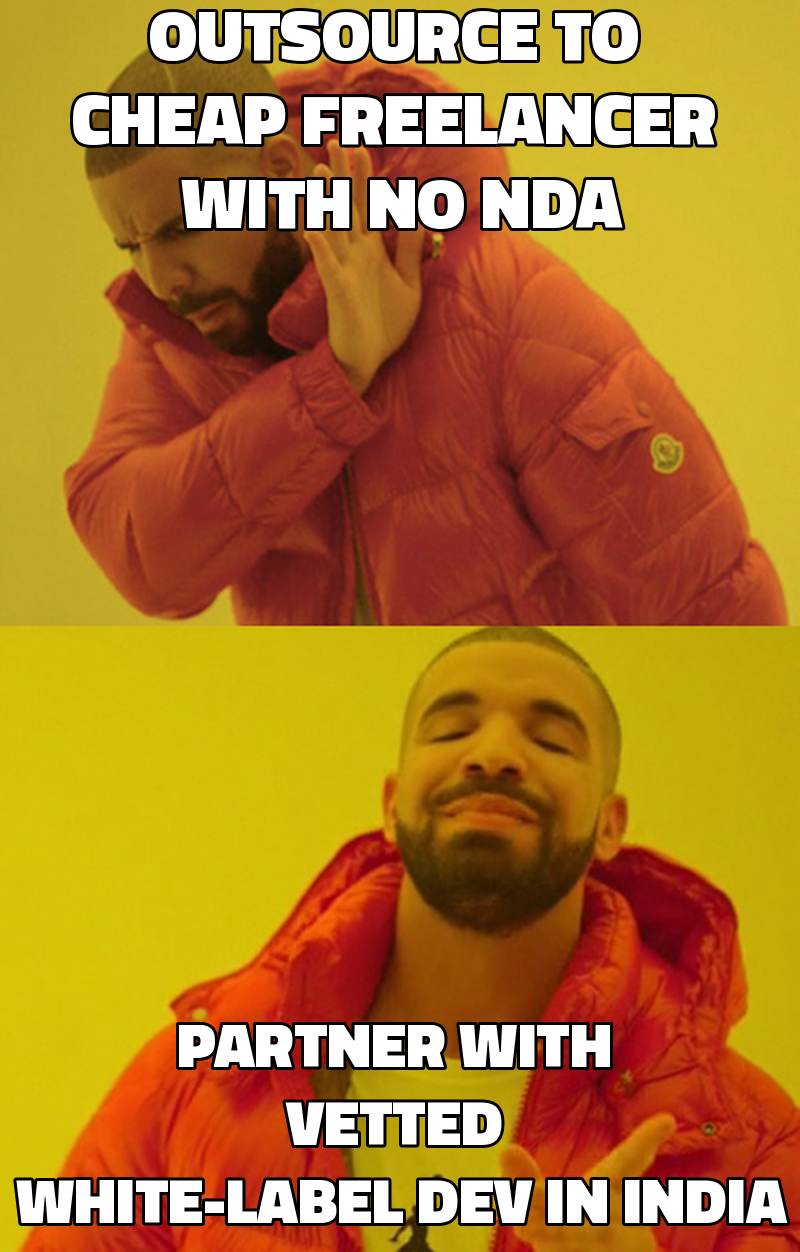
What is a white-label web development agency in India?
A white-label web development agency in India builds digital products, websites, portals, SaaS apps, chat-bots and voice assistants, under your brand name. The client never sees the Indian studio; you receive the finished code, documentation and support, and you invoice the client at your rate. This is different from a traditional offshore subcontractor because the partner signs NDAs, agrees not to poach, and often provides a dedicated account manager who speaks fluent English and aligns with US/UK business hours for overlap.
How can US/UK agencies benefit from an Indian partner?
| Benefit | What it means for your agency | Example |
|---|---|---|
| Access to senior engineers | You can sell AI-driven automation or custom APIs without hiring locally. | Build a GPT-4 powered content generator for a client in 3 weeks instead of 6-8 weeks. |
| Cost efficiency | Hourly rates in India average $25-$45 versus $120-$180 in the US. | A 40-hour feature costs $1,200 in India vs $5,000 in the US. |
| Scalability on demand | Ramp up dev capacity for a big launch without permanent payroll. | Add 2 senior full-stack devs for a 3-month e-commerce overhaul. |
| Brand protection | NDAs and non-circumvent clauses keep the partnership invisible. | Your client never knows the work was outsourced, preserving your full-service image. |
| Faster time-to-market for complex builds | Indian teams often have deep experience with Node.js, Python, AWS, and voice platforms. | Deploy a voice-enabled IVR system in 4 weeks. |
According to Gartner, 62% of agencies plan to increase offshore development spend in 2024, citing talent scarcity and cost pressure. The same report notes that agencies that formalize partner governance see a 30% reduction in missed deadlines.
What are the biggest risks and hidden costs?
| Risk / Hidden Cost | Description | Mitigation |
|---|---|---|
| Scope creep | Small change requests become large unbilled efforts. | Use a fixed-scope pilot with a clear change-order process. |
| Communication lag | 9-12 hour timezone gap can delay feedback loops. | Schedule overlapping windows, use async tools like Slack and ClickUp. |
| Quality variance | Inconsistent code standards can lead to re-work. | Require code reviews, unit test coverage >80%, and a shared GitHub repo. |
| Hidden fees | Setup fees, project-management surcharges, or third-party licences. | Get a line-item cost breakdown before signing. |
| Brand exposure risk | Partner may accidentally reveal your brand. | Enforce NDA, non-circumvent and include branding guidelines. |
| Turnover of Indian staff | High attrition can affect continuity. | Choose partners with a bench of senior engineers and a documented hand-over process. |
A 2023 Clutch survey of 150 US agencies found that 41% reported unexpected change-order costs when working with offshore partners, averaging an extra $1,200 per project. The same survey highlighted that agencies with a single point of contact experienced 25% fewer delays.
How to evaluate and choose the right partner?
- Check the portfolio for AI/voice work – Look for case studies like RouteMate, a production-grade SaaS built for an Australian client, showing end-to-end delivery.
- Validate governance – Ensure they have documented SOPs, a dedicated account manager, and a shared project dashboard (e.g., Monday.com or ClickUp).
- Run a paid pilot – Scope a $2,500-$4,000 feature (e.g., a custom chatbot) with a 2-week turnaround. Measure delivery quality, communication speed and post-launch support.
- Assess financial terms – Aim for a wholesale rate that leaves you a 50-70% margin after your floor of $1,500 per project.
- Confirm legal safeguards – NDA, non-circumvent, IP assignment and data-privacy compliance (GDPR, CCPA) must be signed before any code exchange.
- Test timezone overlap – Schedule a 1-hour daily sync for the pilot; if it works, you can scale.
Sample cost model and profit calculator
| Item | Indian cost (USD) | Your billing price (USD) | Your margin |
|---|---|---|---|
| Fixed-scope pilot (40 hrs) | $1,600 | $3,200 | 50% |
| Change-order (10 hrs) | $400 | $800 | 50% |
| Monthly retainer (15 hrs) | $600 | $1,500 | 60% |
| Overhead (project manager, tools) | $200 | $0 (absorbed) | , |
Profit example: A client pays $5,000 for a custom dashboard. Your Indian partner charges $2,000 for development, $300 for change-orders, $200 for overhead. Your gross profit = $5,000 – $2,500 = $2,500, a 50% margin.
How to protect your brand and client relationship?
- Brand guidelines – Provide a style guide that includes logo usage, tone and documentation format.
- White-label contract clause – State that all deliverables are “work made for hire” and the IP belongs to you.
- Non-circumvent – Include a clause that the partner cannot approach your clients directly for a period of 12 months.
- Single point of contact – The Indian studio assigns one senior lead who reports to you, reducing the risk of miscommunication.
- Transparent reporting – Use a shared dashboard where the client can see status without seeing the partner’s name.
When does the partnership become a liability?
If you notice any of the following, it’s time to reconsider:
- Repeated missed deadlines (>10% of milestones).
- Code that fails security audits (OWASP Top 10).
- Frequent turnover of the assigned lead without proper hand-over.
- Unexplained additional fees beyond the agreed change-order process.
- The partner starts marketing the work as their own case study.
In those cases, invoke the termination clause, transition the code to an in-house or alternative vendor, and document the hand-over to protect your client.
Real-world example: From pilot to retainer
Agency X (a 9-person SEO & branding shop in London) needed a custom AI-driven reporting dashboard for a fintech client. They ran a $3,200 pilot with an Indian partner, receiving a fully functional MVP in 12 days. The client loved the UI and the AI insights, leading to a $12,000 retainer for ongoing feature work and support. Agency X kept 60% margin, eliminated the need to hire a senior developer, and added AI services to their portfolio.
Checklist for a successful white-label partnership
- Verify no in-house dev team and no listed development service on their website.
- Confirm at least one recent case study requiring custom code.
- Secure NDA, IP assignment and non-circumvent agreements.
- Define pilot scope, timeline and change-order pricing.
- Set up a shared project dashboard with milestones.
- Schedule daily 30-minute syncs during overlapping hours.
- Review code quality standards (unit tests, documentation).
- Agree on a wholesale margin range (50-70%).
- Plan a transition path for future in-house or alternative partners.
By following this framework, US/UK agencies can confidently say yes to high-value development requests, keep the client relationship intact, and generate recurring revenue without the overhead of a full-time engineering team.
Frequently asked questions
How quickly can an Indian white-label partner deliver a typical web app?
Most partners promise a fixed-scope build in 2-4 weeks for projects up to $5,000. The exact timeline depends on clear specifications, agreed change-order process and overlapping work hours. Setting a realistic turnaround band protects both sides from scope creep.
What legal protections are needed when outsourcing to India?
At minimum you need a mutual NDA, an IP-assignment clause stating the work is “work made for hire,” and a non-circumvent agreement preventing the partner from contacting your clients directly. Including GDPR and CCPA compliance clauses is advisable if you handle EU or California data.
Can I keep my agency’s branding on the deliverables?
Yes. Provide a brand guide and ask the partner to strip any internal logos or watermarks. The final code, UI mockups and documentation should carry only your agency’s branding.
How do I handle timezone differences?
Schedule a 1-hour daily sync during the overlap (e.g., 8 am EST / 5:30 pm IST). Use async tools like Slack, ClickUp, and shared Git repos for day-to-day updates. Most Indian teams are accustomed to working with US clients and can adjust their workday accordingly.
What hidden costs should I watch for?
Common hidden costs include change-order fees, third-party licence purchases, extra QA cycles, and project-management surcharges. Always request a line-item quote before the pilot and negotiate a cap on change-order rates.
Is it better to pay per hour or per project?
Fixed-price projects give you predictability and protect margins. Hourly rates can lead to scope creep unless you have strict time-tracking and caps. For most agency use-cases, a fixed-scope pilot followed by a retainer works best.
How do I ensure code quality and security?
Require the partner to follow industry standards: code reviews, unit test coverage >80%, linting, and security scans (e.g., Snyk or OWASP ZAP). Ask for a short audit report before the final hand-over.
What if the partner fails to deliver?
Include a termination clause with a 30-day notice period and a hand-over provision that obligates the partner to transfer all source code, documentation and credentials. Keep backups of all work in a secure repository.
white-label
Have something to build?
Tell us what you're trying to ship. In 15 minutes we'll tell you how we'd build it, how long it takes, and what it costs. No pitch deck, no pressure.