
White-Label vs Private-Label Software: Legal, Branding and Profit Differences for Agency Partners

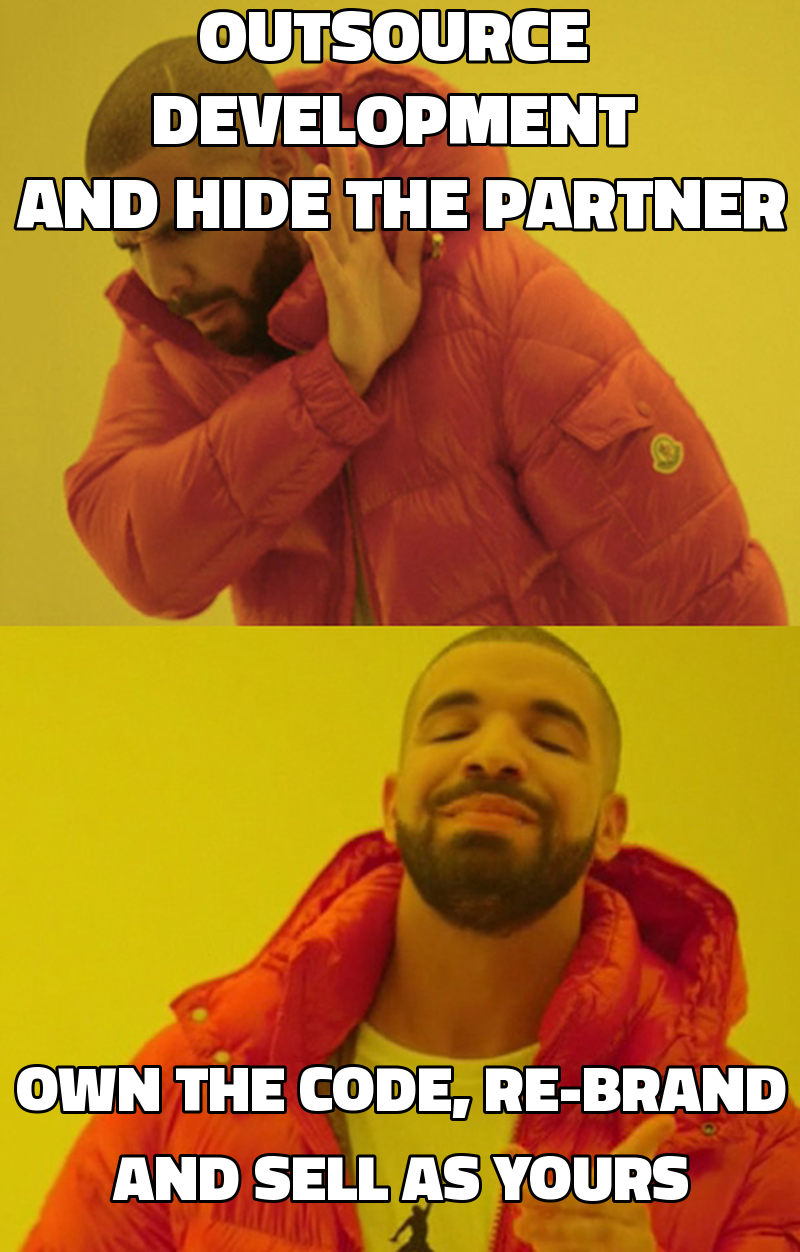
White-label and private-label software both let agencies sell products they didn’t build, but they differ in ownership of the brand, source code rights, and profit split. In a white-label deal the developer stays invisible and the agency markets the solution as its own, while a private-label arrangement usually grants the reseller the right to re-brand and sometimes to modify the code, often with a license that includes source-code access. The legal contracts, branding control and margin potential reflect those distinctions.
Key takeaways
- White-label keeps the developer hidden, private-label gives the reseller branding and sometimes code ownership.
- White-label contracts focus on NDA and non-circumvention, private-label adds IP transfer clauses.
- Margins are typically 50-70 % for white-label, private-label can reach 70-85 % when the reseller owns the IP.
- Agencies can quote projects confidently when they know the licensing model and turnaround guarantees.
- Legal risk is lower with white-label because the developer retains liability for the software core.
- Choose the model that matches your brand promise and the level of customization your clients demand.
What is white-label software?
White-label software is a ready-made product that a development partner creates and allows another company to sell under its own brand name. The partner provides the code, hosting, updates and support, but the reseller never mentions the original developer to the end-client. The agreement typically includes:
- Non-disclosure (NDA) – protects the developer’s proprietary methods.
- Non-circumvention clause – prevents the reseller from hiring the developer’s staff directly.
- Service-level agreement (SLA) – defines uptime, bug-fix windows and response times.
- Revenue-share or wholesale pricing – the reseller pays a fixed wholesale fee per license or a percentage of the gross sale.
According to a 2022 Deloitte survey, 62 % of agencies using white-label partners cite brand consistency as the main benefit, because the client never sees a third-party vendor.
What is private-label software?
Private-label software goes a step further. The developer licenses the product to the reseller and transfers certain intellectual-property (IP) rights. The reseller can:
- Re-brand the UI and marketing materials.
- Modify the source code (often via a GitHub repository) to add custom features.
- Resell the product to multiple end-clients without additional royalty fees, depending on the license.
Private-label contracts therefore contain:
- IP assignment or exclusive license clause – outlines who owns the code after transfer.
- Customization rights – defines what level of code change the reseller may perform.
- Warranty and indemnity – the developer may still guarantee that the base code is free of infringement, but the reseller assumes liability for custom modifications.
Gartner’s 2023 market guide notes that private-label arrangements are popular in SaaS verticals where the reseller wants to position the product as a proprietary solution for high-margin enterprise clients.
Legal implications: risk, liability and IP ownership
| Aspect | White-label | Private-label |
|---|---|---|
| IP ownership | Developer retains copyright; reseller gets a license to use the product under its brand. | Reseller often receives an exclusive or perpetual license; may own derivative works. |
| Liability | Developer remains liable for core bugs, security vulnerabilities and compliance (e.g., GDPR). | Reseller assumes liability for any custom code and for representing the product as its own. |
| Contract complexity | Simpler NDA + SLA; usually 5-10 pages. | Longer agreements covering IP transfer, warranties, indemnities; 15-25 pages. |
| Regulatory compliance | Developer ensures compliance; reseller must follow usage guidelines. | Reseller must ensure compliance for any customizations; may need its own legal review. |
| Termination | License can be revoked if payments stop; developer may require product removal. | IP transfer may be irrevocable; termination often requires a buy-back or de-branding clause. |
For agencies that cannot afford a dedicated legal team, white-label is generally lower risk because the developer bears most of the compliance burden. Private-label demands a stronger contract review process, especially if the agency plans to embed the software in regulated industries such as finance or health care.
Branding consequences: client perception and market positioning
White-label branding
- Invisible partner – The agency presents the solution as an in-house capability. This works well for agencies that market themselves as “full-service digital partners”.
- Consistent messaging – All marketing assets (case studies, demos, pricing sheets) are created by the agency, keeping the voice uniform.
- Limited differentiation – Because the underlying product is the same for every reseller, agencies must rely on service quality, implementation speed, and added consulting to stand out.
Private-label branding
- Full brand ownership – The agency can rename the product, redesign the UI, and bundle it with other services as a unique offering.
- Higher perceived value – Clients often equate “proprietary software” with strategic advantage, allowing agencies to command premium pricing.
- Customization as a differentiator – Agencies can develop niche features (e.g., AI-driven voice bots for Australian SMEs) that competitors cannot replicate without the source code.
A 2021 Forrester report found that agencies that re-branded private-label SaaS saw a 23 % increase in average contract size compared with those using white-label only.
Profit implications: pricing models and margin potential
| Metric | White-label typical range | Private-label typical range |
|---|---|---|
| Wholesale cost per license | $15-$40 (depending on feature set) | $0-$20 (if IP transferred) |
| Agency resale price | $30-$80 per month per seat | $50-$150 per month per seat (premium branding) |
| Margin % | 50-70 % | 70-85 % (when IP is owned) |
| Up-front pilot cost | $1,500-$3,000 (fixed-scope) | $2,500-$5,000 (includes customization) |
| Ongoing support revenue | 15-20 % of resale price (retainer) | 20-30 % of resale price (custom support) |
For a typical agency partner in the US, UK or AU that sells a white-label chatbot platform at $60 per month per seat to a client with 20 seats, the gross revenue is $1,200 per month. If the wholesale cost is $30 per seat, the agency keeps $600, a 50 % margin. The same product, re-branded under a private-label agreement with source-code rights, could be sold at $100 per seat, yielding $2,000 gross. After a $10 per seat royalty, the agency retains $1,800 – an 80 % margin.
Choosing the right model for a no-dev agency
When white-label is the safer bet
- You lack technical staff – You want a single point of contact that delivers the build, fixes bugs and handles hosting.
- Brand consistency matters more than product uniqueness – Your agency sells “full-service digital transformation” and the software is a supporting tool.
- Regulatory exposure is high – You prefer the developer to shoulder GDPR, CCPA or accessibility compliance.
- Cash flow is tight – Lower upfront costs and predictable wholesale pricing fit a pilot-first approach.
When private-label unlocks growth
- You have a niche market – E.g., Australian boutique retailers needing voice-enabled loyalty apps. Customization lets you own the niche.
- You want premium pricing – Re-branding allows you to position the solution as proprietary, justifying higher rates.
- You can absorb legal review – Your agency has access to counsel that can negotiate IP clauses.
- Long-term scalability – Owning the code means you can add features without paying per-seat royalties, improving unit economics as volume grows.
Real-world comparison table for agency decision makers
| Decision factor | White-label pros | White-label cons | Private-label pros | Private-label cons |
|---|---|---|---|---|
| Time to market | Developer delivers ready product in 2-4 weeks. | Limited ability to tweak UI quickly. | Full control over UI, can align with brand launch. | Customization adds 2-6 weeks of development. |
| Upfront investment | Low – pilot fee only. | Ongoing wholesale fees per seat. | Higher – may include code-transfer fee. | Need to budget for legal and customization. |
| Margin potential | 50-70 % after wholesale cost. | Caps premium pricing. | 70-85 % when IP owned. | Margins shrink if royalty per seat is high. |
| Legal exposure | Developer liable for core bugs. | Less control over compliance. | Agency liable for custom code. | Must manage IP warranties. |
| Scalability | Easy to add new clients, same wholesale cost. | Cost per seat may rise with volume. | Unlimited scaling after code ownership. | Requires internal dev resources for major updates. |
How to structure a partnership contract
- Define the licensing tier – wholesale per-seat fee, minimum volume, and any tiered discounts.
- Set branding rights – specify logo placement, marketing copy, and whether the reseller can rename the product.
- Outline IP clauses – for white-label, state “developer retains all copyrights”. For private-label, include “exclusive worldwide license with right to modify and distribute”.
- Include SLA metrics – uptime (e.g., 99.5 % monthly), response time for critical bugs (4 hours), and scheduled maintenance windows.
- Add termination and de-branding provisions – how the reseller must remove branding and data on contract end.
- Add a pilot clause – a fixed-scope, paid pilot (e.g., $2,500) that converts to a retainer if the agency is satisfied. This mirrors Synthisia’s “Escalation Partner” model and reduces risk for both parties.
Practical steps for agency founders
- Audit your current service catalogue – Identify any client requests for AI automation, voice bots, or custom back-ends that you cannot fulfill.
- Map the revenue impact – Use the profit table above to calculate potential margin uplift for each scenario.
- Run a pilot with a trusted developer – Choose a low-risk project (e.g., a chatbot for a local retailer) and set clear success metrics.
- Negotiate IP rights – If the pilot succeeds, discuss moving from white-label to private-label to capture higher margins.
- Create a joint go-to-market plan – Co-brand case studies, share dashboards (Synthisia’s Project Dashboard), and define a sales funnel that keeps the developer invisible.
Case study: RouteMate – a white-label success story
RouteMate, a logistics SaaS built by Synthisia, was delivered under a white-label agreement to a UK-based marketing agency. The agency sold the platform as “LogiBoost” to three mid-size e-commerce clients. Key outcomes:
- Time to market – 3 weeks from contract to live product.
- Margin – 58 % after a $2,000 wholesale fee per client.
- Client retention – All three clients renewed for a 12-month retainer, generating $18,000 recurring revenue for the agency.
- Brand impact – The agency could showcase a proprietary logistics tool without exposing Synthisia’s involvement, reinforcing its “full-stack digital partner” positioning.
Private-label transformation: when to upgrade
After six months, the same agency requested deeper integration with their existing CRM and a custom reporting dashboard. Synthisia negotiated a private-label add-on that transferred the source code for a one-time $8,000 fee. The agency re-branded the product, added a premium “Enterprise” tier, and increased the resale price to $120 per seat. The margin jumped to 78 % and the agency secured a $30,000 contract with a national retailer.
Frequently asked questions
What is the main legal difference between white-label and private-label?
White-label licenses the software while the developer retains copyright and most liability. Private-label adds an IP transfer or exclusive license that lets the reseller own or heavily control the code, shifting more legal responsibility to the reseller for custom changes and compliance.
Can I start with white-label and later switch to private-label?
Yes. Many developers include an upgrade clause that allows the reseller to purchase source-code rights after a successful pilot. This approach lets you test market demand with low risk before committing to a larger IP purchase.
How do margins compare in practice?
White-label margins typically sit between 50-70 % after wholesale costs. Private-label can reach 70-85 % when the reseller owns the IP and eliminates per-seat royalties. The exact numbers depend on the wholesale price, resale price and any customization fees.
Which model protects my agency’s brand better?
Both protect the brand, but white-label guarantees the partner stays invisible, which is ideal if you want to avoid any perception of outsourcing. Private-label lets you fully own the brand narrative, but you must ensure the product quality matches the brand promise.
Do I need a lawyer for a white-label contract?
A basic NDA and SLA can be drafted with a template, but it’s wise to have a lawyer review any clause that touches IP, liability or termination. The risk is lower than private-label, where IP ownership creates more complex legal exposure.
How does a private-label agreement affect support responsibilities?
The developer usually continues to provide core platform support, but the reseller is responsible for any custom modules they add. Service-level expectations should be split in the contract to avoid disputes.
Is private-label worth the extra upfront cost for a small agency?
If you have a clear niche and can price the solution at a premium, the higher margin often justifies the upfront IP purchase. For agencies that primarily need a reliable overflow partner, white-label offers a quicker, lower-cost path to revenue.
Bottom line for agency founders
White-label gives you a fast, low-risk way to expand your service catalogue while keeping the developer invisible. Private-label adds brand ownership, higher margins and the ability to differentiate with custom features, but it requires stronger legal safeguards and a willingness to manage code. Evaluate your client base, cash flow and long-term growth strategy to decide which model aligns with your agency’s profit goals and brand promise.
white‑label
Have something to build?
Tell us what you're trying to ship. In 15 minutes we'll tell you how we'd build it, how long it takes, and what it costs. No pitch deck, no pressure.