
White-Label vs Private-Label: Which Model Gives Small Agencies the Highest Margin

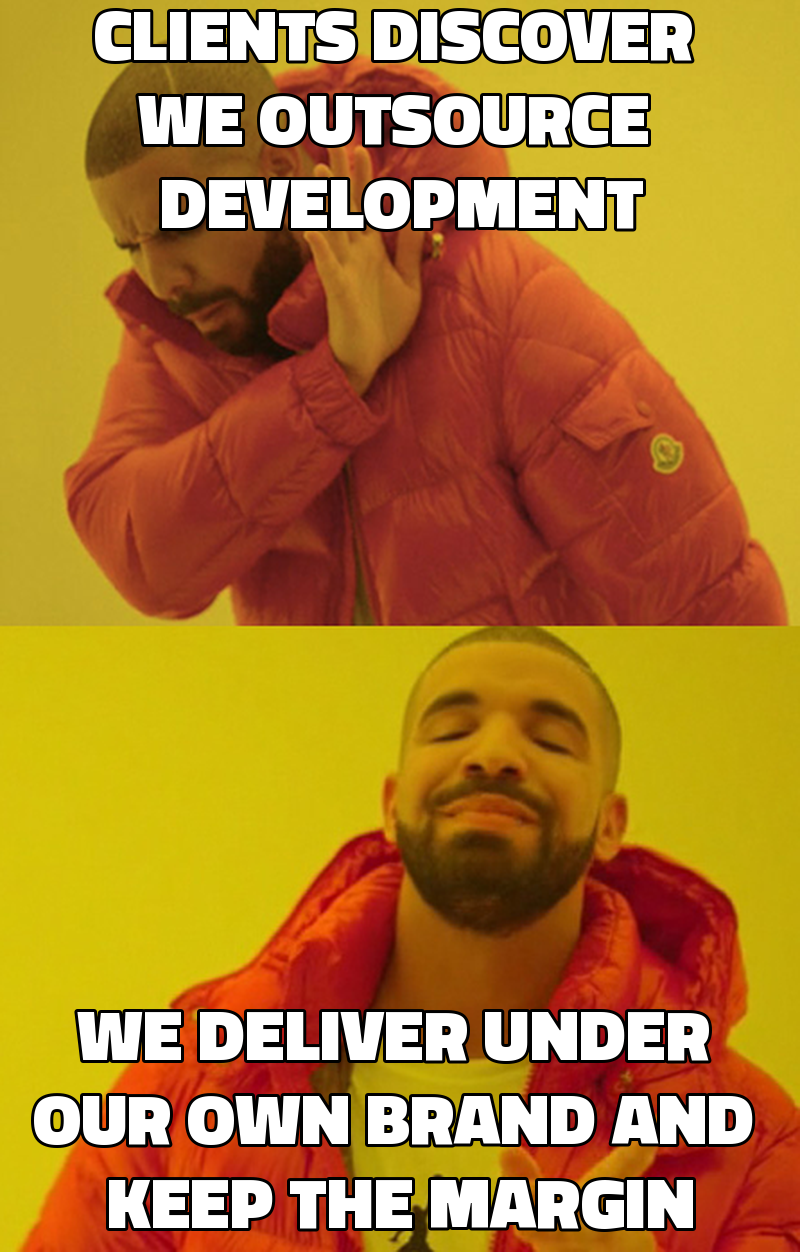
White-label and private-label are distinct partnership models. In a white-label arrangement the development work is delivered under the agency’s brand, while a private-label deal places the partner’s brand on the product and the agency resells it as its own. For a 5-15 person marketing, SEO or branding agency the choice directly determines gross margin, client perception and contract complexity.
Key takeaways
- White-label lets the agency keep the client relationship and charge a 50-70 % markup on the partner’s wholesale rate.
- Private-label often forces the agency to share branding credit, reducing pricing power to 30-45 % markup.
- Legal contracts for white-label typically include NDAs and non-circumvent clauses; private-label adds co-branding and IP-ownership clauses.
- Agencies that need to protect their brand and avoid client churn should prioritize white-label.
- A simple margin calculator shows a $4,000 white-label project can net $1,600-$2,800 after partner cost, versus $800-$1,200 for a private-label equivalent.
What is white-label development?
White-label development is a B2B partnership where the development studio builds a solution, web app, AI automation, voice bot, custom backend, entirely behind the scenes. The agency presents the finished product as its own, retains the client relationship, and invoices the client at a rate that covers the partner’s wholesale cost plus the agency’s margin.
Why agencies love it
- Brand consistency – The client only sees the agency’s logo and communication style.
- Pricing freedom – Agencies can set a premium based on their reputation, not the partner’s cost.
- Risk mitigation – The partner handles technical risk, while the agency manages scope and expectations.
According to a 2023 Gartner survey, 62 % of small agencies that adopted white-label development reported a margin increase of at least 15 % within the first six months.
What is private-label development?
Private-label development is similar technically but the partner’s brand is attached to the deliverable. The agency may sell the solution under a joint brand or as a “partner-powered” offering. The client is aware that a third-party built the product, often through co-branding on the UI, documentation or support portal.
Typical characteristics
- Shared branding – Logos of both parties appear on the product.
- Lower markup – Because the partner’s brand adds perceived value, agencies often charge a smaller premium.
- Complex IP clauses – Ownership may be split, requiring detailed contracts.
Forrester’s 2022 research on co-branded SaaS products found that average gross margin for private-label deals hovered around 35 %, compared with 55 % for pure white-label arrangements.
Revenue impact comparison
| Metric | White-label | Private-label |
|---|---|---|
| Typical wholesale rate (USD) | $1,500-$3,500 per project | $1,500-$3,500 per project |
| Agency markup range | 50 %-70 % | 30 %-45 % |
| Gross margin (average) | 55 % | 35 % |
| Repeat-project likelihood | High – partner stays invisible, agency retains client | Medium – client may request partner directly after first success |
| Average project size for 5-15 person agency | $2,000-$5,000 | $2,000-$5,000 |
Example margin calculation
Assume a $4,000 project with a $2,400 wholesale cost (60 % of revenue). For a white-label markup of 60 % the agency invoices $4,000, pays $2,400 to the partner and keeps $1,600 gross profit. The same project under private-label with a 40 % markup yields $4,000 invoice, $2,400 partner cost, $1,600 gross profit, but the agency must share branding credit, often forcing a discount of 10-15 % that drops profit to $1,200-$1,400.
Branding and client perception
| Aspect | White-label | Private-label |
|---|---|---|
| Client sees agency brand only | Yes | No – partner logo appears |
| Ability to claim “end-to-end” service | Full claim | Qualified claim (partner-powered) |
| Risk of client poaching the partner | Low – NDA + non-circumvent protects | |
| Marketing collateral simplicity | Simple – agency-only assets | |
| Upsell potential on future builds | High – client trusts agency expertise |
A 2024 HubSpot case study of a UK-based SEO agency showed that after switching to white-label AI automation, the agency could add “custom chatbot” to its service menu without redesigning its sales deck, leading to a 22 % increase in average contract value.
Legal and contractual considerations
- Non-disclosure agreement (NDA) – Standard for both models, but white-label NDAs often include a non-circumvent clause that prevents the agency’s client from contacting the partner directly.
- Intellectual property (IP) ownership – White-label contracts usually assign full IP to the agency, while private-label may retain joint ownership or grant a license to the agency only.
- Liability and warranty – In white-label the agency assumes full warranty responsibility; in private-label the partner may retain limited liability, requiring the agency to manage support tickets.
- Compliance – For EU-based agencies, GDPR compliance clauses must specify who is the data controller. White-label typically makes the agency the controller, simplifying the client’s compliance checklist.
- Termination rights – Private-label agreements often include a notice period for brand removal, whereas white-label can be terminated with a simple 30-day notice if margins erode.
Margin calculator for a typical 5-person agency
Project value (USD): $3,500
Wholesale cost (partner): $2,100 (60 % of value)
White-label markup (65 %): $3,500 – $2,100 = $1,400 gross profit
Private-label markup (40 %): $3,500 – $2,100 = $1,400 gross profit
Brand-share discount (15 %): $1,400 – $210 = $1,190 net profit
Result – white-label profit: $1,400 (18 % margin)
Result – private-label profit: $1,190 (14 % margin)
The numbers illustrate why white-label typically yields a 3-5 % higher margin, especially when the agency can command a premium for brand exclusivity.
Choosing the higher-margin model for your agency
| Decision factor | Prefer white-label when | Prefer private-label when |
|---|---|---|
| Brand protection | You cannot afford any partner exposure | Your agency already markets “partner-powered” solutions |
| Margin priority | You need >50 % gross margin on dev projects | You are comfortable with 30-40 % margin for joint branding benefits |
| Legal simplicity | You want a single IP owner (the agency) | You need shared IP to leverage partner’s proprietary tech |
| Client expectations | Clients expect a single point of contact and brand continuity | Clients explicitly ask for “best-in-class” partner technology |
| Scale of partnership | You plan to onboard a capped number of partners for reliability | You want to co-market and tap partner’s brand equity |
For the ICP described, founders of 5-15 person agencies in the US, UK or AU with no in-house developers, the first three rows overwhelmingly favor white-label. The ability to keep the partner invisible protects the agency’s reputation, maximizes markup, and reduces contract complexity.
Implementation checklist for a white-label partnership
- Select a development partner – Look for studios with proven AI/voice automation experience (e.g., Synthisia, RouteMate, or Toptal’s AI team). Verify past SaaS launches and client references.
- Negotiate wholesale rate – Target a 55-65 % discount off your intended client price. Include a minimum floor of $1,500 per project as per your deal shape.
- Draft NDA & non-circumvent – Use a template that covers data protection (GDPR, CCPA) and prohibits the client from contacting the partner directly.
- Define turnaround SLA – Set a realistic delivery band (e.g., 2-3 weeks for a $3k project) and embed it in the agency’s sales pitch.
- Create a pilot workflow – Offer a fixed-scope paid pilot (e.g., $2,000 for a chatbot prototype). Use the pilot to prove reliability and lock in a retainer.
- Onboard a shared dashboard – Provide the agency with a simple status view (Google Sheet or Notion board) to keep clients updated without building a full SaaS portal.
- Monitor margin health – Track each project’s gross profit in a spreadsheet. If margin falls below 45 %, renegotiate rates or limit project size.
- Plan for retainer upsell – After 2-3 successful pilots, propose a $1,500/month retainer covering 15-20 dev hours of ongoing escalation capacity.
Private-label considerations (if you must choose it)
- Co-branding guidelines – Agree on logo placement, color palette, and documentation style.
- Joint marketing budget – Allocate a small spend (e.g., $300 per quarter) for partner-hosted webinars that showcase the combined offering.
- Revenue split – Negotiate a 60-40 split favoring the agency if the partner’s brand adds significant market credibility.
- Exit clause – Include a clause that allows the agency to re-brand the product within 60 days of termination.
Bottom line for small agencies
White-label development delivers the highest margin, protects the agency’s brand, and simplifies legal contracts. Private-label can be viable when the partner’s brand is a market differentiator, but it typically reduces markup and adds IP complexity. For founders who need to say “yes” to every client request without hiring developers, the white-label model is the clear profit driver.
Frequently asked questions
How does a white-label partnership affect my agency’s cash flow?
Because you invoice the client at your full rate and pay the partner a wholesale fee, cash inflow matches your client billing cycle. The partner’s payment is usually due on project completion, so you retain the margin upfront. This structure avoids the delayed payment risk common with revenue-share private-label deals.
Can I switch from private-label to white-label with the same partner?
Yes, but you will need to renegotiate the NDA, IP ownership and branding clauses. Most partners are open to a switch if the agency can demonstrate higher volume potential under a white-label model.
What if a client asks to see the development team?
White-label contracts typically include a clause that the partner remains invisible unless a legal subpoena forces disclosure. In practice, you can position the partner as a “technical subcontractor” without revealing names, preserving brand integrity.
How do I protect my IP when using a white-label partner?
Include a clear IP assignment clause that transfers all code, designs and documentation to the agency upon payment. Also require the partner to delete source files after delivery and to certify that no third-party libraries violate the client’s licensing.
Is a retainer necessary for ongoing work?
A retainer is not mandatory, but it smooths revenue and guarantees the partner’s capacity. A $1,500/month retainer covering 15-20 hours of escalation capacity typically yields a 20-30 % increase in annual profit for agencies with recurring automation needs.
How do I price a white-label project to stay competitive?
Benchmark against agency-level rates for similar services on platforms like Clutch or Upwork. Add a 50-70 % markup over the partner’s wholesale cost, adjust for complexity, and factor in your desired gross margin of at least 55 %.
What legal risks remain after signing an NDA?
NDAs protect confidential information but do not cover liability for product defects. Ensure your contract includes warranty language that places responsibility for bugs and compliance on the agency, not the partner, unless you negotiate a shared warranty.
Will my clients notice any difference in quality?
If you choose a partner with proven expertise in AI automation, voice, and custom back-ends (e.g., Synthisia’s portfolio includes RouteMate, a production SaaS), the quality will match or exceed in-house expectations. The client only sees your brand, so perceived quality aligns with your agency’s reputation.
Ready to lock in a high-margin white-label partnership? Start with a $2,000 pilot and watch your agency’s profit curve climb.
white‑label
Have something to build?
Tell us what you're trying to ship. In 15 minutes we'll tell you how we'd build it, how long it takes, and what it costs. No pitch deck, no pressure.