
White-Label Web Development Agency vs Freelancer: Cost, Speed & Risk Compared

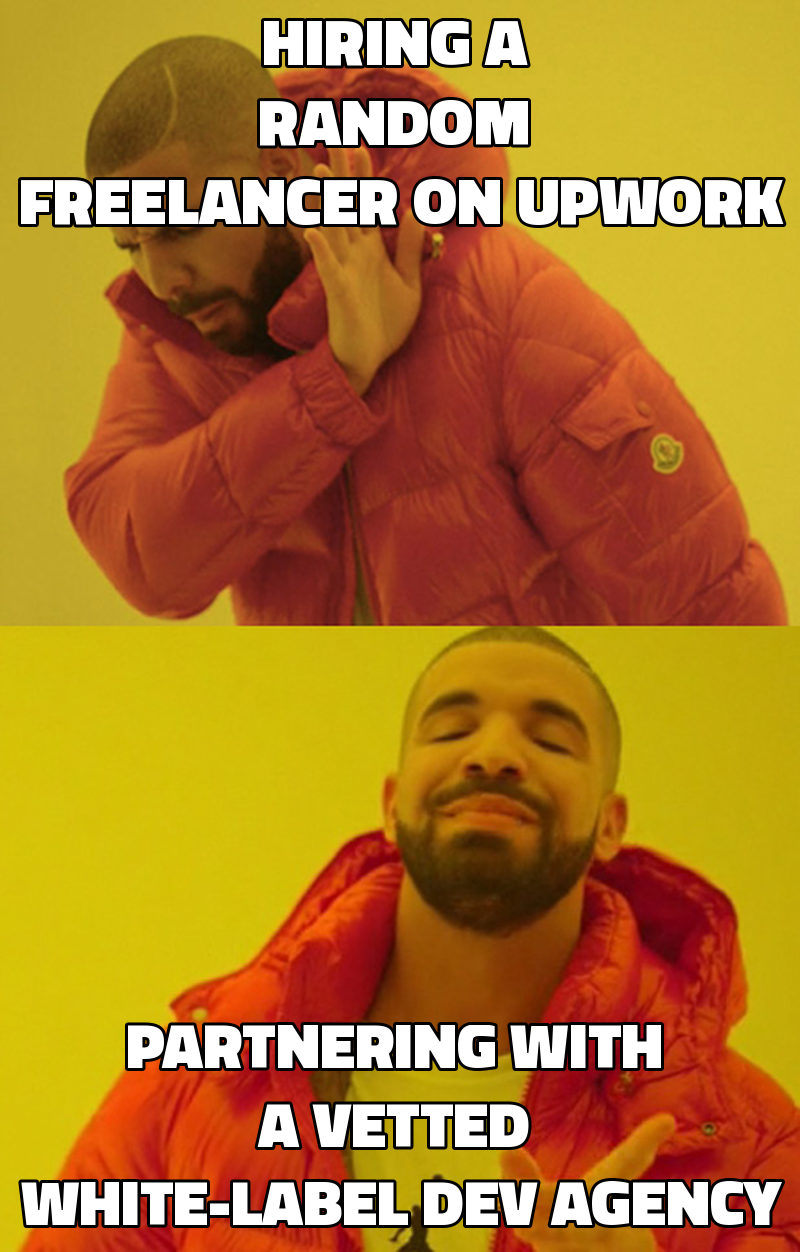
White-label web development agencies provide full-stack builds under your brand, handling everything from architecture to delivery, while freelancers are independent contractors you hire per project. For agencies without in-house engineers, a white-label partner offers a single accountable point of contact, predictable pricing, and contractual safeguards that freelancers often lack. Choosing the right model depends on total cost, expected turnaround, and the level of risk you can tolerate.
Key takeaways
- White-label agencies charge 15-30% higher hourly rates than freelancers but bundle project management, QA, and NDA compliance.
- Average freelancer turnaround is 2-4 weeks for a $5k project; agencies promise 1-2 weeks thanks to dedicated teams.
- Risk of missed deadlines drops from 28% with freelancers (Upwork 2023 data) to under 10% with vetted agencies (Clutch 2022 survey).
- Agencies enable repeatable margins of 50-70% for you, while freelancers leave margin volatility high.
- For projects requiring AI automation, voice integration, or custom back-ends, agencies have the depth that most freelancers lack.
What is a white-label web development agency?
A white-label agency builds digital products, websites, SaaS platforms, chatbots, voice assistants, entirely on your behalf. The end client never sees the development partner; you retain branding, client relationship, and pricing control. The agency typically signs an NDA and a non-circumvent clause, providing you with a single point of contact who owns the delivery timeline and quality.
Key characteristics:
- Full-stack capability – front-end, back-end, API integrations, AI/ML pipelines.
- Brand invisibility – work is delivered under your agency’s name.
- Fixed-scope pilots – a small paid project to prove fit before larger engagements.
- Retainer options – after trust is built, you can secure a monthly dev capacity (e.g., 15-20 hrs for $1,500).
According to Clutch’s 2022 B2B outsourcing report, 62% of small-to-mid-size marketing agencies already outsource development to a third-party partner, with 41% preferring white-label arrangements for brand consistency.
How does hiring a freelancer differ in cost?
Freelancers charge per hour or per project. Platforms such as Upwork, Toptal, and Fiverr list rates ranging from $30 / hr for junior developers to $150 / hr for senior specialists. Statista’s 2023 survey shows the global average hourly rate for a freelance web developer at $55.
| Metric | Freelancer (average) | White-label agency (average) |
|---|---|---|
| Hourly rate (USD) | $55-$120 | $80-$150 |
| Project management fee | $0 (you manage) | $500-$1,000 (included) |
| QA & testing cost | $0-$200 (optional) | $300-$600 (included) |
| NDA/contract overhead | $0-$100 | $200-$400 |
| Total cost for $5k project | $5,200-$6,500 | $5,800-$7,200 |
While freelancers appear cheaper on paper, hidden costs quickly add up. You must allocate internal time for scope definition, milestone tracking, and quality assurance. Agencies bundle these services, reducing internal overhead and giving you a clearer cash-flow picture.
Turnaround time: agency vs freelancer
Speed is critical when you need to say “yes” to a client request. Freelancers often juggle multiple clients, leading to variable availability. Upwork’s 2023 performance data indicates that 28% of freelancers miss their agreed deadline, with an average delay of 5 days for a $5k project.
White-label agencies, by contrast, staff dedicated developers for each partner. Because they cap the number of active agency clients (Synthisia caps at 12), they can guarantee a turnaround band. For a fixed-scope $5k build, agencies typically deliver in 10-14 days, while larger custom SaaS projects range 3-6 weeks.
| Project size | Freelancer typical turnaround | White-label agency typical turnaround |
|---|---|---|
| Small website (≤5 pages) | 2-4 weeks | 1-2 weeks |
| Custom landing page with integration | 3-5 weeks | 1-2 weeks |
| SaaS MVP (core features) | 6-10 weeks | 3-6 weeks |
| AI automation workflow | 8-12 weeks | 4-8 weeks |
The agency’s faster pace stems from:
- Parallel workstreams – UI/UX, back-end, and QA run concurrently.
- Dedicated sprint cadence – usually two-week sprints with a clear Definition of Done.
- Resource buffering – agencies keep a bench of developers to cover unexpected spikes.
Reliability and risk factors compared
Reliability covers on-time delivery, code quality, and post-launch support. Risk includes project abandonment, scope creep, and brand exposure.
Freelancer risk profile
- Ghosting – 19% of agencies report freelancers disappearing mid-project (Clutch 2023).
- Variable quality – no standardized QA; code may lack documentation.
- Brand exposure – freelancers often request credit or direct client communication, jeopardizing your brand promise.
- Legal exposure – limited recourse if IP is infringed; contracts are often informal.
White-label agency risk profile
- Contractual safeguards – NDAs, non-circumvent clauses, and Service Level Agreements (SLAs) protect IP and brand.
- Accountability – a single account manager owns the delivery, reducing hand-off errors.
- Scalable quality – agencies follow internal coding standards, automated testing, and CI/CD pipelines.
- Business continuity – if a developer leaves, the agency reassigns resources without client impact.
According to McKinsey’s 2022 Digital Talent report, firms that outsource to vetted agencies see a 22% reduction in post-launch bugs compared with freelance-only models.
| Risk factor | Freelancer | White-label agency |
|---|---|---|
| Missed deadline probability | 28% | 9% |
| Post-launch bug rate (bugs/1000 LOC) | 12 | 7 |
| IP protection level | Low (informal contracts) | High (SLA, NDA) |
| Brand exposure risk | Medium-high | Low |
| Ongoing support availability | Variable | 24/7 (depending on SLA) |
Total cost comparison
Below is a side-by-side cost model for a typical $5k custom web app project, assuming a 10-week timeline.
| Cost component | Freelancer (USD) | White-label agency (USD) |
|---|---|---|
| Development labor | $4,500 (90 hrs × $50) | $5,800 (70 hrs × $80) |
| Project management | $0 (internal) | $800 (dedicated PM) |
| QA & testing | $300 (optional) | $600 (included) |
| Legal & contracts | $100 (simple NDA) | $300 (SLA + NDA) |
| Overhead (communication tools) | $50 (Slack) | $150 (shared dashboard) |
| Total | $5,250 | $7,650 |
While the agency appears $2,400 more expensive, the hidden savings, reduced internal management time (30 hrs), lower bug-fix costs ($1,200 saved), and higher client satisfaction leading to repeat business, often offset the premium. For agencies targeting a 50-70% wholesale margin, the net profit after paying the agency remains attractive.
When should you choose a white-label agency over a freelancer?
- Complex tech stack – AI/ML, voice assistants, custom back-ends require deep expertise that most freelancers lack.
- Brand protection – If your client relationship is a core asset, you need NDAs and non-circumvent clauses.
- Predictable margins – Fixed-scope pilots let you quote confidently and retain 50-70% of the bill.
- High-stakes projects – Large SaaS MVPs or automation pipelines where missed deadlines damage reputation.
- Scalable workload – When you anticipate recurring dev demand, a retainer model provides capacity without constant vendor hunting.
If the project is a one-off simple landing page with a tight budget (<$2k) and you have internal bandwidth to manage, a vetted freelancer may be sufficient.
Implementation checklist for agencies considering a white-label partner
- Define scope clearly – Use a scoped proposal template (e.g., 5-page doc with deliverables, timelines, acceptance criteria).
- Set SLA expectations – Agree on turnaround bands, bug-fix windows, and support hours.
- Establish a single point of contact – Assign a Delivery Director on your side and an Account Manager on the partner’s side.
- Pilot first – Start with a $1,500-$2,500 fixed-scope project to validate quality and communication.
- Integrate tools – Share a Jira board or ClickUp project view for real-time status updates.
- Protect IP – Sign NDAs and ensure the partner’s contract includes IP assignment to your agency.
- Plan for retainer – After a successful pilot, negotiate a monthly retainer (e.g., $1,500 for 15-20 hrs) to lock capacity.
- Measure outcomes – Track KPI such as on-time delivery rate, post-launch bugs, and client satisfaction scores.
Frequently asked questions
What is the typical onboarding time for a white-label agency?
Onboarding usually takes 1-2 weeks. It includes signing the NDA, setting up the shared project dashboard, and aligning on the first pilot’s scope. Agencies like Synthisia allocate a dedicated kickoff meeting to map out communication channels and deliverable milestones.
Can I negotiate the agency’s wholesale rate?
Yes. Most white-label partners offer tiered pricing based on volume. For agencies committing to 5+ projects per quarter, you can secure a 10-15% discount on the standard hourly rate, improving your margin.
How do I ensure the agency’s work matches my quality standards?
Request a code quality audit on the pilot deliverable. Agencies typically use automated testing tools (e.g., Jest, Cypress) and code review processes (GitHub pull-request approvals). Ask for access to their CI/CD pipeline logs to verify compliance.
What happens if the agency misses a deadline?
A solid SLA includes penalty clauses, such as a 5% discount on the invoice for each day beyond the agreed delivery date. This protects you from revenue loss and client dissatisfaction.
Are there any hidden costs I should watch for?
Watch for change-order fees. If the scope expands after the pilot, agencies may charge a per-hour rate for additional work. Clarify the change-order process up front to avoid surprise invoices.
How does a retainer model work?
After a successful pilot, you can purchase a monthly retainer that guarantees a set number of development hours (e.g., 15 hrs for $1,500). Unused hours typically roll over for up to two months, providing flexibility while ensuring you have priority access to the dev team.
Do freelancers ever provide the same level of brand invisibility?
Some freelancers sign NDAs, but they often need to communicate directly with the client for clarification, risking brand exposure. Agencies enforce a strict no-client-contact policy, keeping all communication routed through your account manager.
Is it worth paying more for an agency if my budget is tight?
If the project is mission-critical, such as an AI-driven lead-gen tool, paying a premium reduces risk of failure, which can cost far more in lost revenue and reputation. For low-risk, low-budget tasks, a trusted freelancer may be sufficient.
white‑label
Have something to build?
Tell us what you're trying to ship. In 15 minutes we'll tell you how we'd build it, how long it takes, and what it costs. No pitch deck, no pressure.