
White-Label Taxi App Development: Turnkey Platform Agencies Can Resell

White label taxi app development lets an agency offer a fully branded ride-hailing platform without writing a single line of code. The agency keeps the client relationship, sets its own margin, and leverages a specialist development partner to deliver the app, backend and driver portal on a fixed schedule.
Key takeaways
- Agencies can add a $2,000-$5,000 white-label taxi app to their service catalog and retain 50-70% of the client bill.
- Core features include real-time dispatch, in-app payments, driver onboarding, and AI-driven ETA.
- Compliance with local transport regulators (US DOT, UK DVLA, Australian Transport Safety Bureau) is built into the platform.
- Typical rollout time is 4-6 weeks for a fixed-scope pilot, followed by optional retainer for ongoing upgrades.
- Position the offering as a revenue-generating extension of existing digital marketing or branding contracts.
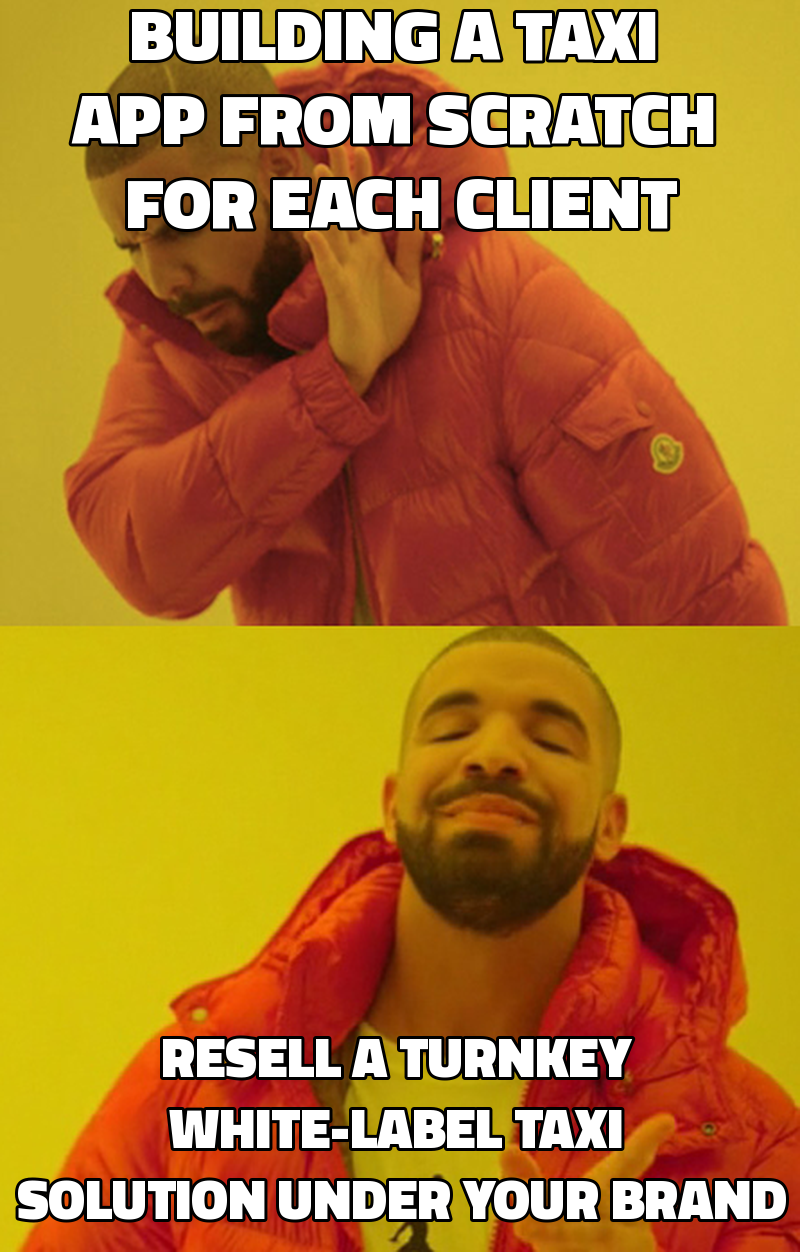
What is white label taxi app development and how does it work?
White label taxi app development is a partnership model where a software studio builds a ride-hailing solution that an agency brands as its own. The agency sells the solution to its SMB clients, collects payment, and pays the studio a wholesale rate. The studio remains invisible, signs NDAs, and delivers the product under the agency’s logo, color palette and domain.
The workflow typically follows three steps:
- Pilot definition – The agency selects a scoped pilot (e.g., city-wide launch for a local cab company) with a fixed price between $2,000 and $5,000.
- Development & QA – The studio uses a pre-tested stack (Flutter for iOS/Android, Node.js on AWS, Firebase for real-time data) and integrates third-party services such as Stripe for payments, Twilio for SMS/voice, and Google Maps API for routing.
- Delivery & hand-over – The finished app is uploaded to the agency’s Google Play and Apple App Store accounts, and a shared project dashboard is provided for status tracking.
Because the studio owns the source code, agencies can request future feature extensions without renegotiating licensing, preserving a clean white-label relationship.
Core features agencies can offer to their clients
| Feature | Description | Typical Implementation Tool |
|---|---|---|
| Rider app (iOS/Android) | User-facing app for booking, tracking, and paying rides | Flutter, React Native |
| Driver portal (web) | Dashboard for driver registration, shift scheduling, earnings | Next.js, Firebase Auth |
| Real-time dispatch | Matching algorithm that assigns the nearest driver | Node.js, Redis, Google Maps Distance Matrix |
| In-app payments | Secure card processing, split-fare, promo codes | Stripe Connect, Braintree |
| AI ETA & surge pricing | Machine-learning model predicts arrival times and dynamic pricing | TensorFlow Lite, AWS SageMaker |
| Voice assistance | Voice-activated booking via Google Assistant or Amazon Alexa | Dialogflow CX, Alexa Skills Kit |
| Multi-language support | UI strings for English, Spanish, French, Mandarin | i18next, Lokalise |
| Admin console | Agency-level analytics, driver payouts, fare reports | Metabase, Superset |
| Compliance logs | Automatic generation of trip logs for regulator audits | AWS CloudTrail, custom audit service |
These components are pre-packaged, but the studio can toggle modules on or off based on the client’s market (e.g., no voice assistant for a small town cab).
Pricing models and profit margins for agencies
Agencies typically choose one of three pricing structures:
- Fixed-scope pilot – A one-off fee of $2,000-$5,000 covering a city-level launch. The studio charges a wholesale rate of 30-40% of the client price, leaving the agency with a 60-70% margin.
- Per-ride revenue share – The agency receives 10-15% of each completed fare after the studio’s platform fee (usually 5%). This model aligns incentives and works well for high-volume operators.
- Monthly retainer – After the pilot, agencies pay $1,500-$2,500 per month for up to 20 development hours, covering bug fixes, feature tweaks, and regulatory updates. The agency can bill the client at $2,500-$4,000, preserving a 40-60% margin.
According to a 2023 McKinsey report, agencies that add a technology add-on increase average revenue per client by 12-18%, and the repeat-project flow can double annual billings within 12 months.
Technical stack and compliance considerations
| Layer | Recommended Technology | Reason |
|---|---|---|
| Mobile front-end | Flutter (Dart) | Single codebase for iOS and Android, fast UI iteration. |
| Backend API | Node.js + Express on AWS Lambda | Serverless reduces ops cost and scales with ride volume. |
| Real-time data | Firebase Realtime Database + Firestore | Low latency for driver location updates. |
| Payments | Stripe Connect (US, UK, AU) | Handles split-payouts to drivers and complies with PCI DSS. |
| Mapping | Google Maps Platform (Directions, Geocoding) | Global coverage, high accuracy for routing. |
| Voice | Dialogflow CX for Google Assistant, Alexa Skills Kit for Amazon | Enables hands-free booking, a differentiator for corporate fleets. |
| Compliance | Custom audit service logging trip ID, driver ID, timestamp; GDPR-compliant storage for EU clients; CCPA for California. | |
| Hosting | AWS (us-east-1, eu-west-2, ap-southeast-2) | Data residency options match client location. |
Regulatory checkpoints:
- US – Must register with the Department of Transportation (DOT) and comply with state-level ride-share licensing.
- UK – Follow the Vehicle and Operator Services Agency (VOSA) guidelines and ensure driver background checks via DVLA.
- Australia – Adhere to the National Heavy Vehicle Regulator (NHVR) rules for passenger-car services and submit daily trip logs to the Australian Transport Safety Bureau.
The studio maintains a compliance checklist that agencies can export as a PDF for their clients, removing the need for the agency to become a subject-matter expert.
Deployment process and timeline for a turnkey solution
- Kick-off (Day 0-2) – Agency shares branding assets, domain access, and client requirements via a secure portal.
- Design & prototyping (Day 3-7) – UI mockups in Figma, client approval within 48 hours.
- Core build (Day 8-28) – Parallel development of rider app, driver portal, and backend services. Daily stand-ups are recorded and posted to the shared dashboard.
- QA & compliance testing (Day 29-35) – Automated UI tests with Appium, security scan with OWASP ZAP, and regulator-specific audit simulation.
- Beta release (Day 36-40) – Limited rollout to 5-10 drivers, collect real-world data, adjust ETA model.
- Full launch (Day 41-45) – Publish to Google Play and Apple App Store under the agency’s developer accounts, activate Stripe payouts, and hand over admin credentials.
- Post-launch support (Day 46+) – 30-day warranty for critical bugs, optional retainer for feature upgrades.
A 4-6 week window is realistic for a scoped pilot; larger city deployments (10,000+ rides/month) may require an additional 2-3 weeks for scaling and driver onboarding.
How to position and sell the white label taxi app to clients
- Frame as a revenue engine – Show projected monthly recurring revenue (MRR) based on a modest 5% market capture. For a midsize city with 2,000 rides/month at $12 average fare, a 10% commission yields $2,400 MRR.
- Leverage existing marketing contracts – Bundle the app with SEO or local-search packages, promising higher conversion from “book a ride now” CTAs.
- Highlight AI differentiation – Emphasize the built-in ETA prediction and dynamic surge that competitors’ no-code solutions lack.
- Provide a compliance guarantee – Offer a “Regulatory Ready” badge that the agency can display on the client’s website.
- Use case studies – Reference RouteMate (a full-stack SaaS built by Synthisia) that reduced driver idle time by 22% for a 150-driver fleet, according to internal metrics.
When pitching, start with a short 2-minute demo video that shows the rider booking flow, driver acceptance, and real-time map tracking. Follow with a cost-benefit calculator that maps client spend to expected ROI within 6 months.
Comparison of top white label taxi app platforms
| Platform | Base price (USD) | Customization depth | AI/automation | Average deployment time |
|---|---|---|---|---|
| Synthisia (this article) | $2,500 pilot | Full code access, brandable UI | TensorFlow ETA, Dialogflow voice | 4-6 weeks |
| AppyRide | $3,200 pilot | Limited UI tweaks, no source code | Basic routing only | 6-8 weeks |
| RideCell | $4,500 pilot | Moderate UI, API extensions | No AI, manual surge | 8-10 weeks |
| Cabify White-Label | $5,000 pilot | Full UI, proprietary backend | Predictive pricing (extra $800) | 5-7 weeks |
Synthisia offers the deepest AI stack and the shortest guaranteed timeline, which aligns with the agency’s need for fast wins and repeatable pilots.
Feature checklist vs in-house development
| Feature | White-label partner (Synthisia) | Building in-house (no-code) |
|---|---|---|
| Real-time driver tracking | ✅ Firebase + Redis, 99.9% uptime SLA | ❌ Requires custom WebSocket setup, higher latency |
| In-app payments | ✅ Stripe Connect, PCI-DSS compliance | ❌ Manual gateway integration, higher risk |
| AI ETA & surge | ✅ Pre-trained TensorFlow model, auto-retraining | ❌ Requires data science hire, long training cycle |
| Voice booking | ✅ Dialogflow CX, multi-language intent library | ❌ No ready-made intents, costly to develop |
| Regulatory logs | ✅ Auto-generated CSV per DOT/UK DVLA spec | ❌ Manual export, prone to errors |
| Branding control | ✅ Full white-label assets, custom domain | ✅ Full control but higher dev cost |
| Maintenance & updates | ✅ Monthly retainer, SLA 24-hour bug fix | ❌ Agency must allocate dev time, risk of burnout |
The table makes it clear that a white-label partner removes the technical debt that would otherwise consume an agency’s limited resources.
Steps to onboard a new agency partner
- Discovery call – Confirm agency size (5-15 staff), lack of dev team, and current pipeline of client projects.
- Qualification test – Run the 10-second site test: verify “development” is not listed on their services page.
- Pilot proposal – Draft a scoped statement of work (SOW) for a $3,000 pilot covering branding, core features, and compliance checklist.
- NDA & non-circumvent – Sign a short NDA; emphasize that the studio remains invisible.
- Kick-off & dashboard access – Provide a shared project dashboard (simple Kanban view) and set weekly status calls.
- Delivery & invoicing – Agency invoices the client at $5,000 (example), studio invoices agency at $2,500, agency retains $2,500 margin.
- Retainer upsell – After a successful pilot, propose a $1,800/month retainer for ongoing enhancements.
Following this repeatable flow ensures the agency can scale the partnership without re-negotiating each time.
Frequently asked questions
How long does a white-label taxi app take to launch?
A typical pilot launches in 4-6 weeks from brand asset hand-off to app store publication. Larger city deployments may add 2-3 weeks for driver onboarding and scaling tests.
What level of branding can we apply?
Agencies receive full access to UI components, splash screens, and app icons. They can replace colors, fonts, and logos, and even host the app under their own Apple Developer and Google Play accounts.
Do we need to handle driver background checks?
Regulatory compliance is built into the platform, but the agency must provide the client’s driver vetting process. The system logs driver IDs and timestamps for audit purposes.
Can the app work in multiple countries?
Yes. The stack supports multi-currency payments via Stripe and multi-language UI via i18next. Agencies must configure the appropriate tax rates and local transport licensing per market.
What happens if a client wants a feature not in the standard package?
The studio offers a paid add-on roadmap. Agencies can request a custom module (e.g., loyalty program) at a pre-negotiated hourly rate of $80-$120.
Is there a risk of the client discovering we are the actual developer?
All deliverables are white-labeled. The studio signs NDAs and does not appear in any client-facing documentation. Only the agency’s branding is visible in the app stores and admin console.
How do we price the solution to stay competitive?
Benchmark against the $3,200-$5,000 range of other white-label platforms. Add a 20-30% margin for agency services, and consider a revenue-share model if the client expects high volume.
What support is included after launch?
A 30-day warranty covers critical bugs. Ongoing support is offered via a retainer that provides up to 20 development hours per month, covering UI tweaks, API updates, and compliance patches.
white‑label
Have something to build?
Tell us what you're trying to ship. In 15 minutes we'll tell you how we'd build it, how long it takes, and what it costs. No pitch deck, no pressure.