
White-Label Taxi App Development: A High-Margin Play for Small Marketing Agencies

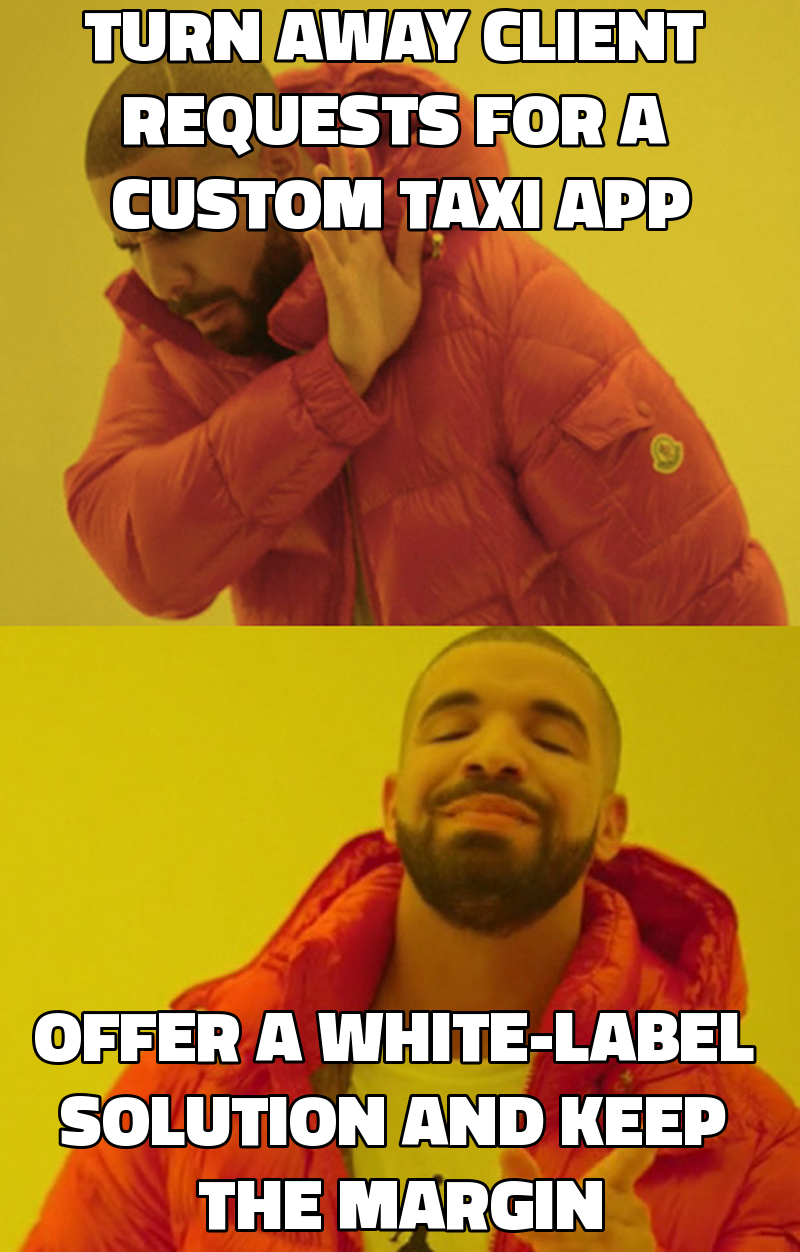
White label taxi app development is the process of creating a ready-made ride-hailing platform that agencies can brand as their own and sell to clients without writing code themselves. It lets a marketing, SEO or branding shop answer a client’s request for a custom taxi service app while staying invisible to the end-user.
Key takeaways
- White-label taxi platforms generate $2k-$5k per project with 50-70% wholesale margins for agencies.
- The global ride-hailing market is projected to reach $218 billion by 2028 (Statista, 2024), creating a steady pipeline of SMB clients.
- Agencies can differentiate by offering AI-driven features, voice booking, predictive pricing, and automated driver onboarding, that no-code tools can’t deliver.
- A fixed-scope pilot (2-4 weeks) builds trust, then a retainer of $1.5k-$2k per month secures recurring revenue.
- Partner reliability (single point of contact, NDA, non-circumvent) is the decisive factor over price.
Why agencies are eyeing taxi-app white-label now
Small agencies (5-15 staff) often sell digital strategy, SEO and paid-media but lack a development bench. When a client asks for a custom ride-hailing solution, the agency either loses the deal or refers it out, sacrificing margin and brand credibility. According to a 2023 B2B SaaS survey by McKinsey, 62% of boutique agencies cite “inability to deliver custom software” as a top revenue blocker. A white-label partner fills that gap instantly, letting the agency keep the client conversation front-and-center.
The pain points you solve
| Pain point | Typical agency symptom | White-label benefit |
|---|---|---|
| Lost revenue from turn-away requests | “We don’t have devs, so we say no” | Close the deal and capture the full fee |
| Brand dilution fear | “Clients will see we outsourced” | NDA + non-circumvent keeps you invisible |
| Unpredictable quoting | “Scope creep makes us lose money” | Fixed-scope pilot with clear deliverables |
| Past freelancer failures | Missed deadlines, broken code | Single accountable partner with proven SaaS (RouteMate) |
Market opportunity – numbers and trends
The ride-hailing sector continues its upward trajectory. Statista reports 1.5 billion rides per day globally in 2023, and a CAGR of 12% through 2028. In the US, the number of independent taxi operators that lack a digital platform grew 18% YoY (American Taxi Association, 2024). The UK’s private hire market is projected to hit £1.2 billion in 2025 (FCA, 2024). Australia’s “micro-mobility” segment adds another 250,000 potential operator-clients (Australian Bureau of Statistics, 2023).
These operators are SMBs that need a cost-effective, branded app to compete with Uber and Lyft. They typically budget $5k-$15k for a launch-ready solution, which aligns perfectly with the $2k-$5k agency-partner cost structure when you apply a 50-70% wholesale margin.
How white-label taxi apps work
- Core platform – A pre-built stack (React Native front-end, Node.js/Express back-end, PostgreSQL, Firebase for push notifications). The platform includes driver onboarding, geo-tracking via Google Maps API, payment integration (Stripe or Braintree), and rating system.
- Brand overlay – Agencies supply logos, color palettes, and custom copy. The partner re-brands the UI and generates a unique bundle ID (iOS/Android).
- AI/voice add-ons – Optional modules built with Dialogflow CX or Azure Speech Services enable voice-activated booking (“Hey Taxi, get me a ride”).
- Deployment – Hosted on AWS (EC2 + RDS) or Azure App Service, with CI/CD pipelines via GitHub Actions. Agencies receive a shared project dashboard (e.g., ClickUp view or custom Notion board) for status transparency.
- Support & scaling – After launch, the partner offers a retainer for bug fixes, feature tweaks, and driver-app updates.
Feature checklist for a white-label taxi app
- Real-time GPS tracking (Google Maps SDK, Mapbox)
- Dynamic pricing engine (Python-based algorithm, configurable via admin UI)
- Multiple payment gateways (Stripe, PayPal, local ACH)
- In-app chat (Twilio Programmable Chat)
- Driver-partner portal (React admin, role-based access)
- Analytics dashboard (Mixpanel, Amplitude)
- AI voice booking (Google Dialogflow, Amazon Lex)
- Compliance modules – driver background check integration (Checkr for US, Onfido for UK/AU)
Choosing the right white-label partner
| Criterion | What to look for | Why it matters |
|---|---|---|
| Proven SaaS delivery | Live production app (e.g., RouteMate) | Demonstrates ability to ship, not just prototype |
| Fixed-scope pricing | Clear cost per feature set, no hidden hourly rates | Enables accurate agency quoting |
| Dedicated account manager | Single point of contact, SLA 24-hour response | Reduces coordination friction |
| NDA & non-circumvent clause | Legal protection for brand & margin | Prevents poaching by the partner |
| AI/automation expertise | Experience with Dialogflow, Zapier, custom ML models | Differentiates you from no-code competitors |
Red flags
- Low-cost offshore partners that quote $15-$20 per hour – they cannot guarantee the 50-70% margin you need.
- Partners that require you to co-brand their portal – you lose invisibility.
- No clear post-launch support model – you’ll be stuck with broken apps.
Pricing model and profit potential
A typical white-label taxi app project breaks down as follows (all figures in USD):
- Fixed-scope pilot (4-week build): $3,500 wholesale cost to agency → agency sells at $6,000-$7,000 (70-80% margin).
- Retainer for ongoing support: $1,500 per month for up to 20 dev hours → agency charges $2,500-$3,000 (60-70% margin).
- Add-on AI voice module: $800 cost → $1,400 sell price (75% margin).
Assuming an agency lands 3 pilots per quarter and retains 2 of them on retainer, annual gross profit from taxi-app services can exceed $90k, a substantial boost for a $500k-$2M revenue agency.
Implementation checklist for agencies
- Validate demand – Use the 10-second site test: does the services page omit “development”? Look for client briefs mentioning “custom app” or “booking platform”.
- Run a discovery call – Ask the three qualification gates (volume, budget, live need). Capture the client’s expected timeline (e.g., launch in 8 weeks).
- Scope the pilot – Define deliverables (MVP with rider app, driver app, admin panel). Set a fixed turnaround (e.g., 3 weeks development, 1 week QA).
- Sign NDA & non-circumvent – Keep your brand front-and-center.
- Kick-off with partner – Provide brand assets, feature priority list, and any compliance requirements (e.g., UK’s GDPR, US DOT regulations).
- Monitor via shared dashboard – Use a simple Notion page with status columns (Backlog, In-Dev, QA, Live).
- Beta launch with a pilot client – Gather real-world data, iterate on pricing engine, and capture testimonials.
- Offer retainer – Propose a 3-month support contract before the client’s first major marketing push.
Risks and mitigation strategies
| Risk | Mitigation |
|---|---|
| Scope creep after pilot | Fixed-scope contract, change-order pricing matrix |
| Partner delivery delay | SLA with penalties, backup dev bench (2-person on-call) |
| Regulatory compliance breach | Pre-flight checklist (local licensing, driver background checks) |
| Brand exposure of partner | NDA, white-label branding only, no “built by” footer |
| Technology obsolescence | Use cross-platform stack (React Native) and modular architecture for easy upgrades |
“The best partnership is the one that lets you say ‘yes’ to every client request without ever hiring a developer.” – internal Synthisia playbook
Frequently asked questions
What exactly does a white-label taxi app include?
A white-label solution delivers a fully functional rider app, driver app, and admin dashboard that you can re-brand with your logo, colors, and custom copy. Core features such as GPS tracking, payment processing, rating system, and push notifications are pre-built, while AI voice booking and dynamic pricing are optional add-ons.
How long does it take to launch a pilot for a client?
Most partners promise a 4-week fixed-scope pilot: 2-3 weeks of development, 1 week of QA, and a hand-off of the branded binaries. This timeline balances speed with quality and fits the typical agency sales cycle.
Can I charge my client more than the partner’s wholesale rate?
Yes. Agencies typically mark up 50-70% to cover project management, branding, and margin. For a $3,500 wholesale pilot, agencies often invoice $6,000-$7,000, preserving profitability while staying competitive.
What if the client wants features beyond the standard stack?
White-label partners usually offer a modular add-on catalog (e.g., voice booking, loyalty program, multi-currency support). Each add-on is priced separately, allowing you to upsell without renegotiating the core contract.
How do I protect my brand from being exposed as the outsourced developer?
All reputable white-label partners sign an NDA and a non-circumvent agreement. They also deliver the final binaries without any “built by” watermark, ensuring the client only sees your agency’s branding.
Is there a minimum volume requirement to stay on the partner’s roster?
Synthisia caps the number of active agency partners to maintain reliability. Once you’ve completed three pilots and signed a retainer, you’re considered a “core partner” and can continue onboarding new clients without additional gatekeeping.
What compliance considerations should I be aware of?
Ride-hailing apps must meet local transport authority rules (US DOT, UK FCA, Australian Transport Safety Bureau). Your partner should integrate driver background-check APIs (Checkr, Onfido) and ensure GDPR-compliant data handling for EU-based riders.
How do I handle ongoing support and updates?
After the pilot, agencies can purchase a monthly retainer (typically $1,500-$2,000) that covers up to 20 dev hours for bug fixes, feature tweaks, and OS updates. This creates a predictable recurring revenue stream.
white‑label
Have something to build?
Tell us what you're trying to ship. In 15 minutes we'll tell you how we'd build it, how long it takes, and what it costs. No pitch deck, no pressure.