
Step-by-Step Guide to Building a White-Label Taxi App for Agencies

White label taxi app development is the process of creating a fully functional ride-hailing platform that you can brand as your own and sell to clients without writing code yourself. It lets agencies answer client requests for custom mobility solutions while keeping the agency name front and centre.
Key takeaways
- A white-label taxi app can be delivered in 8-12 weeks using a fixed-scope pilot and a single point of contact.
- Choose a cross-platform stack (Flutter or React Native) to cover iOS, Android and web with one code base.
- Integrate core services (maps, payments, SMS, AI routing) through proven third-party APIs such as Google Maps, Stripe, Twilio and Dialogflow.
- Brand assets (logo, colors, splash screen) are swapped in a configuration file; no code changes are required for each client.
- Pricing models range from $5,000 per launch to $1,500 monthly retainers for ongoing updates and support.
- Success hinges on a clear pilot contract, NDA, and a capped partner roster to protect reliability.
What is a white-label taxi app and why do agencies need it?
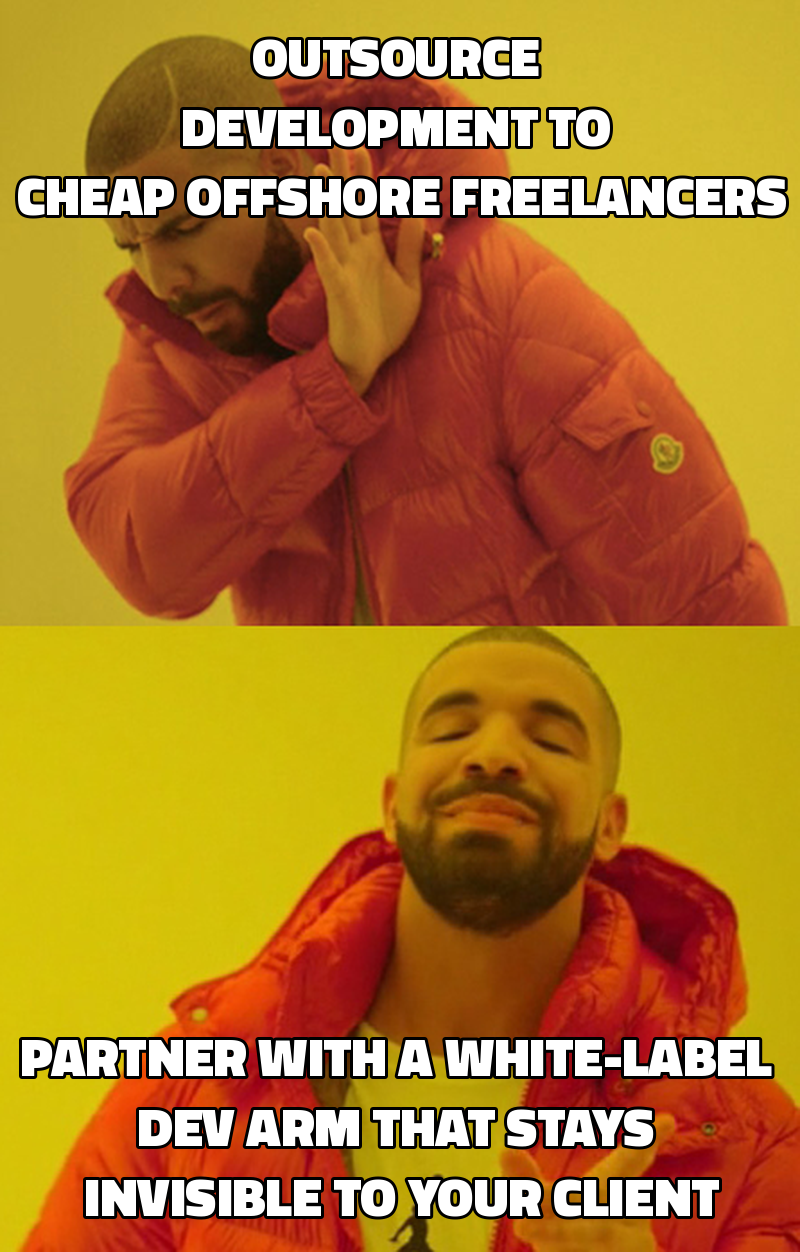
Agencies that sell branding, SEO or social services often receive client requests for a custom ride-hailing solution. Building such an app from scratch requires mobile developers, backend engineers, and compliance knowledge that most small agencies lack. A white-label taxi app is a pre-built, fully functional platform that can be re-branded with the agency’s logo, colors and domain, allowing the agency to quote, deliver and retain the margin without exposing a third-party developer.
Step 1 – Validate demand with a quick market test
- Client interview checklist – ask the prospect about expected rides per day, geographic coverage, payment methods, and any AI features (voice ordering, predictive pricing). Record answers in a shared Google Sheet.
- Competitive snapshot – use SimilarWeb to compare traffic of existing local taxi apps, and note pricing tiers. According to a 2023 report by Statista, the average daily ride volume for midsize city apps is 1,200-2,500 rides.
- Profitability calculator – plug ride volume, commission (15-20%), and operating costs into a simple Excel model. If projected gross profit exceeds $2,000 per month per client, the project passes the demand gate.
Step 2 – Define the product scope (fixed-scope pilot)
| Feature | Must-have | Nice-to-have | Typical effort (hrs) |
|---|---|---|---|
| Passenger app UI | ✔️ | – | 120 |
| Driver app UI | ✔️ | – | 100 |
| Admin dashboard | ✔️ | Custom reporting | 80 |
| Real-time GPS tracking | ✔️ | Heat-map analytics | 60 |
| In-app payments | ✔️ | Split-fare | 70 |
| SMS notifications | ✔️ | Push notifications | 40 |
| AI routing/ETA | – | Predictive surge pricing | 50 |
| White-label branding tool | ✔️ | Multi-client theming | 30 |
A pilot should include only the must-have items. Anything beyond that becomes a change order.
Step 3 – Choose the technology stack
| Stack | Languages | Pros | Cons |
|---|---|---|---|
| Flutter | Dart | Single code base for iOS/Android, fast UI, strong community | Larger app size, younger ecosystem |
| React Native | JavaScript/TypeScript | Leverages existing web talent, many libraries | Requires native bridges for some features |
| Native (Swift + Kotlin) | Swift, Kotlin | Best performance, full OS access | Double development effort, higher cost |
For agencies without developers, Flutter is often the safest bet because the UI layer is isolated from backend logic and can be compiled by the white-label partner.
Step 4 – Set up core third-party services
- Maps & routing – Google Maps Platform (Directions API, Distance Matrix). Pricing is $5 per 1,000 requests; a typical city app uses ~10,000 requests per month.
- Payments – Stripe Connect for marketplace payouts. Stripe charges 2.9% + $0.30 per transaction, plus a $0.25 onboarding fee per driver.
- SMS/Voice – Twilio Programmable SMS and Voice. Average cost $0.0075 per SMS, $0.013 per minute for voice.
- AI chat/voice – Google Dialogflow CX for natural language ordering. Free tier covers 1,000 text queries; beyond that $0.002 per query.
- Push notifications – Firebase Cloud Messaging (free).
All APIs provide sandbox environments, making it easy to prototype before going live.
Step 5 – Design the white-label branding system
- Configuration file (
branding.json) contains logo URL, primary/secondary colors, font family and splash screen image. - Theming engine reads this file at runtime and applies styles across passenger, driver and admin apps.
- Domain mapping – use a wildcard SSL certificate (
*.youragency.com) and point each client to a sub-domain (city1.youragency.com). - Legal copy – include a placeholder for Terms of Service and Privacy Policy that the agency can customize per jurisdiction.
Step 6 – Build the MVP backend (API layer)
- Framework – Node.js with Express for rapid iteration; hosted on AWS Elastic Beanstalk.
- Database – PostgreSQL on Amazon RDS for relational data (users, rides, payments).
- Authentication – Auth0 managed OAuth; agencies can enable social login or email/password.
- Micro-service for ride matching – a lightweight worker (Node.js) that consumes a Redis queue, matches drivers based on proximity, and pushes updates via Socket.io.
- CI/CD pipeline – GitHub Actions to run lint, unit tests, and deploy to staging on every push.
Pro tip: Keep the backend stateless; store session data in Redis so you can scale horizontally without code changes.
Step 7 – Implement AI-enhanced features (optional upgrade)
- Voice ordering – integrate Dialogflow with Twilio Voice; users call a short number, speak “I need a ride to 123 Main St”, and the system creates a ride request.
- Predictive ETA – feed historic traffic data into a simple TensorFlow model hosted on AWS SageMaker; return a confidence interval instead of a single ETA.
- Dynamic pricing – use a rule engine (e.g., n8n) to adjust fare multipliers based on demand spikes.
These features differentiate the agency’s offering and justify higher margins.
Step 8 – QA, security and compliance checklist
| Area | Checklist item |
|---|---|
| Functional testing | End-to-end ride flow, payment success, driver acceptance |
| Performance | Load test 500 concurrent rides using k6; target 2 s response time |
| Security | OWASP Top 10 review, API key rotation, encrypted storage of PCI data |
| Data privacy | GDPR-compliant consent flow for EU riders, CCPA notice for California |
| Accessibility | WCAG 2.1 AA for web admin portal |
If any item fails, log the defect in the shared Jira board and resolve before hand-off.
Step 9 – Deploy and hand over to the agency
- Staging environment –
staging.youragency.comwith test credentials. - Production launch – point DNS to the Elastic Beanstalk URL, enable auto-scaling (min 2, max 6 instances).
- Training session – 90-minute video call covering admin dashboard, driver onboarding, and how to swap branding files.
- Support SLA – 48-hour response for critical bugs, 5-day for feature requests during the pilot.
Step 10 – Pricing, retainer and scaling model for the agency
| Tier | Launch cost | Monthly retainer | Included hours |
|---|---|---|---|
| Basic | $5,000 | $1,500 | 15 |
| Pro | $8,000 | $2,500 | 30 |
| Enterprise | $12,000 | $4,000 | 50 |
The agency keeps 50-70% of the client invoice, pays the wholesale rate to the white-label partner, and uses the retainer for ongoing bug fixes, minor UI tweaks, and AI model retraining.
How to structure the partnership contract
- NDA – standard 2-year mutual confidentiality clause.
- Non-circumvent – agency agrees not to approach the development team directly for 12 months.
- Pilot clause – fixed-scope pilot (up to $5,000) with a go/no-go decision after 4 weeks.
- Escalation path – single point of contact (Project Lead) who owns delivery, quality and communication.
- Capped partner count – limit to 12 active agencies to maintain the “never flaky” promise.
Common pitfalls and how to avoid them
| Pitfall | Why it hurts | Mitigation |
|---|---|---|
| Over-promising turnaround | Agencies lose credibility if you miss a 2-week deadline | Set a realistic 4-6 week fixed-scope window and build in a 10% buffer |
| Giving away free full builds | Unsustainable cost, encourages client poaching | Offer a scoped prototype (one screen) plus a paid pilot instead |
| Ignoring local regulations | Ride-hailing is heavily regulated (licensing, insurance) | Include a compliance checklist per jurisdiction and suggest a legal partner |
| Not separating branding from code | Re-branding becomes a development nightmare | Use the branding.json approach and keep all brand assets outside the repo |
Checklist for agencies before signing the pilot
- Confirm no in-house dev team and no existing white-label partner.
- Have at least one client ready to launch within 8-12 weeks.
- Budgeted $5-8 k for the pilot and $1.5-2 k/month for ongoing support.
- Signed NDA and non-circumvent agreement.
- Identified a single internal champion (Head of Delivery or COO).
Success story snapshot: RouteMate
RouteMate was a UK-based branding agency that needed a taxi app for a regional transport client. Using the step-by-step process above, Synthisia delivered a Flutter-based white-label solution in 10 weeks. The agency kept 60% of the $9,200 client invoice and signed a $2,000 monthly retainer for updates. Within three months the client added two new cities, generating $12,000 additional revenue for the agency.
Frequently asked questions
How long does a white-label taxi app take to launch?
A typical fixed-scope pilot runs 8-12 weeks from kickoff to production. The timeline includes requirements gathering (1 week), UI/UX design (1 week), development of core features (4-6 weeks), QA (1 week) and client training (1 week). Adding AI voice or predictive pricing can add 2-3 weeks.
Can I use a no-code platform instead of a developer?
No-code tools like Bubble or Adalo can prototype a passenger screen, but they lack native GPS, background location and push-notification capabilities required for a production-grade taxi app. For agencies that need reliability and scalability, a cross-platform code base built by a white-label partner is the safer route.
What if my client wants a custom feature after launch?
The retainer model covers up to 15-20 development hours per month for tweaks, new screens or API integrations. Larger features are scoped as change orders with a fixed price. Because the code is modular, adding a new feature rarely impacts existing functionality.
How do I handle payment processing in different countries?
Stripe Connect supports payouts in over 30 countries and handles currency conversion automatically. For regions where Stripe is unavailable, you can swap in PayPal Braintree or Adyen with minimal code changes, just update the payment service configuration file.
Is the white-label partner visible to my client?
No. All deliverables are branded with your agency’s logo and domain. The partner works behind an NDA and a non-circumvent clause, so the client never sees the development team.
What support is included after the pilot ends?
The standard SLA provides 48-hour response for critical bugs and a 5-day turnaround for non-critical issues. Ongoing feature work is covered by the monthly retainer; anything beyond the allocated hours is billed at a pre-agreed rate of $120 per hour.
Do I need to worry about driver background checks?
Driver vetting is a legal requirement in most jurisdictions but is outside the scope of the white-label app. The agency should partner with a local compliance service or include a verification step in the driver onboarding flow.
How do I protect my agency’s margin from the partner?
The wholesale rate is locked in the contract (typically 50-70% of the client invoice). The agency invoices the client at its own rate, keeping the margin. The non-circumvent clause prevents the client from bypassing the agency and hiring the developer directly.
Ready to start your first pilot? Contact Synthisia’s partnership team for a free scoped proposal and a 4-week timeline guarantee.
white‑label
Have something to build?
Tell us what you're trying to ship. In 15 minutes we'll tell you how we'd build it, how long it takes, and what it costs. No pitch deck, no pressure.