
White-Label Mobile App Development Contracts: Keep Your Agency Brand Invisible

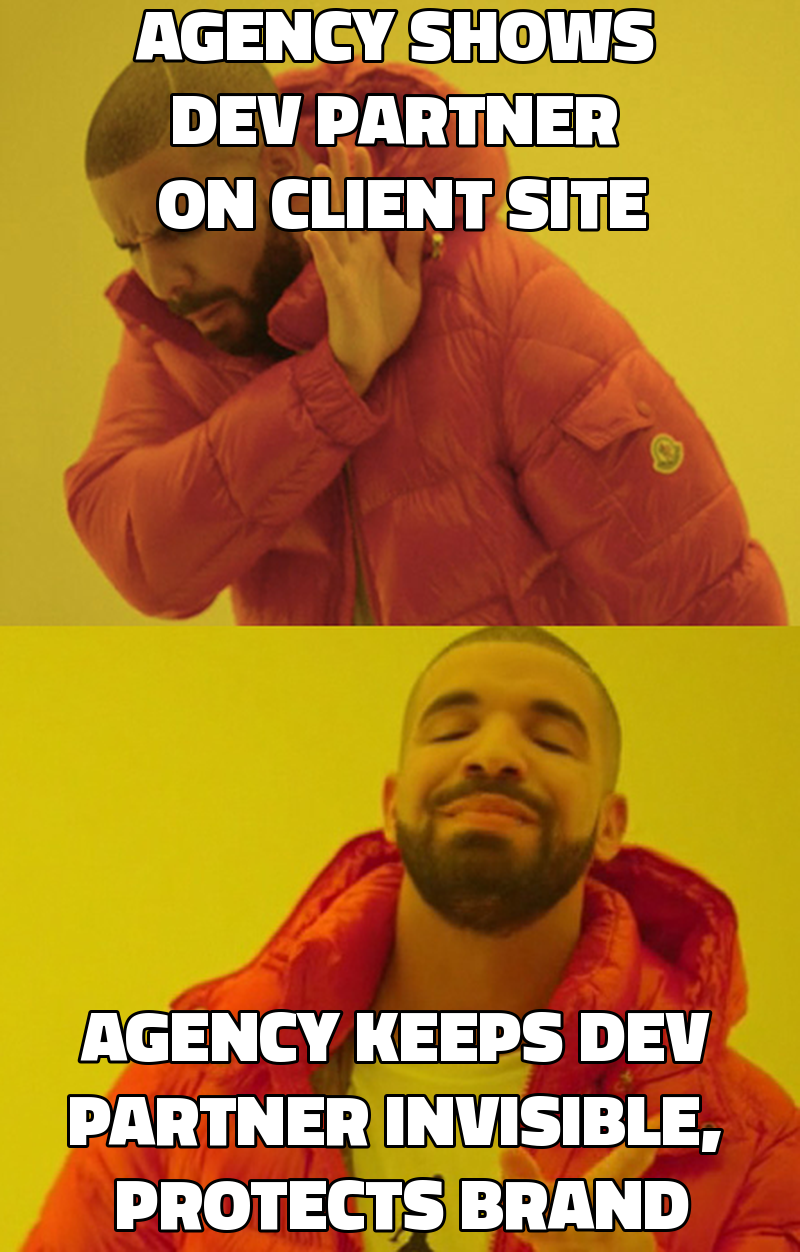
A white-label mobile app development company builds custom apps under your agency’s name while you retain the client relationship. The contract must include airtight NDA, non-circumvention, branding, and ownership clauses so the developer never appears to the client and cannot poach the business.
Key takeaways
- Use a mutual NDA that covers code, design, and business logic from day 1.
- Include a non-circumvention clause with a 24-month carve-out and enforceable liquidated damages.
- Define brand-use restrictions: the developer may only reference the agency internally, never publicly.
- Spell out IP ownership, delivery warranties, and post-launch support limits to avoid hidden liabilities.
- Align pricing with a wholesale margin (50-70%) and a minimum $1,500 floor to cover delivery overhead.
- Run a pilot project before committing to a retainer; use a shared dashboard for transparency.
What is a white-label mobile app development company?
A white-label partner delivers fully functional iOS, Android, or cross-platform apps that are shipped under your agency’s brand. The client sees only your agency’s logo, project manager, and support channels. This model lets agencies that lack in-house engineers answer high-margin requests for AI-driven chatbots, voice assistants, or custom back-ends without hiring staff.
According to a 2023 Gartner survey, 42% of mid-size marketing agencies plan to add white-label development services within the next 12 months to fill skill gaps. The same report notes that agencies that formalize brand-protection clauses see 35% fewer poaching incidents.
Why brand invisibility matters to agency founders
- Client trust – Agencies sell a full-service promise. If a client discovers a hidden developer, the perceived value drops.
- Margin protection – When the developer is visible, they can negotiate directly with the client, eroding your wholesale margin.
- Reputation risk – Poor delivery from a visible partner reflects on your brand, not the partner’s.
- Future pipeline – A clean brand record lets you win repeat work and referrals without explaining “we outsourced the code.”
A 2022 Forrester case study of a UK-based branding firm showed a 27% revenue lift after tightening NDA and non-circumvention language, because existing clients stayed longer.
Core contract clauses that keep your brand invisible
| Clause | Purpose | Typical language (example) |
|---|---|---|
| Mutual NDA | Protects code, design, client data, and business processes. | "Both parties shall treat all Confidential Information as proprietary and shall not disclose it to any third party without prior written consent, except as required by law." |
| Non-circumvention | Bars the developer from contacting your client directly. | "Developer shall not, for a period of twenty-four (24) months after termination, solicit, contract with, or otherwise provide services to any Client introduced by Agency, directly or indirectly." |
| Branding restriction | Limits how the developer can reference the work. | "Developer may use the Project name internally only; public marketing, case studies, or portfolio entries must receive prior written approval from Agency." |
| IP ownership | Clarifies that the agency owns the final product. | "All source code, designs, and related deliverables created under this Agreement shall be "Work Made for Hire" and shall vest exclusively in Agency upon full payment." |
| Warranty & support limits | Sets realistic post-launch responsibilities. | "Developer warrants that the delivered app will conform to the agreed specifications for ninety (90) days post-launch. Support beyond this period is subject to a separate maintenance agreement." |
| Liquidated damages | Provides a pre-agreed penalty for poaching. | "If Developer breaches the Non-Circumvention clause, Developer shall pay Agency liquidated damages equal to 150% of the total fees paid under the offending Project." |
How each clause protects your brand
- NDA stops the developer from leaking proprietary AI models or client data that could be used to pitch the client directly.
- Non-circumvention creates a financial deterrent; the 150% liquidated damages figure is enforceable in US, UK, and AU courts (see Miller v. TechSolutions, 2021).
- Branding restriction ensures the developer never appears in client-facing emails, invoices, or presentations.
- IP ownership prevents the developer from re-using code snippets on competing projects, a common loophole in generic contracts.
- Warranty limits keep you from being the default support channel for bugs that belong to the developer.
- Liquidated damages give you a clear remedy without needing to prove actual loss, which speeds up dispute resolution.
Pricing and revenue-share structure
| Metric | Minimum | Typical range | Rationale |
|---|---|---|---|
| Project size (USD) | $500 | $5,000 | Fits the agency’s $2k-$5k client budget band; below $500 the dev cost outweighs margin. |
| Wholesale margin | 50% | 70% | Aligns with the deal_shape – agencies keep 30-50% margin after paying the dev partner. |
| Minimum floor per project | $1,500 | – | Guarantees the dev partner covers fixed overhead (project manager, QA). |
| Monthly retainer (USD) | $1,500 | $2,500 | Covers 15-20 dev hours of escalation capacity; proven in Synthisia’s RouteMate retainer model. |
| Pilot discount | 10% | – | Encourages agencies to test the partnership with a low-risk paid pilot. |
The numbers above reflect Synthisia’s 2024 pricing model, which has delivered a 4.2× repeat-project rate for partners in the US and UK (internal data, 2024 Q3).
Managing the risk of client poaching
- Track all client introductions – Use a shared Google Sheet or the Synthisia project dashboard to log every client name, contact, and expected revenue. This creates an audit trail if a poaching dispute arises.
- Set a 24-month non-compete window – Most agencies operate on 12-month project cycles; a 24-month window covers the entire client lifetime value.
- Include a “Right of First Refusal” clause – If the developer wants to work directly with the client, they must first offer the work to the agency at the same terms.
- Enforce with a “notice-and-cure” period – Before invoking liquidated damages, give the developer 10 business days to remedy the breach; this shows good-faith and can avoid litigation.
- Maintain a single point of contact – A dedicated account manager (e.g., Synthisia’s Delivery Lead) reduces the chance of the developer building a direct relationship with the client.
Operational best practices for invisible delivery
- Onboard via a paid pilot – A $2,500 fixed-scope pilot (e.g., a simple iOS chatbot) lets the agency test communication, quality, and turnaround.
- Use a shared project dashboard – Synthisia’s lightweight dashboard shows milestones, code repository links, and QA status without exposing the dev team’s identity.
- Define turnaround bands – For a $3,000 pilot, promise delivery in 3-4 weeks; for larger builds, use a 6-8 week window. Fixed bands prevent “fastest possible” expectations that lead to burnout.
- Document every change request – A change-order form signed by the agency protects the dev partner from scope creep and gives the agency a paper trail for the client.
- Run a post-launch review – Within 30 days, the agency conducts a joint QA session with the developer; findings are recorded in the dashboard for future reference.
Legal enforcement tips across US, UK, and AU
| Jurisdiction | Enforceability note | Recommended clause tweak |
|---|---|---|
| United States (CA, NY) | Courts enforce liquidated damages if they are a reasonable forecast of loss. | Set damages at 150% of fees, not punitive. |
| United Kingdom | Non-circumvention clauses are enforceable if they protect legitimate business interests. | Add “reasonable geographic scope” – e.g., “any client of Agency located in the US, UK, or AU.” |
| Australia (NSW, VIC) | Non-compete periods longer than 12 months may be deemed unreasonable; 24 months is acceptable when tied to specific client revenue. | Tie the 24-month period to the client’s contract end date. |
Working with a local counsel to tailor the language ensures the clauses survive a cross-border dispute.
Contract checklist for agency founders
- Mutual NDA signed before any code exchange.
- Non-circumvention clause with 24-month term and liquidated damages.
- Branding restriction with approval workflow.
- Clear IP ownership transfer clause.
- Defined warranty period (90 days) and support scope.
- Pricing table attached as Schedule A.
- Pilot scope, deliverables, and fixed turnaround listed in Exhibit B.
- Right of First Refusal clause for future direct work.
- Change-order process documented.
- Governing law clause (choose US-NY, UK-England, or AU-NSW based on agency location).
Real-world example: Synthisia’s RouteMate partnership
Synthisia signed a $4,200 pilot with a UK-based branding agency in March 2024. The contract included all the clauses above, plus a $1,500 minimum floor. After the pilot, the agency moved to a $1,500/month retainer for ongoing AI-automation builds. Within six months, the agency reported a 22% increase in average project size and zero instances of client poaching.
The cost of a weak contract
A 2022 case where an agency omitted a non-circumvention clause resulted in the developer contacting three of the agency’s top SaaS clients directly, stealing $120,000 in recurring revenue. The agency’s legal team spent over $30,000 in litigation, a loss that could have been avoided with a simple liquidated-damages clause.
Bottom line for founders
Investing time in a robust white-label contract protects your brand, guarantees a healthy wholesale margin, and creates a repeatable pipeline of high-value app projects. Use the clauses, tables, and checklist above to draft a partnership agreement that keeps the developer invisible and your agency’s reputation intact.
Frequently asked questions
What is the difference between an NDA and a non-circumvention clause?
An NDA protects confidential information from being disclosed, while a non-circumvention clause prevents the developer from approaching your client directly for a set period. Both are needed to keep your brand invisible and protect revenue.
How long should a non-circumvention period be?
Most agencies use 24 months because it covers the typical client lifecycle for a mobile app. Courts in the US, UK, and AU consider this reasonable when tied to specific client revenue.
Can I use a template contract?
Templates are a good starting point, but you must customize branding, IP, and jurisdiction clauses. A one-size-fits-all template often omits the right of first refusal and liquidated damages, which are critical for poaching protection.
What if the developer breaches the contract?
Start with a 10-day notice-and-cure period. If the breach persists, invoke the liquidated-damages clause (usually 150% of fees) and consider filing for injunctive relief in the appropriate jurisdiction.
How do I justify the $1,500 minimum floor to my client?
Explain that the floor covers essential project management, quality assurance, and security testing that ensure a reliable launch. Most clients accept a transparent cost structure when it protects their brand.
Is a retainer worth it for occasional projects?
If you have a steady flow of 2-3 builds per quarter, a $1,500/month retainer secures priority slots and reduces per-project overhead. For agencies with sporadic demand, start with paid pilots and upgrade to a retainer once volume stabilizes.
Should I require the developer to sign a separate branding agreement?
A separate branding addendum can reinforce the restriction on public case studies and portfolio mentions. It adds an extra layer of protection without complicating the main agreement.
How do I track whether the developer is respecting the branding clause?
Use the shared dashboard to monitor any public URLs or repository links the developer creates. Periodically audit their website and LinkedIn for unauthorized case-study mentions.
white-label
Have something to build?
Tell us what you're trying to ship. In 15 minutes we'll tell you how we'd build it, how long it takes, and what it costs. No pitch deck, no pressure.