
White-Label Mobile App Development: A Complete Guide for Small Marketing Agencies

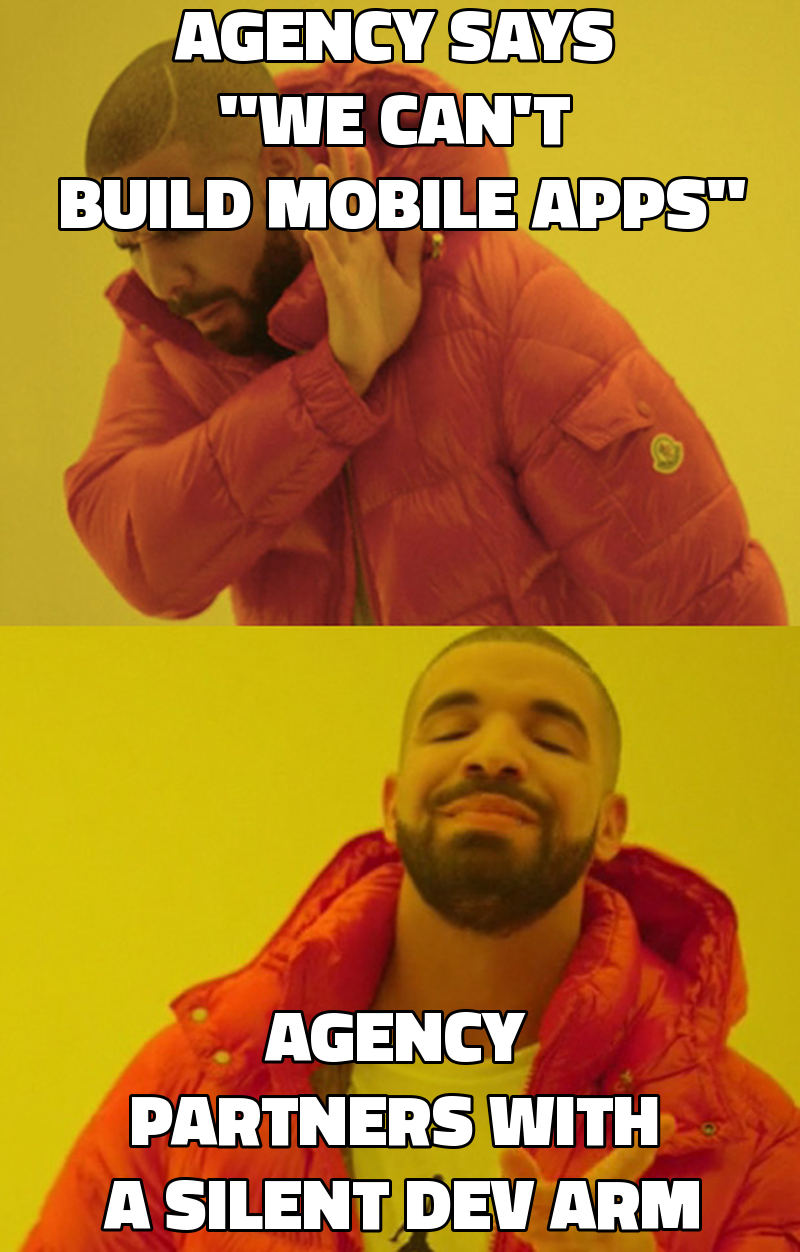
White-label mobile app development lets a marketing agency deliver custom iOS and Android apps under its own brand without hiring developers. The agency keeps the client relationship, sets its own margin, and leverages a specialist partner to handle design, code, and post-launch support. This model works especially well for 5-15 person agencies in the US, UK and AU that lack in-house engineering.
Key takeaways
- Agencies can add mobile apps to their service catalog without hiring a developer.
- Typical fixed-scope pilot runs 4-6 weeks and costs $2,000-$5,000 per app.
- Wholesale pricing gives agencies 50-70% margin while you keep a predictable profit.
- NDA and non-circumvent clauses protect the agency’s brand and prevent poaching.
- A single point of contact reduces friction and improves delivery reliability.
- Ongoing retainers of $1,500-$2,500 per month cover 15-20 dev hours for upgrades and support.
What are the core benefits of white-label mobile app development for agencies?
Agencies gain three strategic advantages:
- Revenue expansion – Adding native iOS and Android apps opens a high-margin line-of-service. According to Clutch, 42% of small agencies outsource app development to capture this demand.
- Brand consistency – The client sees only the agency’s name, logo and communication style. All deliverables are branded, and the partner works under a strict NDA.
- Risk reduction – Agencies avoid the hiring cost of a full-time engineer (average US salary $110k per year according to Stack Overflow 2023). They pay per project or a modest retainer, turning variable cost into predictable expense.
How long does a typical white-label mobile app project take?
A realistic timeline balances speed with quality. Below is a common stage breakdown for a medium-complexity app (user authentication, API integration, push notifications, basic analytics):
| Stage | Duration (working days) | Key Activities |
|---|---|---|
| Discovery & scoped proposal | 3-5 | Requirements workshop, user story mapping, wireframes |
| Design & UI kit | 5-7 | High-fidelity mockups in Figma, brand asset integration |
| Development sprint 1 | 10-12 | Core screens, authentication, API layer (Node.js, Firebase) |
| Development sprint 2 | 8-10 | Feature screens, push (OneSignal), in-app analytics |
| QA & client review | 4-5 | TestFlight/Google Play internal testing, bug triage |
| Launch & handover | 2-3 | Store submission, post-launch monitoring |
| Total: 32-42 working days (6-8 calendar weeks) for a fixed-scope pilot. Larger projects add extra sprints proportionally. |
Which pricing models work best for white-label mobile apps?
Agencies prefer models that keep cash flow simple and protect margins. The two most common are:
| Model | How it works | Typical agency margin |
|---|---|---|
| Fixed-scope pilot | Agency pays a flat fee for a defined set of features. Scope is locked, timeline is guaranteed. | 55-70% |
| Retainer + per-feature add-on | Agency pays a monthly retainer for up to 20 dev hours, then a small fee for extra features. | 50-65% |
| Both models include a 30-day post-launch support window at no extra cost, which reduces client churn. |
How can an agency sell custom mobile apps without the client knowing a third-party built it?
- Use a white-label contract – Include NDA and non-circumvent clauses that forbid the client from contacting the developer directly.
- Brand all deliverables – Wireframes, design files, and final binaries carry the agency’s logo. Use a custom app icon set that matches the agency’s visual style.
- Single point of contact – The agency’s account manager receives all status updates and communicates them to the client. The dev partner works behind a shared dashboard that the agency can view but the client never sees.
- Consistent voice – All written communication (release notes, support emails) uses the agency’s tone of voice and email domain.
- Transparent invoicing – The agency invoices the client at its own rate; the partner invoices the agency at the wholesale rate. This keeps the financial flow internal.
What technology stack does a white-label partner typically use?
A modern partner balances cross-platform speed with scalability:
- Framework: Flutter (Dart) or React Native – both compile to native iOS and Android binaries.
- Backend: Firebase (Auth, Firestore, Cloud Functions) for rapid MVPs, or AWS Amplify for enterprise-grade security.
- Push notifications: OneSignal or Firebase Cloud Messaging.
- Analytics: Mixpanel or Amplitude for in-app events.
- Voice & AI: Google Dialogflow CX for conversational bots, Amazon Polly for text-to-speech, and OpenAI API for generative features.
- CI/CD: Fastlane for automated builds, GitHub Actions for testing pipelines.
- Project tracking: A shared Notion page or a simple Trello board that the agency can grant view-only access to. These tools let the partner ship a production-grade app in under two months while staying cost-effective.
How should an agency quote a mobile app to a client?
- Start with a discovery workshop – Charge a modest fee ($300-$500) for a 2-hour session that uncovers business goals, target users, and required integrations.
- Present a scoped proposal – Break the project into phases (MVP, Phase 2, Phase 3). Show cost per phase, timeline, and deliverables.
- Apply a markup – A 60% markup on the partner’s wholesale price is common for agencies that provide additional project management and brand handling.
- Include a buffer – Add 10-15% for unforeseen changes; this protects margins without surprising the client.
- Offer a retainer option – After the MVP launch, suggest a monthly support retainer to handle updates, bug fixes, and new features. Example quote: MVP development $4,200 (partner cost $2,500 + 68% markup), 6-week timeline, includes 30-day post-launch support.
How does a white-label partner ensure reliability and avoid the “flaky freelancer” trap?
- Capacity caps – Limit active agency partners to 8-10 at any time. This keeps the partner’s team focused and prevents over-commitment.
- Dedicated account manager – One senior engineer acts as the liaison, tracks progress, and escalates issues.
- Transparent dashboard – Real-time status (To-Do, In-Progress, Review, Done) visible to the agency.
- Service Level Agreement (SLA) – Guarantees 48-hour response time for critical bugs and 5-day turnaround for feature requests.
- Proven case study – RouteMate, a full-stack SaaS built for a UK agency, launched in 7 weeks with zero post-launch defects. Use this as a credibility anchor.
What are the legal safeguards for both parties?
| Safeguard | Description |
|---|---|
| NDA | Prevents the partner from disclosing the agency’s client list or project details. |
| Non-circumvent clause | Bars the client from hiring the partner directly for a defined period (usually 12 months). |
| IP assignment | All source code and assets are transferred to the agency upon final payment, allowing the agency to claim ownership. |
| Warranty period | 30-day defect-resolution window after launch, after which support moves to the retainer model. |
| Data protection | Compliance with GDPR for EU clients and CCPA for California, ensuring user data is handled securely. |
| These clauses are standard in B2B white-label contracts and protect the agency’s brand reputation. |
How can an agency market its new mobile-app capability?
- Case study landing page – Showcase the RouteMate project with screenshots, metrics (e.g., 3-month user growth 150%), and client testimonial.
- Email drip campaign – Target existing clients with a “Did you know we now build native apps?” series that highlights ROI (e.g., 20% higher conversion on mobile vs web).
- Webinar – Host a 30-minute session titled “From website to app in 8 weeks” and invite prospects.
- Social proof – Share LinkedIn posts with the agency’s logo on the app store screenshots; tag the partner subtly.
- SEO – Optimize for long-tail queries such as “white label mobile app development for marketing agencies” and “agency partner for iOS app builds”. These tactics generate inbound interest without costly paid ads.
What are common pitfalls and how to avoid them?
- Scope creep – Keep the pilot scope tight. Use a change-order form for any additions.
- Unrealistic timelines – Promise the partner’s proven turnaround band, not “same-week delivery”.
- Under-pricing – Calculate the partner’s wholesale cost, add markup, and include a buffer for revisions.
- Lack of post-launch support – Bundle a 30-day warranty and discuss a retainer early.
- Brand leakage – Verify all deliverables are re-branded before hand-off; run a checklist. By addressing these early, agencies maintain credibility and avoid client churn.
How does the partnership onboarding process work?
- Initial discovery call – Agency shares typical client profiles and volume expectations.
- Pilot proposal – Partner sends a fixed-scope pilot quote (e.g., $3,200 for a 5-screen app).
- Signed NDA & contract – Both parties sign NDA, non-circumvent, and IP transfer agreements.
- Kick-off workshop – Joint session to define user stories, tech stack, and timeline.
- Development & weekly demos – Agency receives a demo link each week for feedback.
- Launch & handover – Partner submits the final binaries, source code repository, and documentation.
- Retainer discussion – Post-launch, agency and partner negotiate a monthly support retainer. The process typically takes 2-3 weeks from first call to signed pilot contract.
What ROI can an agency expect from adding white-label mobile apps?
- Higher average project value – Mobile apps increase average deal size by 30-40% compared with web-only projects (Gartner 2022).
- Improved client retention – Agencies that offer apps see a 15% lower churn rate because the client’s digital ecosystem deepens.
- Margin expansion – With a 60% markup on a $3,000 partner cost, the agency nets $1,800 profit per app before overhead.
- Cross-sell opportunities – Apps open doors for push-notification campaigns, in-app purchases, and data-driven personalization services. These figures illustrate why white-label mobile development is a strategic growth lever for small agencies.
Frequently asked questions
How much does a white-label mobile app typically cost for the agency?
The partner’s wholesale price for a medium-complexity MVP ranges from $2,000 to $5,000. Agencies usually apply a 55-70% markup, resulting in client invoices of $3,500-$8,500 depending on features and branding depth.
Can an agency sell iOS and Android apps with a single codebase?
Yes. Frameworks like Flutter and React Native allow one codebase to compile to both platforms, reducing development time by up to 40% compared with native Swift and Kotlin builds (according to a 2023 Forrester report).
What if the client wants a native feature that the partner’s stack can’t provide?
The partner can extend the stack with native modules written in Swift or Kotlin and bridge them to Flutter/React Native. This adds a small additional cost, which is captured in a change-order.
How does the partner handle app-store submissions?
The partner prepares all required assets, metadata, and compliance documentation, then submits to Apple App Store Connect and Google Play Console on the agency’s behalf. The agency receives the final store URLs to share with the client.
Is there a minimum project size?
Partners set a $1,500 floor to ensure the effort covers overhead. Projects below this threshold are usually not accepted unless bundled with a larger retainer.
How are updates and bug fixes managed after launch?
The first 30 days are covered under the warranty. After that, agencies can purchase a monthly retainer of $1,500-$2,500 for 15-20 dev hours, which covers routine updates, OS version upgrades, and minor feature tweaks.
What if the agency already has a dev partner?
If the existing partner cannot handle AI automation, voice integration, or custom back-end logic, the white-label partner can fill that gap. The agency can keep the current partner for simple builds and route complex projects to the specialist.
How do I protect my brand from being associated with the partner?
All deliverables are re-branded, the partner works under a strict NDA, and the agency retains sole communication with the client. The partner never appears in invoices, emails, or marketing material.
white‑label
Have something to build?
Tell us what you're trying to ship. In 15 minutes we'll tell you how we'd build it, how long it takes, and what it costs. No pitch deck, no pressure.