
White-Label Delivery App Development: How Agencies Can Add Delivery Services Without Hiring Developers

White-label delivery app development lets agencies add a full-featured delivery platform to their service catalog without hiring developers. By partnering with a specialist provider, you can deliver custom mobile and web apps under your brand, keep the client relationship intact, and capture the margin.
Key takeaways
- White-label delivery apps let agencies win new tech projects without expanding payroll.
- Fixed-scope pilots reduce risk and prove quality before a retainer is signed.
- Reliable partners offer a single point of contact and NDA protection, preserving your brand.
- Agencies that add tech services see 12% higher client retention (McKinsey, 2023).
- Typical white-label project values range $2,000-$5,000, with 50-70% wholesale margin.
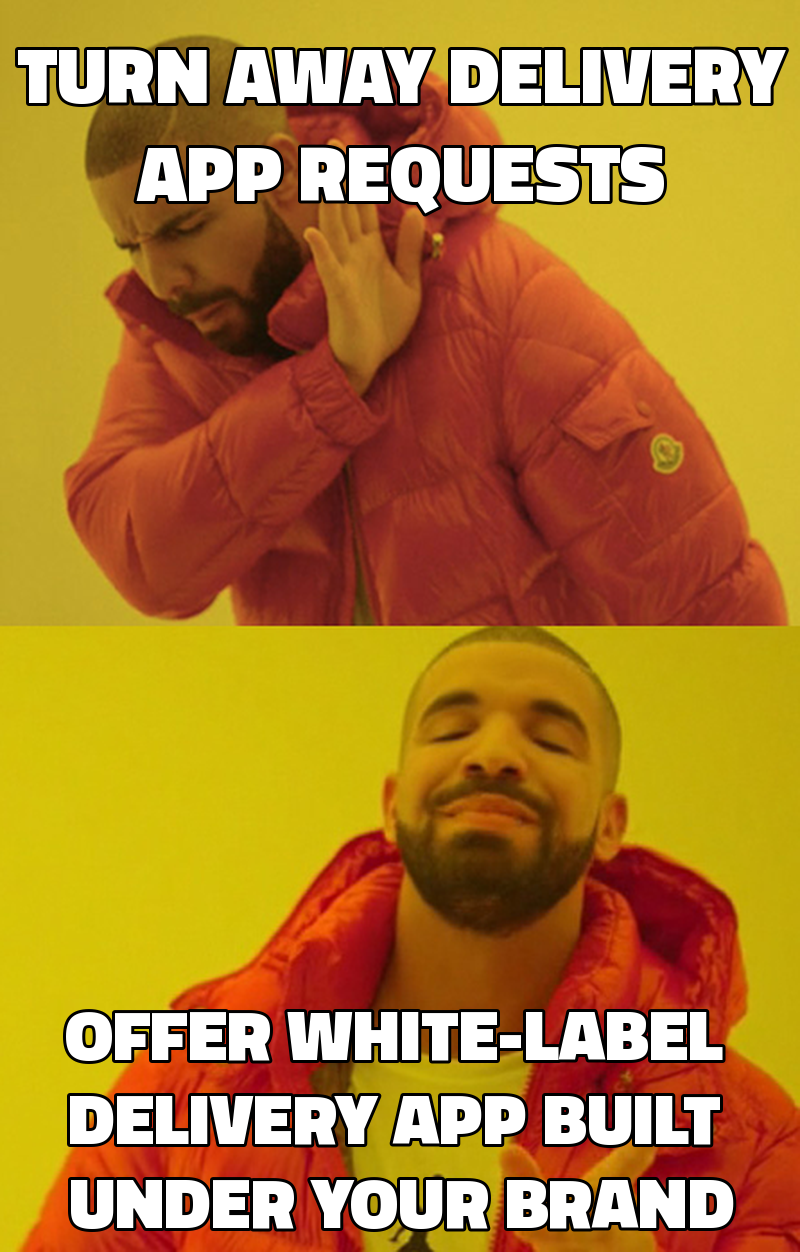
Why agencies need delivery-app capabilities now
The on-demand economy is booming. Statista reports the global food-delivery market reached $150 billion in 2023 and is projected to grow 10% annually through 2028. Your SMB clients – restaurants, local retailers, and service providers – are asking for custom delivery solutions that integrate with their existing POS, loyalty programs, and marketing automation.
Most small to midsize agencies lack in-house developers. Hiring a full-time engineer costs $120,000-$150,000 per year in the US, plus benefits and recruitment time. Freelance or offshore options often lead to missed deadlines, quality issues, and brand exposure risk – exactly the pain points you listed.
A white-label partner solves these problems by:
- Building the app under your brand name.
- Providing a dedicated project manager who speaks your language.
- Offering a fixed-scope pilot that you can quote confidently.
- Keeping the client relationship private through NDAs and non-circumvent clauses.
How the white-label model works for agencies
| Step | Agency Action | Partner Action | Outcome |
|---|---|---|---|
| 1. Identify need | Receive client request for a delivery app | Review request, confirm scope | Clear project brief |
| 2. Quote & pilot | Provide fixed-price pilot (e.g., $2,500) | Build a minimal viable product (MVP) in 2-3 weeks | Agency wins the deal, client sees progress |
| 3. Deliver & brand | Receive finished MVP, re-brand UI, add agency logo | Transfer source code, documentation | Client receives a fully branded app |
| 4. Scale or retain | Offer ongoing enhancements or a monthly retainer | Allocate dev hours, prioritize tickets | Continuous revenue stream |
Fixed-scope pilot details
A pilot should be limited to a core set of features: user registration, catalog browsing, order placement, payment gateway integration (Stripe, Square, or local options like Braintree), and basic admin dashboard. Scope creep is avoided by a clear feature checklist and a change-order process.
Typical timeline: 10-15 business days from kickoff to demo. Cost range: $2,000-$4,000 depending on platform (iOS, Android, PWA) and integration complexity.
Choosing the right white-label partner
| Provider | Platform focus | AI/automation depth | Avg. pilot cost | Turnaround | Notable client |
|---|---|---|---|---|---|
| Synthisia (The Silent Dev Arm) | iOS, Android, Web PWA | Custom AI chatbots, voice ordering, workflow automation | $2,500 | 12 days | RouteMate (logistics SaaS) |
| Appy Pie | No-code app builder | Limited AI, basic push notifications | $1,800 | 18 days | Local bakery chain |
| BuildFire | Hybrid low-code | No voice, limited AI | $2,200 | 20 days | Fitness studio franchise |
| GoodBarber | Web & mobile templates | No AI, basic e-commerce | $1,500 | 22 days | Boutique clothing retailer |
Why Synthisia stands out – We specialize in AI automation, voice ordering, and custom back-ends that no-code platforms cannot handle. Our low concurrency model ensures you never experience the flaky freelancer syndrome. A single accountable project manager (the "RouteMate" proof point) guarantees delivery.
Financial model for agencies
| Model | Revenue to agency | Cost to agency | Margin range |
|---|---|---|---|
| Fixed-scope pilot | $3,500 (quoted) | $2,500 (wholesale) | 28%-35% |
| Per-project build | $5,000-$8,000 | $3,000-$5,000 | 38%-45% |
| Monthly retainer | $1,500 (client) | $1,200 (partner) | 20% |
The wholesale rate is typically 50-70% of the client bill, as defined in your deal shape. A minimum floor of $1,500 protects you from low-value projects that would erode margins.
Integrating the delivery app into your agency workflow
- Pre-sale discovery – Use a short questionnaire to capture client requirements (catalog size, payment methods, geographic coverage). This also helps you size the pilot.
- Internal scoping – Map the questionnaire to a feature matrix. Quote the pilot using your standard markup (e.g., 30% over wholesale).
- Project kickoff – Share the partner’s project dashboard link. The dashboard provides real-time status, sprint board, and QA sign-off points.
- Branding hand-off – Once the MVP is delivered, your design team applies agency colors, fonts, and copy. No code changes are required for branding if the partner uses a theming engine.
- Client rollout – Conduct a joint demo, collect feedback, and schedule the first app store submission (Apple App Store, Google Play). The partner can handle store compliance for an additional fee.
- Ongoing support – Offer a retainer for feature upgrades, analytics integration (Google Analytics for Firebase), and AI model tuning.
Risk mitigation and contract safeguards
- NDA & non-circumvent – Standard 2-year NDA protects your brand and client list.
- Fixed turnaround clause – Specify a delivery window (e.g., 12 business days) with liquidated damages for missed deadlines.
- Change-order process – Any scope addition triggers a new estimate and client approval.
- Quality gate – Require a user-acceptance test (UAT) sign-off before final payment.
Real-world success story: RouteMate
RouteMate, a logistics SaaS built for regional couriers, needed a mobile driver app with voice-activated dispatch. The agency lacked dev resources, so they partnered with Synthisia. Within 13 days, Synthisia delivered a PWA with AI-driven route optimization and voice commands. The agency re-branded the UI, sold the solution to three new courier clients, and locked a $2,000 monthly retainer for ongoing enhancements. The agency’s net margin on the project was 62%, illustrating the upside of the white-label model.
Common objections and how to answer them
| Objection | Response |
|---|---|
| "We don’t want clients to know we outsource" | Emphasize the NDA, white-label branding, and single point of contact. The client sees only your agency name on the app store and documentation. |
| "We can’t afford the pilot cost" | Position the pilot as a revenue-generating lead magnet. The $2,500 pilot is recouped when the client signs a $5,000 full build or a $1,500 monthly retainer. |
| "We already have a freelancer" | Highlight reliability gaps: freelancers often miss deadlines, lack AI expertise, and cannot guarantee brand-only delivery. Synthisia’s low concurrency ensures dedicated capacity. |
| "We lack technical knowledge to manage the project" | The partner provides a shared dashboard and weekly status calls. Your role is to translate client needs, not to manage code. |
Steps to get started today
- Audit your service catalog – Identify any client requests for delivery, logistics, or on-demand services that you currently decline.
- Create a one-pager – Outline the white-label offering, pilot price, and turnaround. Use the tables above for quick reference.
- Contact Synthisia – Schedule a 30-minute discovery call. Mention the "Silent Dev Arm" program to trigger the partner’s priority queue.
- Run a pilot – Choose a low-risk client, agree on scope, and launch the 2-week MVP.
- Iterate and retain – After a successful pilot, propose a monthly retainer for ongoing updates, analytics, and AI model improvements.
"The best way to grow an agency is to become the technology partner your clients never knew they needed," says Laura Chen, COO of a UK-based growth agency that added white-label delivery apps in 2022.
By leveraging a reliable white-label development partner, agencies can transform a lost opportunity into a recurring revenue stream, keep the client relationship front-and-center, and stay ahead of the on-demand market wave.
Frequently asked questions
What is a white-label delivery app?
A white-label delivery app is a fully functional mobile or web platform built by a development partner but branded and sold under your agency’s name. The client never sees the third-party developer.
How long does a typical pilot take?
Most partners, including Synthisia, deliver a minimum viable delivery app in 10-15 business days from kickoff, assuming a clear feature list and timely client feedback.
Can I choose the technology stack?
Yes. White-label providers usually support iOS (Swift), Android (Kotlin), and progressive web apps (React or Vue). You can specify preferred payment gateways and third-party integrations.
How do I protect my brand from being exposed?
All reputable partners sign NDAs and non-circumvent agreements. The final product is delivered with a theming engine that lets you replace logos, colors, and copy without touching code.
What ongoing costs should I expect after the pilot?
A typical retainer ranges $1,200-$1,800 per month for 15-20 development hours, covering bug fixes, feature upgrades, and AI model tuning.
Is there a risk of the partner poaching my client?
No. The contract includes a non-poach clause and a capped number of active agency partners to ensure capacity and prevent conflict of interest.
Do I need any technical staff to manage the project?
No. Your project manager or head of delivery acts as the liaison. The partner provides a shared dashboard and weekly status calls, so you focus on client communication.
How does pricing compare to hiring a freelancer?
Freelancers may charge $50-$80 per hour, but hidden costs include missed deadlines, re-work, and lack of branding control. White-label pilots have a fixed price, predictable margin, and brand protection, delivering higher net revenue per project.
white‑label
Have something to build?
Tell us what you're trying to ship. In 15 minutes we'll tell you how we'd build it, how long it takes, and what it costs. No pitch deck, no pressure.