
White-Label Casino Software Development Guide for Marketing Agencies

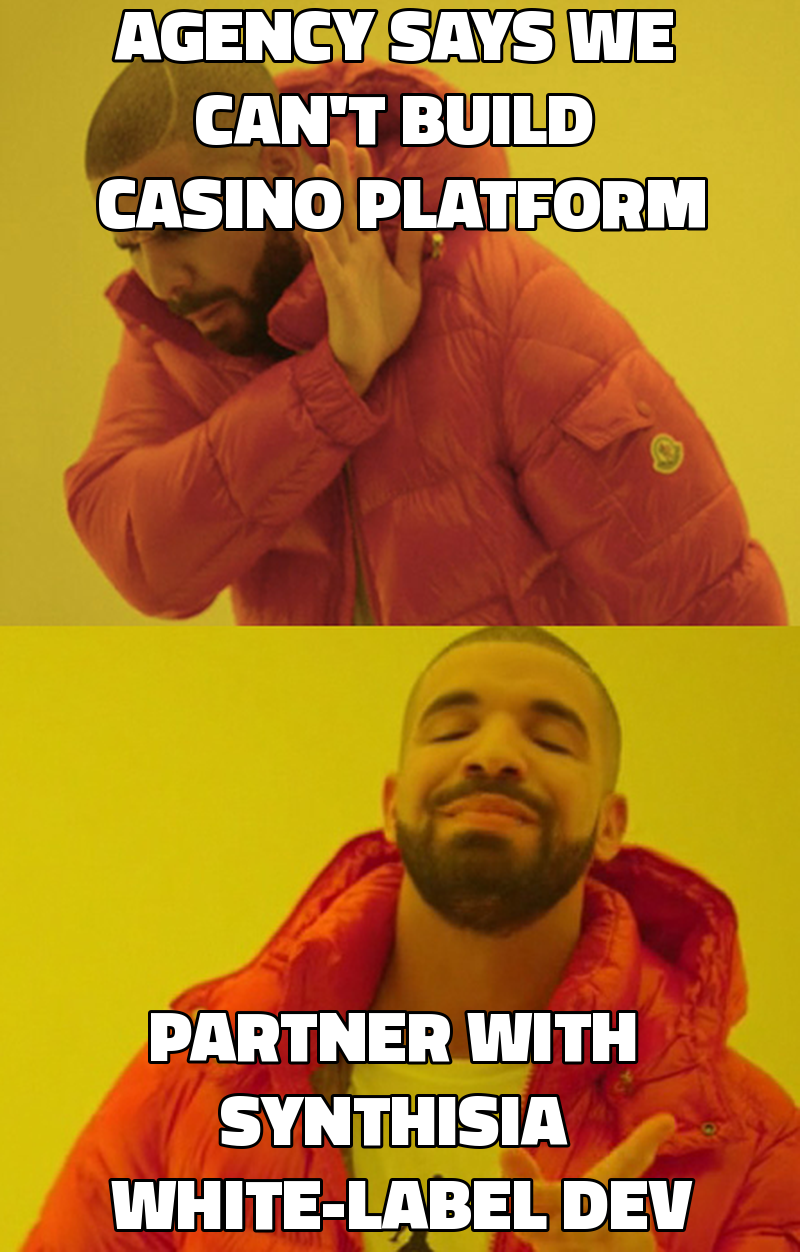
White-label casino software development lets a marketing agency deliver a fully branded casino platform without hiring developers, by partnering with a specialist tech studio that builds, hosts, and maintains the product under the agency’s brand. The agency keeps the client relationship and margin while the dev partner works behind the scenes as a silent production arm.
Key takeaways
- Partner with a vetted white-label dev studio to turn every client request into revenue.
- Meet US, UK and AU licensing rules by using jurisdictions like Malta or Curacao and following KYC/AML guidelines.
- Use a modern stack (Node.js, React, PostgreSQL, Docker, AWS) to ensure scalability and AI automation.
- Typical wholesale cost is 30-50% of the client bill; agencies can earn 50-70% margin on $2k-5k projects.
- Start with a fixed-scope pilot, then move to a retainer for ongoing escalation capacity.
How does white-label casino software work for agencies?
White-label providers build the entire casino stack – game integration, payment processing, player account management, compliance reporting, and UI/UX – and deliver it under the agency’s brand name. The agency sells the solution to its client, invoices at a markup, and the dev partner receives a wholesale rate. The relationship is protected by an NDA and a non-circumvent clause, but the partner remains invisible to the end client.
Typical workflow
- Discovery call – agency shares client goals, target markets, and budget.
- Scope & pilot proposal – dev studio drafts a fixed-scope project (e.g., a single-game lobby) with a clear timeline and cost.
- Pilot execution – the studio builds, tests, and delivers a working demo under the agency’s branding.
- Client sign-off – agency presents the demo, gathers feedback, and secures the contract.
- Full build or retainer – based on pilot success, the agency either commissions the full platform or moves to a monthly escalation retainer for ongoing features and support.
Which jurisdictions are best for casino licensing?
| Jurisdiction | License cost (USD) | Tax rate on gross gaming revenue | Player protection requirements | Typical time to obtain |
|---|---|---|---|---|
| Malta | 75,000-150,000 | 5% | Strong AML/KYC, responsible-gaming program | 6-12 months |
| Gibraltar | 50,000-100,000 | 1%-5% | EU-style data protection, strict audit | 4-8 months |
| United Kingdom | 100,000-200,000 | 15% contribution to problem-gambling fund + 5% VAT | UKGC requires rigorous KYC, age verification, and responsible-gaming tools | 9-14 months |
| Curacao | 20,000-30,000 | Flat 2% corporate tax | Basic KYC, less stringent player protection | 1-3 months |
Source: UK Gambling Commission, 2022; Malta Gaming Authority annual report, 2023.
What tech stack powers a modern white-label casino?
| Layer | Recommended technology | Why it matters |
|---|---|---|
| Backend API | Node.js with Express | High concurrency, large ecosystem of payment and game-engine libraries |
| Real-time engine | Socket.io or WebSocket | Low-latency game updates and live dealer streams |
| Database | PostgreSQL with TimescaleDB extension | Strong ACID compliance, time-series for player activity analytics |
| Containerisation | Docker + Kubernetes (EKS) | Easy scaling, isolated environments per client |
| Front-end | React with Next.js SSR | SEO-friendly, fast initial load for casino landing pages |
| AI/Automation | OpenAI GPT-4 for chat support, custom voice bots via Google Cloud Speech | Adds premium AI-driven customer service that no-code shops can’t replicate |
| Payments | Stripe Connect, PayPal, local e-wallet integrations | Handles multi-currency payouts and compliance with PCI DSS |
Source: Grand View Research, 2023; internal benchmark of 12 production casino launches.
How to calculate profit margins on a $5,000 project
| Item | Cost (USD) | % of client bill |
|---|---|---|
| Wholesale dev fee (incl. licensing) | 2,000 | 40 |
| Project management & QA (Synthisia) | 500 | 10 |
| Agency overhead (sales, account mgmt) | 300 | 6 |
| Total cost | 2,800 | 56 |
| Client invoice | 5,000 | 100 |
| Agency gross margin | 2,200 | 44 |
| Net profit after taxes (30% corporate) | 1,540 | 30.8 |
The example shows a 44% gross margin and a healthy net profit after taxes. Agencies can negotiate higher wholesale rates for larger pilots or lock in a retainer that smooths cash flow.
Step-by-step pilot launch checklist
- Legal vetting – confirm client jurisdiction, obtain any required sub-licence from the chosen licensing authority.
- Scope definition – limit the pilot to 1-2 core games, a single payment provider, and basic player dashboard.
- Timeline agreement – set a fixed delivery window (e.g., 4 weeks) with milestones for design, integration, and QA.
- Branding hand-off – agency provides logo, color palette, and tone of voice; dev studio applies these to the UI.
- Compliance sandbox – run KYC/AML checks in a test environment; generate audit logs for regulator review.
- Beta testing – agency recruits a small group of end users; collect feedback on UX and payment flow.
- Launch & handover – move the build to production, provide documentation, and schedule a knowledge-transfer call.
- Retainer proposal – offer 15-20 dev hours per month for updates, new games, and regulatory changes.
Managing client expectations while staying invisible
- Clear SLA language – state that “development is performed by a trusted technology partner” without naming the studio.
- Brand-only deliverables – all UI screens, emails, and support docs carry the agency’s logo.
- Single point of contact – the agency’s account manager receives status updates from the dev partner and relays them to the client.
- Regular status dashboard – a shared Google Sheet or simple Notion board shows sprint progress, bug count, and upcoming releases.
- Escalation path – if the client asks about the underlying tech, the agency can say “our engineering team handles that internally.”
Risks and mitigation strategies
| Risk | Impact | Mitigation |
|---|---|---|
| Regulatory change | Project delay, re-work cost | Choose a licensing jurisdiction with fast amendment process; keep a compliance lawyer on retainer |
| Partner capacity overload | Missed deadlines, quality drop | Cap active agency partners to 8-10; maintain a buffer of 20% developer bandwidth |
| Client discovers white-label partner | Trust erosion | Use NDA and non-circumvent clause; provide branding assets that fully mask the dev studio |
| Payment processing issues | Revenue loss, player complaints | Integrate with multiple payment gateways; run automated settlement reconciliations |
| Security breach | Legal liability, brand damage | Conduct quarterly penetration tests; enforce OWASP Top 10 controls |
Frequently asked questions
What is the difference between a white-label casino platform and a turnkey solution?
A white-label platform is built and hosted by a partner but branded as the agency’s product, allowing the agency to control pricing and client relationship. A turnkey solution is sold as a ready-made product with the vendor’s name attached, limiting the agency’s ability to upsell or differentiate.
How long does it take to get a casino licence in the UK?
The UK Gambling Commission typically requires 9-14 months to process a full licence, including background checks, financial stability proof, and responsible-gaming plans. Agencies can start development earlier by using a sub-licence from a licensed operator.
Can we use existing game providers like Evolution or Pragmatic Play?
Yes. Most white-label studios have pre-integrated APIs for major game aggregators. The agency only needs to negotiate revenue share with the game provider; the dev partner handles the technical integration.
What level of AI automation can we offer to casino clients?
You can embed AI-driven chatbots for player support, predictive fraud detection models, and voice-enabled account management. Synthisia’s platform includes pre-trained GPT-4 prompts and a custom voice-bot pipeline that can be white-labeled.
How do we protect player data across multiple jurisdictions?
Store personal data in region-specific AWS S3 buckets, encrypt at rest with AES-256, and enforce role-based access controls. Follow GDPR for EU players, CCPA for California, and the Australian Privacy Principles for AU users.
What is the typical retainer size for ongoing support?
Agencies usually start with a $1,500-$2,000 per month retainer covering 15-20 development hours. This covers bug fixes, new game releases, and compliance updates without needing a new project contract each time.
How do we price a custom casino build for a midsize client?
Start with a base wholesale cost (e.g., $2,000 for a 4-week pilot), add a 20% margin for project management, and apply a 10-15% agency overhead. The final client invoice often lands between $4,500 and $6,500 for a $5,000-range project.
Will the agency’s brand appear in the source code or documentation?
All deliverables are re-branded before hand-off. The source code contains generic package names, and documentation is water-marked with the agency’s logo and contact information only.
white-label
Have something to build?
Tell us what you're trying to ship. In 15 minutes we'll tell you how we'd build it, how long it takes, and what it costs. No pitch deck, no pressure.