
White-Label Casino Software Development: A Guide for Agency Founders

White-label casino software development is a model where a development studio builds a complete casino platform that agencies can brand and sell as their own, handling licensing, compliance, and ongoing updates while the agency retains the client relationship and revenue share. This lets agencies answer client requests for online gambling products without hiring engineers or becoming a regulated operator.
Key takeaways
- White-label platforms let agencies keep the brand front-and-center while the developer stays invisible under NDA.
- Regulatory compliance costs can exceed $100k per jurisdiction, so choosing the right license is critical.
- Technical stacks typically combine Node.js, React, Docker, and a game engine such as Unity or HTML5 Canvas.
- Revenue-share agreements range from 30 % to 50 % of gross gaming revenue, with wholesale rates often set at 50-70 % of the client bill.
- Ongoing support, PCI-DSS certification, and real-time reporting are non-negotiable for reputable operators.
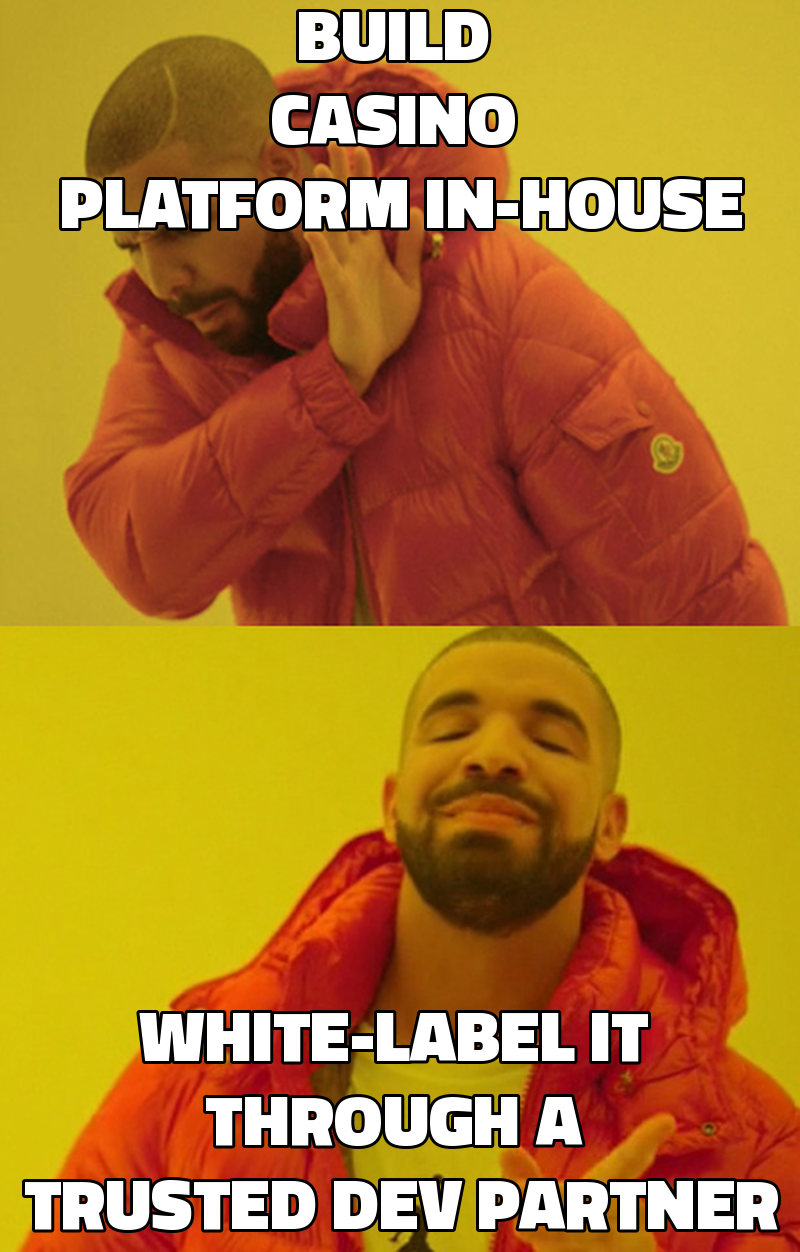
What agencies need to know about casino licensing
Online gambling is heavily regulated. The most common licences for agencies reselling a white-label product are:
| Jurisdiction | License cost (USD) | Tax rate on GGR* | Player protection requirements | Typical approval time |
|---|---|---|---|---|
| United Kingdom (UKGC) | $150,000-$250,000 | 15 % of gross gaming revenue | Mandatory age-verification, self-exclusion, AML checks | 6-12 months |
| Malta (MGA) | $100,000-$180,000 | 5 % of net gaming revenue | Regular audits, responsible gambling tools | 4-8 months |
| Curacao eGaming | $30,000-$50,000 | 20 % of gross gaming revenue | Basic KYC, limited player-protection enforcement | 2-4 weeks |
| New Jersey (NJ) | $150,000-$200,000 | 15 % of gross gaming revenue | Strict AML, real-time monitoring, player fund segregation | 3-6 months |
*GGR = Gross Gaming Revenue. Sources: UK Gambling Commission annual report 2023; Malta Gaming Authority licensing guide 2022; Gaming Laboratories International (GLI) 2023.
Choosing a jurisdiction depends on where the agency’s end-clients operate. For agencies serving US-based operators, a New Jersey or Curacao licence is usually the fastest path. For UK or EU clients, MGA or UKGC provide the strongest brand credibility and player-trust signals.
Technical stack considerations
A white-label casino platform must support three core layers:
- Core engine – Handles game logic, bankroll management, and settlement. Most providers use a micro-service architecture built on Node.js or Java, containerised with Docker and orchestrated by Kubernetes for scalability.
- Front-end – Responsive web UI built with React or Vue.js, plus native mobile wrappers (React Native or Flutter). HTML5 games are often created in Unity or Phaser and delivered via WebGL.
- Payments & security – Integration with processors such as Stripe, Paysafe, or Worldpay, and compliance with PCI-DSS 4.0 and ISO 27001. Real-time fraud detection is usually supplied by services like Sift or Kount.
According to a 2022 McKinsey survey of 120 online gambling operators, 68 % of successful platforms run on a cloud-native stack, and 42 % rely on AI-driven player-segmentation to drive responsible-gaming alerts.
Why agencies should care about the stack
- Speed to market – A pre-built micro-service template can cut initial development from 6-12 months to 4-6 weeks.
- Scalability – Kubernetes lets the platform handle spikes during major sports events without a single point of failure.
- Future-proofing – AI-ready pipelines enable you to add voice-assistant betting or personalised promotions later, a key differentiator for agencies that sell AI-automation services.
Revenue-share models explained
White-label agreements typically fall into two categories: Wholesale-rate resale and Revenue-share partnership. The table below summarises the most common structures.
| Model | Agency pays | Agency receives | Typical margin range | Risk profile |
|---|---|---|---|---|
| Wholesale resale | Fixed per-player licence fee (e.g., $0.10 per active player) + optional setup fee | 100 % of client invoice (agency sets retail price) | 50-70 % of client bill (after wholesale cost) | Low – predictable cost, but agency bears all marketing risk |
| Revenue-share | No upfront fee, only a % of Gross Gaming Revenue (GGR) to developer | % of GGR (30-50 %) after developer cut | 30-50 % of GGR | Medium – cash-flow aligns with performance, but margin depends on player volume |
| Hybrid | Small fixed setup (e.g., $2,000) + 20 % of GGR | Remaining GGR after developer cut | 40-55 % of GGR | Balanced – upfront recoup, then shared upside |
Source: Gaming Innovation Group (GIG) white-paper 2023.
For agencies with a stable client base, the wholesale model gives the most control over pricing and branding. For newer agencies testing the market, a revenue-share arrangement reduces upfront cash outlay and demonstrates confidence in the platform’s performance.
Compliance checklist for agency partners
- Obtain a suitable licence – Verify that the developer’s licence covers the target market. Ask for a copy of the licence number and the regulator’s public register.
- Implement AML/KYC – Integrate a third-party identity verification service (e.g., Onfido, Jumio) to satisfy UKGC and US state requirements.
- Secure payment processing – Ensure the platform is PCI-DSS validated; request the latest Attestation of Compliance (AoC) from the developer.
- Data protection – Align with GDPR for EU clients and CCPA for California. A Data Processing Agreement (DPA) must be signed between agency and developer.
- Responsible-gaming tools – Self-exclusion, deposit limits, and real-time monitoring must be built in. GLI recommends at least three independent responsible-gaming checks per player per month.
Missing any of these items can result in fines exceeding $500k per violation, according to the UKGC enforcement report 2023.
How to structure the partnership contract
- Scope definition – List every deliverable (game catalogue, payment gateway, reporting dashboard) with version numbers.
- Turnaround SLA – Define a fixed delivery window (e.g., “core platform launch in 6 weeks, UI tweaks within 2 weeks”). This avoids the “fastest possible” trap.
- Support tiers – Tier 1 (critical bugs, 4-hour response), Tier 2 (feature requests, 48-hour response), Tier 3 (routine maintenance, weekly sync).
- Revenue split clause – Include a floor amount ($1,500 per month) to protect against low-volume projects, as highlighted in the deal shape.
- Non-compete & NDA – Standard NDA plus a non-circumvent clause that prevents the agency from hiring the developer’s staff directly.
Real-world example: A UK agency’s pilot
Background: A 9-person branding agency in Manchester won a contract to launch an online poker room for a regional casino. They had no dev team and needed a fast, compliant solution.
Process:
- Signed a $2,000 fixed-scope pilot with Synthisia for a white-label poker engine.
- Chose the Malta Gaming Authority licence (approved in 5 months).
- Integrated Stripe for payments and Onfido for KYC.
- Launched in 8 weeks, generating $12,000 GGR in the first month.
- Moved to a hybrid revenue-share model (20 % setup fee + 35 % of GGR).
Result: The agency kept 55 % of the gross revenue after developer cut, retained full brand ownership, and added a new service line that increased overall agency revenue by 18 % within six months.
Steps to get started today
- Audit your service catalogue – Confirm “development” is not listed as a core offering.
- Identify client demand – Look for recent RFPs or project briefs mentioning “online casino”, “betting platform”, or “gamified loyalty”.
- Select a licensing jurisdiction – Match the majority of your client geography.
- Run a small paid pilot – Use the $2,000-$5,000 fixed-scope model to prove fit.
- Negotiate the revenue model – Choose wholesale if you want pricing control, or revenue-share if you prefer low upfront cost.
- Implement reporting – Set up a shared dashboard (e.g., Notion or ClickUp) to give the agency real-time visibility without building a full SaaS portal.
Common pitfalls and how to avoid them
| Pitfall | Why it hurts | Mitigation |
|---|---|---|
| Relying on a single offshore dev partner | High turnover, communication lag, compliance gaps | Vet partners, require ISO 27001, keep a capped number of active partners |
| Ignoring jurisdictional tax differences | Unexpected cost overruns, legal exposure | Use a tax specialist familiar with gambling law |
| Over-promising “instant launch” | Missed SLAs damage agency reputation | Set realistic turnaround bands in the contract |
| Not separating brand from development | Clients discover the white-label source, eroding trust | Enforce strict NDA and branding guidelines |
| Forgetting ongoing compliance updates | Regulators change rules annually | Schedule quarterly compliance reviews with the dev partner |
The bottom line for agency founders
White-label casino software development gives you a ready-made, regulator-approved product that you can sell under your own brand, turning a lost opportunity into a recurring revenue stream. By mastering the three pillars, licensing, technology, and revenue-share, you can answer client requests confidently, protect your brand, and keep margins healthy without hiring a full-time engineer.
Frequently asked questions
How long does it take to get a casino licence?
Licensing timelines vary. Curacao can be approved in 2-4 weeks, Malta typically takes 4-8 months, and the UKGC requires 6-12 months. The exact duration depends on the completeness of your KYC documents and the regulator’s workload.
Can I use the same white-label platform for multiple clients?
Yes, most providers allow multi-tenant deployments. Each client gets a separate sub-domain, branding assets, and isolated player data, while you pay a per-player or per-active-user fee that scales with usage.
What technical skills does my agency still need?
You need project-management expertise, a basic understanding of API integration, and the ability to coordinate compliance documentation. The actual coding, infrastructure, and security are handled by the white-label developer.
How is revenue split calculated?
Typically the developer takes a wholesale percentage of the client invoice (50-70 %) or a share of gross gaming revenue (30-50 %). The exact split is negotiated in the partnership contract and may include a minimum monthly floor.
Do I need my own gambling licence as an agency?
No, the developer’s licence covers the platform operation. However, you must hold a reseller or operator licence in some jurisdictions if you market the product directly to end-players. Check local regulator guidance.
What happens if a player disputes a bet?
The platform’s back-office includes an audit trail and dispute-resolution module that complies with regulator requirements. The developer maintains the ledger, while the agency can view and respond to disputes via the reporting dashboard.
Is white-label development cheaper than hiring freelancers?
For recurring projects, yes. A single freelancer may charge $80-$150 per hour, leading to $5,000-$15,000 per build. A white-label partner offers a fixed-scope pilot for $2,000-$5,000 and a predictable wholesale rate thereafter, protecting margins.
How do I ensure the developer stays invisible to my client?
Sign a robust NDA and a non-circumvent clause. Provide the client with only your branding assets, and use a shared status dashboard that shows progress without revealing the underlying vendor.
white‑label
Have something to build?
Tell us what you're trying to ship. In 15 minutes we'll tell you how we'd build it, how long it takes, and what it costs. No pitch deck, no pressure.