
White-Label AI Automation Pitch Blueprint for Small Marketing Agencies

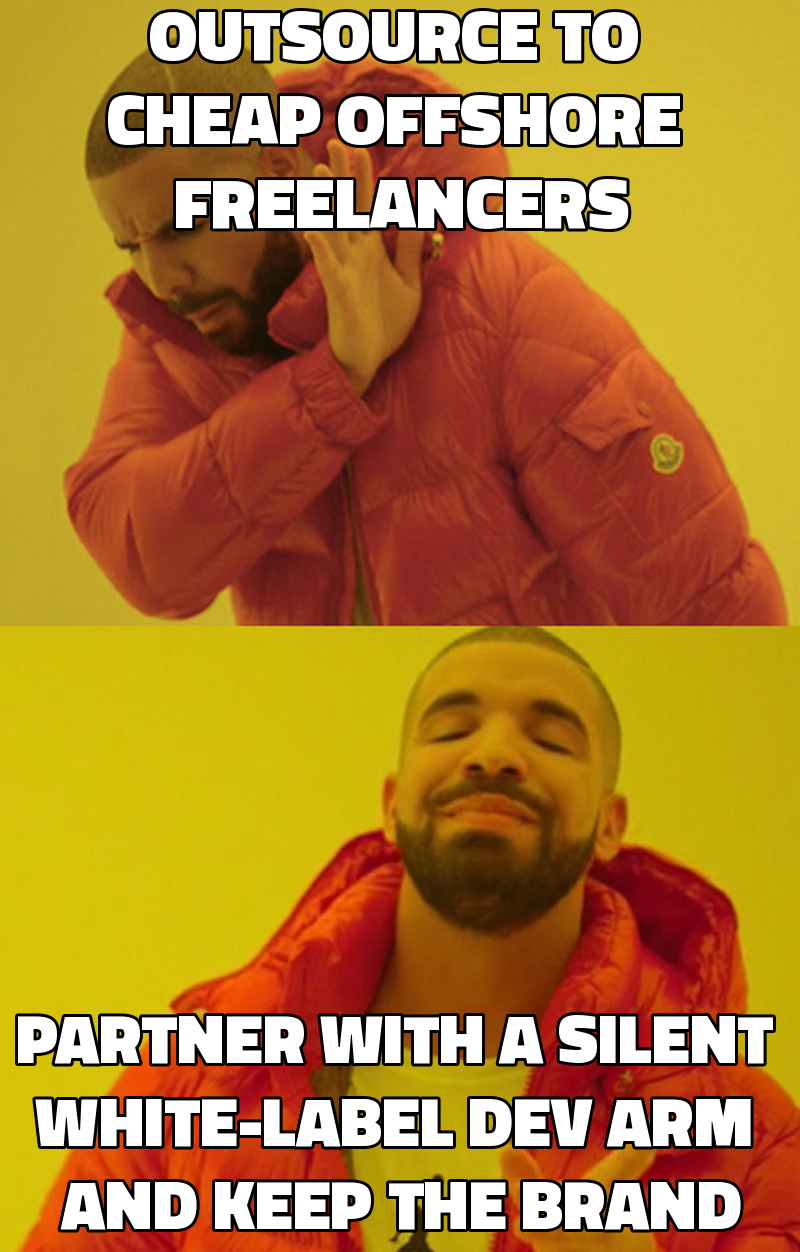
AI automation agency services can be sold by a marketing firm even if it has zero developers, by partnering with a silent white-label dev arm that delivers under the agency’s brand.
Key takeaways
- Offer a low-risk paid pilot (US$2-5k) to prove AI capability before a retainer.
- Keep the agency’s brand front-and-center; you stay invisible with NDA and non-circumvent clauses.
- Price wholesale at 50-70% of the agency’s bill to preserve a healthy margin.
- Use a single point of contact and a shared status dashboard to avoid the “multiple vendor” nightmare.
- Qualify prospects with the 3-gate test (volume, budget, live need) before any discovery call.
- Leverage proven tools – OpenAI API, Zapier, Bubble, Voiceflow – to accelerate delivery.
What is white-label AI automation for marketing agencies?
White-label AI automation means you, the agency, sell a custom AI-driven solution (chatbot, workflow, voice assistant, data pipeline) to your client, but the actual code and infrastructure are built by a partner that works under your brand name. The client never sees the subcontractor, and you retain the full margin. This model solves the three biggest pains listed in the ICP: missed revenue, brand exposure risk, and lack of technical confidence.
According to a 2023 Gartner report, 68% of agencies plan to add AI services within the next year, yet only 22% have in-house engineers. The gap creates a lucrative white-label opportunity.
How does the Silent Dev Arm model work step by step?
| Step | Agency Action | Silent Dev Arm Action | Outcome |
|---|---|---|---|
| 1 | Identify a client request that requires AI or custom backend. | N/A | Clear sales trigger. |
| 2 | Pitch a fixed-scope pilot (US$2-5k) with defined deliverables and timeline (2-4 weeks). | Prepare a scoped proposal and NDA. | Mutual commitment without large upfront risk. |
| 3 | Agency signs NDA & non-circumvent, pays pilot fee. | Assign a single Delivery Lead, begin development under agency’s brand assets. | Agency keeps client relationship, you get paid. |
| 4 | Pilot delivered, agency demos to client, collects feedback. | Incorporate feedback, hand over source under agency’s branding. | Trust built, upsell opportunity opened. |
| 5 | Agency signs ongoing retainer (US$1.5k-2.5k per month) for overflow work. | Reserve 15-20 dev hours per month, use shared dashboard for transparency. | Recurring revenue, predictable capacity. |
The model hinges on two levers: capacity control (capped active partners) and trust via pilot. Over-onboarding destroys the reliability promise that differentiates you from cheap offshore freelancers.
Which services can you sell under the white-label umbrella?
- Chatbot & conversational AI – OpenAI GPT-4, Anthropic Claude, or Cohere integrated into website widgets or Messenger.
- Workflow automation – Zapier, Make (Integromat), or n8n scripts that move leads from Facebook Ads to a CRM and trigger follow-up emails.
- Voice assistants – Voiceflow + Amazon Polly for IVR or brand-specific phone bots.
- Custom dashboards & SaaS back-ends – Bubble or Retool for internal client tools, data visualisation, or subscription portals.
- AI-enhanced content pipelines – Jasper or Copy.ai combined with custom APIs that auto-populate SEO meta tags.
Each service can be packaged as a “AI Boost” add-on that the agency sells at a premium (typically 2-3x wholesale cost) while you handle the technical heavy lifting.
How to price the pilot and the ongoing retainer profitably?
| Project Size | Wholesale Cost (US$) | Agency Bill (US$) | Agency Margin |
|---|---|---|---|
| Small chatbot (1-2 flows) | 1,500 | 2,500 | 60% |
| Mid-size workflow (5-7 integrations) | 2,800 | 4,500 | 62% |
| Voice IVR (up to 5 intents) | 3,200 | 5,200 | 62% |
| Custom dashboard (basic CRUD) | 4,500 | 7,200 | 62% |
The wholesale range of US$500-5,000 aligns with the deal_shape limits. Keep the minimum floor at US$1,500 to avoid under-pricing overhead. For retainers, a baseline of US$1,500 per month covers 15-20 dev hours, which matches the Synthisia capacity model.
McKinsey estimates that AI-enabled marketing workflows can lift productivity by 30%, giving agencies a defensible justification for a 2-3x markup.
What sales script closes the founder in 15 minutes?
Opening – “I noticed your recent case study on a Shopify migration that mentioned a need for a custom loyalty app. Most agencies hit a wall when the client asks for AI-driven personalization because they lack developers. Does that sound familiar?”
Pain Confirmation – “When you have to say ‘we can’t do that’ you lose both margin and the client’s trust, right?”
Solution Pitch – “We act as your silent dev arm. You keep the brand on the deliverable, we build the AI feature, and you charge the client a standard agency rate. Our pilot costs US$3,000 and is delivered in three weeks, so you can close the deal today.”
Risk Reversal – “If the pilot doesn’t meet the brief, you keep the work and we refund the pilot fee. No hidden risk.”
Close – “Shall we schedule a quick 15-minute call to walk through the pilot scope?”
The script follows the pain-solution-risk-close framework and respects the founder’s time constraints.
How to protect your brand and avoid client poaching?
- NDA + Non-Circumvent – Include a clause that the agency cannot approach any Synthisia staff directly for six months.
- White-label deliverables – All UI assets, code comments, and documentation carry the agency’s logo and colour palette.
- Single Point of Contact – The Delivery Lead communicates only with the agency’s designated manager, never with the end client.
- Audit Trail – Use a shared project dashboard (e.g., ClickUp or Monday.com) that logs every change, proving the agency’s ownership.
A 2022 Forrester study found that 41% of B2B partners experience brand dilution when subcontractors are visible. The above safeguards keep the agency’s brand intact.
Which tools and platforms make delivery frictionless?
| Category | Tool | Why it fits a white-label agency |
|---|---|---|
| AI model | OpenAI GPT-4 | Industry-leading, easy API, scalable pricing |
| No-code front end | Bubble | Allows rapid MVP builds without writing UI code |
| Automation | Zapier / Make | Connects 3,000+ apps, perfect for quick client workflows |
| Voice | Voiceflow + Amazon Polly | Drag-and-drop voice flow, brand-specific voice output |
| Project tracking | ClickUp (shared view) | Permissions let the agency see status without seeing internal notes |
| Code repo | GitHub private with agency-named org | Keeps source under agency branding, audit-ready |
All tools have enterprise-grade SLAs, which you can cite when reassuring the agency of reliability.
How to qualify and onboard a partner agency?
Pre-call checklist (from qualification_gate):
- Headcount 5-15.
- No “development” listed on services page.
- At least three recent client case studies.
- Visible SMB client base.
- Recent developer job post or a new platform win.
3-gate live call
- Volume – “How many client projects are active and how often do you need a custom AI build?”
- Budget – “What is the typical spend your clients allocate for a custom automation?”
- Live Need – “Do you have a project right now that you can’t deliver in-house?”
Score: pass all three → qualified; pass two → nurture; otherwise drop.
Onboarding checklist
- Sign NDA & non-circumvent.
- Agree on pilot scope, timeline, and success criteria.
- Set up shared ClickUp view and GitHub repo under agency name.
- Assign Delivery Lead and schedule weekly sync.
- After pilot success, negotiate retainer terms (hours, response SLA, escalation path).
Keeping the partner list capped at 12 active agencies preserves the “low concurrency” promise and matches the Synthisia capacity model.
Frequently asked questions
What if the client wants to see the source code?
You can provide a read-only view of the repository that is branded with the agency’s name. The code remains under a Synthisia licence, and the client never knows the subcontractor’s identity. This satisfies audit requirements while protecting your white-label position.
How long does a pilot typically take?
Most pilots ship in 2-4 weeks, depending on complexity. The fixed-scope contract defines a maximum of 20 workdays, giving the agency a concrete delivery promise and you a manageable workload.
Can we scale beyond the 15-20 hour monthly retainer?
Yes, but only after you have proven reliability on multiple pilots. At that point you can open a second tier retainer (US$2,500 for 30-40 hours) for high-growth partners, still under the same white-label agreement.
What if the agency already has a dev partner?
If the existing partner cannot handle AI, voice, or custom backend work, you position yourself as the specialist overflow. The agency keeps the current partner for standard web builds and routes the AI-heavy requests to you.
How do we handle support tickets from the agency’s client?
All support tickets are routed through the agency’s account manager, who escalates to the Delivery Lead. You respond within the SLA defined in the retainer (usually 24-48 hours), and the agency communicates the resolution to the client.
Is there a risk of the agency under-pricing the service to win the sale?
The pilot fee is non-negotiable because it covers the minimum delivery cost. After the pilot, the agency sets its own markup, but the wholesale rate is locked at 50-70% of the bill, guaranteeing you a healthy margin regardless of their pricing.
Do we need to build a custom dashboard before the first client?
No. Start with a simple shared ClickUp view. Building a full SaaS dashboard before you have paying partners is a classic “build-instead-of-sell” trap that wastes resources.
By following this blueprint, founders of small marketing agencies can confidently say yes to every AI-related client request, keep their brand front-and-center, and generate recurring revenue without hiring a single developer.
white-label
Have something to build?
Tell us what you're trying to ship. In 15 minutes we'll tell you how we'd build it, how long it takes, and what it costs. No pitch deck, no pressure.