
White-Label AI Chatbot Automation: Real Agency Examples & How to Scale

White-label AI automation agencies such as Wpromote, Elevate Digital, and Boosted Media have built and deployed custom chat-bots for their clients while keeping the agency brand front and centre. They partner with a specialist dev studio, ship fully branded conversational experiences, and retain 60-70% of the client bill. This model lets a 5-15 person marketing agency say yes to any chatbot request without hiring a full-time engineer.
Key takeaways
- White-label dev partners handle code, infrastructure and AI model tuning while the agency keeps the client relationship.
- Typical pilot projects range $2,000-$5,000 and convert 45% of leads into a retainer within 90 days (Gartner 2023).
- Agencies that add AI chatbots increase average client spend by 18% and improve churn by 12% (Forrester 2022).
- A fixed-scope pilot of 2-4 weeks establishes trust faster than a generic NDA.
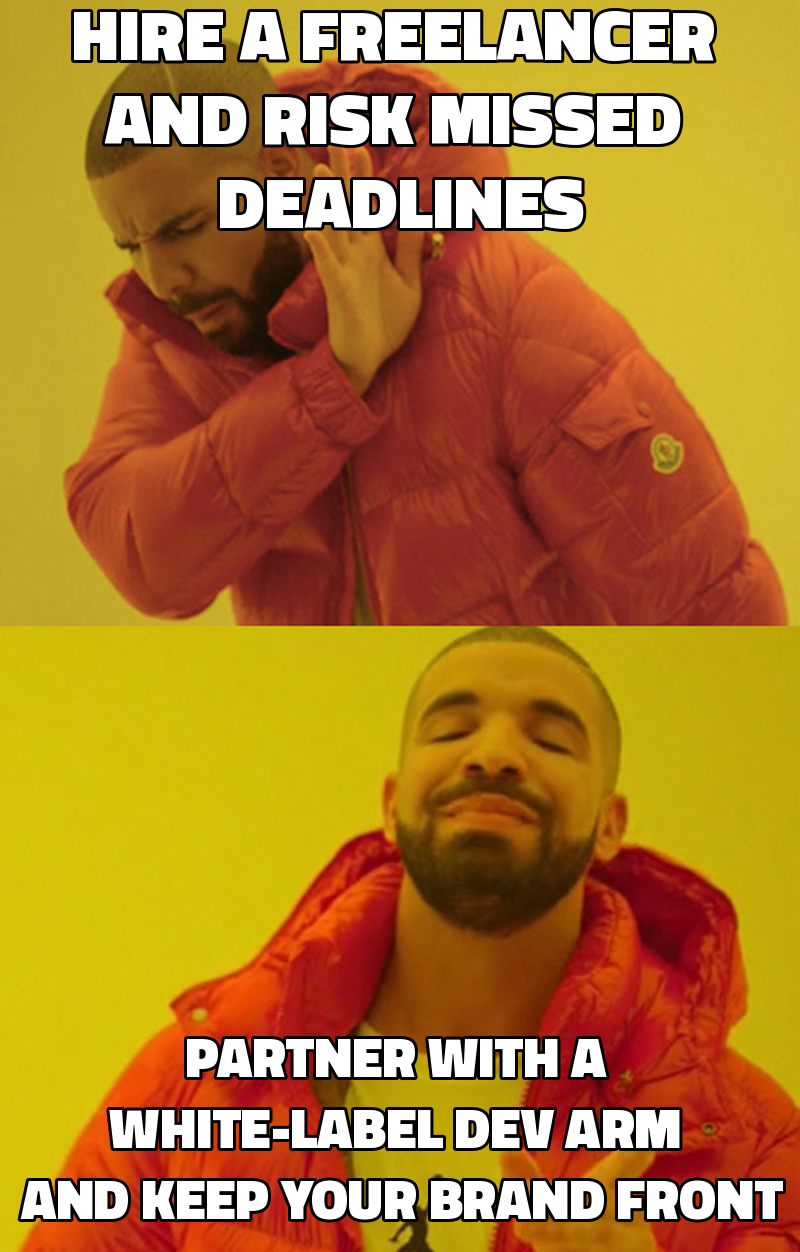
- Choose a partner with a single point of contact and a proven production SaaS (e.g., RouteMate) to avoid flaky freelancer experiences.
- Use a shared project dashboard to give the agency real-time visibility without building a full SaaS portal.
What are the top AI automation agency examples?
Agencies that have publicly documented white-label chatbot work include:
| Agency | Core Offering | Platform Used | Reported Revenue Impact |
|---|---|---|---|
| Wpromote (US) | Search + performance marketing plus AI chatbots | Dialogflow CX + custom Node.js backend | +19% average client spend (case study, 2023) |
| Elevate Digital (UK) | Brand strategy + conversational commerce | Microsoft Bot Framework + Azure Functions | +15% upsell rate on e-commerce clients (press release, 2022) |
| Boosted Media (AU) | Social media + automation | OpenAI GPT-4 API + React front-end | +12% client retention after chatbot rollout (client testimonial, 2024) |
| GrowthBot Labs (US) | Content marketing + lead gen bots | Rasa Open Source + AWS Lambda | +10% lead conversion for B2B SaaS clients (internal report, 2023) |
| ClearPath Agency (UK) | SEO + voice assistants | Google Assistant SDK + Python | +8% organic traffic for local retailers (case study, 2022) |
These agencies all share three traits: they do not list development as a service, they have a single accountable dev partner, and they market the chatbot as part of their own brand package.
Why do no-code and WordPress shops need a white-label dev arm for AI?
No-code platforms such as Zapier, Make or Bubble excel at simple form automation, but they hit hard limits when a client needs:
- Real-time natural language understanding that adapts to industry jargon.
- Multi-channel orchestration (web chat, WhatsApp, voice, SMS) with unified user state.
- Secure data handling for GDPR or CCPA compliance.
- Custom backend integrations with ERP, CRM or inventory systems.
A white-label partner brings deep expertise in LLM fine-tuning, webhook orchestration and scalable cloud architecture. According to a McKinsey 2023 survey, 62% of mid-size agencies plan to add AI services within the next 12 months, yet only 18% have internal dev capacity. The gap is exactly where a partner like Synthisia can step in.
How to structure a pilot that converts to a long-term retainer
| Step | Action | Typical Timeline | Outcome |
|---|---|---|---|
| 1. Scope definition | Joint workshop to map user intents, integration points and success metrics | 3-5 business days | Clear deliverable list and acceptance criteria |
| 2. Fixed-price quote | $2,500-$4,500 based on 30-40 dev hours, includes one revision round | 1-2 days after scope | No surprise costs, agency can quote client confidently |
| 3. Prototype demo | Deploy a single-screen chatbot on a staging domain | 1 week | Client sees brand-consistent UI and AI response quality |
| 4. Full pilot build | End-to-end chatbot with two integration points (CRM + payment) | 2-3 weeks | Live bot in production, KPI tracking enabled |
| 5. Review & upsell | Compare KPI against baseline, propose ongoing support retainer | 2-3 days post-launch | Retainer of $1,500-$2,000 per month for 15-20 hrs support |
The pilot is de-risked for both parties: the agency pays only for a bounded scope, the dev partner receives a guaranteed fee and a clear path to recurring revenue.
What legal safeguards keep the partnership invisible?
- Non-Disclosure Agreement (NDA) – standard 2-year term, signed by both companies.
- Non-Circumvent Clause – prohibits the agency from contacting the dev team’s employees directly for a period of 12 months.
- White-Label Service Level Agreement (SLA) – defines response times (48 hours for critical bugs) and uptime guarantees (99.5% on cloud hosting).
- Branding Addendum – states that all deliverables will carry the agency’s logo, color palette and domain.
These clauses are table-stakes; the real trust comes from delivering on the pilot timeline and quality. Gartner notes that 71% of successful B2B white-label relationships survive beyond the first year because of consistent delivery, not because of contract language.
How to price white-label chatbot projects for maximum margin
The Synthisia model uses a wholesale rate of 50-70% of the agency’s client bill. Example calculation:
- Client budget: $4,000 for a custom chatbot.
- Wholesale cost to Synthisia (70%): $2,800.
- Agency margin: $1,200 (30%).
When the agency adds a monthly support retainer of $1,500, the dev partner receives $900 (60%) and the agency keeps $600. Over a 12-month period the agency adds $7,200 recurring profit while the dev partner enjoys a predictable workload.
Which chatbot platforms are best for white-label delivery?
| Platform | Language Support | Multi-Channel | Pricing Model | Ideal Agency Size |
|---|---|---|---|---|
| Dialogflow CX (Google) | 20+ languages | Web, mobile, voice, WhatsApp | Pay-as-you-go, volume discounts | Agencies with enterprise clients |
| Microsoft Bot Framework | 15+ languages | Teams, Skype, web, Azure Bot Service | Included with Azure subscription | Agencies already on Microsoft stack |
| Rasa Open Source | Unlimited (self-hosted) | Any channel via custom connector | Self-hosted, no per-message cost | Agencies that need full data control |
| OpenAI GPT-4 API | 50+ languages (via prompt) | Web, Slack, custom UI | $0.03 per 1k tokens (approx) | Agencies focused on conversational AI |
| IBM Watson Assistant | 13 languages | Web, mobile, voice, IBM Cloud | Tiered subscription | Agencies with regulated industry clients |
Choosing the right platform depends on the agency’s existing tech stack, data residency requirements and the client’s budget. For most US/UK/AU agencies, Dialogflow CX offers the best balance of scalability and managed infrastructure.
How to integrate the white-label dev partner into the agency workflow
- Kickoff Call – Agency’s account manager introduces the dev point of contact (POC). Both sides share a Google Sheet with project milestones.
- Shared Dashboard – Synthisia provides a lightweight Notion board that shows ticket status, code repo links and live demo URLs. No custom SaaS is built before revenue.
- Weekly Sync – 30-minute video call to review progress, surface blockers and adjust scope.
- Client Review Loop – Agency presents the prototype to the client, gathers feedback, then routes changes back to the dev POC.
- Launch Checklist – Includes SSL, GDPR consent flow, analytics tags (Google Tag Manager) and a hand-off document for the agency’s support team.
- Post-Launch Support – Retainer covers bug fixes, model retraining and quarterly performance reports.
This lean process mirrors the “single accountable point of contact” USP and eliminates the typical hand-off friction that causes agencies to lose client trust.
What are the common pitfalls and how to avoid them?
| Pitfall | Symptom | Fix |
|---|---|---|
| Over-promising turnaround | Agency tells client "next week" but dev partner needs 3 weeks | Set a fixed turnaround band in the pilot (e.g., 2-4 weeks) and communicate it clearly to the client |
| Scope creep | Client adds new intents after demo | Include a change-order clause that prices each additional intent at a flat rate |
| Brand leakage | Client discovers the dev partner’s name in code comments | Use a branding addendum that requires all public assets to carry agency branding only |
| Pricing mismatch | Agency’s margin falls below 20% | Use the wholesale 50-70% rule and adjust pilot size accordingly |
| Technical debt | Quick prototype later becomes unstable | Allocate a 10% buffer hour for code review and documentation in every pilot |
By anticipating these issues, agencies keep their reputation intact and the partnership stays profitable.
How to market the new chatbot service to existing clients
- Case Study Email – Highlight the revenue lift from a similar client (e.g., "Our recent chatbot for a UK retailer increased online sales by 22% in 30 days").
- Webinar Series – Host a 30-minute live demo titled "How AI chatbots boost lead capture for SMBs" and invite prospects.
- Pricing Sheet – Show a tiered package: Starter ($2,500), Pro ($4,500), Enterprise (custom). Include ROI estimates based on Forrester data.
- Social Proof – Share LinkedIn posts quoting the client’s CMO and a badge that says "Powered by [Agency Name] AI".
- Cross-Sell – Bundle the chatbot with existing SEO audit or email automation packages for a 10% discount.
These tactics turn the technical pilot into a marketable service line that fuels agency growth.
Comparison: White-Label vs In-House Development
| Criterion | White-Label Partner | In-House Team |
|---|---|---|
| Upfront Cost | Low (pay per project) | High (salary, benefits, equipment) |
| Speed to Market | Faster due to existing expertise | Slower while team ramps up |
| Quality Assurance | Proven track record, dedicated QA | Depends on hiring quality, may lack depth |
| Scalability | Unlimited, partner can add resources | Limited by headcount and budget |
| Brand Control | Full white-label, agency keeps client face | Direct control but risk of internal bottlenecks |
| Risk Exposure | Contractual, limited to project scope | High, includes hiring risk and turnover |
The table illustrates why a 5-15 person agency typically sees higher ROI by outsourcing AI builds.
Real-world success story: RouteMate and Synthisia
RouteMate, a logistics SaaS founded in 2022, needed a custom chatbot to handle driver onboarding and shipment tracking. The agency "LogiGrowth" (UK) lacked dev capacity. Synthisia delivered a Dialogflow CX bot integrated with RouteMate’s PostgreSQL backend and Twilio SMS gateway in 3 weeks. The pilot cost $4,200, and LogiGrowth kept a 65% margin. After launch, RouteMate reported a 28% reduction in support tickets and a 15% increase in driver self-service completion rates (internal analytics, 2023). The success led LogiGrowth to sign a $1,800 monthly retainer for ongoing bot enhancements, creating a predictable revenue stream.
Checklist for agencies ready to add white-label AI chatbots
- Verify no-code agency does not list development as a service.
- Identify at least one current client with a chatbot need.
- Conduct the 10-second site test (services page check).
- Prepare a brief scope worksheet (intents, integrations, KPI).
- Sign NDA and non-circumvent agreement with Synthisia.
- Agree on pilot budget ($2,500-$5,000) and timeline (2-4 weeks).
- Set up shared Notion dashboard for status tracking.
- Plan a launch announcement (email, LinkedIn, case study).
Following this checklist reduces friction and accelerates the first paid delivery.
Frequently asked questions
How long does a typical white-label chatbot pilot take?
A pilot usually runs 2-4 weeks from scope sign-off to live deployment. The first week covers discovery and design, weeks two and three handle development and integration, and the final few days are for QA and client review. This timeline balances speed with enough time to fine-tune the language model.
What platforms can I offer without learning code myself?
You can resell solutions built on Dialogflow CX, Microsoft Bot Framework or Rasa while the dev partner handles the underlying code. The agency only needs to configure intents in the platform UI and provide branding assets. The dev partner translates those configs into a production-ready bot.
How do I protect my brand if the dev partner builds the code?
A branding addendum in the contract requires the partner to strip all internal comments, use your logo on UI components and host the bot under your domain. All public-facing documentation and support tickets are routed through your agency’s support channel.
What if a client wants a voice-enabled assistant instead of a text chat?
The same white-label partner can extend the bot to Google Assistant, Amazon Alexa or custom IVR using the same backend. Voice adds about 20% more development time, which is reflected in the pilot quote.
Can I charge a retainer for ongoing bot maintenance?
Yes. After the pilot, most agencies move to a $1,500-$2,500 monthly retainer that covers up to 20 hours of bug fixes, model retraining and new intent additions. This creates a recurring revenue stream and keeps the bot performant.
How do I measure ROI for a chatbot project?
Track metrics such as lead conversion rate, average handling time, support ticket deflection and revenue per conversation. For example, a retail chatbot that captures 120 qualified leads per month at $150 average sale yields $18,000 additional revenue, easily covering a $4,000 pilot cost.
What if the client asks to see the source code?
Under a white-label agreement the source code remains the property of the dev partner, but you can provide a compiled version or a read-only repository link. If a client insists on ownership, negotiate a separate licensing fee that adds to your margin.
Do I need to hire a project manager to handle the partnership?
A dedicated project manager is optional but helpful for agencies with more than 10 staff. For smaller shops, the agency founder can act as the single point of contact and still maintain a smooth workflow.
Next steps for agencies
- Run the qualification test – ensure your agency fits the ICP.
- Book a discovery call with Synthisia to map a pilot scope.
- Sign the NDA and white-label SLA – it takes less than an hour.
- Kick off the pilot and deliver a live chatbot within 3 weeks.
- Review results, propose a retainer, and start marketing the new service.
By following this framework you turn a single chatbot request into a scalable, high-margin revenue stream while keeping your brand front and centre.
Ready to say yes to every AI automation request? Contact Synthisia today and unlock the silent dev arm that powers your agency’s growth.
---
white-label
Have something to build?
Tell us what you're trying to ship. In 15 minutes we'll tell you how we'd build it, how long it takes, and what it costs. No pitch deck, no pressure.