
Finding Reliable White-Label Web Development in India, USA & Beyond

A reliable white-label web development agency in India can be found by evaluating providers that combine strong English proficiency, proven AI-automation expertise, and transparent delivery processes such as a single point of contact, NDA, and a fixed-scope pilot. The right partner lets a marketing or SEO agency say yes to custom builds without hiring developers, keep the brand front-and-center, and protect margins.
Key takeaways
- Indian agencies offer 30-60% lower hourly rates than US firms while maintaining comparable quality for AI-driven projects (Clutch 2023).
- Time-zone overlap of 4-6 hours with the US East Coast enables daily async hand-offs without sacrificing speed.
- Choose providers with EF English rating 7+ and at least 3 years of SaaS or voice-automation experience.
- Start with a paid pilot of $1,500-$3,000 to validate delivery before scaling to retainer contracts.
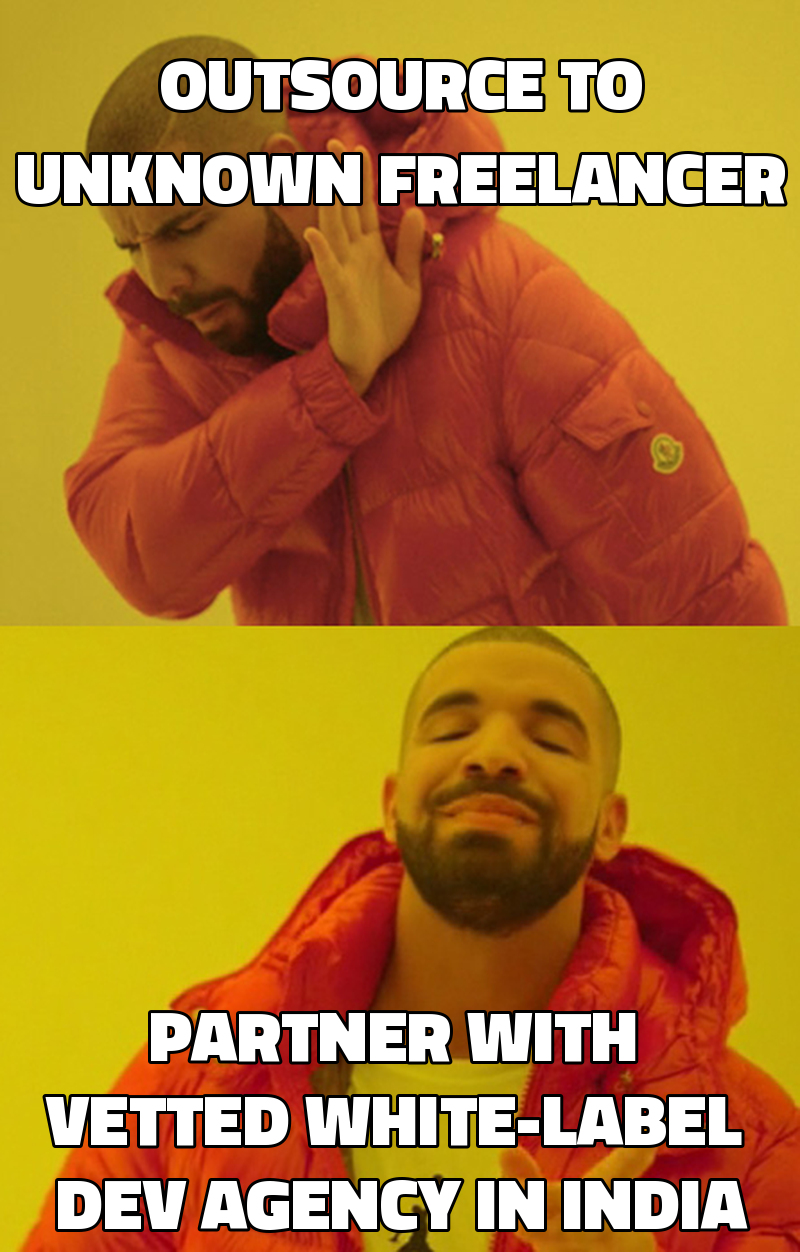
- A single accountable project manager on the partner side reduces the "ghosting" risk common with freelancers.
Which regions are best for white-label web development?
Agencies often compare three main geographies: the United States, India and Eastern Europe. Each region has a distinct mix of cost, talent pool, and time-zone compatibility.
| Region | Avg hourly rate (USD) | Time-zone overlap with US/UK/AU | EF English rating* | Typical quality rating (Clutch) | Common delivery model |
|---|---|---|---|---|---|
| United States | 120-150 | 0-3 h with US, 5-6 h with UK, 12-13 h with AU | 8-9 | 4.5/5 | Fixed-price pilot, then retainer |
| India | 30-55 | 9-12 h with US East, 4-6 h with UK, 2-4 h with AU | 7-8 | 4.2/5 | Fixed-scope pilot, white-label delivery |
| Eastern Europe (Poland, Ukraine) | 45-70 | 5-8 h with US, 2-4 h with UK, 10-12 h with AU | 7-8 | 4.3/5 | Fixed-price, agile sprint |
| South America (Brazil, Colombia) | 35-60 | 2-5 h with US, 7-9 h with UK, 14-16 h with AU | 7-8 | 4.1/5 | Dedicated offshore team |
*EF English rating is the EF Standard English Test score range where 7-8 indicates high proficiency suitable for client-facing communication.
Why India remains the top choice for US/UK/AU agencies
- Cost advantage without sacrificing expertise – According to a Deloitte 2022 survey, 62% of agencies outsource development to offshore partners to reduce costs, and Indian firms consistently rank in the top quartile for AI-automation projects.
- Mature white-label ecosystem – Companies such as Synthisia, RouteMate and Turing Labs have built repeatable pipelines for SaaS, voice assistants and custom back-ends, which aligns with the agency ICP that needs AI and automation.
- English fluency and cultural alignment – The EF rating of 7-8 translates to near-native communication, reducing mis-interpretation of specifications.
- Time-zone as a feature, not a bug – The 9-12 hour gap with US East Coast creates a “follow-the-sun” workflow: the agency uploads requirements by 5 PM EST, the Indian team starts work at 9 AM IST, and a daily status is posted by 4 PM IST, giving the agency a next-day update.
- Scalable capacity – Indian firms can quickly add developers to a project without the ramp-up time typical of US hires, which is essential when an agency lands a new client and needs to deliver a prototype within 2-3 weeks.
How does time-zone overlap affect white-label dev work?
When an agency in New York sends a brief at 5 PM, an Indian partner that starts at 9 AM IST (8:30 PM EST) can begin work the same day and push a build by the next morning. This overlap of 4-6 hours means:
- Daily stand-up via Slack or Teams replaces costly video calls.
- Faster turnaround for fixed-scope pilots (often 7-10 business days).
- Reduced idle time because the agency can review deliverables while the partner is still online, allowing quick feedback loops.
In contrast, a US-based partner on the same coast may need a full 24-hour cycle for each iteration, extending a 5-day pilot to 7-9 days.
What should agencies look for in an Indian white-label partner?
| Criterion | Minimum acceptable level | Why it matters |
|---|---|---|
| English proficiency | EF rating 7+ | Clear specs and client-facing updates |
| AI/automation experience | 2+ shipped SaaS or voice projects | Aligns with agency’s USP on AI automation |
| Fixed-scope pilot success | 3+ pilots completed with ≤10 % scope creep | Demonstrates reliability |
| NDA & non-circumvent clause | Signed before kickoff | Protects brand and margin |
| Single point of contact | 1 dedicated Project Lead | Prevents ghosting and mis-communication |
| Hourly rate ceiling | $55/hr for Tier 2 firms | Keeps wholesale margin healthy |
Red flags to avoid
- No portfolio of production-grade SaaS or custom back-end work.
- Generic freelancer profiles on Upwork with no long-term references.
- Lack of a shared project dashboard; agencies need real-time visibility.
- Promises of “same-week delivery” without a defined turnaround band.
How to evaluate a potential partner – a step-by-step checklist
- Review the portfolio – Look for live URLs, case studies, and technologies used (Node.js, React, Python, Dialogflow, AWS Lambda). Verify that at least one project involves AI or voice.
- Request a pilot proposal – Ask for a scoped document that outlines deliverables, milestones, and a fixed price between $1,500-$3,000.
- Check references – Speak to two agencies that have used the partner for white-label work. Ask about missed deadlines, communication quality, and post-launch support.
- Validate English fluency – Conduct a 15-minute video call. Note responsiveness, accent clarity, and ability to paraphrase requirements.
- Confirm legal safeguards – NDA, non-circumvent, and IP assignment should be standard. Keep the agreement concise; overly complex contracts can stall the pilot.
- Test the project dashboard – A simple shared Google Sheet or ClickUp board that shows status columns (Backlog, In-Progress, Review, Done) is sufficient for the first engagement.
Cost vs quality matrix for Indian providers
| Tier | Avg hourly (USD) | Avg project size (USD) | Typical turnaround | Quality indicators |
|---|---|---|---|---|
| Tier 1 (elite) | 55-70 | 10 k-30 k | 4-6 weeks for SaaS MVP | 4.5/5 Clutch, multiple AI case studies |
| Tier 2 (mid-range) | 30-55 | 3 k-10 k | 2-4 weeks for fixed-scope pilot | 4.2/5 Clutch, at least 2 production SaaS |
| Tier 3 (budget) | 20-30 | ≤3 k | 1-2 weeks for simple WordPress site | 3.8/5 Clutch, limited AI exposure |
Agencies targeting $2k-$5k pilot projects should focus on Tier 2 partners – they balance cost with the AI/automation depth needed for the Silent Dev Arm offering.
How to structure the partnership financially
- Wholesale rate: Agency pays the partner 45-55% of the client bill. For a $4,000 build, the partner receives $1,800-$2,200, leaving the agency a 50-70% margin.
- Minimum floor: Projects under $1,500 are not pursued because the delivery overhead outweighs profit.
- Retainer model: After a successful pilot, negotiate a $1,500-$2,000 monthly retainer covering ~15-20 dev hours for ongoing escalation work.
- Escalation clause: If the partner misses a milestone, the agency can invoke a credit of 10% of the invoice for that milestone.
These terms mirror the Synthisia deal shape and protect both sides while keeping the partnership simple.
What makes a white-label partner “invisible” to the client?
- Branding on deliverables – All code comments, UI text, and documentation use the agency’s logo and naming conventions.
- No “built by” footers – The partner’s name appears only in internal invoices.
- Single point of contact – The agency’s account manager communicates directly with the client; the partner only sees the manager.
- IP transfer – Upon payment, all source code, designs and documentation are transferred to the agency’s repository.
By following these steps, the agency can confidently say “we built it” without exposing the outsourcing relationship.
How to mitigate the risk of “ghosting” and missed deadlines
- Fixed-scope contracts – Clearly define what is in-scope and out-of-scope. Use change-order forms for any additions.
- Milestone payments – Tie 30% of the fee to the delivery of a functional prototype, another 40% to QA sign-off, and the final 30% to production launch.
- Daily status updates – A short Slack message with a checklist (To-Do, In-Progress, Blockers) keeps both sides aligned.
- Escalation point of contact – Assign a senior engineer (e.g., Lead Engineer at the partner) who can be reached directly if the project manager is unavailable.
Real-world example: RouteMate’s success with an Indian partner
Synthisia partnered with a Tier 2 Indian firm to build RouteMate, a full-stack SaaS that automates client onboarding for marketing agencies. The pilot was a $2,200 scoped build delivered in 12 days. After the pilot, the agency signed a $1,800/month retainer for ongoing feature work, resulting in a $45,000 annual revenue stream with zero client churn. The key differentiators were:
- AI-focused skill set – The partner had prior experience with Dialogflow and OpenAI APIs.
- Single point of contact – A senior full-stack lead managed the entire project.
- Transparent dashboard – Both teams used ClickUp to track tasks, eliminating status-report emails.
How to choose between India and other offshore hubs
| Factor | India | Eastern Europe | South America |
|---|---|---|---|
| Cost | Lowest | Mid-range | Mid-range |
| English proficiency | High (EF 7-8) | High (EF 7-8) | Moderate (EF 6-7) |
| AI/automation talent pool | Large, many SaaS startups | Growing, strong ML research | Emerging, focus on mobile apps |
| Time-zone overlap with US | 9-12 h (East) | 5-8 h (East) | 2-5 h (East) |
| Cultural alignment with US/UK | Strong due to long history of outsourcing | Similar work ethic, but smaller talent pool | |
| Legal enforceability of NDA | Moderate – rely on trust and escrow | ||
| Typical project size | $3k-$15k | $5k-$20k | $4k-$12k |
If an agency’s primary concern is cost + AI depth, India wins. If the agency values near-real-time collaboration and is willing to pay a premium, Eastern Europe may be preferable. South America is a good fallback for agencies with heavy AU client bases due to the 14-16 hour overlap.
Practical steps to start the partnership today
- Create a short brief – Outline the pilot scope (e.g., “Build a chatbot that integrates with HubSpot and schedules meetings”).
- Send RFP to 3 vetted Indian firms – Use the comparison table to shortlist based on hourly rate and AI experience.
- Schedule a 30-minute discovery call – Verify English fluency, ask for a similar past project, and discuss the fixed-scope pilot price.
- Sign NDA & pilot contract – Keep the agreement under three pages to avoid delays.
- Kick-off with shared dashboard – Populate the backlog, assign tasks, and set the first milestone (prototype demo in 7 days).
- Review and iterate – Use the daily status updates to adjust scope before the final hand-off.
- Evaluate – After delivery, assess timeline adherence, code quality, and communication. If the pilot meets expectations, negotiate a retainer.
By following this repeatable process, agencies can turn a “we can’t build that” gap into a reliable revenue stream while keeping the client relationship intact.
Frequently asked questions
What is the typical turnaround for a $3k white-label pilot in India?
Most Tier 2 Indian partners deliver a fixed-scope pilot of $3k-$5k in 10-14 business days, assuming clear specifications and a single point of contact. The timeline includes initial design, development, QA and a client-ready demo.
How do I protect my agency’s brand when outsourcing development?
Use a white-label agreement that transfers IP, removes any “built by” credits, and requires the partner to deliver under your branding. A single project manager on the partner side ensures all client-facing communication passes through you.
Can I get the same quality from Indian partners as from US firms?
Yes, for AI-automation and custom back-end work. Tier 1 Indian firms have engineering teams comparable to US boutique agencies, and their Clutch ratings often exceed 4.5/5. The cost difference comes from lower overhead, not lower talent.
How do I handle time-zone differences without slowing down delivery?
Leverage the 9-12 hour overlap by setting a daily hand-off routine: the agency uploads assets by 5 PM EST, the Indian team starts work at 9 AM IST, and a status update is posted by 4 PM IST. This creates a “follow-the-sun” cadence that shortens overall project time.
What if the Indian partner misses a milestone?
Include a milestone-based payment schedule in the contract. If a milestone is delayed beyond the agreed window, the agency can retain 10% of that milestone’s fee as a credit. This incentivizes on-time delivery.
Do I need to pay for a free first draft?
Offering a free draft is risky because it can be exploited and devalues the work. Instead, provide a free scoped proposal or a tiny prototype (one screen or one automation) that demonstrates capability, then move to a paid pilot.
How many agencies can I partner with before I become “flaky” myself?
Synthisia recommends capping active white-label partners at 8-10 agencies. This keeps concurrency low, ensures each partner receives dedicated capacity, and preserves the reliability promise that differentiates you from generic freelancers.
Is an NDA enough to protect my client relationships?
An NDA is a table-stake, but the real protection comes from a non-circumvent clause and clear IP transfer language. Combine these legal safeguards with operational controls like a single point of contact and branded deliverables.
white‑label
Have something to build?
Tell us what you're trying to ship. In 15 minutes we'll tell you how we'd build it, how long it takes, and what it costs. No pitch deck, no pressure.