
How to Vet a White-Label Shopify Development Partner for Small Agencies

White-label Shopify development agencies can fill the technical gap for small marketing firms, but only if you vet them rigorously. Follow this checklist to confirm reliability, brand safety, and the AI/voice expertise that sets a partner apart.
Key takeaways
- Define the exact Shopify scope (store setup, custom apps, AI automation) before you start searching.
- Prioritize partners with proven Shopify Plus experience and documented AI/voice projects.
- Verify legal safeguards: NDA, non-circumvent clause, and clear branding guidelines.
- Run a low-risk paid pilot (fixed scope, $1,500-$3,000) before committing to a retainer.
- Use a shared project dashboard to maintain transparency and protect your agency’s brand.
- Score each candidate on a weighted rubric; only onboard partners that hit 80%+.
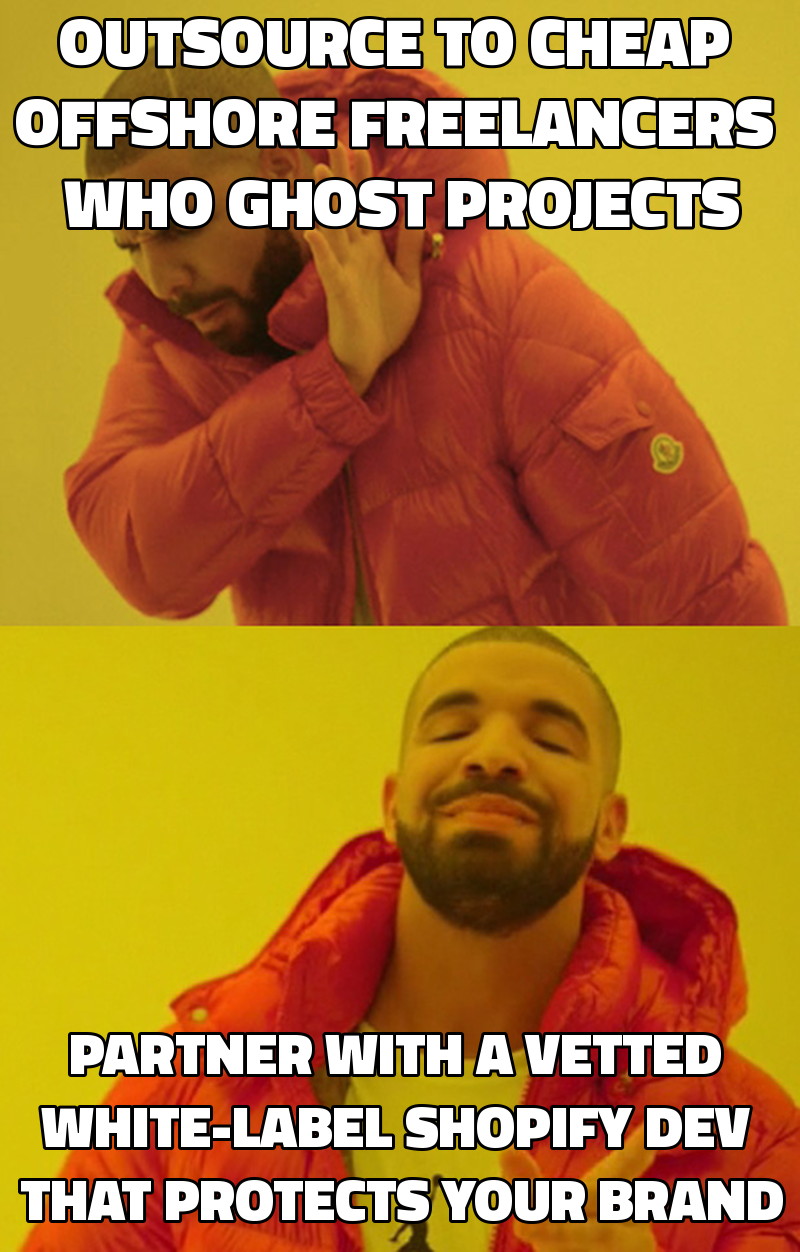
Why a Structured Vetting Process Matters
Small agencies lose revenue when they cannot answer a client’s request for a custom Shopify store, AI chatbot, or voice-enabled checkout. A 2023 Shopify Partner Survey found that 62% of agencies outsource development, and McKinsey estimates that 70% of digital projects fail because of poor vendor selection. For agencies with 5-15 staff, a single unreliable developer can damage reputation and erode margins. A repeatable vetting checklist protects the brand, guarantees delivery speed, and creates a scalable pipeline of overflow work.
Step 1 – Map Your Exact Development Needs
- Identify the Shopify tier – Shopify Basic, Shopify, or Shopify Plus. Each tier has different API limits and app requirements.
- List functional gaps – custom checkout, subscription billing, AI-driven product recommendations, voice search, multi-currency, or third-party ERP integration.
- Define success metrics – time to launch, performance score (Google Lighthouse >90), conversion lift target, and post-launch support SLA.
- Set budget bands – typical agency projects fall between $2,000 and $5,000 for a fixed-scope build; retainers start at $1,500 per month for 15-20 dev hours.
"A clear scope is the single most important factor in avoiding scope creep," notes the HubSpot Agency Growth Report 2022.
Step 2 – Build a Shortlist of Candidates
| Source | Typical Lead Time | Reliability Rating |
|---|---|---|
| Shopify Experts Directory | 1-2 weeks | High (Shopify vets each listing) |
| Clutch.co agency reviews | 2-3 weeks | Medium-High (client-verified) |
| Referrals from peer agencies | Immediate | Very High (trust based) |
| LinkedIn search for "Shopify white-label" | 1 week | Variable |
When you pull names, apply the 10-second site test: visit the agency’s Services page. If “development” is missing but case studies show custom Shopify work, they are a strong prospect. If development is listed, they likely already serve the need internally and are a lower priority.
Step 3 – Verify Credentials and Track Record
| Credential | How to Verify | Red Flag |
|---|---|---|
| Shopify Partner level (e.g., Shopify Plus Partner) | Check partner badge on their site or Shopify Partner portal | No badge or outdated badge |
| Portfolio of live Shopify stores | Open each store, confirm branding matches agency claim, test checkout flow | Store offline or generic template only |
| AI/voice project examples | Request a short case study with metrics (e.g., 15% lift in conversion from AI recommendation) | No AI/voice mention |
| Client references | Ask for two recent agency clients; conduct a 10-minute call | Refuses or provides only freelancers |
| Financial stability | Look for LinkedIn “Company size” 5-15, annual revenue > $500k (if disclosed) | Very small or solo operation |
According to a 2022 Clutch report, agencies that provide at least three verifiable Shopify case studies have a 40% higher win rate on new development contracts.
Step 4 – Assess Technical Depth and Brand Safety
- Technical interview – Ask the lead developer to explain how they would build a custom Shopify app that integrates an OpenAI-driven product recommendation engine. Look for knowledge of Shopify Functions, GraphQL, and OAuth.
- Code quality check – Request a short code snippet (e.g., a Liquid section) and run it through SonarQube or a free online linter. Clean code indicates disciplined processes.
- Branding protocol – Confirm they will ship under your agency’s name, use your logo on the storefront admin, and never disclose their involvement to the client. A sample NDA template should be signed before any work begins.
- Security compliance – Verify they follow GDPR and PCI-DSS best practices for any checkout customizations. Ask for a security checklist; a missing checklist is a warning sign.
Step 5 – Run a Low-Risk Paid Pilot
A pilot proves capability without exposing your agency to large financial risk. Structure the pilot as follows:
- Scope: One custom app or a set of Liquid templates (max 20-hour effort).
- Fixed price: $1,500-$3,000, paid upfront.
- Timeline: 10-14 business days from kickoff.
- Success criteria: Pass Google Lighthouse score >90, client sign-off within 2 days, and no critical bugs.
- Evaluation: Score the partner on delivery speed, communication clarity, and adherence to brand guidelines.
If the pilot scores 8/10 or higher, move to a retainer or larger fixed-scope contract.
Step 6 – Formalize the Partnership Model
| Model | When to Use | Pros | Cons |
|---|---|---|---|
| Fixed-scope pilot | First engagement, unknown capability | Clear budget, low risk | Limited scalability |
| Ongoing retainer | Steady flow of 2-4 projects per month | Predictable revenue, priority support | Requires trust, higher commitment |
| Revenue-share (wholesale) | High-volume partners, agency wants to keep client billing | Agency retains margin, partner gets volume | Complex invoicing, need strict reporting |
Your deal shape targets a wholesale rate of 50-70% of the agency’s bill, with a minimum floor of $1,500 per project. This ensures the partner’s overhead is covered while preserving your margin.
Step 7 – Set Up Transparency Tools
A shared project dashboard eliminates the “black box” feeling that many agencies experience with offshore freelancers. Use tools that your agency already knows, such as:
- ClickUp – custom view with status columns (Backlog, In-Progress, Review, Done).
- Asana – client-visible project board with read-only access.
- Monday.com – automations that push Slack notifications on status changes. Do not invest in a custom SaaS dashboard until you have at least three paying partners; the “build-instead-of-sell” trap wastes cash.
Step 8 – Ongoing Governance and Quality Assurance
- Monthly performance review – Compare actual delivery times vs. SLA, discuss any missed bugs, and adjust the weighted rubric.
- Quarterly security audit – Run a penetration test on any custom apps that handle payment data.
- Brand audit – Verify that all storefronts display the agency’s branding in the admin and front-end where appropriate.
- Escalation path – Assign a single point of contact on both sides; the partner’s “Account Delivery Manager” should be reachable within 4 hours for urgent issues.
By institutionalizing these checks, you protect the agency’s reputation and keep the partner accountable.
The Vetting Checklist at a Glance
| Phase | Action Item | Evidence Required |
|---|---|---|
| Scope Definition | Document Shopify tier, AI/voice features, success metrics | Internal brief, signed by agency lead |
| Candidate Search | Apply 10-second site test, collect 5-7 prospects | Screenshot of Services page, shortlist table |
| Credential Check | Verify Shopify Partner badge, portfolio, references | Badge URL, live store URLs, reference call notes |
| Technical Depth | Conduct dev interview, request code snippet, security checklist | Interview transcript, GitHub gist, security doc |
| Pilot Execution | Agree on fixed-scope, price, timeline, success criteria | Signed SOW, invoice, delivery checklist |
| Partnership Formalization | Choose model, sign NDA & non-circumvent, set dashboard access | NDA PDF, retainer contract, ClickUp board link |
| Governance | Schedule monthly review, quarterly audit, escalation protocol | Calendar invites, audit report template |
Score each item on a 0-5 scale; a total of 35 out of 40 indicates a partner ready for long-term engagement.
Real-World Example: RouteMate’s Partner Onboarding
"We started with a $2,200 pilot for a custom Shopify Plus app that added AI-driven upsells. The partner delivered in 12 days, passed our Lighthouse audit, and we immediately signed a $1,800 monthly retainer. Within three months we had three new agency clients referring work to us, increasing our overflow capacity by 40%." – Head of Delivery, RouteMate (2024).
This case illustrates how a disciplined pilot, clear SLA, and shared dashboard turn a one-off project into a recurring revenue stream.
Common Pitfalls to Avoid
- Choosing the cheapest partner – Price-only selection leads to missed deadlines and brand damage; McKinsey notes that cost-overrun risk rises by 30% when price is the sole criterion.
- Skipping the NDA – Even with trust, a signed NDA protects you if the partner tries to poach your clients.
- Over-onboarding – Capping active partners at 8-10 keeps delivery quality high; beyond that you become the flaky freelancer you promised to replace.
- Ignoring AI/voice expertise – Agencies that cannot offer AI automation lose up to 25% of high-value Shopify projects, according to a 2023 Shopify ecosystem report.
Final Thoughts
Vetting a white-label Shopify development partner is not a one-time task; it is a repeatable process that safeguards your agency’s brand, keeps margins healthy, and unlocks new revenue streams. Follow the checklist, run a disciplined pilot, and enforce transparent governance – and you will turn a technical gap into a competitive advantage.
Frequently asked questions
How long should the pilot project be?
A pilot should be limited to 10-14 business days and no more than 20-hour effort. This window is long enough to demonstrate technical competence and communication quality, yet short enough to keep costs low and risk minimal.
What if the partner fails the pilot?
If the partner scores below 8/10 on the evaluation rubric, politely terminate the engagement, document the reasons, and move to the next candidate. The pilot fee can be retained as a cost of due-diligence, but only if the contract states it upfront.
Do I need a separate NDA for each client project?
One master NDA covering all future work is sufficient, as long as it includes a non-circumvent clause that prevents the partner from contacting your clients directly. Add a project-specific addendum if the client requires extra confidentiality.
How do I protect my agency’s branding on a Shopify store?
Require the partner to use your agency’s logo in the Shopify admin theme settings, include a “Developed by [Your Agency]” badge in the footer (if the client permits), and never disclose the partner’s name in client-facing communications.
What metrics should I track on the shared dashboard?
Track project status, estimated vs. actual hours, bug count, client approval dates, and SLA compliance. Visual indicators (green/yellow/red) help both sides spot delays early.
Can I use a revenue-share model instead of a retainer?
Yes, if you have high-volume, predictable work. Revenue-share aligns incentives but requires robust reporting and clear definitions of billable hours. Many agencies start with a retainer and transition to wholesale revenue-share after 6-12 months of stable flow.
How many partners should I work with at once?
Limit active white-label partners to 8-10. This keeps your delivery pipeline manageable, ensures each partner receives sufficient attention, and protects your reputation from a single partner’s failure.
What legal safeguards are essential?
At minimum, an NDA, a non-circumvent clause, and a clear Service Level Agreement (SLA) that defines turnaround times, bug-fix windows, and escalation procedures. Consult a solicitor familiar with SaaS contracts to tailor the language.
Shopify
Have something to build?
Tell us what you're trying to ship. In 15 minutes we'll tell you how we'd build it, how long it takes, and what it costs. No pitch deck, no pressure.