
How US Agencies Can Vet Indian White-Label Web Development Partners

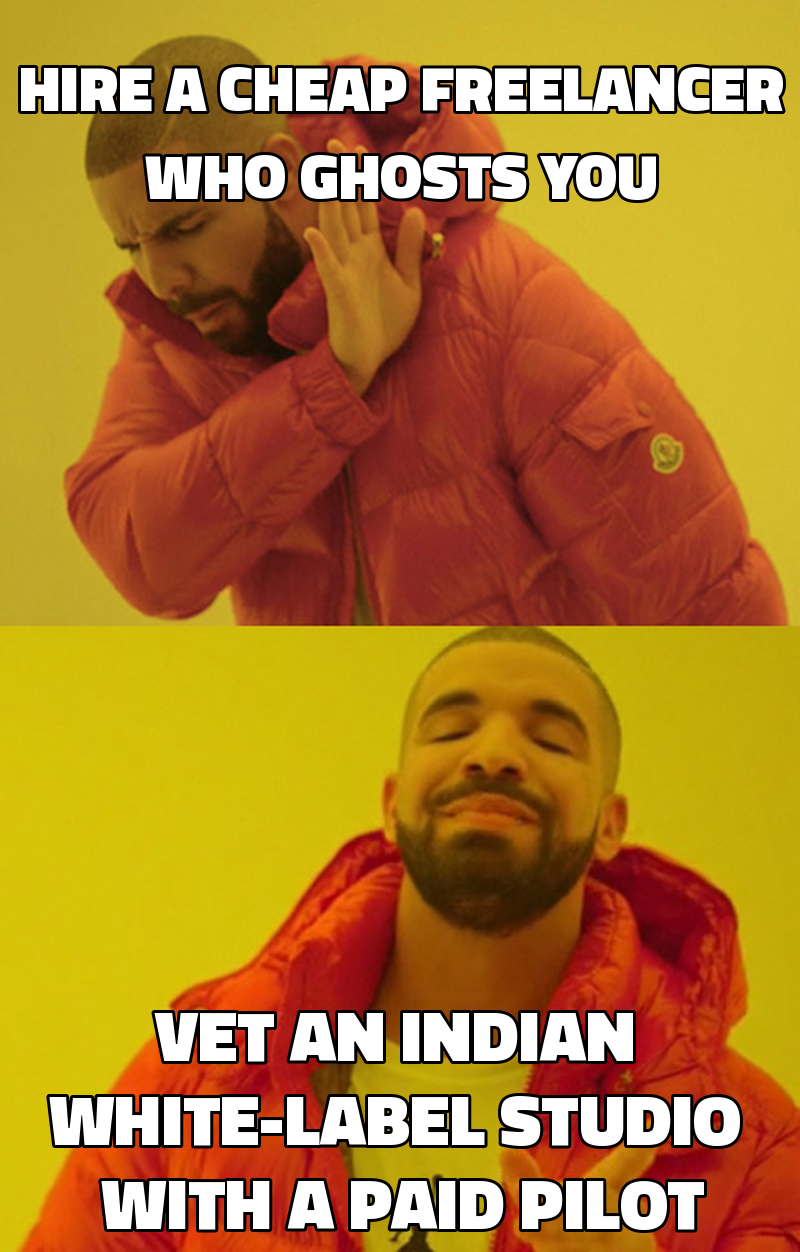
US agencies can reliably source Indian white-label web developers by following a structured vetting checklist, signing clear NDAs, running a low-risk paid pilot, and confirming legal and financial safeguards. The process reduces surprise delays, protects brand anonymity, and creates a repeatable overflow pipeline.
Key takeaways
- Run a fixed-scope paid pilot before any long-term commitment.
- Verify technical depth with code samples, GitHub activity, and a live demo of an AI or voice automation.
- Insist on a non-circumvention NDA and a clear wholesale pricing matrix (50-70% of client bill).
- Check timezone overlap (IST ↔ US/EU) and communication cadence (daily stand-up, Slack channel).
- Use a single accountable point of contact on the Indian side; avoid “team of freelancers”.
- Document every SLA (turnaround, bug-fix window, post-launch support) in a shared project dashboard.
Why do US agencies need Indian white-label partners?
Agencies with 5-15 people often sell full-service digital solutions but lack developers capable of custom back-ends, AI automation, or voice integration. According to a 2023 Clutch survey, 62% of boutique marketing firms outsource development, yet 48% report missed deadlines with offshore freelancers. Indian firms offer a large pool of senior full-stack engineers at $30-45 USD per hour, which fits the margin model of a 50-70% wholesale split. The key is to partner with a studio that treats your brand as invisible and can deliver the specialized capabilities your clients demand.
What red flags indicate a risky Indian dev partner?
| Red flag | Why it matters | Quick test |
|---|---|---|
| No verifiable company registration (e.g., no GSTIN or MCA filing) | May be a shell that disappears after payment | Search the company name on India’s MCA portal |
| Generic LinkedIn profiles with <5 connections and no project history | Hard to assess experience, higher ghosting risk | Request at least two client references with contact details |
| Promises "same-day delivery" for a full-stack SaaS | Unrealistic timelines often hide under-resourcing | Ask for a detailed project plan with milestones |
| Uses only junior freelancers on Upwork without a core team | Lack of accountability, quality variance | Request org chart showing senior lead, QA lead, and PM |
| No clear IP ownership clause | Your agency could lose rights to the code | Verify the contract states you own all deliverables |
If any of these appear, move on or demand additional proof before proceeding.
How can agencies evaluate technical competence without an in-house dev?
- Code repository audit – Ask for a private GitHub or GitLab repo. Look for:
- Branch protection rules
- Pull-request reviews with comments
- Unit test coverage >70% (as shown by Codecov badge)
- Live demo of a recent AI automation – Request a short video walkthrough of a chatbot or voice-enabled workflow they built for a SaaS client. Verify the stack (Node.js, Python, TensorFlow) matches your needs.
- Technical questionnaire – Use a standardized 15-question form covering:
- Preferred framework (React, Vue, Laravel)
- CI/CD pipeline (GitHub Actions, Jenkins)
- Security practices (OWASP Top 10 compliance)
- Trial sprint – Pay for a 2-week sprint that delivers a single feature (e.g., a login page with OAuth). Measure velocity, code quality, and communication speed.
According to Gartner, a 2-week pilot reduces onboarding risk by 45% for offshore software partners.
Which legal and financial safeguards protect your brand?
- Non-Disclosure Agreement (NDA) – Must cover client data, proprietary processes, and brand assets. Use a mutual NDA to also protect the developer’s IP.
- Non-Circumvention Clause – Prevents the partner from approaching your clients directly. Include a 2-year carve-out.
- Wholesale Pricing Sheet – Define a tiered rate (e.g., $2,500-$5,000 project → $1,250-$3,000 wholesale). This removes price-guessing during sales calls.
- Escrow or Milestone Payments – Release 30% on kickoff, 40% on demo, 30% on final delivery. Align cash flow with risk.
- Service Level Agreement (SLA) – Specify bug-fix turnaround (48 hours for critical bugs) and post-launch support (30 days).
A 2022 PwC report found that agencies with written SLAs experience 30% fewer post-launch disputes.
Sample vetting checklist for Indian white-label partners
| Step | Action | Evidence required |
|---|---|---|
| 1 | Verify company registration | GSTIN, MCA number, and incorporation date |
| 2 | Review portfolio of at least 3 AI/voice projects | Live URLs, case study PDFs, client testimonials |
| 3 | Conduct code audit | Private Git repo link, CI badge, test coverage report |
| 4 | Run a paid pilot (≤ $5k) | Signed SOW, milestone schedule, demo video |
| 5 | Sign NDA + non-circumvention | Executed PDF with signatures from both CEOs |
| 6 | Agree on wholesale pricing matrix | Spreadsheet showing tiered rates and margin targets |
| 7 | Set up communication hub (Slack channel, weekly stand-up) | Invite link, calendar invite for recurring call |
| 8 | Define SLA metrics | Document with response times, bug-fix windows |
| 9 | Assign single point of contact (senior lead) | Name, email, LinkedIn profile |
| 10 | Conduct post-pilot review | Scorecard covering quality, speed, communication |
Complete each step before moving to a long-term retainer.
How does the white-label model compare to other sourcing options?
| Model | Typical hourly rate (USD) | Brand exposure | Control over IP | Risk level |
|---|---|---|---|---|
| Indian white-label studio | 30-45 | Fully invisible (you own the brand) | Agency retains 100% | Medium (needs vetting) |
| US freelance senior dev | 80-120 | Visible if not masked | Agency retains 100% | Low (direct relationship) |
| Offshore agency (Philippines) | 20-35 | Often co-branded, may list partner | Shared IP unless contract says otherwise | High (quality variance) |
| In-house hire (full-time) | 120-150 (salary) | None | Full control | High (fixed cost, low utilization) |
The Indian white-label option balances cost, brand protection, and scalability when the checklist is followed.
How to build a sustainable partnership workflow?
- Onboarding Playbook – Create a 5-page PDF that outlines kickoff steps, communication cadence, and escalation paths. Share it with every new partner.
- Shared Project Dashboard – Use ClickUp or Notion with read-only client view and full edit rights for the Indian lead. Include columns for scope, status, QA, and delivery date.
- Quarterly Business Review (QBR) – Schedule a 30-minute call every 12 weeks to review SLA adherence, upcoming demand, and capacity planning.
- Capacity Buffer – Limit active partners to 8-10 agencies. This keeps concurrency low, ensuring you never become the flaky freelancer you promise to replace.
- Feedback Loop – After each delivery, collect a short NPS survey from the agency and a technical quality score from your internal QA lead. Feed results back into the partner scorecard.
Following this loop creates a virtuous cycle: reliable delivery → agency confidence → repeat projects → predictable revenue.
Frequently asked questions
How much should a paid pilot cost?
A pilot should be sized to prove one core capability (e.g., an AI chatbot) and stay between $2,000 and $5,000. This range covers the developer’s time while keeping risk low for the agency. The pilot’s SOW must list deliverables, acceptance criteria, and a clear hand-off point.
What if the Indian partner breaches the NDA?
Legal recourse across borders can be slow, so the primary defense is deterrence. Include a liquidated-damage clause equal to 2× the project value. Most reputable studios will avoid breach because it jeopardizes future US contracts.
How do I handle timezone differences?
IST is 9.5-12.5 hours ahead of US Eastern Time. Set overlapping windows of 2-3 hours (e.g., 8 am EST / 5 pm IST) for live stand-ups. Use asynchronous tools (Slack, Loom) for detailed updates.
Can I use the same Indian partner for multiple agency clients?
Yes, but keep each client’s branding separate. Create distinct project spaces in your dashboard and enforce a “no client-list sharing” clause in the contract to protect confidentiality.
What if the pilot fails to meet quality standards?
Define a “go/no-go” checklist before the pilot starts. If the partner misses >2 of the 5 quality criteria, you can terminate the agreement without additional payment, as stipulated in the SOW.
How do I protect my agency’s margin?
Set a wholesale rate that guarantees you keep 55-65% of the client bill. Include a clause that the partner cannot undercut your price for the same client. Track actual costs in your dashboard to ensure margin targets are met.
Is it worth paying for a third-party audit of the partner?
For high-value contracts (> $20k), a one-time security audit from a firm like SANS can validate the partner’s OWASP compliance. The cost (≈ $3k) is usually recouped through reduced risk and higher client confidence.
Will my clients ever know I’m using an offshore partner?
If you enforce the NDA, non-circumvention clause, and use white-label branding on all deliverables, the client will see only your agency’s name and design assets. The partner’s logo never appears in client-facing material.
"The best partnerships are invisible until they deliver something extraordinary." – Synthisia Founder
white‑label
Have something to build?
Tell us what you're trying to ship. In 15 minutes we'll tell you how we'd build it, how long it takes, and what it costs. No pitch deck, no pressure.