
Find Reliable White-Label Development Partners Outside India for US Agencies

Yes, there are reputable white-label development hubs outside India that serve US-based agencies, such as teams in Eastern Europe, Latin America and the Philippines. These regions combine strong English proficiency, overlapping working hours and a talent pool that can handle AI automation, voice integrations and custom back-ends. Selecting the right partner requires a systematic vetting process, clear contracts and a low-risk pilot project.
Key takeaways
- Eastern Europe, Latin America and the Philippines give the best mix of cost, quality and timezone overlap for US/UK/AU agencies.
- Use a three-gate qualification framework (volume, budget, live need) before any discovery call.
- Start with a paid, fixed-scope pilot of $2,000-$5,000 to prove reliability and protect margins.
- Insist on NDA, non-circumvent clause and a single point of contact to keep your brand invisible.
- Leverage shared project dashboards (e.g., ClickUp, Monday.com) and version control (GitHub) to maintain transparency.
- Avoid partners that list "development" as a service on their own site – they are not a gap-filler.
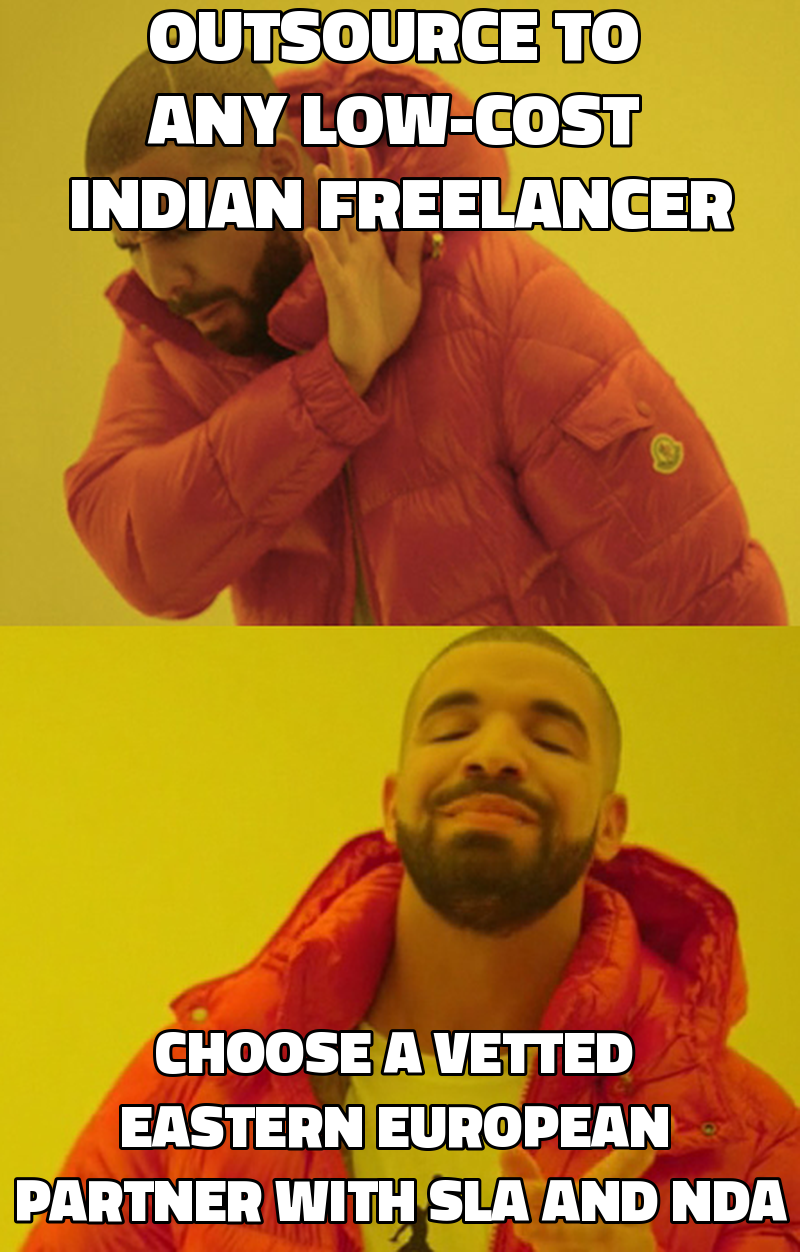
How do agencies spot a trustworthy white-label dev partner outside India?
- Run the 10-second site test – open the prospect’s website, check the Services page. If development is absent but client case studies mention apps, automation or custom portals, they are a prime target.
- Check public signals – look for statements like “we partner with developers” or recent job posts for contract developers. These indicate an immediate overflow need.
- Validate language and communication – schedule a 30-minute video call. Agencies that reply within 24 hours and use clear, business-level English usually have mature processes.
- Confirm timezone overlap – ideal partners should have at least 3-4 hours of working-day overlap with EST/PST or GMT. This reduces async delays and enables rapid feedback loops.
- Ask for references and a live demo – a reputable partner will provide two recent agency references and a short walkthrough of a shipped project (e.g., a SaaS dashboard built for a US fintech).
Which regions offer the best balance of cost, quality and timezone for US agencies?
| Region | Avg hourly rate (USD) | English proficiency (EF rating) | Typical timezone overlap with EST | Talent focus |
|---|---|---|---|---|
| Eastern Europe (Poland, Ukraine, Romania) | 30-45 | 70-75 (high) | 4-6 hrs (morning EST) | AI/ML, backend, full-stack |
| Latin America (Argentina, Colombia, Mexico) | 25-40 | 65-70 (high) | 5-7 hrs (midday EST) | Mobile, voice APIs, automation |
| Philippines | 20-35 | 60-65 (moderate) | 3-5 hrs (late EST) | WordPress, chatbots, UI/UX |
| Southeast Asia (Vietnam, Malaysia) | 20-30 | 55-60 (moderate) | 2-4 hrs (early EST) | Front-end, low-code extensions |
Why Eastern Europe leads – According to a 2023 Gartner survey, 68 % of US agencies rate Eastern European teams as “most reliable for complex custom builds.” The region also benefits from a strong university pipeline in computer science.
What red flags indicate a risky offshore partner?
- Development listed as a service on their own site – they are not a white-label overflow partner.
- No NDA or non-circumvent clause – suggests they may poach your clients.
- Flat-rate pricing without scope definition – often hides hidden change-order fees.
- Inconsistent communication – delayed replies, reliance on chat bots only.
- Lack of a dedicated account manager – you will end up juggling multiple developers.
- Only one portfolio item – limited experience, higher chance of missed deadlines.
How to structure a pilot project that protects both sides
| Step | Action | Reason |
|---|---|---|
| 1 | Define a fixed-scope deliverable (e.g., a chatbot integration for a client site) | Keeps cost predictable and prevents scope creep |
| 2 | Set a price range of $2,000-$5,000, matching the agency’s typical build size | Aligns with the $1500 minimum floor and ensures the partner is compensated for real work |
| 3 | Agree on a turnaround SLA – 2 weeks for a prototype, 4 weeks for final delivery | Provides a measurable performance metric |
| 4 | Use a shared project board (ClickUp) with status columns: Backlog, In Progress, Review, Done | Transparency for both parties |
| 5 | Conduct a mid-pilot review (Day 7) to assess code quality, communication and alignment | Early detection of issues before full payment |
| 6 | Release 50 % payment up-front, 50 % on acceptance of the final deliverable | Balances risk – the partner has cash flow, you retain leverage |
What contract clauses keep your brand invisible and your margins safe?
- Non-Disclosure Agreement (NDA) – standard clause covering all project-related information.
- Non-Circumvent Clause – prevents the partner from contacting your client directly for a defined period (usually 12 months).
- White-Label Branding Clause – obligates the partner to deliver all code, design assets and documentation without any of their branding.
- Service Level Agreement (SLA) – defines response times (e.g., 24-hour bug fix) and penalties for missed deadlines.
- Intellectual Property Assignment – all IP created under the project is assigned to the agency, ensuring you can re-sell the work.
- Termination for Cause – allows you to end the relationship if quality metrics fall below 80 % of agreed standards.
Which tools and processes make remote white-label collaboration seamless?
- Project Management: ClickUp, Monday.com, or Asana – set up a client-facing view that hides internal notes.
- Version Control: GitHub private repos with branch protection rules; give the agency read-only access to the repo URL for client demos.
- Design Handoff: Figma with “Developer Handoff” mode – eliminates back-and-forth on asset specs.
- Continuous Integration: GitHub Actions or CircleCI to run automated tests on every push; agencies can see test results without seeing the code.
- Communication Hub: Slack shared channel with #dev-updates only – keeps conversation focused and searchable.
- Time Tracking: Harvest or Toggl integrated with the project board – provides transparent billing without exposing individual hourly rates.
How does the pricing model work for a wholesale white-label partnership?
| Metric | Range |
|---|---|
| Project value (USD) | $500-$5,000 |
| Your share of the bill | 50-70 % |
| Minimum floor per project | $1,500 |
| Monthly retainer (after pilot) | $1,500 for ~15-20 dev hrs |
| Expected margin after retainer | 55-65 % |
The model is designed so the agency keeps the client relationship and markup, while you focus on delivery. Because the partner is capped at 10-12 active agencies, you maintain a low concurrency rate, which is the core reliability edge.
What are the most common objections and how to answer them?
- “We already have a partner in India.” – Highlight timezone mismatch (India is 9-12 h ahead of EST) and the higher risk of missed deadlines, citing the 2022 Forrester report that 42 % of US agencies experienced at least one critical delay with Indian partners.
- “Your rates are higher than Indian freelancers.” – Emphasize quality, reduced re-work, and the hidden cost of project overruns. A 2023 McKinsey analysis shows that every 10 % increase in initial cost can reduce total project cost by up to 30 % when re-work is eliminated.
- “We fear client discovery.” – Explain the NDA and non-circumvent clauses, and give the example of RouteMate, a production SaaS built invisibly for a US client, where the agency’s brand was the only public face.
- “We need faster delivery.” – Show the defined SLA (e.g., 2-week prototype) and the benefit of overlapping work hours in Eastern Europe, which provides same-day feedback for EST mornings.
What next steps should agencies take today?
- Run the 10-second site test on your top 20 prospects.
- Create a short questionnaire covering volume, budget and live need – use the three-gate framework.
- Shortlist three partners – one from Eastern Europe, one from Latin America, one from the Philippines – using the evaluation table below.
- Schedule discovery calls – focus on their pilot process, communication cadence and contract clauses.
- Kick off a $2,500 pilot with clear scope and SLA; track progress in ClickUp.
- Review pilot outcomes – if the partner hits >90 % SLA compliance, move to a retainer agreement.
Partner evaluation checklist
| Criterion | Must-have | Nice-to-have |
|---|---|---|
| English fluency (EF rating) | ≥70 | ≥75 |
| Timezone overlap with EST/PST | ≥3 hrs | ≥5 hrs |
| Proven agency references (2+) | Yes | Yes, from US market |
| NDA & non-circumvent clause | Signed before kickoff | Included in master agreement |
| Dedicated account manager | Yes | Same person for all accounts |
| QA process (automated tests) | Yes | Code coverage >80 % |
| Fixed-scope pilot experience | Yes | Delivered >5 pilots for agencies |
Frequently asked questions
What is the difference between white-label and subcontracting?
White-label means the development work is delivered under your agency’s brand, with no mention of the external team. Subcontracting usually leaves the partner’s name visible to the client. White-label protects your brand and allows you to keep the full margin.
How long does a typical pilot take?
A well-scoped pilot for a chatbot or simple integration usually takes 2-4 weeks from kickoff to delivery, assuming a 3-hour daily overlap with EST. The timeline is defined in the SLA and should be written into the contract.
Can I mix developers from different regions for the same project?
Technically you can, but it adds coordination overhead and risks inconsistent code style. Most agencies prefer a single regional partner per project to keep communication simple and quality consistent.
What if the partner misses a deadline?
The SLA should include a penalty clause, such as a 5 % discount for each business day beyond the agreed delivery date. Repeated breaches allow you to terminate for cause without penalty.
How do I protect my IP when using a foreign partner?
Include an IP Assignment clause that transfers all rights to you upon payment, and store all source code in a repository you control (GitHub organization). Use branch protection to limit who can merge code.
Is it safe to pay a partner before seeing any work?
The recommended payment schedule is 50 % upfront and 50 % on acceptance. This gives the partner cash flow while you retain leverage to verify quality before the final payment.
Do I need a local legal entity in the partner’s country?
Not for a pure white-label relationship. A standard service agreement, signed electronically, is sufficient. However, if you plan to retain a retainer for >6 months, consider a local entity to simplify tax withholding.
How can I scale the partnership without losing reliability?
Cap the number of active agency partners (e.g., 12) and allocate a dedicated senior project manager to each. When demand exceeds capacity, onboard a new partner only after they pass the same three-gate vetting process.
white‑label
Have something to build?
Tell us what you're trying to ship. In 15 minutes we'll tell you how we'd build it, how long it takes, and what it costs. No pitch deck, no pressure.