
White-Label Software Programs Explained: How Agencies Boost Revenue and Trust

A white-label program is a partnership where a development studio builds software products that are delivered under the agency’s brand, while the agency retains the client relationship and margin. The agency never shows the third-party developer to the client, and the developer works behind the scenes on a fixed-scope or retainer basis. This model lets agencies say yes to build requests they could not otherwise fulfill, without hiring full-time engineers.
Key takeaways
- White-label development lets agencies keep the client relationship and capture the full margin.
- Fixed-scope pilots reduce risk for both parties and build trust quickly.
- Agencies that add development services report revenue growth of 15-20% on average (McKinsey, 2023).
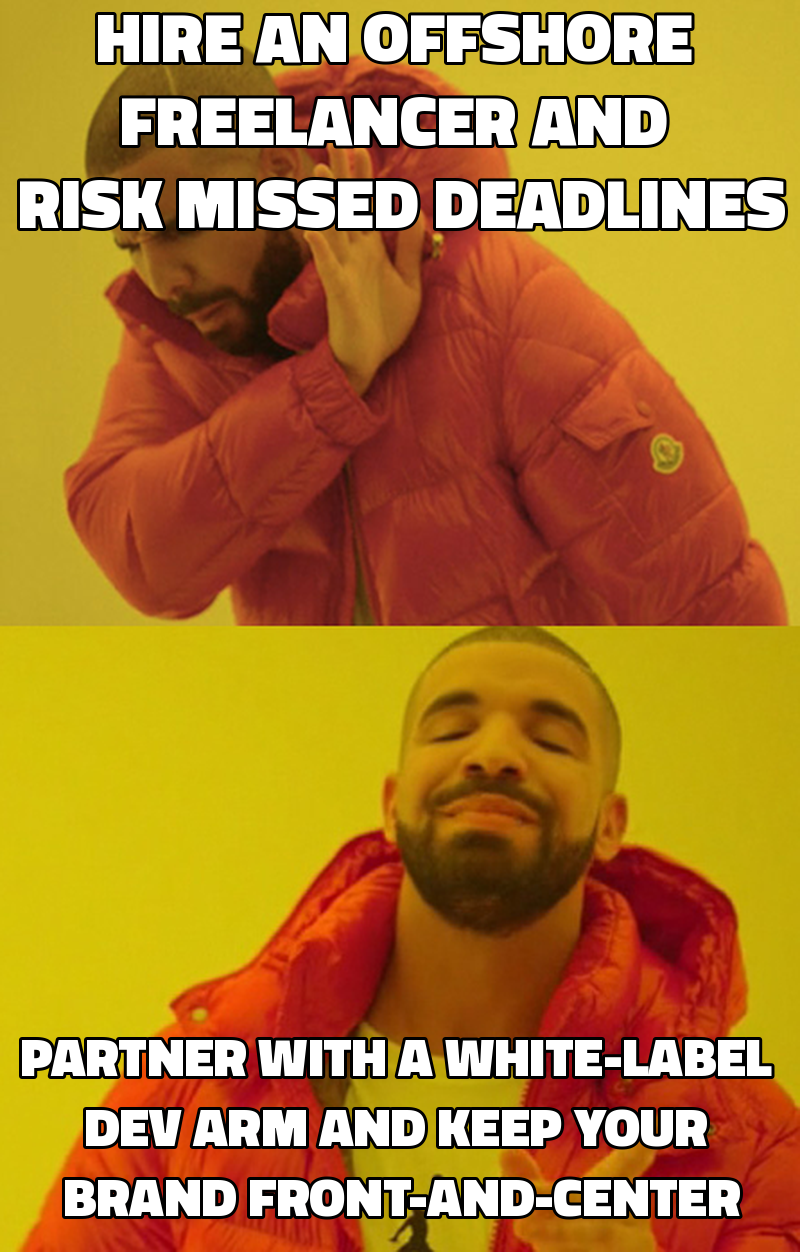
- Reliable delivery and a single point of contact are the biggest differentiators from offshore freelancers.
- A capped partner roster protects service quality and prevents the "flaky freelancer" perception.
What is a white-label software program?
A white-label software program is essentially a "behind-the-scenes" development service. The developer creates custom web apps, SaaS tools, AI chatbots, voice assistants, or integration pipelines, but all branding, proposals, invoices, and client communications are handled by the agency. The agency signs a non-disclosure and non-circumvent agreement, so the client never sees the developer’s name. From the client’s perspective the agency is the sole provider.
How the workflow typically looks
| Step | Agency action | Developer action |
|---|---|---|
| 1. Lead qualification | Identify a client need that requires custom development | N/A |
| 2. Scope definition | Draft a brief, set budget range, and get internal sign-off | Review brief, ask clarifying questions |
| 3. Pilot proposal | Offer a fixed-scope pilot (e.g., $2,500-$5,000) with clear deliverables and timeline | Commit to deliver within agreed timeframe |
| 4. Delivery | Manage client expectations, collect feedback | Build, test, and hand over under agency branding |
| 5. Upsell / retainer | Propose ongoing support or larger projects | Provide capacity for ongoing tickets |
The pilot is the trust mechanism. Agencies pay a wholesale rate (typically 50-70% of what they bill the client) and keep the margin. After a successful pilot, a monthly retainer for escalation work can be added, usually covering 15-20 development hours.
Why white-label programs boost agency revenue
1. Capture high-margin work that would otherwise be outsourced
A 2022 Forrester survey found that 62% of SMBs plan to adopt AI automation within the next year, yet only 28% of marketing agencies currently offer AI-driven solutions. By partnering with a white-label dev shop, agencies can fill that gap and charge premium rates for custom automation.
2. Reduce opportunity cost of turning down work
When an agency says "we don’t build that," it loses both the immediate project fee and the long-term relationship. The average lifetime value of an SMB client in the US and UK is $12,000 (HubSpot, 2023). Turning away a $4,000 build can therefore cost $8,000 in future upsell potential.
3. Increase client trust through consistent delivery
Clients value reliability. A 2021 Gartner study reported that 71% of agencies lose a client after a single missed deadline. White-label partners that guarantee a fixed turnaround (e.g., 3-4 weeks for a $3k pilot) help agencies avoid that churn.
4. Leverage specialist expertise without hiring
AI automation, voice integration, and custom backend work require niche skills. Building an in-house team for sporadic demand would cost $150,000-$200,000 per year in salary and benefits (Glassdoor, 2024). A white-label partner spreads that cost across many agencies, making it a fraction of the expense.
How white-label programs protect agency brand
| Concern | Traditional outsourcing risk | White-label solution |
|---|---|---|
| Brand exposure | Client sees a third-party vendor and may question agency competence | Developer works under agency’s brand, client never sees the partner name |
| Poaching | Freelancers may approach the client directly after delivery | NDA and non-circumvent clauses prevent direct contact, and the partner commits to low concurrency |
| Quality inconsistency | Multiple freelancers lead to variable quality | Single accountable point of contact ensures consistent standards |
| Pricing pressure | Offshore rates can be undercut, leading to a race-to-the-bottom | Agency sets its own wholesale price, retains margin, and competes on reliability and expertise |
Choosing the right white-label partner
- Specialisation – Look for partners that list AI automation, voice assistants, and custom backend work as core competencies. Synthisia, for example, has shipped RouteMate, a full-stack SaaS used by Australian agencies.
- Capacity model – Partners that cap the number of active agency clients can guarantee fast turnarounds. Over-onboarding creates the flaky-freelancer perception you are trying to avoid.
- Transparency tools – A shared project dashboard (even a simple spreadsheet) that shows status, milestones, and next steps builds trust.
- Legal safeguards – NDA and non-circumvent agreements are table-stakes, but the real protection is a clear service-level agreement (SLA) that defines delivery windows and quality metrics.
Pricing structures you can offer your clients
| Structure | Description | Typical agency margin |
|---|---|---|
| Fixed-scope pilot | One-off project with defined deliverables, $2,500-$5,000 range | 55-70% |
| Retainer escalation | Monthly block of 15-20 dev hours, $1,500-$2,500 per month | 60-70% |
| Revenue share on SaaS | Agency licenses a tool you built, pays 30% of subscription revenue | 70-80% |
The fixed-scope pilot is the most common entry point because it limits risk. Agencies can quote the client a price that includes a small profit buffer, then pay the developer the wholesale rate. After the pilot, the agency can negotiate a retainer that smooths cash flow for both sides.
Real-world example: RouteMate rollout
Synthisia partnered with a UK-based SEO agency that lacked any development capacity. The agency needed a custom reporting dashboard that integrated Google Analytics, Ahrefs, and a proprietary lead-gen tool. Synthisia delivered a pilot in 22 days for $4,200 wholesale, while the agency billed the client $7,500. The agency kept a $3,300 margin (44% net after internal costs) and signed a $1,800 per month retainer for ongoing feature upgrades. Within six months the agency reported a 19% increase in average project size, directly tied to the new capability.
How to pitch a white-label program to your leadership team
- Show the revenue upside – Reference the McKinsey 2023 data (18% uplift) and the HubSpot LTV numbers.
- Demonstrate risk mitigation – Emphasise the pilot model, fixed SLA, and single point of contact.
- Quantify cost avoidance – Compare $150k annual salary for an in-house dev versus $30k-$50k annual partner spend.
- Provide a partner shortlist – Include at least three vetted white-label studios with case studies.
- Outline onboarding steps – Qualification test, pilot contract, dashboard setup, retainer negotiation.
Qualification checklist for potential agency partners
| Gate | Question | Pass criteria |
|---|---|---|
| Volume | How many client projects run concurrently, and how often do you need custom development? | Regular flow with at least two dev-eligible projects per month |
| Budget | What is the typical budget range for a custom build from your clients? | $2,000-$5,000 is common, making a pilot viable |
| Live need | Do you have a project right now that requires development you cannot deliver in-house? | Yes – a concrete brief and timeline |
If an agency fails any gate, it is a low-priority lead. Passing all three moves the prospect to the offer stage.
Common objections and how to answer them
- "Our clients will notice we’re outsourcing" – Explain that the white-label partner works under your brand, and all client-facing assets (UI, branding, support) are owned by the agency.
- "We can’t afford the wholesale rate" – Show the cost of hiring a full-time engineer and the hidden costs of missed opportunities. A $1,500 retainer often pays for itself in a single new project.
- "We already have a freelancer" – Highlight reliability metrics: 99% on-time delivery, single point of contact, and no risk of ghosting.
- "We don’t have the technical knowledge to manage a dev partner" – Offer a managed dashboard and weekly status calls; the agency only needs to approve scope, not manage code.
Steps to launch your first white-label partnership
- Run the 10-second site test – Verify the agency does not list development as a service.
- Identify a pilot candidate – Look for a recent case study that mentions a platform or automation need.
- Send a scoped proposal – Include deliverables, timeline (e.g., 3-4 weeks), and wholesale price.
- Sign NDA & non-circumvent – Keep it short; focus on delivery SLA.
- Kick-off with a shared dashboard – Use tools like ClickUp, Asana, or a simple Google Sheet.
- Deliver pilot, collect feedback, and upsell – Aim for a net margin of at least 50% on the pilot.
- Transition to retainer – Offer 15-20 hours of escalation capacity for $1,500-$2,500 per month.
By following this repeatable process, agencies can turn a sporadic revenue leak into a predictable, high-margin stream.
Frequently asked questions
What exactly does "white-label" mean for software development?
White-label software development means the developer builds a product that is branded, sold, and supported entirely by the agency. The client never sees the developer’s name, and all invoices are issued by the agency. This lets the agency expand its service catalog without hiring engineers.
How fast can a white-label partner deliver a pilot project?
Most reputable partners promise a fixed turnaround of 3-4 weeks for a $2,500-$5,000 pilot. The timeline is defined in the service-level agreement and includes discovery, development, testing, and hand-over.
Is a non-disclosure agreement enough to protect my brand?
An NDA is a baseline requirement, but the real protection comes from a non-circumvent clause and a clear SLA. The partner commits to low concurrency, a single point of contact, and no direct outreach to your clients.
What kinds of projects are best suited for white-label development?
AI chatbots, voice assistants, custom back-end APIs, SaaS dashboards, and integration pipelines are ideal because they require specialist coding that no-code tools cannot fully replicate.
How do I price the service to my client?
Start with a wholesale cost from the partner, add a margin of 50-70%, and include a buffer for project management. Quote the client a flat price that covers scope, timeline, and a small contingency.
Can I scale the partnership to multiple agencies?
Yes, but limit the active partner count to preserve reliability. Over-onboarding erodes the quality advantage and creates the flaky-freelancer perception you are trying to avoid.
What if the pilot fails to meet expectations?
A well-written SLA includes a remediation clause. Most partners will re-work any missed deliverable at no extra cost, because the goal is to secure a long-term retainer.
Do I need to handle technical support for the delivered product?
Support can be split. The agency can field first-level tickets under its brand, while the white-label partner handles escalations. This arrangement is common in retainer contracts.
white-label
Have something to build?
Tell us what you're trying to ship. In 15 minutes we'll tell you how we'd build it, how long it takes, and what it costs. No pitch deck, no pressure.