
Step-by-Step Guide for Agencies to White-Label Shopify Development

A white-label Shopify development agency builds Shopify stores for your clients under your brand, letting you keep the relationship and margin while we handle the code. It lets you say yes to custom e-commerce projects without hiring an in-house engineer.
Key takeaways
- Choose a partner with proven Shopify launches, AI automation experience and a solid NDA.
- Define a fixed-scope pilot that includes deliverables, timeline and a clear hand-off checklist.
- Keep all client-facing assets (logo, copy, support email) under your agency name.
- Use a shared project dashboard to give your team real-time visibility.
- Price the wholesale rate at 50-70% of the client bill and add a retainer after the pilot.
- Protect your brand with a non-circumvent clause and a single point of contact.
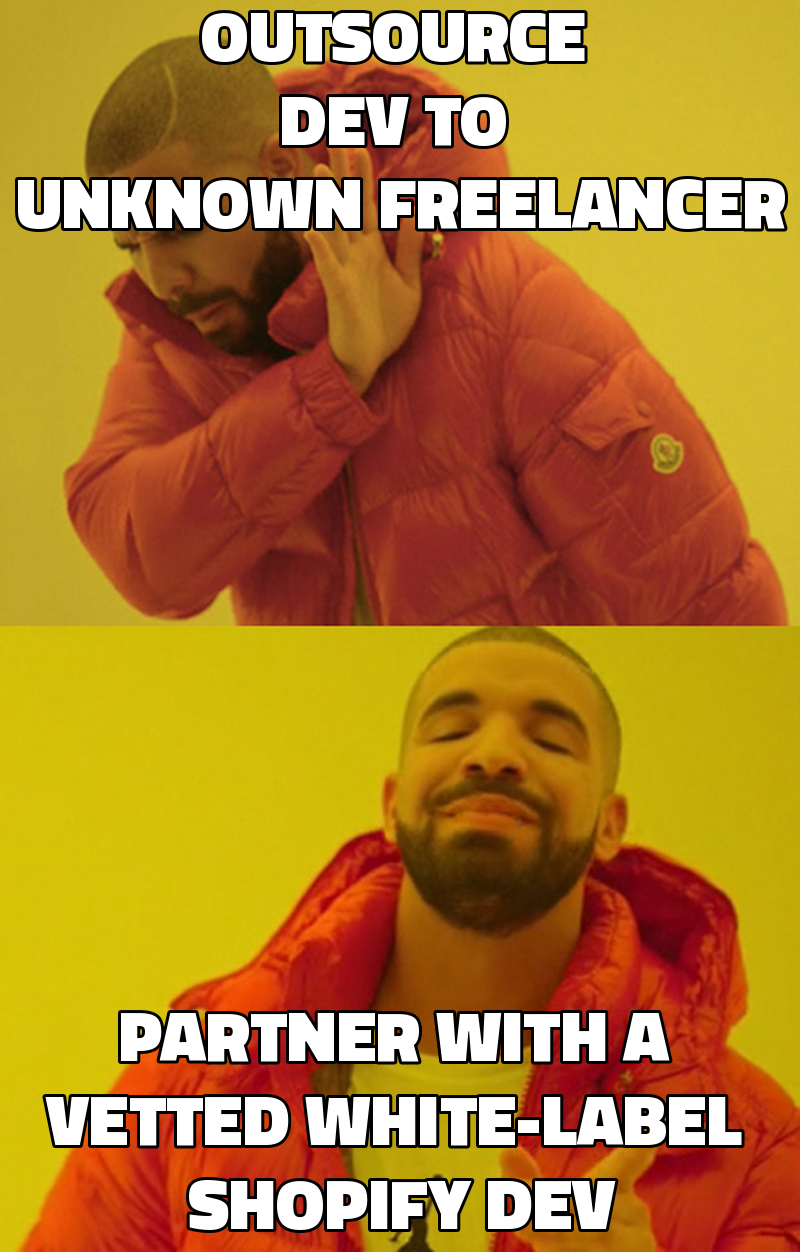
How do I choose a white-label Shopify development partner?
Selecting the right partner is the foundation of a sustainable white-label model. Below are the top criteria you should score each prospect against.
| Criterion | Why it matters | Minimum acceptable score |
|---|---|---|
| Shopify launch record (last 12 months) | Demonstrates ability to deliver on time and within budget. | 3 out of 5 successful launches |
| AI and voice automation expertise | Your ICP wants chat-bots, voice assistants and custom back-ends that no-code tools can’t handle. | Proven integration with at least two AI platforms (e.g., OpenAI, Google Dialogflow) |
| NDA & non-circumvent policy | Prevents poaching and protects your brand. | Signed NDA and clause in place |
| Dedicated account manager | Guarantees a single accountable contact, avoiding the freelancer ghosting problem. | One named manager with 24-hour response SLA |
| Timezone overlap (US/UK/AU) | Enables reasonable turnaround without overnight work. | Overlap of at least 3 working hours |
| Pricing transparency | Allows you to calculate wholesale margin confidently. | Fixed-scope pricing sheet provided |
How to score: Interview the prospect, request case studies, and ask for a short demo of a recent Shopify store that includes a custom automation. Record the answers in a simple spreadsheet and set a threshold (e.g., 12 out of 20 points). Only partners that meet the threshold move to the pilot stage.
What should be included in the pilot scope and contract?
A pilot proves the partnership works before you commit to a retainer. Keep the pilot small, fixed-price and tightly scoped.
- Project definition – One Shopify store for a single client, including up to three custom sections (e.g., product recommendation engine, checkout upsell, voice search).
- Deliverables – Design mock-ups, theme code, custom app (if needed), QA checklist, and a 30-day support window.
- Timeline – 3-4 weeks from kickoff to live launch. Set a realistic turnaround band (e.g., 20-25 business days) and embed a buffer for client feedback.
- Payment terms – 50% upfront, 50% on launch. The wholesale rate should be 55% of the client invoice you will charge.
- Branding clause – All UI elements, help docs and support emails must carry your agency’s logo and tone of voice.
- Exit clause – Either side can terminate with 7-day written notice if milestones are missed.
"A well-defined pilot reduces risk for both parties and creates a repeatable template for future projects," says the 2022 Deloitte Global Outsourcing Survey.
How do I keep the white-label work invisible to my client?
Your client should never see the development partner’s name. Follow these steps:
- Domain and email branding – Use your agency’s domain for all Shopify admin emails (e.g., [email protected]). The partner should configure the store to send from that address.
- Design assets – Provide the partner with your brand guide, fonts and color palette. Require them to embed the guide into the theme’s CSS.
- Documentation – All user guides, onboarding videos and support FAQs must be created by your team or co-branded.
- Support hand-off – After launch, the partner provides a technical hand-over packet, but all client support tickets are routed to your agency’s ticketing system (e.g., Zendesk or Freshdesk).
- Legal protection – Include a non-disclosure and non-circumvent clause that explicitly forbids the partner from contacting the client directly.
Which tools should we use to manage the white-label workflow?
A shared dashboard gives you visibility and reduces the “who is doing what” friction. Below are the recommended stack for agencies of 5-15 people.
| Tool | Use case | Reason |
|---|---|---|
| ClickUp | Project planning, task assignments, Gantt view | Affordable, unlimited users, integrates with Slack |
| GitHub (private repo) | Code version control for custom apps | Industry standard, audit trail for compliance |
| Integromat / Make | Automate hand-off notifications, invoice generation | No-code, quick to set up |
| Google Data Studio | Build a client-facing status report that pulls from ClickUp | Branded dashboards, real-time data |
| Stripe Connect | Collect client payments and split revenue with partner | Handles wholesale rate payouts automatically |
Tip: Start with a simple shared Google Sheet that lists project phases, owners and due dates. Upgrade to ClickUp only after you have at least two active pilots.
What pricing model works best for agencies?
Agencies typically choose one of three models. Pick the one that aligns with cash flow and client expectations.
| Model | Description | Pros | Cons |
|---|---|---|---|
| Fixed-scope pilot + retainer | One-off project at a set price, then a monthly retainer for overflow. | Predictable revenue, easy to quote. | Requires trust after pilot. |
| Per-store wholesale markup | Agency invoices client at $X, pays partner $Y (50-70% of X). | Simple margin calculation, scalable. | Agency must manage all client communication. |
| Revenue share on custom apps | Partner gets a percentage of app sales after launch. | Low upfront cost for client, aligns incentives. | Complex accounting, longer ROI. |
According to a 2023 McKinsey analysis of service-based firms, agencies that add a retainer component see 12-18% higher lifetime value per client. Use that insight when you pitch the long-term benefits.
How do I handle client communication and expectations?
Transparency with the client builds trust, even when you are not doing the coding yourself.
- Kickoff meeting – Present a one-page project charter that lists scope, timeline and who the day-to-day contact is (your account manager).
- Weekly status email – Include a link to the shared dashboard, highlight completed milestones and note any risks.
- Change-request process – Define a clear change order form that adds scope, cost and timeline before work begins.
- Launch checklist – Walk the client through DNS configuration, payment gateway testing and SEO basics. The partner provides a technical checklist, you own the client sign-off.
- Post-launch support – Offer a 30-day “warm hand-off” period where the partner resolves bugs, but you field all client tickets.
What are the common pitfalls and how to avoid them?
| Pitfall | Impact | Mitigation |
|---|---|---|
| Partner misses deadline | Client dissatisfaction, margin erosion | Set a buffer in the timeline, include penalty clause for >5 day delay |
| Brand leakage (partner’s logo appears) | Trust loss, client may bypass you | Run a final QA that checks every email template and footer for branding |
| Scope creep without price adjustment | Profitability drops | Use the change-request form and require written approval before any extra work |
| Poor communication channel | Misaligned expectations, duplicated effort | Mandate Slack channel with both agency and partner leads for real-time updates |
| Inadequate technical documentation | Future support burden on agency | Require partner to deliver a technical hand-over doc with architecture diagram |
How do I scale the partnership after the pilot?
Once the pilot succeeds, move to a retainer model that guarantees you a set number of development hours each month. Example:
- Retainer tier 1: $1,500/month for up to 15 dev hours (covers minor tweaks, new sections, app updates).
- Retainer tier 2: $2,800/month for up to 30 dev hours (includes a quarterly feature rollout).
Offer the retainer as an “escalation arm” – you only use it when internal capacity is maxed out. This keeps the partner’s concurrency low, preserving the reliability edge that differentiates you from cheap offshore freelancers.
What legal safeguards should be in place?
- Master Services Agreement (MSA) – Covers confidentiality, IP ownership (agency retains all client IP), and liability limits.
- Non-Circumvent Clause – Prohibits the partner from contacting your clients directly for a period of 12 months.
- Service Level Agreement (SLA) – Defines response times (e.g., 24-hour bug fix for critical issues) and penalties for missed SLAs.
- Data Protection Addendum – If you handle EU client data, ensure GDPR compliance; include clauses for data processing and breach notification.
Frequently asked questions
How long does a typical white-label Shopify build take?
A fixed-scope store with up to three custom sections usually launches in 3-4 weeks. The timeline includes design sign-off, theme development, QA and a 30-day support window.
Can I charge my client a higher price than the wholesale rate?
Yes. Most agencies apply a 50-70% markup on the partner’s wholesale cost. This covers project management, branding, and your profit margin.
What if the partner fails to meet the deadline?
Your MSA should include a penalty clause (e.g., a 5% discount for each day beyond the agreed window, up to a maximum of 20%). You can also keep a small buffer in the client timeline to absorb minor delays.
Do I need to hire a Shopify expert on my staff?
No. The white-label partner provides the technical expertise. Your team focuses on client strategy, branding and account management.
How do I handle custom app licensing?
If the partner builds a private app, the agency retains ownership of the code. You can host it on your own Shopify Partner account and grant the client access through the store admin.
Is there a minimum project size?
Our model works best for projects between $2,000 and $5,000. Smaller jobs often don’t justify the fixed-scope pilot overhead, while larger enterprise builds may need a dedicated development shop.
What if my client wants ongoing support after launch?
Offer a retainer that includes a set number of support hours each month. The partner handles the technical work; you continue to be the point of contact for the client.
How do I protect my brand from being exposed?
Use the branding clause in the contract, configure all Shopify admin emails to use your domain, and run a final branding audit before the store goes live.
white‑label
Have something to build?
Tell us what you're trying to ship. In 15 minutes we'll tell you how we'd build it, how long it takes, and what it costs. No pitch deck, no pressure.