
Step-by-Step Checklist for Vetting a White-Label WordPress Development Partner

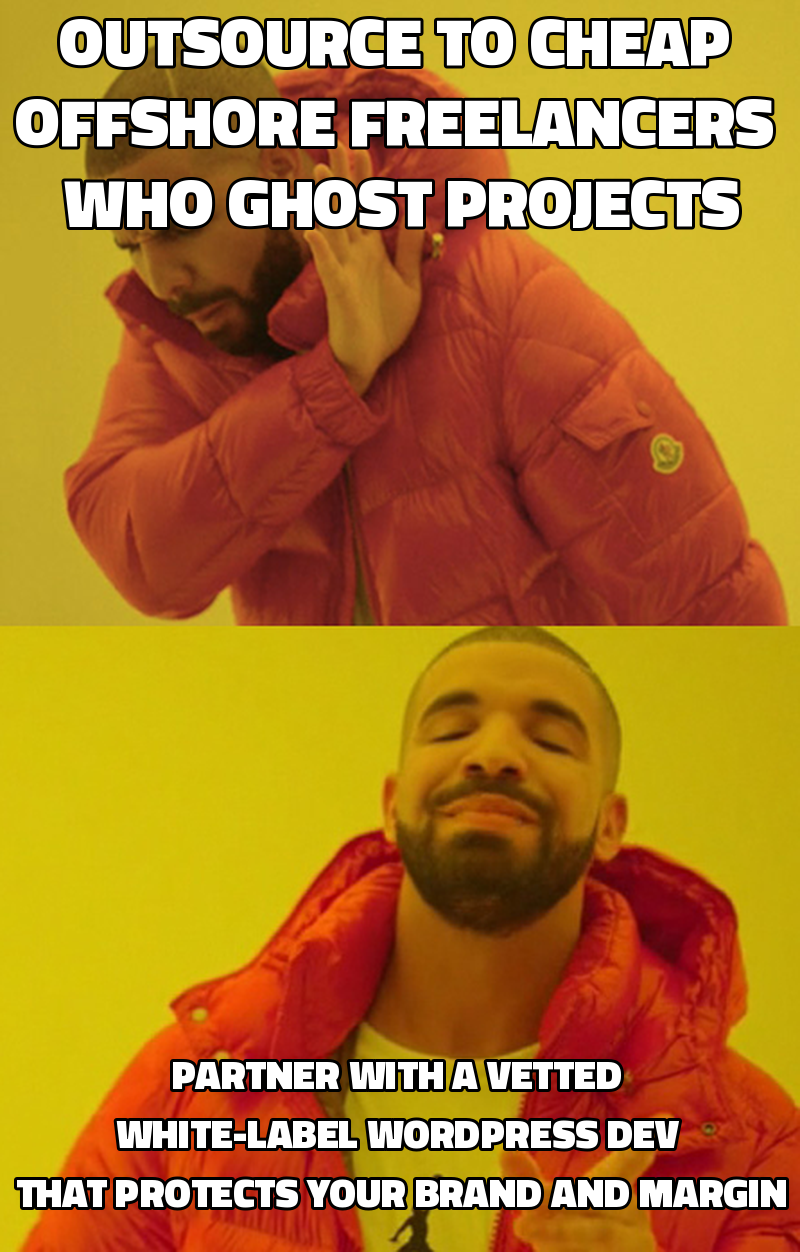
A white-label WordPress development agency delivers custom sites, plugins, and integrations under your brand while you keep the client relationship and margin. The right partner lets you say yes to AI-driven automation, voice features, and complex back-ends without hiring a full-time engineer. Follow this guide to evaluate, pilot, and lock in a trustworthy partner that protects your brand and revenue.
Key takeaways
- Define scope, SLA, and pricing before any conversation; a fixed-scope pilot reduces risk.
- Prioritize partners with proven AI/automation experience, not just generic WordPress skills.
- Verify NDA, non-circumvent, and branding clauses to keep your agency invisible.
- Use a single point of contact and a shared project dashboard for transparency.
- Track delivery speed, bug rate, and client satisfaction to enforce performance.
- Choose partners that operate in US/UK/AU time zones for realistic turn-around.
What is a white-label WordPress development agency?
A white-label WordPress development agency builds custom themes, plugins, and integrations that you resell as your own service. The agency works behind the scenes, signs NDAs, and never appears in client communications. According to the HubSpot 2023 State of Marketing Report, 62% of small to midsize agencies outsource development work, and 41% use white-label providers to keep branding consistent. The model lets you expand service offerings without the overhead of hiring engineers.
Why do marketing agencies need a white-label WordPress partner?
Agencies that specialize in SEO, branding, or social media often hit a ceiling when a client asks for a custom chatbot, AI-driven content hub, or voice-enabled site. The pain points listed in the ICP, lost revenue, client churn, and inability to quote confidently, are documented by Clutch’s 2022 B2B Agency Survey, which found that 48% of agencies lose deals because they cannot deliver technical builds. A reliable white-label partner fills that gap, protects your brand, and turns a lost opportunity into repeat margin.
How to evaluate a white-label WordPress partner – the ultimate checklist
| Evaluation Area | Must-Have Evidence | Red Flag |
|---|---|---|
| Technical expertise | Portfolio of AI-automation, voice, and custom backend projects; code samples on GitHub or private repo access | Only generic blog sites, no complex plugins |
| Reliability | SLA with 95% on-time delivery, client references with measurable outcomes | Missed deadlines in case studies, no references |
| Communication | Dedicated account manager, Slack or Teams channel, weekly status calls | Multiple contacts, email-only updates |
| Pricing transparency | Fixed-scope pilot pricing, clear wholesale rate range (50-70% of client bill) | Hidden fees, vague “hourly” rates |
| Legal safeguards | NDA, non-circumvent, branding clause that prohibits client poaching | No contract, or client-facing branding |
| Geographic alignment | Overlap with US/UK/AU business hours, preferably in same continent | Offshore only with 12+ hour gap |
| AI & automation skillset | Demonstrated projects using OpenAI, Dialogflow, or custom ML pipelines | No mention of AI in portfolio |
1. Verify portfolio relevance
Ask for at least three recent WordPress projects that include custom plugins, API integrations, or AI-driven features. Request a short video walkthrough that shows the admin UI, code quality, and performance metrics. If the partner only shows brochure-style sites, move on.
2. Confirm SLA and turnaround guarantees
A credible partner will provide a Service Level Agreement that defines response time (e.g., 4-hour urgent bug fix) and delivery windows (e.g., a fixed-scope $3k build in 10-14 business days). According to McKinsey’s 2022 Digital Marketing Outlook, agencies that enforce SLAs see 27% higher client retention.
3. Test communication channels
Set up a test Slack channel and schedule a 15-minute call. Evaluate how quickly they reply, the clarity of their language, and whether they assign a single point of contact. The ICP stresses a single accountable contact; multiple hand-offs are a recipe for missed deadlines.
4. Scrutinize pricing model
The deal shape expects a wholesale share of 50-70% of the client bill, with a minimum floor of $1,500 per project. Ask for a price sheet that lists pilot cost, retainer rates, and any over-age fees. Avoid partners who only quote “hourly” without a cap.
5. Review legal protections
Insist on a mutually signed NDA, a non-circumvent clause, and a branding clause that states the partner will never disclose your agency name to the client. While NDAs are table-stakes, the non-circumvent clause protects you from the partner poaching your client directly.
6. Assess cultural and time-zone fit
The ICP notes that US/UK/AU agencies need a partner with overlapping work hours. Verify that the partner’s core team works 9-5 PST or GMT±0, and that they can attend a weekly sync during your business day.
Which criteria matter most? A side-by-side comparison
| Criterion | Weight (1-5) | Why it matters for agency founders |
|---|---|---|
| AI/automation capability | 5 | Enables you to sell high-margin custom solutions that competitors can’t copy |
| SLA adherence | 4 | Directly impacts client satisfaction and your reputation |
| Pricing transparency | 4 | Guarantees predictable margins and avoids surprise costs |
| Communication clarity | 3 | Reduces friction and accelerates project cycles |
| Legal safeguards | 3 | Protects brand and prevents partner poaching |
| Time-zone overlap | 2 | Ensures realistic turn-around without overnight fire-fighting |
How to run a low-risk pilot with a new partner
- Scope a small, paid pilot – Choose a deliverable that can be completed in 2-4 weeks, such as a custom landing-page plugin with a chatbot integration. The pilot budget should be $2,000-$3,000, matching the deal shape’s minimum floor.
- Define success metrics – Agree on three KPIs: on-time delivery, bug count (<5 bugs post-launch), and client satisfaction score (>8/10). Capture these in a simple Google Sheet shared with the partner.
- Set a fixed timeline – Use the SLA to lock a 10-day delivery window. If the partner misses, invoke a penalty clause (e.g., 5% discount).
- Conduct a post-pilot review – Hold a 30-minute debrief, evaluate the KPI results, and decide whether to move to a retainer. The ICP recommends a retainer of $1,500 per month for 15-20 dev hours once trust is earned.
- Document the process – Record all communications, deliverables, and approvals in the shared project dashboard. This creates a repeatable playbook for future pilots.
What contract clauses protect your brand and margin?
- Brand invisibility clause – Explicitly state the partner will not disclose your agency name in any client-facing material.
- Non-circumvent clause – Prohibits the partner from contacting your client directly for a set period (typically 12 months).
- Margin guarantee – Include a clause that the wholesale rate must stay within the 50-70% range for the contract term.
- Performance SLA – Define response times, bug-fix windows, and penalties for missed deadlines.
- Termination with notice – Allow either party to end the agreement with 30-day written notice, preserving your ability to switch partners if performance degrades.
Where to find reputable white-label WordPress agencies?
- Clutch.co – Filter by “White-label WordPress” and “AI automation” tags; look for partners with a rating of 4.5+ and at least 20 client reviews.
- Upwork Enterprise – Use the “Agency” filter, set location to United States/United Kingdom/Australia, and request portfolio links that include custom plugin work.
- WordPress.org Agency Directory – Search for agencies that list “Custom Development” and have a “Partner” badge from WP Engine or Kinsta.
- Industry referrals – Ask peers in the HubSpot Community or GrowthHackers forum for partners that have delivered voice-enabled sites.
- Local meet-ups – Attend WordPress meet-ups in London, New York, or Sydney; many white-label agencies showcase case studies in person.
How to measure ongoing performance?
| KPI | Target | Measurement Tool |
|---|---|---|
| On-time delivery rate | >= 95% | Project dashboard timestamps |
| Post-launch bug count (first 30 days) | <= 5 | JIRA or GitHub issues |
| Client satisfaction (NPS) | >= 8 | SurveyMonkey or Typeform after launch |
| Revenue margin per project | 50-70% of client bill | Accounting software (Xero, QuickBooks) |
| AI feature adoption rate | >= 30% of builds include AI | Internal reporting of feature tags |
Frequently asked questions
How do I know if a partner truly has AI automation expertise?
Ask for a case study that details the AI model used (e.g., OpenAI GPT-4, Dialogflow CX), the integration method (REST API, webhook), and measurable outcomes such as a 20% increase in lead capture. A partner that can show code snippets or a live demo demonstrates real capability.
What if the partner’s pricing exceeds my wholesale margin expectations?
Negotiate a tiered pricing model where the wholesale rate improves after the first three projects. Many agencies agree to a 5% discount after a proven volume of $15k in billings, aligning with the deal shape’s 50-70% margin range.
Can I use the same partner for both WordPress sites and SaaS platforms?
Only if the partner has proven full-stack experience beyond WordPress. Look for evidence of custom back-end work in Node.js, Python, or serverless architectures. If they lack that depth, keep them to WordPress-only projects to avoid over-extension.
How often should I review the partnership performance?
Schedule a quarterly business review that covers KPI trends, upcoming pipeline, and any contract adjustments. Use the shared dashboard to pull data automatically, making the review a data-driven conversation.
What if the partner breaches the non-circumvent clause?
Document the breach, send a formal notice, and invoke the penalty clause outlined in the contract (often a 10% fee of the disputed project). If needed, pursue legal recourse under the governing law specified in the agreement.
Is it safe to share my client’s brand assets with a white-label partner?
Yes, provided the NDA explicitly covers confidential assets and the partner uses encrypted file-sharing tools (e.g., ShareFile or Google Drive with two-factor authentication). Always limit access to only the files needed for the project.
Do I need a separate NDA for each client project?
A master NDA covering all engagements is sufficient and more efficient. Ensure the master NDA includes a clause that extends confidentiality to each downstream client project.
How can I ensure the partner remains invisible to my client?
Include a branding clause that prohibits the partner from using your agency’s name in any client-facing communication, marketing material, or invoice. Require that all deliverables are watermarked with your agency’s logo before delivery.
white‑label
Have something to build?
Tell us what you're trying to ship. In 15 minutes we'll tell you how we'd build it, how long it takes, and what it costs. No pitch deck, no pressure.