
Step-by-Step Blueprint to Launch an AI Automation Agency for No-Dev Marketing Shops

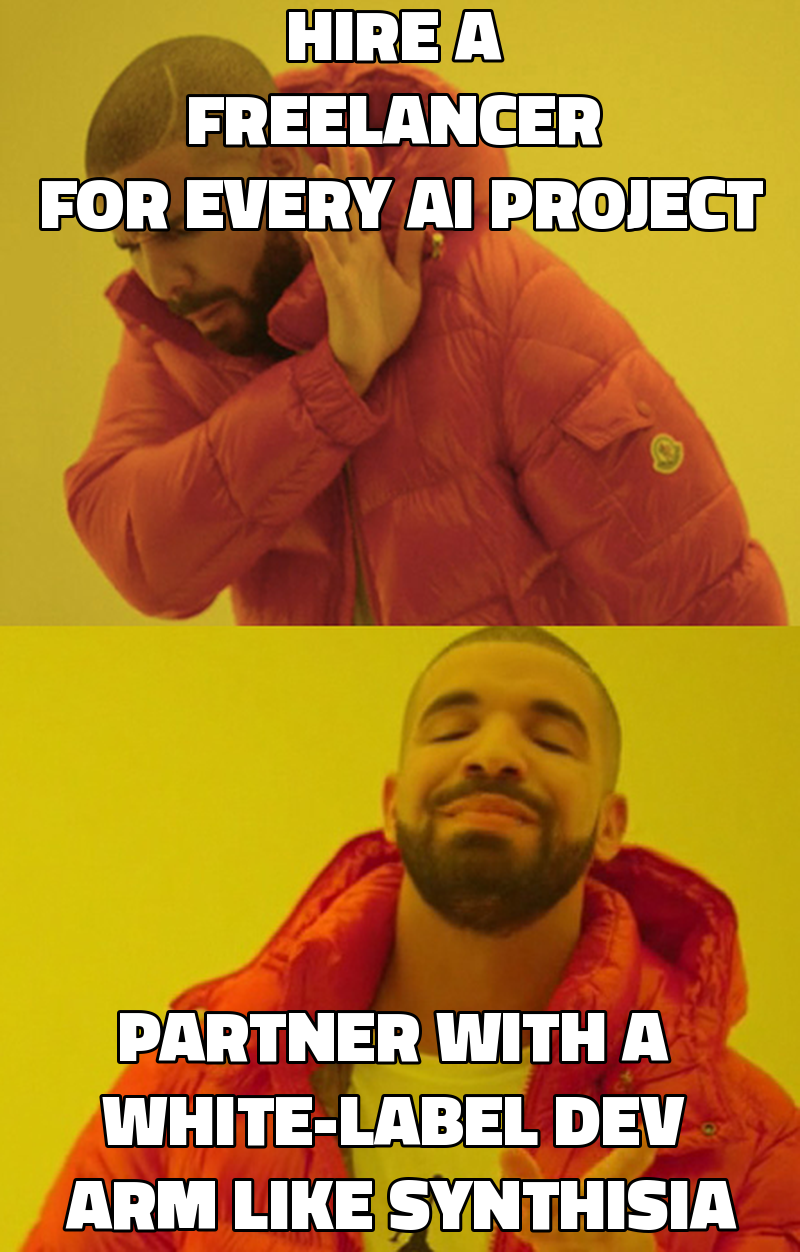
Launch an AI automation agency by partnering with a white-label dev studio, defining a fixed-scope pilot, and then scaling to a retainer model. The fastest path is to secure one agency client, deliver a $2k-$5k pilot in 2-3 weeks, and lock in a $1.5k-$2k monthly retainer for ongoing overflow.
Key takeaways
- Target 5-15 person marketing/SEO agencies in the US, UK or AU that have no in-house developers.
- Offer a white-label pilot (USD 2,000-5,000) with a 2-3 week turnaround to prove reliability.
- Use proven AI tools (OpenAI, LangChain, Zapier, Make, Voiceflow) and low-code back-ends (Bubble, Retool) to keep delivery costs under $50/hr.
- Price wholesale at 50-70% of the agency’s bill, with a minimum floor of $1,500 per project.
- After the pilot, move the partner to a $1,500-$2,000 monthly retainer covering ~15-20 dev hours.
- Keep partner count capped (3-5 active agencies) to maintain the "never flaky" reputation.
What is an AI automation agency?
An AI automation agency sells custom AI-powered workflows, chatbots, voice assistants and bespoke SaaS tools on behalf of marketing firms that lack development talent. The agency’s brand stays front-and-center while a silent development partner builds the solution, integrates APIs and hands over a ready-to-launch product. This model lets the marketing shop expand its service catalog without hiring engineers, turning lost opportunities into recurring margin.
Who is the ideal partner for a white-label dev arm?
- Size: 5-15 employees, revenue typically $500k-$5M, no dedicated devs.
- Geography: United States, United Kingdom, Australia – English speaking, USD/GBP/AUD billing.
- Pain points: Turning away AI/automation requests, mis-pricing projects, fear of client discovering an outsourced dev, past freelancer failures.
- Goals: Say yes to every build request, keep the client relationship, quote confidently, protect brand integrity.
Step-by-step blueprint to get off the ground
| Milestone | Action | Owner | Typical timeframe |
|---|---|---|---|
| 1. Market validation | Identify 20 target agencies, run the 10-second site test, collect trigger signals. | Founder | 1 week |
| 2. Outreach & qualification | Send personalized email referencing a recent case study, run the three-gate qualification call. | Founder / Sales Lead | 1-2 weeks |
| 3. Pilot proposal | Draft a fixed-scope pilot (USD 2k-5k), define deliverables, set a 2-3 week turnaround, include a scoped prototype demo. | Account Manager | 2 days |
| 4. NDA & partner contract | Execute NDA, non-circumvent clause, agree on wholesale rate (50-70%). | Legal / Founder | 1-2 days |
| 5. Build & deliver pilot | Use selected AI stack, share a simple status dashboard, deliver within agreed window. | Lead Engineer | 2-3 weeks |
| 6. Review & upsell | Conduct a post-pilot review, present ROI numbers, propose a retainer for ongoing overflow. | Founder | 3-5 days |
| 7. Retainer onboarding | Sign retainer agreement ($1.5k-$2k/mo), allocate 15-20 dev hrs per month, set SLAs. | Operations | 1 week |
| 8. Scale & repeat | Add a second agency partner, keep total active partners ≤5, refine SOPs. | Founder | Ongoing |
Choosing the right tool stack
| Use case | Recommended platform | Reason |
|---|---|---|
| Large-language-model prompting | OpenAI GPT-4 (via API) | Industry-standard, strong documentation, pay-as-you-go pricing. |
| Prompt orchestration & chaining | LangChain (Python) + CrewAI | Enables complex workflows without building a full backend. |
| No-code UI & admin panels | Bubble or Retool | Rapid front-end without a full dev team, costs <$30/mo. |
| Workflow automation | Make (formerly Integromat) or Zapier | Connects 3,000+ apps, visual builder, good for agency staff. |
| Voice assistants | Voiceflow + Google Cloud Text-to-Speech | Low-code voice flow designer, high-quality TTS. |
| Data storage | Supabase (PostgreSQL) or Airtable for small datasets | Free tier for pilots, easy API access. |
| Monitoring & alerts | Sentry (error tracking) + Slack webhook | Immediate visibility for agency stakeholders. |
Pricing models that work for agencies
| Model | Description | Agency bill range | Your wholesale share |
|---|---|---|---|
| Fixed-scope pilot | One-off project, defined deliverables, 2-3 week timeline. | $2,000-$5,000 | 55-70% (≈ $1,200-$3,500) |
| Tiered project | Small (<$5k), medium ($5k-$15k), large ($15k+). Rate per tier rises with complexity. | $5,000-$20,000 | 50-65% |
| Monthly retainer | Pre-paid block of dev hours, priority queue, SLA guarantee. | $1,500-$2,500/mo | 60-70% |
| Success-fee add-on | Bonus % if the AI tool lifts client revenue >10% (measured after 90 days). | Variable | 5-10% of uplift |
Building the partnership agreement
- NDA – one-page mutual confidentiality, signed before any prototype.
- Non-circumvent clause – prohibits the agency from hiring your engineers directly for 12 months.
- Wholesale pricing schedule – list minimum floor ($1,500) and percentage range (50-70%).
- Service Level Agreement (SLA) – 2-3 business day response, 2-3 week pilot delivery, 99% uptime for hosted components.
- Escalation path – single point of contact (your Account Manager) who owns the timeline and quality.
Sales and onboarding process
- Cold outreach: reference a recent AI success (e.g., “We built a lead-scoring chatbot for a UK boutique law firm that reduced qualification time by 30% – see the case study”).
- Discovery call: run the three-gate script, capture volume, budget, live need.
- Proposal deck: 3 pages – problem, pilot scope, timeline, pricing.
- Contract signing: use DocuSign for speed; attach the NDA.
- Kick-off: shared Google Sheet for milestones, Slack channel for real-time updates.
Delivering the pilot project
- Scope freeze – lock features, data sources, integration points.
- Rapid prototyping – build a 1-screen demo in 24-48 hrs, get agency feedback.
- Iterate – incorporate feedback, run internal QA, log bugs in ClickUp.
- User acceptance testing – agency runs the bot with a client, you monitor via Sentry.
- Hand-off – deliver documentation, admin credentials, a 30-minute training call.
- Metrics report – show time saved, conversion lift, cost per lead; cite “according to HubSpot, chatbots increase lead capture by 25%” to add credibility.
Scaling to a retainer
- After a successful pilot, propose a retainer that covers 15-20 dev hours per month.
- Set a priority queue: retainer clients jump to the front of the sprint backlog.
- Offer quarterly health checks to surface new automation ideas (e.g., content-generation pipelines, SEO audit bots).
- Keep the partner cap at 5 active agencies; this maintains the "never flaky" promise and lets you allocate ~20-30 hrs/week per partner.
Common pitfalls and how to avoid them
| Pitfall | Why it hurts | Fix |
|---|---|---|
| Over-promising speed | Sets unrealistic expectations, leads to burnout. | Define a fixed turnaround band (e.g., pilot = 14-21 days) and stick to it. |
| Free-draft model | Encourages exploitation, devalues engineering work. | Replace with a paid prototype or scoped proposal. |
| Unlimited partner onboarding | Dilutes reliability, creates flaky reputation. | Cap active partners, use a waiting list. |
| Ignoring data security | Agencies worry about client data exposure. | Use GDPR-compliant storage (Supabase) and sign Data Processing Agreements. |
| No clear exit criteria | Partners stay stuck in pilot limbo. | Include a “pilot success criteria” checklist and a retainer conversion clause. |
Frequently asked questions
How much capital do I need to start the white-label AI agency?
You can begin with as little as $10,000–$15,000 for tooling (OpenAI credits, Bubble subscription, Slack, ClickUp) and a part-time senior engineer. The biggest cost is your time spent on sales and partnership contracts. Many founders bootstrap by charging the first pilot to cover initial labor.
What if the agency already has a dev partner?
If their current partner cannot handle AI, voice or custom backend work, you position yourself as the specialist overflow. Highlight case studies where you delivered an automation that the existing partner couldn’t, and propose a pilot to prove the gap.
How do I protect my IP when working under another brand?
All deliverables are owned by the agency client per the white-label agreement, but you retain the underlying reusable components (prompt libraries, integration templates). Include a clause that any reusable assets remain your intellectual property.
Can I charge per hour instead of a wholesale rate?
Hourly billing erodes the partner’s margin and makes budgeting hard for agencies. Fixed-scope pilots and retainers give them predictability and let you capture a healthy wholesale share. Use hourly rates only for emergency hot-fixes outside the retainer scope.
What legal documents are essential before starting work?
At minimum you need a Mutual NDA, a Non-Circumvent Agreement, and a Service Agreement that outlines wholesale pricing, SLAs, and IP ownership. A short 2-page contract is preferred; agencies dislike long legal decks.
How do I measure the ROI of an AI automation project?
Track metrics such as time saved per task, conversion lift, cost-per-lead reduction, and churn reduction. For example, a chatbot that handles 60% of inbound queries can cut support costs by roughly 30% (according to a 2023 Deloitte survey).
What if the pilot fails to meet expectations?
Include a “pilot success criteria” checklist in the proposal. If the pilot doesn’t hit the agreed KPIs, you either iterate at no extra cost (to preserve the relationship) or offer a discount on the next retainer. Transparency builds trust faster than a perfect first delivery.
How many agencies can I realistically serve at once?
Aim for 3-5 active partners. Each partner typically needs 15-20 dev hours per month, which translates to ~80-120 hours of engineering capacity. Keeping the roster small protects your reputation and allows you to over-deliver consistently.
AI automation
Have something to build?
Tell us what you're trying to ship. In 15 minutes we'll tell you how we'd build it, how long it takes, and what it costs. No pitch deck, no pressure.