
How to Price White-Label Development Projects for Small Marketing Agencies

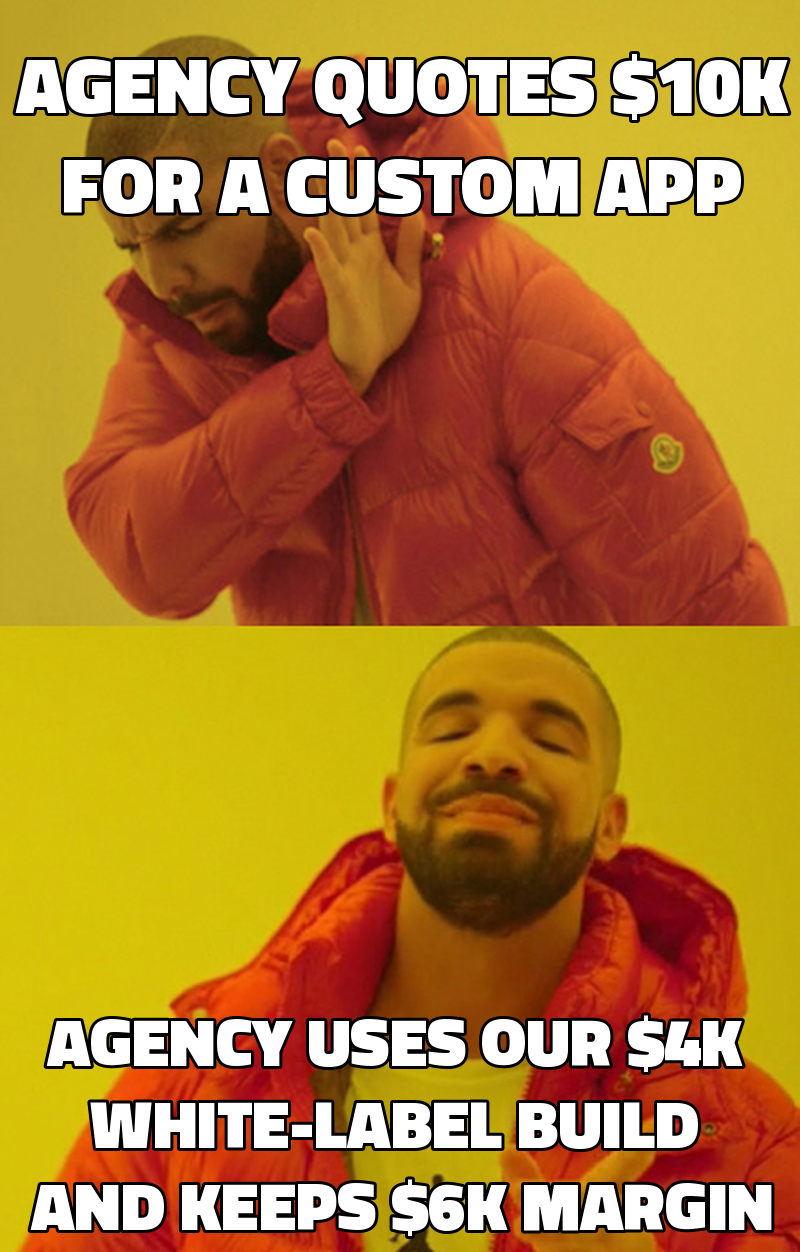
White label development agency pricing typically involves a wholesale rate that lets the agency keep 30-70% margin while covering your costs. You calculate it by estimating the development effort, applying a blended hourly rate (e.g., $80-$120), adding a fixed overhead buffer, and then setting a client-facing price that meets the agency’s profit target.
Key takeaways
- Estimate effort in hours, then multiply by a blended rate of $80-$120 to get a base cost.
- Add a 15-20% overhead buffer for project management, QA, and risk.
- Aim for a wholesale margin of 50-70% so the agency can charge 2-3× your cost.
- Use three pricing tiers: paid pilot, fixed-scope build, and monthly retainer.
- Include hidden costs (license fees, third-party APIs, post-launch support) in your quote to protect margin.
How do I estimate the cost of a white-label development project?
Accurate estimation is the foundation of a profitable pricing model. Follow the five-step framework below, which aligns with the way agency founders think about billable work.
- Scope the deliverable – Break the project into functional modules (e.g., user auth, API integration, AI chatbot, admin panel). Use the agency’s typical client brief as a checklist.
- Assign effort per module – Leverage historical data or industry benchmarks. For example, a simple WordPress-based landing page averages 8-12 hours, while a custom AI-driven chatbot averages 30-45 hours.
- Choose a blended hourly rate – Combine senior developer ($120/hr), mid-level ($90/hr), and junior ($70/hr) rates based on the mix you plan to use. For most white-label partners, a blended rate of $95/hr balances competitiveness and profitability.
- Add overhead – Project management, QA, and internal coordination typically add 15-20% on top of pure development cost.
- Validate with a risk buffer – Add 10% for scope creep or unexpected integration issues.
Sample effort estimation table
| Module | Estimated Hours | Senior % | Mid % | Junior % | Weighted Rate | Cost (USD) |
|---|---|---|---|---|---|---|
| User authentication | 12 | 20% | 50% | 30% | $95 | $1,140 |
| AI chatbot (GPT-4) | 35 | 30% | 50% | 20% | $106 | $3,710 |
| Third-party API integration | 20 | 25% | 50% | 25% | $98 | $1,960 |
| Admin dashboard | 25 | 15% | 55% | 30% | $92 | $2,300 |
| QA & testing | 15 | 0% | 40% | 60% | $80 | $1,200 |
| Total | 107 | , | , | , | , | $10,310 |
The weighted rate column is calculated as (Senior % × $120) + (Mid % × $90) + (Junior % × $70).
According to the 2023 Clutch Agency Survey, 62% of small agencies outsource development because they lack internal capacity. Using a structured estimate like the table above reduces the risk of under-pricing that 1 in 3 agencies experience.
What wholesale margin should I aim for?
Your wholesale margin is the percentage of the client-facing price you keep after paying your own costs. The sweet spot for small agencies is 50-70%, which translates to a 2-3× markup on your internal cost.
| Project size (USD) | Base cost (USD) | Recommended wholesale margin | Client-facing price (USD) |
|---|---|---|---|
| $2,000 – $5,000 | $800 – $1,600 | 55% | $1,800 – $4,500 |
| $5,001 – $15,000 | $2,000 – $5,000 | 60% | $5,000 – $12,500 |
| $15,001+ | $5,000+ | 65% | $15,000+ |
The margin range widens as project complexity grows because agencies can justify higher strategic value and longer timelines. A 2022 Deloitte study of B2B service firms found that firms with a 60%+ wholesale margin reported 22% higher client retention rates.
How should I structure pricing tiers for pilots, fixed-scope builds, and retainers?
1. Paid pilot (risk-free entry)
- Scope: 1-2 core features, limited to 20-30% of the full project.
- Price: Fixed fee of $1,500-$2,500 (covers your base cost plus a 20% pilot buffer).
- Goal: Prove quality, establish trust, and lock in a larger follow-up contract.
2. Fixed-scope build (core delivery)
- Scope: Full feature set defined in the proposal.
- Price calculation: Base cost × (1 + desired wholesale margin).
- Typical range: $3,000-$12,000 for most agency clients (see table above).
- Milestones: 30% upfront, 40% on beta, 30% on final delivery.
3. Monthly retainer (ongoing escalation)
- Coverage: 15-20 dev hours per month, priority queue, bug fixes, small enhancements.
- Rate: $1,500-$2,500 per month (covers $900-$1,200 of actual dev time plus margin).
- Lock-in: Minimum 3-month commitment; after 6 months, offer a 5% discount for annual renewal.
Pro tip: Bundle a quarterly “innovation sprint” (2-hour AI automation proof-of-concept) into the retainer to showcase ongoing value and reduce churn.
What hidden costs should I include to stay profitable?
- Third-party API fees – OpenAI, Twilio, Stripe, etc. Add a 10% markup on any usage-based cost.
- Licensing – Premium WordPress themes, UI component libraries, or SaaS SDKs.
- Compliance checks – GDPR or CCPA audit time (usually 2-4 hours per project).
- Post-launch support – 1-hour/week of monitoring for the first month; price it as a “support buffer”.
- Currency conversion – If the agency bills in GBP or AUD, include a 2% FX buffer to protect against rate swings.
By surfacing these items in the proposal, you avoid surprise invoices and maintain the agency’s trust.
How do I present pricing to agency decision-makers without scaring them?
- Start with the business outcome – “Your client will launch a chatbot that reduces support tickets by 30%.”
- Show the cost breakdown – Use a simple two-column table: Your cost vs Agency markup.
- Highlight the margin – “With a 60% wholesale margin, you can charge $4,800 and keep $2,880 profit.”
- Offer a price-lock guarantee – For the first 90 days, the wholesale rate stays fixed; any scope change triggers a transparent change order.
- Provide case study proof – Reference RouteMate (a production SaaS built for a UK agency) where the agency earned a 68% margin and retained the client for 18 months.
Sample pricing proposal template (markdown snippet)
**Project:** AI-driven chatbot for XYZ Retail
**Scope:** 3 core intents, integration with Shopify, admin dashboard
**Base cost:** $2,800 (see effort table)
**Wholesale margin:** 60%
**Agency price:** $4,800
**Payment schedule:** 30% upfront, 40% on beta, 30% on launch
**Included hidden costs:** API usage (estimated $150/mo, marked up 10%)
Real-world example: From pilot to retainer
- Pilot – Agency A paid $1,800 for a prototype chatbot (10 hours dev). They saw a 25% lift in lead capture.
- Full build – Based on pilot success, they approved a $5,200 fixed-scope build (base cost $2,000, 60% margin).
- Retainer – After launch, they signed a $1,800/month retainer for ongoing tweaks and a quarterly AI-feature sprint.
- Result – Over 12 months, Agency A earned $21,600 profit from a $12,000 internal cost, a 180% ROI on the partnership.
Frequently asked questions
What is the difference between wholesale and retail pricing?
Wholesale pricing is the rate you charge the agency; retail pricing is what the agency bills its client. The wholesale margin (usually 50-70%) determines how much the agency can markup while staying competitive.
How do I handle scope creep without eroding my margin?
Include a clear change-order clause that defines a per-hour rate ($100-$130) for any work beyond the original scope. Require written approval before starting additional tasks.
Should I charge in USD only?
For US, UK, and AU agencies, USD is standard and avoids conversion headaches. If the agency prefers GBP or AUD, quote in their currency but embed a 2% FX buffer to protect your margin.
Can I offer a discount for volume projects?
Yes. A tiered discount (5% for $10k+, 10% for $20k+) encourages agencies to bundle multiple builds into a single contract, increasing predictable revenue.
How many hours can I realistically allocate per month per partner?
Limit active partners to 3-4 at a time. With a capacity of 120-150 dev hours per month, allocate ~30-40 hours per partner for a sustainable retainer model.
What if the agency already has a dev partner?
Focus on gaps your partner can’t fill, AI automation, voice assistants, custom back-ends. Position yourself as a specialist overflow resource rather than a replacement.
How do I protect my IP while staying invisible?
Use a standard NDA and a non-circumvent clause. Deliver code under the agency’s branding and keep all repository access under a joint GitHub organization where the agency has read-only rights.
Is it worth offering a free first deliverable?
Generally no. Instead, provide a low-cost prototype (max $300) that demonstrates quality. This avoids unpaid engineering hours while still giving the agency a tangible proof point.
white‑label
Have something to build?
Tell us what you're trying to ship. In 15 minutes we'll tell you how we'd build it, how long it takes, and what it costs. No pitch deck, no pressure.