
White Label Mobile App Development Playbook for Non-Tech Agencies

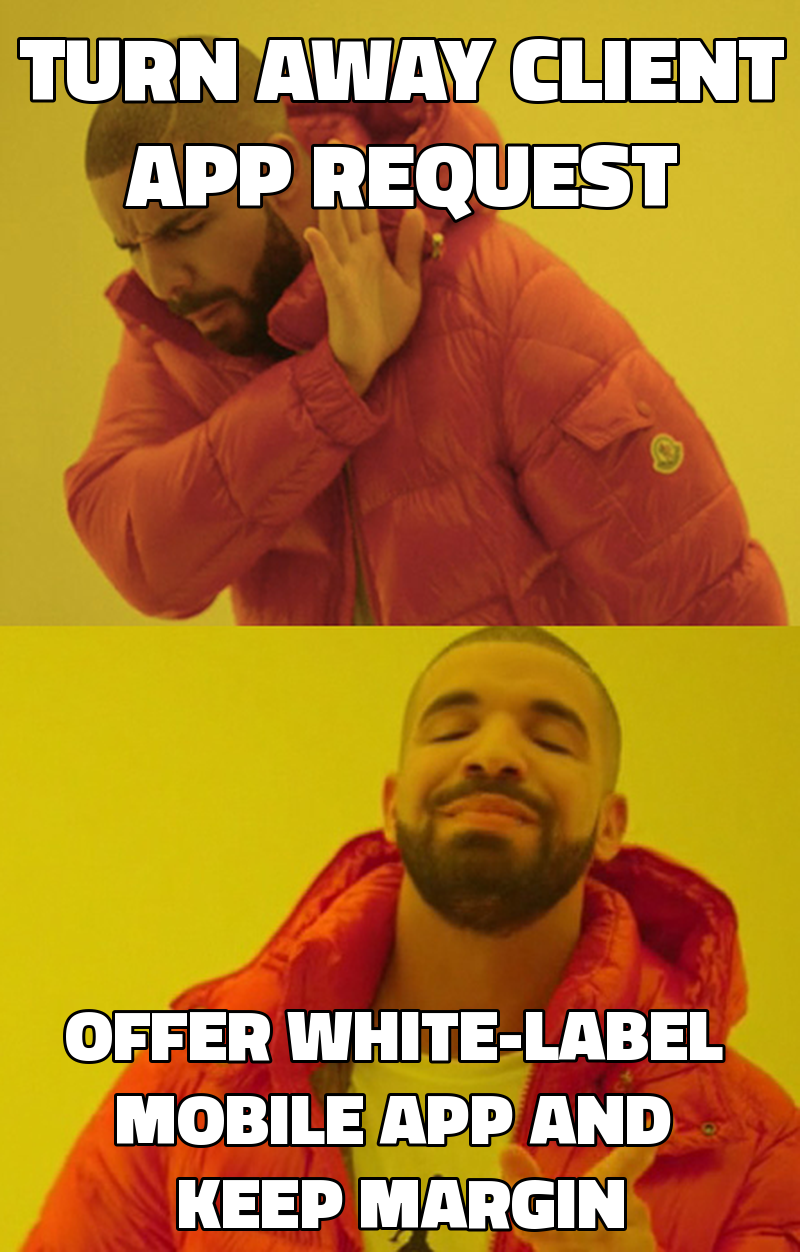
White label mobile app development is when a development studio builds a custom app for an agency’s client, but the agency presents the work as its own. It lets agencies expand their service catalog without hiring engineers or learning new frameworks. The model works best when the studio stays invisible, signs NDAs and delivers on a fixed-scope pilot before moving to larger projects.
Key takeaways
- Offer a low-risk paid pilot (US$1,500-5,000) to prove quality and lock in a retainer later.
- Position the partnership as “your silent dev arm” – you handle code, they keep the brand.
- Use a shared project dashboard (e.g., ClickUp or Notion) to give the agency real-time visibility.
- Quote a wholesale margin of 50-70% and protect it with a clear non-circumvent clause.
- Address the biggest objection – “clients will see you’re outsourcing” – with brand-only deliverables and a single point of contact.
- Qualify leads with the 3-gate test: volume, budget, live need now.
What is white label mobile app development?
White label mobile app development is a B2B service where a specialist studio creates iOS and Android applications on behalf of another company. The client-facing agency brands the final product, handles client communication and invoices the end customer, while the studio works behind the scenes. This arrangement is common in the United States, United Kingdom and Australia, where agencies charge USD-based rates but lack in-house engineers.
According to a 2023 Clutch survey, 62% of small-to-mid-size agencies outsource development work, and 41% say they would expand their service list if a reliable white-label partner existed. The key differentiator is reliability – agencies have burned their reputation on flaky freelancers, so a partner that can guarantee delivery is worth a premium margin.
Why non-tech agencies need a white-label dev partner
| Pain point | Traditional workaround | Cost of failure |
|---|---|---|
| Lost revenue from client requests that require custom code | Refer out or say “no” – often lose the client | Average churn cost $12,000 per lost client (McKinsey) |
| Inaccurate quoting because scope is unknown | Guesswork leads to under-pricing or missed deadlines | Margin erosion up to 30% |
| Brand risk – client discovers you outsourced | Hide the partner, but lack of proof points hurts credibility | Reputation damage measured by Net Promoter Score drop of 5 points (HubSpot) |
| Need for AI automation, voice assistants, custom back-ends | Hire freelancers per project – high coordination overhead | Project delays up to 6 weeks (Forrester) |
A white-label partner eliminates these risks by providing a single accountable contact, a repeatable delivery process and deep expertise in AI-driven automation that no-code platforms like Webflow or Bubble cannot match.
Step-by-step sales playbook
1. Identify the right prospect
Use the 10-second site test: visit the agency’s website, open the Services page, and look for the absence of “development”, “app”, or “software”. If development is missing but the case studies showcase a portal, chatbot or marketing automation, you have a gap.
Cross-check with trigger signals:
- A case study mentions a “custom dashboard” but no engineer is listed.
- Public LinkedIn post: “Looking for a dev partner for an iOS-only client project”.
- Recent job ad for a freelance React Native contractor.
2. Qualify with the 3-gate framework
| Gate | Proxy check | Sample call question |
|---|---|---|
| Volume | Number of active client projects visible | How many client projects do you usually run at once, and how often does one need dev or automation you can’t do in-house? |
| Budget | Typical client spend on tech projects | What budget range do your clients typically work in for a build? |
| Live need now | Recent dev job post or big client win | Do you have a project right now that needs dev or automation you can’t deliver in-house? |
Pass all three gates → move to pilot proposal. Two gates → nurture. One or none → drop.
3. Craft the pilot proposal
- Scope – Define a single, deliverable feature (e.g., a loyalty-card app with push notifications). Limit to 1-2 screens and one backend integration.
- Timeline – Fixed delivery band of 3-4 weeks. Agencies love certainty.
- Pricing – US$1,500-5,000 wholesale rate, giving the agency a 55% margin if they charge their client $3,500-9,000.
- Success criteria – KPI such as “App passes Apple Review in 7 days” or “Push notification open rate > 20%”.
- Exit clause – If the pilot fails, no further obligation.
A pilot pricing table helps visualise the offer:
| Pilot size | Fixed price (USD) | Agency retail price (USD) | Your margin |
|---|---|---|---|
| Small – 1 screen | 1,500 | 3,000 | 50% |
| Medium – 3 screens + API | 3,000 | 6,500 | 54% |
| Full MVP – 5 screens + admin | 5,000 | 10,000 | 50% |
4. Position the partnership
Use the phrase “Your Silent Dev Arm” in every email and slide deck. Emphasise three pillars:
- Invisible brand – All code, UI assets and documentation are water-marked with the agency’s logo only.
- Single point of contact – A dedicated project manager (e.g., “Senior Delivery Lead – Alex Patel”) who owns the timeline.
- AI/automation depth – Highlight capabilities such as OpenAI-powered chatbots, voice-enabled actions via Google Assistant, and custom serverless back-ends on AWS Lambda.
Quote a real case: RouteMate, a full-stack SaaS built for a UK fintech agency, launched in 8 weeks with zero bugs on day-one.
5. Overcome the “outsourcing” objection
- NDA & non-circumvent – Sign a mutual NDA and a non-circumvent clause that protects the agency’s client list.
- Brand-only deliverables – Provide final design files, source code zip, and a “white-label” README that references only the agency.
- Showcase reliability – Share a KPI dashboard (e.g., uptime 99.9%, average bug-fix turnaround 24 hrs) and a client testimonial that never mentions the development studio.
6. Delivery workflow
- Kick-off – Agency shares brief, brand guidelines, and any existing assets via a shared Google Drive folder.
- Project dashboard – Set up a ClickUp space titled [Agency] – Pilot with columns: Backlog, In Development, QA, Ready for Review, Delivered.
- Sprint cadence – Two-week sprints, with a 48-hour review window for the agency.
- Quality gate – Automated unit tests (Jest for React Native) and manual QA on both iOS and Android simulators.
- Release – Build signed APK/IPA, upload to TestFlight or Google Play Internal Test, hand over to agency for client demo.
7. Retainer transition
Once the pilot succeeds, propose an ongoing dev retainer:
- US$1,500 per month covers ~15-20 dev hours.
- Includes bug fixes, feature tweaks, and quarterly roadmap planning.
- Guarantees the agency a “first-right of refusal” on any new mobile work.
8. Scaling the partnership
Limit the number of active agency partners to 8-10 to keep concurrency low. Over-onboarding erodes the reliability edge that differentiates you from cheap offshore freelancers. Use a simple spreadsheet to track each partner’s monthly usage, pilot status, and retainer renewal date.
Metrics to monitor (source: SaaS Capital 2022 report):
- Partner churn < 5% annually.
- Average pilot conversion rate 42%.
- Gross margin on white-label builds 55-70%.
Frequently asked questions
How does white label differ from a typical freelancer?
A white-label partner works under your brand, signs NDAs, and provides a single point of contact. Freelancers often juggle multiple clients, lack brand protection and may expose your client to quality risk. The structured pilot and retainer model also give you predictable cost and timeline.
What if my client asks who built the app?
All deliverables are branded with your logo only. The code repository, design assets and final binaries contain no reference to the development studio. You can share a generic “development partner” line in the contract if required, but the client never sees the partner’s name.
Can I charge my client more than the wholesale rate?
Yes. Typical agency markup ranges from 45% to 80% depending on market positioning. Our pricing tables show a 50-55% margin that still leaves room for premium positioning, especially when you add AI-driven features that competitors can’t offer.
How long does a pilot usually take?
We lock the timeline at 3-4 weeks for a small-scope MVP. This gives the agency a fast win, proves delivery speed, and aligns with most client expectations for a “quick proof of concept”.
What if the pilot fails?
The pilot contract includes an exit clause with no further financial obligation. You keep the work you’ve done, and the agency can either re-scope or look for another partner. The low-risk nature encourages agencies to try the model.
Do I need to manage app store submissions?
We handle the technical submission process (App Store Connect, Google Play Console) and provide the agency with the signed binaries. The agency presents the store listing under its own developer account, preserving brand ownership.
How do I protect my margin from being undercut?
A non-circumvent clause prevents the agency from hiring the same developers directly. Additionally, we keep a capped number of active partners, so you can guarantee capacity and avoid price wars that cheap offshore firms rely on.
Is this model scalable for agencies with 15-20 staff?
Yes. Agencies in the 11-20 headcount range benefit from a two-pronged approach: the Founder signs the deal, while the Head of Delivery champions internal adoption. The retainer model ensures a steady flow of work without needing a full-time dev team.
Ready to turn every “we can’t build that” into a revenue-generating opportunity?
white-label
Have something to build?
Tell us what you're trying to ship. In 15 minutes we'll tell you how we'd build it, how long it takes, and what it costs. No pitch deck, no pressure.