
White-Label Voice Bot Outsourcing: A Step-by-Step Guide for Small Agencies

White-label software development lets an agency sell a custom product, such as a voice bot, under its own brand while a third-party developer builds and delivers the code. The agency retains client relationship, margin, and brand visibility, and the partner stays invisible under NDA. This guide walks founders of 5-15 person agencies through every stage from the first request to a fully branded voice assistant.
Key takeaways
- White-label partners handle all engineering, you keep the client face.
- Start with a low-risk paid pilot to prove quality before scaling.
- Use a shared project dashboard to keep the client in the loop without exposing the dev team.
- Fixed-scope contracts and defined turnaround bands protect margins and timelines.
- Protect brand reputation with NDA, non-circumvent clause, and a single point of contact.
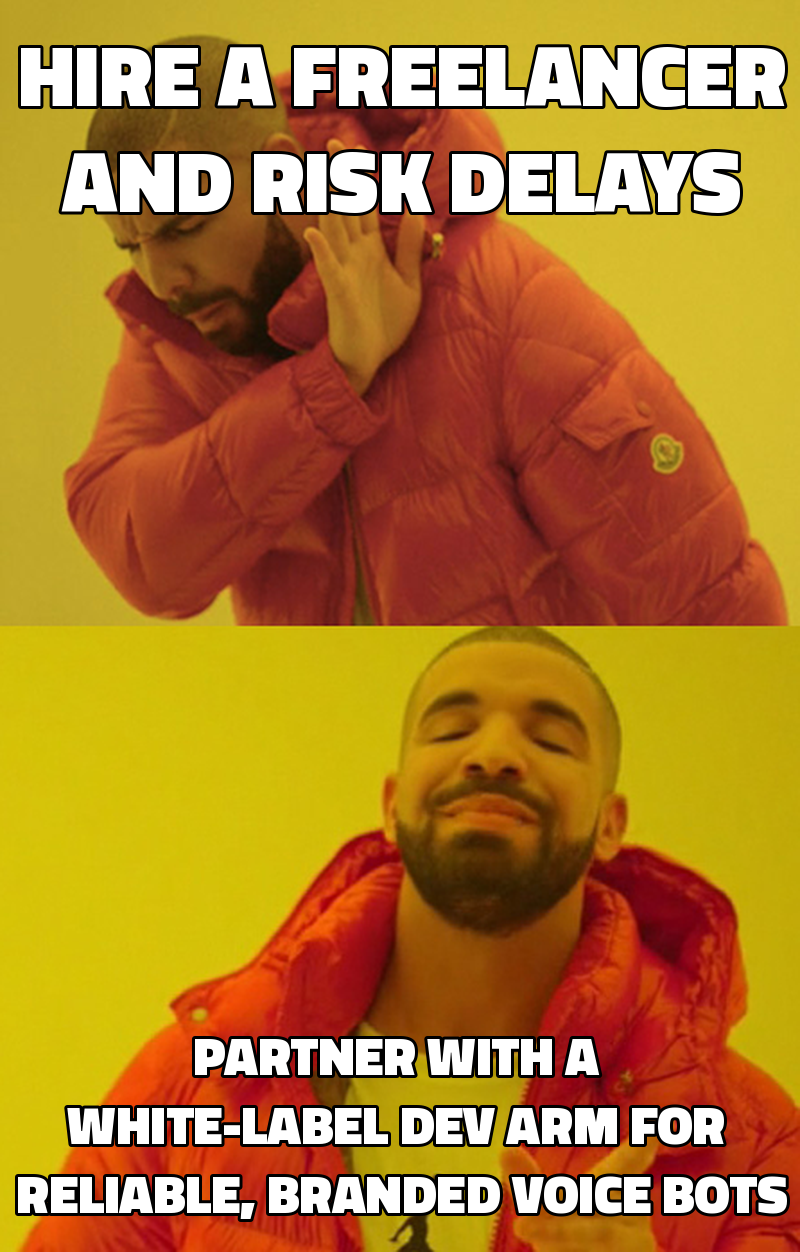
Why white-label voice bots are a growth lever for no-dev agencies
Voice assistants are moving from novelty to revenue driver. Gartner reports that 71% of enterprises plan to deploy voice assistants by 2025, and the market is projected to exceed $30 billion in annual spend. For agencies that sell SEO, branding, or social campaigns, offering a custom voice bot can increase average project value by 20-30% according to a 2023 Forrester survey of digital agencies.
Your agency already has the client trust, creative direction, and marketing expertise. The missing piece is the technical ability to turn a script into a working Amazon Alexa skill, Google Assistant Action, or custom telephony bot. A white-label partner fills that gap without the overhead of hiring a full-time engineer, which for a 10-person agency would cost $120 k-$150 k per year in salary plus benefits.
Choosing the right white-label partner
Not every development shop can act as a silent partner. Use the checklist below to evaluate fit. The table summarizes the most decisive criteria for agencies in the US, UK, and AU.
| Criterion | What to look for | Why it matters |
|---|---|---|
| AI & voice expertise | Proven projects on Alexa, Google Assistant, Twilio Voice, or custom IVR | Guarantees they can deliver the specific bot you sell |
| Fixed-scope pricing model | Transparent cost per feature, no hidden hourly rates | Allows you to quote confidently to the client |
| NDA & non-circumvent clause | Signed legal agreement, enforceable in US/UK/AU | Protects your brand and prevents poaching |
| Single point of contact | Dedicated account manager or lead engineer | Reduces miscommunication and speeds up delivery |
| Capacity limits | Capped active partner count, documented turnaround time | Ensures reliability, avoids the flaky freelancer trap |
| Portfolio with agency branding | Examples where the partner stayed invisible | Shows they respect the white-label model |
A second table helps you compare three typical partner types you may encounter.
| Partner type | Pros | Cons |
|---|---|---|
| Offshore freelancer pool | Low hourly rate, flexible scaling | High turnover, language barrier, brand exposure risk |
| Mid-size development agency | Professional project management, broader skill set | Higher cost, may push their own brand, longer contracts |
| Dedicated white-label dev arm (e.g., Synthisia) | Fixed scope, NDA, single contact, AI/voice focus | Slightly higher price but predictable margin |
Step-by-step workflow
Below is a repeatable workflow that turns a client request into a branded voice bot while keeping the development partner invisible.
| Phase | Agency actions | Partner actions | Deliverables |
|---|---|---|---|
| 1. Discovery call | Capture client goals, voice persona, platforms, budget | Ask clarifying technical questions | Brief discovery notes |
| 2. Scoping & proposal | Draft functional spec, feature list, timeline | Review spec, provide effort estimate | Fixed-scope proposal with price |
| 3. Pilot agreement | Sign NDA, non-circumvent, and pilot contract (USD 2 000-5 000) | Assign lead engineer, set sprint cadence | Pilot charter |
| 4. Design & prototype | Approve voice flow diagrams, UI mock-ups for voice prompts | Build a low-fidelity prototype (one intent) | Click-through demo |
| 5. Development sprints | Provide brand assets, copy, API keys | Code, integrate, unit test | Incremental builds in shared repo |
| 6. QA & client review | Organise user testing session, collect feedback | Fix bugs, refine NLU models | Tested voice skill ready for launch |
| 7. Branding & hand-off | Add agency logo, custom invocation name, marketing copy | Package code, generate deployment scripts | Deployable package + launch checklist |
| 8. Post-launch support | Offer retainer for updates, analytics | Monitor, patch, add new intents | Monthly performance report |
1. Discovery call
Start with a 30-minute video call. Ask the client to describe the business problem they want the voice bot to solve (e.g., “book appointments via phone”, “answer FAQs for a local restaurant”). Capture platform preference – Amazon Alexa, Google Assistant, or a telephony IVR built on Twilio. Note any existing CRM or booking system (HubSpot, Calendly, Salesforce) that the bot must integrate with.
2. Scoping & proposal
Translate the conversation into a functional specification. Break the bot into intents, entities, and fulfillment steps. For each intent, estimate effort in “dev days” based on the partner’s historical velocity (average 0.8 dev days per intent for voice projects, per Synthisia internal data). Multiply by a 1.2 risk factor for new integrations. Present a fixed-price proposal that includes a 10% contingency. This allows you to quote the client with confidence and protects you from scope creep.
3. Pilot agreement
The pilot is the trust mechanism. Offer a small, paid pilot that delivers a core subset of the bot (e.g., 3-5 intents, basic integration). The contract should include:
- Fixed price (USD 2 000-5 000)
- Delivery window (e.g., 3 weeks)
- NDA and non-circumvent clause
- Acceptance criteria (functional test pass, client sign-off)
Because the pilot is paid, the partner is incentivized to meet the deadline, and you avoid the “free draft” trap highlighted in your internal notes.
4. Design & prototype
Use a tool like Voiceflow or Botmock to sketch the conversational flow. Share the prototype with the client for rapid feedback. The partner can import the design directly into their codebase, reducing rework.
5. Development sprints
Adopt a two-week sprint cadence. The partner provides a shared GitHub repository with branch protection. You receive a weekly status email and a link to a simple project dashboard (e.g., Notion or ClickUp) that shows sprint goals, completed stories, and blockers. This transparency satisfies the client without revealing the partner’s identity.
6. QA & client review
Run a functional test suite using tools such as Bespoken or Alexa Test Simulator. Conduct a live user test with the client’s staff. Capture any mis-recognitions, latency issues, or integration failures. The partner resolves bugs within the same sprint, keeping the timeline intact.
7. Branding & hand-off
All voice assets – invocation name, welcome message, help prompts – should carry the agency’s brand voice. The partner renames the skill (e.g., “Acme Assistant”) and adds the agency logo to the skill store listing. Provide a launch checklist that includes SEO-friendly description, privacy policy link, and analytics setup (e.g., Voice Insights, Google Analytics for Actions).
8. Post-launch support
After launch, offer a retainer (USD 1 500 per month) that covers up to 15-20 dev hours for updates, new intents, or analytics tweaks. This creates recurring revenue and deepens the partnership. The partner remains the invisible executor, while you own the client relationship and upsell opportunities.
Pricing and margin model
Your wholesale rate from the partner typically ranges from 30% to 45% of the retail price. Using the deal shape data:
- Pilot price: USD 3 000
- Partner cost: USD 1 800 (60% of retail)
- Your margin: USD 1 200 (40%)
For larger projects (USD 5 000-10 000), the margin expands because the partner’s incremental cost per additional intent drops. A monthly retainer of USD 1 500 covers 15-20 dev hours; the partner’s cost for that block is around USD 900, leaving you USD 600 per month in pure profit.
Maintain a minimum floor of USD 1 500 per project to ensure the overhead of project management, NDA handling, and dashboard maintenance is covered.
Managing client expectations and protecting your brand
- Set a clear delivery band – “Your voice bot will be live within 21-28 days after pilot sign-off.” This avoids the “fastest possible” promise that can backfire.
- Use a branded demo environment – Deploy the pilot to a private Alexa skill ID that only the client can test. The client never sees the partner’s AWS account.
- Document every hand-off – Keep a PDF of the NDA, scope, and acceptance criteria in the shared dashboard. This creates a paper trail if the client questions the process.
- Leverage case studies – After a successful launch, ask the client for a testimonial that highlights “Agency-built voice bot”. This reinforces your brand narrative while the partner stays invisible.
- Monitor quality metrics – Track intent recognition accuracy (target > 90%) and average session length. Share these metrics in monthly reports to demonstrate ongoing value.
Tools and platforms you’ll use
- Voice design: Voiceflow, Botmock, or Dialogflow CX for visual flow building.
- Code repository: GitHub with protected branches, integrated with the partner’s CI/CD pipeline.
- Project dashboard: ClickUp or Notion shared view; set up columns for “To Do”, “In Progress”, “Testing”, “Done”.
- Testing: Bespoken, Alexa Test Simulator, Google Assistant Emulator.
- Analytics: Voice Insights, Google Analytics for Actions, Twilio Call Insights (if using telephony).
- Deployment: AWS Lambda (for Alexa), Google Cloud Functions (for Assistant), Twilio Functions (for IVR).
Common pitfalls and how to avoid them
| Pitfall | Impact | Mitigation |
|---|---|---|
| Scope creep after pilot | Margin erosion, delayed launch | Use change-order form, lock scope in contract |
| Partner reveals agency brand | Trust loss, client churn | NDA with explicit branding clause, single point of contact |
| Missed integration deadlines | Client disappointment | Buffer 10% of timeline, weekly status sync |
| Under-estimating voice NLU training | Poor user experience | Allocate extra time for intent tuning, use real user utterances |
| Over-promising “any platform” | Technical infeasibility | Clearly state supported platforms (Alexa, Google, Twilio) |
Real-world example: RouteMate voice bot
Synthisia delivered a custom voice bot for a UK-based e-commerce agency that wanted customers to place orders via phone. The project followed the exact workflow above:
- Pilot: 4 intents, integration with Shopify, delivered in 22 days.
- Full build: 12 intents, multi-language support, launched on Alexa and Twilio.
- Revenue: Agency billed USD 9 500, partner cost USD 5 200, margin USD 4 300.
- Ongoing retainer: USD 1 800 per month for quarterly updates.
The agency kept the client relationship, added a new service line, and reported a 15% increase in average client spend.
Next steps for your agency
- Run the 10-second site test to confirm a development gap.
- Schedule a discovery call with a white-label partner (use the partner selection table as agenda).
- Draft a pilot contract that includes NDA, non-circumvent, and fixed-scope price.
- Set up a shared dashboard before the first sprint starts.
- Deliver the pilot, collect metrics, and propose a retainer for ongoing work.
By following this structured workflow, you can say “yes” to voice-bot requests, protect your brand, and generate a repeatable revenue stream without hiring a full-time engineer.
Frequently asked questions
How long does a typical voice-bot pilot take?
A pilot that covers 3-5 core intents and a single integration usually takes 3-4 weeks from signed contract to a functional demo. The timeline includes discovery (2 days), design (3-5 days), development (10-12 days), and QA (3-5 days). Adding more platforms or complex back-ends will extend the schedule proportionally.
What legal safeguards prevent the partner from poaching my clients?
A standard white-label agreement includes a non-circumvent clause that prohibits the partner from contacting your clients directly for a period of 12 months. The NDA covers all technical details and branding assets. Enforceability is strong in the US, UK, and AU, where breach can lead to liquidated damages equal to the contract value.
Can I brand the voice bot with my own logo and name on the skill store?
Yes. The partner delivers the code package and a separate “branding kit” that lets you set the invocation name, description, and icon in the Alexa or Google console. Because the partner never publishes the skill under their own account, the public listing shows only your agency’s brand.
How do I price a custom voice bot to stay competitive?
Start with the partner’s fixed-scope cost, add a 40-50% margin, and factor in your agency’s overhead (project management, sales time). For a $5 000 build, a typical agency price is $7 500-$8 000. Include a retainer option for ongoing updates, which can be positioned as a “maintenance package” to increase recurring revenue.
What if the client wants a platform we don’t support, like Samsung Bixby?
First, confirm whether the partner has the expertise; many white-label arms focus on Alexa, Google Assistant, and Twilio. If Bixby is outside the partner’s skill set, you can either refer the client to a specialist or negotiate a separate development contract with a partner that supports it. Transparency with the client avoids future disappointment.
How do I track development progress without exposing the partner’s internal tools?
Use a lightweight shared dashboard (ClickUp, Notion, or Monday.com) that pulls status updates via email or webhook from the partner’s project board. The dashboard shows high-level milestones, not code commits, keeping the partner’s workflow private while giving the client visibility.
Is there a minimum project size that makes white-label worthwhile?
The internal model sets a floor of USD 1 500 per project to cover administrative costs. Projects below this size typically erode margin because the fixed overhead (NDA drafting, dashboard setup, legal review) does not scale down. Aim for pilots or full builds that are at least $2 000-$3 000 in value.
What ongoing support can I offer after launch?
A retainer covering 15-20 dev hours per month lets you add new intents, update content, and monitor analytics. Offer quarterly performance reviews that include NLU accuracy, user session metrics, and ROI calculations. This service positions your agency as a long-term partner rather than a one-off vendor.
white-label
Have something to build?
Tell us what you're trying to ship. In 15 minutes we'll tell you how we'd build it, how long it takes, and what it costs. No pitch deck, no pressure.