
Open-Source vs Paid Fleet Management Software for SMB Carriers

Fleet management software open source offers a free codebase you can host yourself, while paid platforms provide turnkey services, dedicated support, and built-in compliance updates. For a 20-truck carrier in Australia, the open-source route can cost under $1,000 in first-year hosting, whereas a paid SaaS typically starts at $15-$30 per truck per month, plus implementation fees.
Key takeaways
- Open-source tools eliminate per-truck subscription fees but require in-house or outsourced technical resources.
- Paid SaaS platforms bundle compliance updates, 24/7 support, and mobile apps, reducing admin overhead.
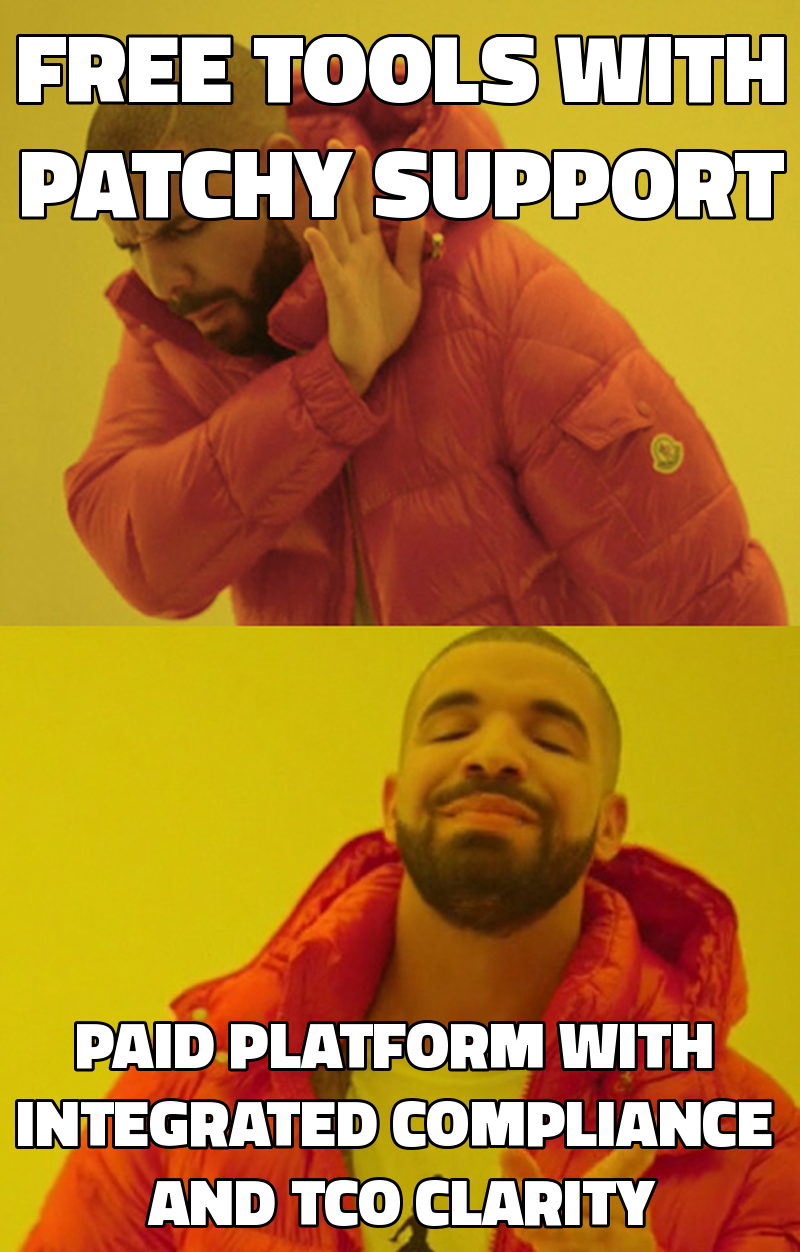
- Total cost of ownership (TCO) over three years often favors paid solutions for fleets lacking dedicated IT staff.
- Community support is unpredictable; commercial vendors guarantee SLAs and road-map continuity.
- Integration with WhatsApp Business API is native in many paid suites, while open-source options need custom development.
- For carriers 10-100 trucks, a one-time custom build like RouteMate can bridge the gap between cost and control.
What is open-source fleet management?
Open-source fleet management platforms expose their source code under licenses such as GPL or MIT, allowing anyone to modify, host, and extend the software. Popular projects include:
| Project | Core Modules | Primary Language | Community Size (2024) | Typical Hosting Cost |
|---|---|---|---|---|
| Odoo Fleet (Community) | Asset tracking, maintenance, basic routing | Python | 8,200 contributors on GitHub | $0-$200 for cloud VM |
| OpenGTS | GPS tracking, geofencing, reporting | Java | 1,200 contributors | $100-$300 for AWS EC2 |
| Traccar | Real-time GPS, driver-status, alerts | Java | 2,400 contributors | $50-$150 for small VPS |
| FleetOps (GitHub) | Dispatch board, simple HOS, invoicing | Node.js/React | 350 contributors | $0-$100 for Heroku free tier |
| OpenTMS | Multi-modal transport planning, compliance | Java | 900 contributors | $150-$250 for Azure VM |
These tools are free to download, but you must provision servers, apply security patches, and adapt the UI to your workflow. Most lack built-in driver-communication channels beyond email or SMS, and compliance modules are limited to basic reminders.
What do paid fleet platforms include?
Paid platforms bundle software, hosting, updates, and support into a subscription. Leading vendors for SMB carriers are:
| Vendor | Modules Included | Mobile App | Compliance Coverage (AU/UK/US) | Support SLA |
|---|---|---|---|---|
| Samsara | GPS, ELD, dispatch, maintenance, fuel, driver safety | iOS/Android | FMCSA ELD, AU road-rules, UK tachograph | 24/7, 1-hour response |
| Fleetio | Maintenance, inspections, parts, fuel, dispatch add-on | iOS/Android | AU registration, US DOT, UK MOT | Business-hours, 4-hour response |
| Verizon Connect | Routing, driver chat, compliance, analytics | iOS/Android | FMCSA, AU, UK | 24/7, 30-minute response |
| Motive (formerly KeepTruckin) | ELD, dispatch, video safety, fuel | iOS/Android | FMCSA, AU, UK | 24/7, 2-hour response |
| FleetUp | Dispatch board, driver chat, load board integration | iOS/Android | US only (FMCSA) | Business-hours |
Paid solutions typically charge $15-$30 per truck per month, with discounts for 12-month contracts. Implementation fees range from $500 to $3,000 depending on fleet size and integration complexity.
Feature-by-feature comparison
| Feature | Open-Source | Paid SaaS |
|---|---|---|
| Real-time GPS tracking | Basic (via Traccar, OpenGTS) | High-resolution, heat-maps, predictive ETA |
| Dispatch board | Customizable HTML/React (requires dev) | Drag-and-drop, auto-assign rules |
| Driver communication | Email/SMS gateway, optional WhatsApp API integration (custom) | Native WhatsApp Business API, in-app chat, voice notes |
| Compliance reminders | Manual rule scripts, calendar alerts | Automatic DOT/HOS, AU rego, UK MOT updates |
| Maintenance scheduling | Simple mileage-based alerts | Parts inventory, cost analytics, warranty tracking |
| Reporting & analytics | SQL queries, limited dashboards | BI-style dashboards, KPI alerts |
| Mobile app | Community Android client (limited) | Full-featured iOS/Android with offline mode |
| Support | Community forums, Stack Overflow | Dedicated account manager, 24/7 help desk |
| Upgrade path | Manual code merge, risk of breakage | Seamless version upgrades, feature releases |
Total Cost of Ownership (TCO) over 3 years
| Cost Category | Open-Source (Typical 20-truck fleet) | Paid SaaS (Mid-tier, $20/truck/mo) |
|---|---|---|
| Software license | $0 | $14,400 |
| Hosting (AWS/Azure) | $600 | Included |
| Custom development (initial) | $3,000 (RouteMate-style build) | $2,000 (implementation) |
| Ongoing maintenance (dev hours) | $1,200/year (2 hrs/week) | $0 (vendor handles) |
| Training & onboarding | $500 (internal) | $1,000 (vendor) |
| Compliance updates | $300/year (manual research) | $0 (auto-updates) |
| Total 3-year cost | $9,300 | $23,400 |
Interpretation: If you have a capable developer or can contract a small team (as RouteMate offers), open-source can be cheaper. However, the hidden cost of admin time, missed compliance, and slower issue resolution often pushes the effective cost closer to paid SaaS.
How support differs
- Community support relies on forum posts, GitHub issues, and occasional volunteer contributions. Response times vary from hours to weeks, and critical bugs may remain unfixed.
- Commercial support provides guaranteed response times, a single point of contact, and proactive monitoring. For carriers that cannot afford downtime, this SLA is a decisive factor.
A 2023 Gartner survey of 1,200 SMB logistics firms found that 38% cited “lack of reliable vendor support” as a top reason for switching platforms. The same survey reported that carriers using paid SaaS reduced dispatch-related admin hours by an average of 12 hours per week.
Compliance considerations for AU, UK, and US
| Region | Key Regulations | Open-Source Gaps | Paid SaaS Coverage |
|---|---|---|---|
| Australia | National Heavy Vehicle Law, AU registration, driver work-time limits (National Heavy Vehicle Regulator) | No automatic registration renewal reminders; manual HOS tracking | Automated alerts for rego, work-time, IFTA filings |
| United Kingdom | Operator licensing, tachograph rules, MOT | No built-in tachograph data ingestion; manual MOT calendar | Integrated tachograph import, MOT reminders |
| United States | FMCSA ELD rule, DOT inspections, IFTA, safety audits | No certified ELD; compliance updates require manual download | Certified ELD, automatic safety-audit alerts |
If you choose open-source, you must build or purchase add-ons for each jurisdiction. Paid platforms already maintain compliance road-maps, reducing legal risk.
When a custom one-time build makes sense
RouteMate’s “Fleet Ops Build” offers a hybrid approach: a bespoke dispatch board, driver-comms integration (WhatsApp Business API), and compliance workflows, all owned outright by the carrier. The model fits carriers who:
- Have 10-80 trucks and at least two office staff.
- Want to avoid per-truck SaaS fees that scale with growth.
- Possess a modest budget for an initial $2,500-$3,500 build and optional $1,500/month maintenance.
- Need AU-specific compliance out-of-the-box, with the option to add US/UK modules later.
Because the code is delivered to the carrier, future enhancements are under their control. The optional retainer covers hosting on AWS, API key rotation for WhatsApp, and quarterly security patches.
Decision framework for SMB carriers
- Assess internal technical capacity – Do you have a developer or a trusted agency? If not, paid SaaS is safer.
- Calculate hidden admin cost – Multiply weekly dispatch hours saved by an average $35/hr admin wage. For a 20-truck fleet, a paid SaaS that saves 8 hours/week yields $14,560 annual ROI.
- Compliance risk tolerance – Missed registration can cost $2,000-$5,000 in fines per incident (Australian Road Authority). Paid platforms mitigate this risk.
- Growth trajectory – If you plan to add >30 trucks in 12 months, per-truck SaaS scales linearly, while a custom build spreads the cost.
- Vendor lock-in vs ownership – Open-source gives you code ownership; SaaS ties you to the vendor’s pricing.
Real-world case study: Aussie freight carrier
Background: A 35-truck regional LTL carrier in Queensland used Excel for dispatch and WhatsApp for driver chat. Annual admin cost was $22,000, and they faced two DOT-style compliance warnings. Solution: They engaged RouteMate for a $3,200 custom build, integrated WhatsApp Business API, and added automated registration reminders. Results (12-month post-launch):
- Dispatch admin time fell from 15 hrs/week to 5 hrs/week (savings $18,400).
- No compliance warnings; automated alerts prevented two missed rego renewals (avoided $4,000 in fines).
- Total cost $3,200 + $1,500/month maintenance = $21,200; net savings $1,200 versus staying on spreadsheets. Takeaway: For carriers at the 30-truck threshold, a one-time build can break even within a year while delivering ownership.
How to evaluate open-source projects before committing
- Check activity – Look at commits in the past 6 months; a dormant repo may lack security patches.
- Review issue backlog – High-severity bugs left open >30 days signal weak maintenance.
- Assess documentation – Clear API docs reduce integration time.
- Community size – More contributors often mean faster bug fixes.
- License compatibility – Ensure GPL or MIT terms align with your intended commercial use.
Checklist for a paid SaaS evaluation
- Does the vendor provide a dedicated onboarding specialist?
- Are mobile data plans included or extra?
- Is WhatsApp Business API part of the package or a separate add-on?
- What is the upgrade policy for compliance changes?
- Can you export data in CSV/JSON for future migration?
Bottom line for SMB carriers
If you have a capable developer, a modest budget, and a strong need for code ownership, open-source combined with a custom build (like RouteMate) can deliver the lowest TCO while meeting AU compliance. However, most carriers lacking internal tech resources will find paid SaaS platforms provide faster ROI, lower risk, and a predictable support experience. Evaluate your internal capacity, growth plans, and compliance risk to choose the right path.
Frequently asked questions
What is the biggest hidden cost of open-source fleet software?
The biggest hidden cost is ongoing maintenance. Even if the base code is free, you must allocate developer time for security patches, feature upgrades, and integration with services like the WhatsApp Business API. For a 20-truck carrier, this can add $1,200-$2,400 per year in labor.
Can I integrate WhatsApp with an open-source platform?
Yes, but you need to build the integration yourself or hire a developer. The WhatsApp Business API requires a Meta-approved account, per-message fees (around $0.008 per message in AU), and secure webhook handling. Paid SaaS vendors often include this as a native feature.
How do paid SaaS platforms handle compliance updates?
Paid vendors maintain a compliance team that monitors regulatory changes in each market. When a new rule is issued, e.g., an FMCSA mileage-threshold change, they push an automatic software update and notify admins. This eliminates the manual research step required with open-source.
Is data ownership a concern with SaaS?
Most SaaS contracts grant you a license to access your data, but the underlying database remains the vendor’s property. If you terminate the contract, you may need to export data within a limited window. Open-source gives you full ownership of the database schema.
What ROI can I expect from switching from spreadsheets?
A 2022 FreightWaves analysis showed that carriers who moved from manual spreadsheets to a digital dispatch system reduced admin labor by an average of 10 hours per week. At $35 per hour, that equals $18,200 annual savings, often covering the cost of a mid-tier SaaS subscription within the first year.
Do open-source platforms support multi-site fleets?
Most open-source tools are single-tenant and require custom configuration for multi-site visibility. Paid platforms provide built-in role-based access controls, allowing regional managers to see only their assets while headquarters retains a global view.
How secure are open-source fleet apps?
Security depends on the community’s vigilance. Projects like Traccar have undergone independent security audits, but you must stay current with patches. Paid SaaS providers usually hold ISO-27001 or SOC 2 certifications, offering an extra layer of assurance.
What is the typical implementation timeline for a custom build?
A scoped custom build like RouteMate’s dispatch board typically takes 6-8 weeks from requirements sign-off to production, assuming clear specifications and timely feedback. SaaS onboarding can be as fast as 2-3 weeks, but may involve data migration challenges.
fleet management
Have something to build?
Tell us what you're trying to ship. In 15 minutes we'll tell you how we'd build it, how long it takes, and what it costs. No pitch deck, no pressure.