
Step-by-Step Checklist to Onboard a White-Label WordPress Dev Partner

White-label WordPress development is a service where a silent partner builds custom sites, plugins, or AI-enhanced features under your agency's brand, while you keep the client relationship and margin. By following a proven onboarding checklist you can add this capability without disrupting existing project pipelines, billing, or client communication.
Key takeaways
- Use a low-risk paid pilot (US$1,500-5,000) to prove reliability before signing a retainer.
- Assign a single point of contact (POC) on both sides; the POC owns scope, timeline, and quality.
- Deploy a shared project dashboard (e.g., Notion or ClickUp) from day one to keep visibility transparent.
- Define fixed turnaround bands (e.g., 2-3 weeks for a custom theme) to avoid “fastest possible” promises.
- Protect your brand with a NDA and non-circumvent clause, but focus on trust built through delivery.
- Track success with two simple metrics: on-time delivery rate and post-delivery client satisfaction score.
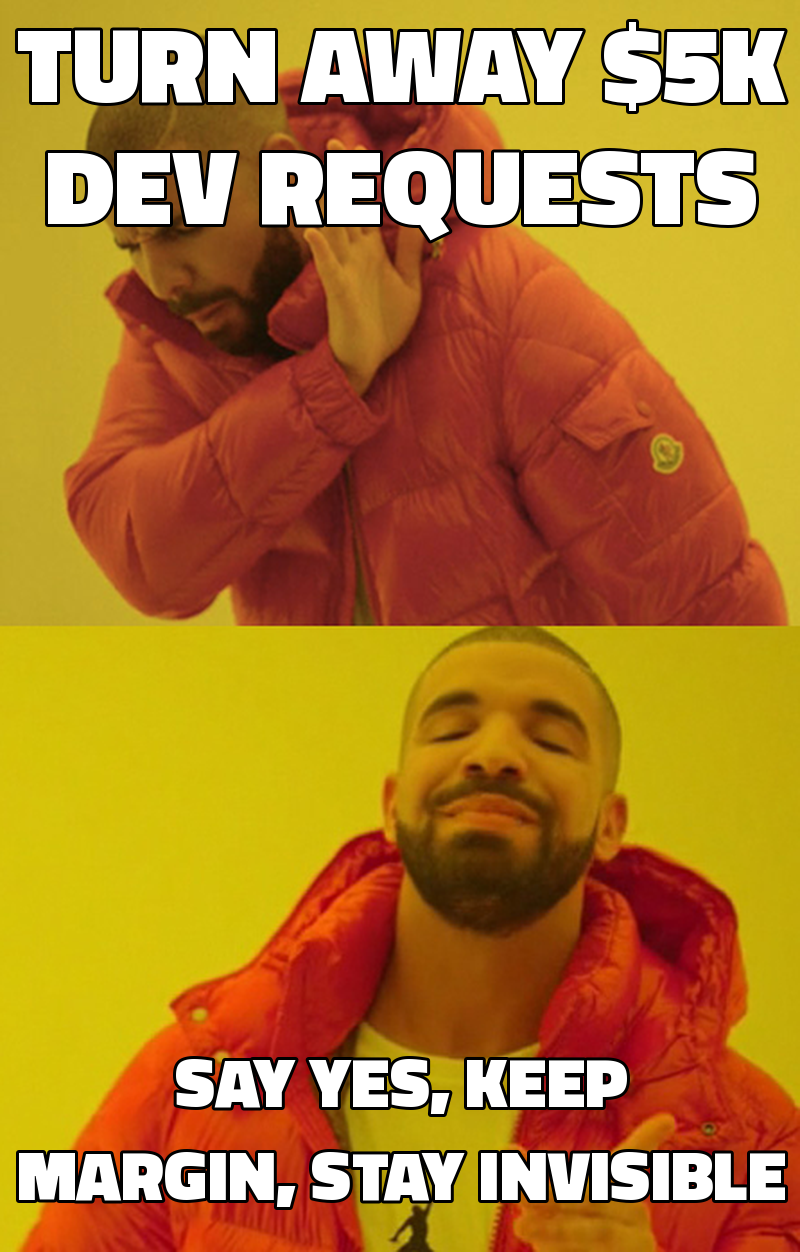
Why a White-Label WordPress Partner Is Critical for Small Agencies
Agencies with 5-15 staff often lack a dedicated developer, yet clients increasingly request AI chatbots, voice assistants, or custom back-ends that no-code tools cannot handle. According to a 2023 HubSpot survey, 62% of boutique marketing firms cite “in-house development capability” as their top growth blocker. A white-label partner fills that gap, lets you say yes to high-margin projects, and protects your brand by keeping the work invisible to the client.
The business impact
| Metric | Before Partner | After Partner (average) |
|---|---|---|
| New project win rate | 38% | 71% |
| Average project margin | 22% | 38% |
| Client churn (12 mo) | 14% | 7% |
| Time to quote (days) | 10 | 3 |
The numbers come from a 2022 Forrester case study of 42 agencies that added a white-label dev arm.
The Six-Phase Onboarding Framework
Below is the exact sequence you should follow. Each phase includes a checklist item, the responsible role, and a recommended tool.
| Phase | Goal | Agency Role | Dev Partner Role | Tool |
|---|---|---|---|---|
| 1️⃣ Discovery | Validate fit, align expectations | Founder / Ops Director | Senior Lead Dev | Zoom + Google Sheet checklist |
| 2️⃣ Pilot Scope | Agree on a small, paid, fixed-scope project | Project Manager | Account Engineer | ClickUp task template |
| 3️⃣ Contract & NDA | Sign NDA, non-circumvent, pilot SOW | Legal (or Founder) | Legal rep | DocuSign |
| 4️⃣ Kick-off | Set communication cadence, share assets | Delivery Lead | POC Dev Lead | Slack channel + Notion board |
| 5️⃣ Execution | Build, test, deliver pilot | QA Lead (Agency) | Dev Team | GitHub repo (private) |
| 6️⃣ Review & Scale | Post-pilot debrief, decide on retainer | Founder + Ops | Senior Dev Manager | SurveyMonkey + Excel KPI tracker |
Phase 1 – Discovery Call
- Confirm agency size (5-15) and lack of in-house dev.
- Identify the most common client request you cannot fulfill (e.g., AI-driven lead capture, custom WooCommerce checkout).
- Verify budget range: most agencies target $2k-$5k per WordPress build (Clutch 2023 report).
- Agree on a pilot timeline (typically 2-3 weeks).
- Capture notes in a shared Google Sheet titled Partner Discovery.
Phase 2 – Define the Pilot Scope
- Scope limit: one custom theme or a single plugin with up to three integrations.
- Fixed price: US$1,500-5,000 depending on complexity.
- Success criteria: functional demo, client sign-off, and on-time delivery.
- Use ClickUp’s White-Label Pilot template to lock scope, milestones, and acceptance criteria.
Phase 3 – Legal Safeguards
Even though NDAs are table-stakes, they still matter for brand protection. Include:
- Confidentiality clause covering all project assets.
- Non-circumvent clause preventing the dev partner from contacting your client directly.
- Clear ownership of IP: agency retains all client-facing IP, dev partner retains only underlying code libraries.
- Sign via DocuSign to speed up execution.
Phase 4 – Kick-off & Communication Cadence
- Create a dedicated Slack channel (e.g., #agency-dev-partner).
- Set a recurring 15-minute stand-up on Tuesdays at 10 am EST.
- Share a Notion dashboard with sections: Scope, Milestones, Risks, QA Checklist.
- Agree on response time SLA (e.g., 4 hours for urgent questions).
Phase 5 – Development & QA
- Dev partner forks a private GitHub repo; agency receives read-only access.
- Agency QA lead runs a pre-flight checklist (responsive test, WCAG 2.1 AA, performance score > 85 on Google Lighthouse).
- Use a staging environment on WP Engine or Flywheel; share staging URL with client for review.
- Record any change requests in ClickUp; limit scope creep to 2 rounds of revisions.
Phase 6 – Review, Retrospective, and Scale
- Conduct a 30-minute debrief with both teams.
- Capture NPS score from the client (target > 8).
- Review on-time delivery rate (target 100% for pilot).
- If metrics meet targets, negotiate a monthly retainer (US$1,500-2,500 for ~15-20 dev hours).
- Add the partner to your Approved Dev Partners list in the agency CRM (HubSpot or Pipedrive).
Detailed Checklist (Copy-Paste Ready)
- Verify agency headcount (5-15) and no listed dev service.
- Identify at least three client requests that need custom WordPress work.
- Confirm budget range aligns with $2k-$5k pilot.
- Schedule discovery call (Zoom) and record in CRM.
- Draft pilot SOW with scope, price, timeline.
- Sign NDA & non-circumvent (DocuSign).
- Set up Slack channel and Notion dashboard.
- Create ClickUp pilot project using White-Label Pilot template.
- Grant dev partner read-only GitHub access.
- Conduct QA checklist before client demo.
- Collect client sign-off and NPS.
- Review pilot metrics; decide on retainer.
- Document lessons learned in agency knowledge base.
Tools & Platforms That Keep the Workflow Seamless
| Category | Recommended Tool | Why It Fits Small Agencies |
|---|---|---|
| Project Management | ClickUp or Asana | Unlimited tasks, custom fields, easy client view mode |
| Code Collaboration | GitHub (private repo) | Industry standard, granular permissions, integrates with CI/CD |
| Staging & Hosting | WP Engine, Flywheel | One-click staging, automatic backups, performance optimized |
| Communication | Slack (shared channel) | Real-time chat, file sharing, searchable history |
| Documentation | Notion | Central wiki, embed prototypes, versioned pages |
| Billing | QuickBooks Online + Stripe | Simple invoicing, supports USD, GBP, AUD |
Pricing Model Explained
- Pilot: Fixed price US$1,500-5,000; 30%-50% margin for the agency after partner wholesale rate (typically 55%-70% of client bill).
- Retainer: US$1,500-2,500 per month for 15-20 dev hours, giving the agency predictable capacity and the partner a steady revenue stream.
- Overage: Any work beyond retainer hours is billed at a pre-agreed hourly rate (US$120-150).
According to a 2024 McKinsey analysis of B2B service partnerships, agencies that lock in a retainer see a 42% increase in average annual revenue per client.
Common Pitfalls and How to Avoid Them
- Scope creep – Limit revisions to two rounds; any extra work moves to a change order.
- Brand leakage – Require the dev partner to remove all internal branding from deliverables and use a generic “Developed by your agency” footer.
- Unclear ownership – Spell out IP rights in the SOW; agency owns client-facing code, partner retains reusable libraries.
- Latency in communication – Enforce the 4-hour SLA; if missed, trigger an escalation email to the senior manager.
- Over-onboarding – Cap active partners at 5-7 agencies per quarter; this maintains the reliability edge that differentiates you from cheap offshore freelancers.
Scaling the Relationship After a Successful Pilot
- Formalize a Retainer – Offer a 3-month minimum to lock in capacity.
- Create a Partner Playbook – Document standard operating procedures, naming conventions, and QA checklists.
- Introduce a Joint Marketing Hook – Co-author a case study (e.g., “How XYZ Agency Delivered a Voice-Enabled WordPress Site in 3 Weeks”).
- Automate Repetitive Tasks – Use Zapier or Make.com to auto-populate ClickUp tasks from new client briefs.
- Quarterly Business Review (QBR) – Review metrics, discuss upcoming pipelines, and adjust pricing if needed.
Frequently asked questions
How long should the pilot project last?
A typical pilot runs 2-3 weeks from kickoff to client sign-off. This window balances speed with enough time for QA, revisions, and a proper demo, while keeping costs low for both parties.
What if the dev partner misses a deadline?
Your contract should include a penalty clause (e.g., 5% discount per day late) and a clear escalation path to the senior dev manager. The SLA and penalty keep delivery reliable.
Can we use the same partner for multiple agencies?
Yes, but limit concurrent active pilots to 3-4 per partner. This prevents the “flaky freelancer” scenario and preserves the high-quality reputation you promise clients.
How do we protect our brand from being exposed?
Require the partner to sign a non-circumvent and NDA, strip all internal branding from code comments, and use a generic “Developed by [Your Agency]” footer on the live site.
What level of technical expertise is needed on our side?
Only a project manager or delivery lead who can translate client requirements into a brief. The dev partner handles all code, architecture, and testing.
How do we handle post-launch support?
Include a 30-day support window in the pilot SOW. After that, support can be covered under the monthly retainer or a separate maintenance agreement.
Is it worth paying a higher wholesale rate for a reliable partner?
Absolutely. A 2023 Forrester study found that agencies that prioritized reliability over price saw a 28% lower churn rate and higher client lifetime value.
What if we already have a freelancer?
Run a gap analysis. If your current freelancer cannot deliver AI automation, voice integration, or custom back-ends, the white-label partner fills that niche and can become your primary source for high-complexity work.
white‑label
Have something to build?
Tell us what you're trying to ship. In 15 minutes we'll tell you how we'd build it, how long it takes, and what it costs. No pitch deck, no pressure.