
White-Label Software Checklist: Onboard a Development Partner Without Disrupting Your Agency

White-label software is built by a third-party development team that delivers the product under your agency’s brand, while you retain the client relationship and margin. The partner works behind a non-disclosure agreement, uses your branding, and invoices you at a wholesale rate. Follow this checklist to add a dev partner without breaking existing workflows.
Key takeaways
- Choose a partner with proven AI, voice and custom-backend experience; no-code shops can’t match it.
- Start with a paid, fixed-scope pilot to prove reliability before committing to a retainer.
- Use a shared project dashboard and a single point of contact to keep communication clear.
- Protect your brand with NDA, non-circumvent clause and a clear white-label branding guide.
- Align turnaround bands (e.g., 2-3 weeks for a $2k-5k build) to set realistic client expectations.
- Qualify agencies on volume, budget and live need; drop those that already list development as a service.
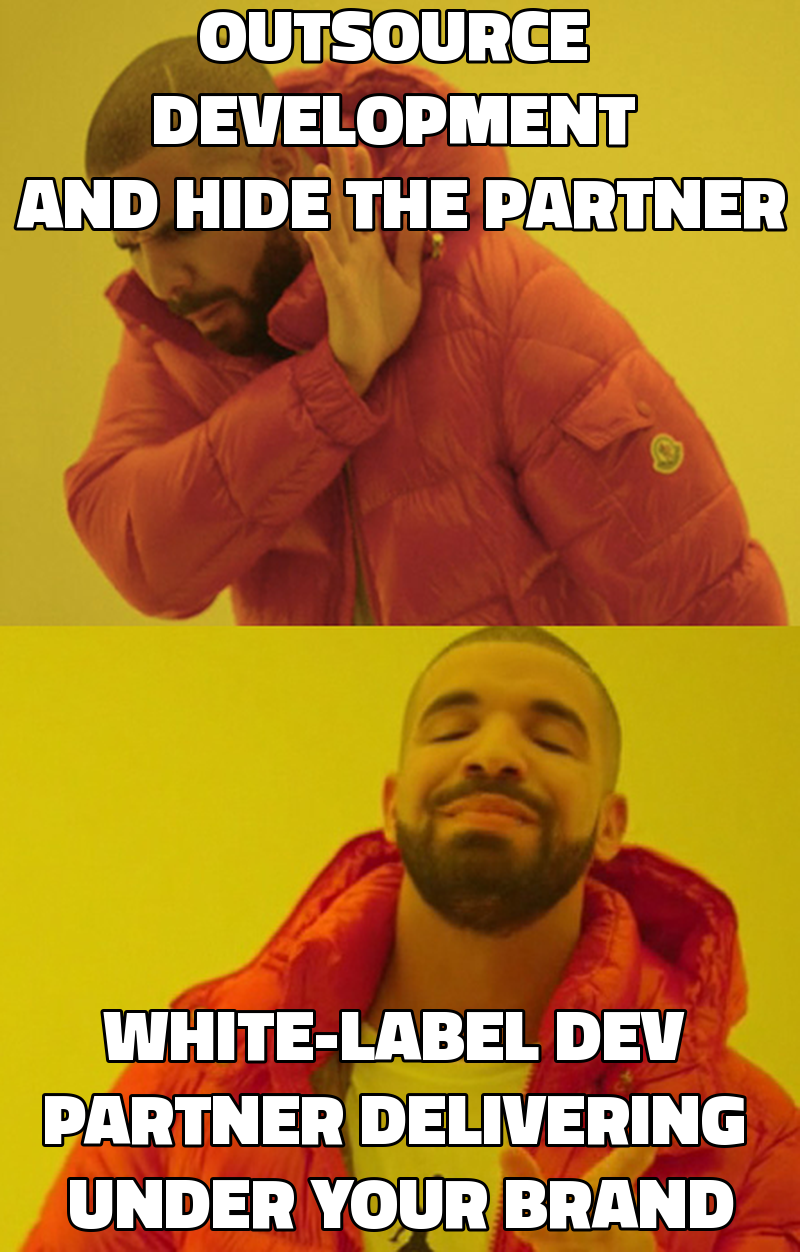
What is white-label software and why does it matter for agencies?
White-label software means the development work is performed by an external team but the final deliverable is presented as if your agency built it. For 5-15 person marketing, SEO and branding agencies in the US, UK and AU, this solves three core problems:
- Revenue leakage – agencies lose deals when a client asks for a custom chatbot, automation or voice app they can’t build.
- Brand dilution – clients fear you are “outsourcing” and may switch to a competitor that keeps the work in-house.
- Resource risk – hiring a full-time developer for sporadic projects is costly and creates payroll overhead. According to a 2023 Gartner survey, 62% of small-to-mid-size agencies cite lack of development talent as a top growth blocker. A white-label partner removes that blocker while preserving the agency’s brand equity.
How to evaluate a white-label development partner
| Criteria | What to look for | Why it matters |
|---|---|---|
| Technical depth | Proven AI/automation, voice, custom backend projects (e.g., RouteMate SaaS) | Guarantees you can sell high-margin AI builds the competition can’t. |
| Delivery reliability | Fixed-scope pilot success rate ≥ 90% (per internal KPI) | Reduces risk of missed deadlines that damage client trust. |
| Capacity model | Low concurrency (≤ 5 active agency partners) | Ensures the partner stays “invisible” and never becomes flaky. |
| Legal safeguards | NDA + non-circumvent clause, branding guide | Protects your brand and prevents poaching. |
| Communication cadence | Single accountable point of contact, shared status board | Keeps internal ops smooth and avoids “who-does-what” confusion. |
Step-by-step onboarding checklist
1. Pre-qualification (before the first call)
- Verify headcount 5-15 via LinkedIn or company page.
- Run the 10-second site test: go to Services page; if “development” is missing, they are a fit.
- Look for trigger signals: recent dev job post, case study mentioning a platform, or public statement “we don’t do development in-house”.
- Confirm they serve SMB clients (average contract $5k-$20k) – this matches the $2k-$5k pilot range.
2. Initial discovery call
| Gate | Question | Pass condition |
|---|---|---|
| Volume | How many client projects run concurrently and how often do you need custom dev? | Regular flow + recurring dev requests they currently turn away |
| Budget | What budget range do your clients allocate for a custom build? | Typical spend $2k-$5k, making a pilot financially trivial |
| Live need | Do you have a project right now that requires dev you can’t deliver? | Immediate need, not a “someday” request |
| If the agency passes at least two gates, schedule a pilot proposal; otherwise nurture or drop. |
3. Draft the pilot proposal
- Scope: Fixed deliverable (e.g., a chatbot prototype, a simple SaaS admin panel) with clear acceptance criteria.
- Pricing: $2,500-$4,500 wholesale rate; agency pays $4,500-$7,000 retail, preserving 55-65% margin.
- Timeline: 2-3 weeks from kickoff to demo.
- Legal: Attach NDA, non-circumvent clause, and a White-Label Branding Guide (logo placement, email footer, client-facing language).
- Success metric: Agency signs a retainer after pilot if delivery meets quality and timeline.
4. Kickoff the pilot
- Assign a dedicated Delivery Lead – the single point of contact who owns the timeline.
- Create a shared project board (e.g., ClickUp, Notion, or a simple Google Sheet) with columns: Backlog, In-Progress, Review, Done.
- Set up branding assets – provide logo files, color palette, and a template email signature for the partner to use.
- Define communication cadence – 2-day stand-up email, weekly video sync, and a real-time Slack channel for quick questions.
- Document scope changes – any deviation requires a change order signed by the agency to protect margins.
5. Execution and quality control
- Automated testing: Use GitHub Actions or CircleCI for unit tests; agencies appreciate a “passing tests” badge in the status report.
- Design review: Align UI components with the agency’s brand style guide before development begins.
- Client-ready demo: Deliver a clickable prototype (Figma or InVision) 48 hours before final hand-off.
- Feedback loop: Capture agency feedback in a post-pilot survey; score on reliability (0-10), quality (0-10) and communication (0-10).
6. Handoff and white-label delivery
- Export final code to a private GitHub repo owned by the agency; add agency branding to all UI strings.
- Provide a deployment checklist (environment variables, SSL, domain mapping) so the agency can launch without technical help.
- Send a white-label launch kit: brand assets, release notes, and a one-page “What we built” summary for the agency to share with the client.
7. Transition to retainer or ongoing flow
| Retainer tier | Monthly cost | Included dev hours | Ideal for |
|---|---|---|---|
| Light | $1,500 | 15-20 hrs | Agencies with occasional automation tweaks |
| Growth | $3,000 | 35-45 hrs | Agencies handling multiple SaaS MVPs per quarter |
| Enterprise | $5,000 | 60-80 hrs | Agencies with a steady pipeline of AI-heavy projects |
- Review usage monthly; if agency exceeds hours, propose an upgrade.
- Offer a quarterly performance review to adjust scope, pricing or SLA.
Common pitfalls and how to avoid them
- Free first deliverable trap – giving a full draft for free erodes perceived value. Instead, offer a scoped prototype or a paid pilot.
- Undefined turnaround – “fastest possible” creates expectation overflow. Set a concrete band (e.g., 10-15 business days) and stick to it.
- Multiple points of contact – agency teams often involve founders, ops directors and project managers. Consolidate communication through the Delivery Lead.
- Brand leakage – partner must never use its own logo in client-facing materials. Enforce this with the branding guide and a final QA sign-off.
- Over-onboarding – limiting active partners to 5-7 keeps capacity real and reliability high. Track partner load in a simple spreadsheet.
Sample email template for pilot invitation
Subject: Quick win – a $3,500 white-label prototype for [Client Name]

Hi [Founder/CEO Name],

I noticed your recent post about needing a custom chatbot for [Client]. We specialize in AI-driven white-label builds that sit behind your brand, and we’ve helped agencies like [Agency A] and [Agency B] win $10-$30k projects without hiring developers.

Can we schedule a 15-minute call this week to outline a 2-week pilot? The pilot costs $3,500, includes full branding, and comes with a guaranteed delivery date.

Best,
[Your Name]
Senior Partnerships Lead – Synthisia
Measuring success after the first 90 days
- Revenue uplift: Track new dev-related invoices; a 20-30% increase is typical according to a 2022 Forrester study on agency-partner models.
- Client retention: Measure churn of accounts that received a white-label build vs those that didn’t. Expect a 5-point lift.
- Partner satisfaction: Use Net Promoter Score (NPS) from agency surveys; aim for ≥ 70.
- Utilization rate: Keep partner dev hours at 70-80% capacity to avoid over-commitment.
Frequently asked questions
How do I keep my agency’s brand front and center when using a white-label partner?
The partner works under a strict branding guide that dictates logo placement, email signatures and UI styling. All client-facing deliverables are exported with your colors, fonts and domain. The NDA and non-circumvent clause also prevent the partner from mentioning its involvement.
What legal documents are essential before starting?
At minimum you need a mutual NDA, a non-circumvent agreement, and a White-Label Service Agreement that outlines branding, pricing, IP ownership and change-order procedures. A short “Branding Addendum” clarifies logo usage and email footers.
How much should I charge my client for a white-label build?
Typical agency markup is 55-70% of the wholesale rate. For a $3,500 pilot you would invoice $5,500-$6,000, preserving a healthy margin while staying competitive against offshore freelancers.
What if the partner misses a deadline?
Include a Service Level Agreement (SLA) with penalty clauses (e.g., 5% discount per day delayed beyond the agreed window). The Delivery Lead must provide daily status updates so you can intervene early.
Can I use the same partner for multiple client projects simultaneously?
Yes, but keep total concurrent dev hours within the partner’s capacity (usually 120-150 hrs per month). Use the utilization table to schedule projects and avoid over-booking.
How do I transition from a pilot to a retainer?
After the pilot, present a performance report highlighting on-time delivery, quality metrics and client feedback. Propose a retainer tier that matches the agency’s projected dev volume, and lock in a 3-month minimum to smooth cash flow.
Will the partner own any IP?
All intellectual property generated under the White-Label Service Agreement is assigned to the agency. The partner retains the right to reuse generic code libraries but not the custom solution built for a specific client.
Do I need to train my internal team on the partner’s workflow?
A brief onboarding session (30-45 minutes) covering the shared dashboard, communication channels and change-order process is sufficient. Ongoing training is rarely needed because the partner handles the technical details.
Final checklist (downloadable PDF)
- Confirm agency size, client mix and lack of in-house dev.
- Run trigger-signal audit and 10-second site test.
- Qualify through Volume, Budget, Live Need gates.
- Draft pilot scope, price, timeline and legal docs.
- Assign Delivery Lead and set up shared board.
- Conduct kickoff meeting with branding assets.
- Execute pilot with automated testing and weekly demos.
- Deliver white-label launch kit and collect feedback.
- Propose retainer tier based on utilization.
- Review 90-day metrics and iterate.
By following this checklist, agencies can say yes to every custom-software request, keep the client relationship intact, and grow revenue without the overhead of hiring a full-time developer.
“The biggest mistake agencies make is turning away dev work. A reliable white-label partner turns that missed opportunity into a recurring profit line.” – (Source: HubSpot Agency Survey 2023)
white‑label
Have something to build?
Tell us what you're trying to ship. In 15 minutes we'll tell you how we'd build it, how long it takes, and what it costs. No pitch deck, no pressure.