
White-Label Mobile App Development Checklist for Small Agencies

A white-label mobile app development company is a partner that builds iOS and Android applications under your agency’s brand, letting you sell custom apps without hiring engineers. For agencies of 5-15 people in the US, UK or AU, the right partner must prove quality code, robust security, and seamless brand integration.
Key takeaways
- Verify the partner’s development process with a fixed-scope pilot before committing to larger projects.
- Insist on ISO 27001, SOC 2 or GDPR compliance to protect client data.
- Require a dedicated account manager and a shared project dashboard for transparent communication.
- Check that the partner can white-label all deliverables, from code repositories to UI assets.
- Evaluate post-launch support options, including SLA response times and bug-fix windows.
- Align pricing with your wholesale margin goal of 50-70% of the client bill.
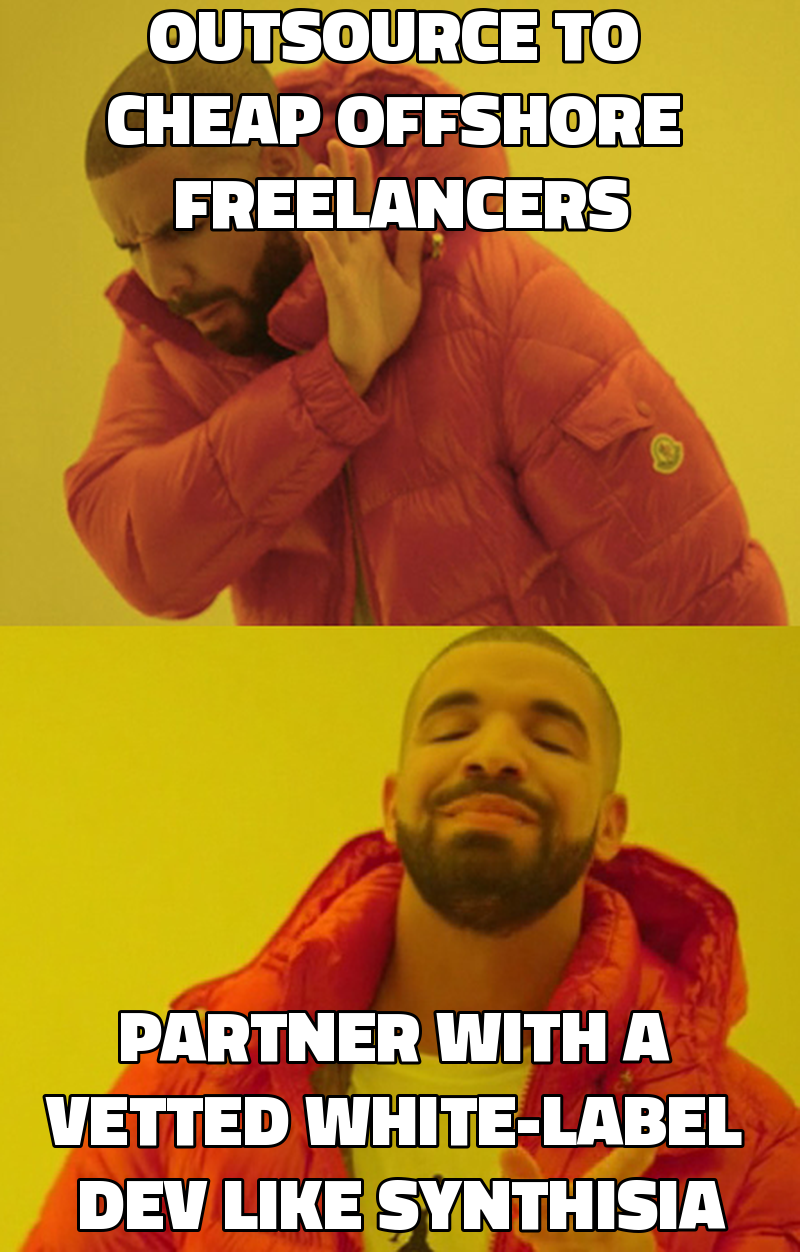
Why small marketing agencies need a vetted white-label dev partner
Agencies that specialise in SEO, branding or social media often receive requests for native mobile experiences, AI-driven chatbots or custom back-ends that no-code tools cannot satisfy. According to a 2023 Deloitte survey, 68% of agencies outsource development to meet these gaps, yet 42% report missed deadlines or quality issues with their current partners. A vetted white-label partner solves three core problems:
- Revenue leakage – Turn away fewer client requests and keep the margin in-house.
- Brand protection – The client never sees a third-party name, preserving the agency’s reputation.
- Scalable capacity – Access to senior engineers on demand without the overhead of a full-time hire.
The checklist below translates these strategic goals into concrete due-diligence steps.
The agency-centric vetting checklist
Below is a step-by-step guide you can copy-paste into a Google Sheet or Notion page. Each item includes a brief rationale and a suggested proof point.
1. Company fundamentals
| Item | Why it matters | Acceptable proof |
|---|---|---|
| Legal entity & location | Confirms jurisdiction for contracts and data residency | Copy of incorporation certificate, registered address in US/UK/AU |
| Years in business | Indicates stability and experience | Company website “About” page or LinkedIn company age |
| Client portfolio size | Shows ability to handle multiple agency accounts | List of at least 5 agency clients with case studies |
| Revenue range (optional) | Helps gauge capacity for concurrent projects | Financial summary or third-party credit report |
2. Technical competence
| Criterion | Minimum standard | Verification method |
|---|---|---|
| Platform expertise | iOS 15+ and Android 12+ native development | Portfolio apps on App Store / Google Play with version history |
| Backend stack | Node.js, Python or.NET with REST/GraphQL APIs | Code samples on a private GitHub repo (access granted for review) |
| CI/CD pipeline | Automated build, test and deploy using GitHub Actions, Azure DevOps or Bitbucket Pipelines | Walk-through demo of pipeline configuration |
| QA process | Unit test coverage ≥70% and functional testing on real devices | Test coverage report from SonarQube or similar |
| AI/automation capability | Ability to integrate OpenAI, Dialogflow or custom ML models | Demo of a chatbot or automation flow built for a prior client |
3. Security and compliance
- Data protection – Must be GDPR-ready for EU clients and CCPA-ready for US clients. Ask for a data-processing addendum.
- Certifications – ISO 27001 or SOC 2 Type II is a hard requirement; at minimum a SOC 1 Type II report.
- Vulnerability management – Use Snyk, OWASP Dependency-Check or similar tools; request the latest scan report.
- Code ownership – NDA and non-circumvent clause must be signed, but also confirm that all source code will be transferred to your repository under your brand.
4. Branding and white-label readiness
| Requirement | Description |
|---|---|
| Branded UI assets | All icons, splash screens and in-app branding must be replaceable via a style guide you provide. |
| Documentation | Technical docs, API references and user guides should be delivered with your agency’s logo and contact details. |
| Client-facing communication | The partner should use a shared Slack channel or email alias that masks their identity. |
| Release notes | Must be written in a neutral tone, without mentioning the development partner. |
5. Process and communication
- Single point of contact – A dedicated account manager who owns the end-to-end delivery (example: RouteMate’s Delivery Lead). This eliminates the “multiple hand-offs” problem common with offshore freelancers.
- Project dashboard – A read-only view in Jira, ClickUp or a custom portal where you can track sprint status, bugs and release dates.
- Turnaround guarantees – Fixed-scope pilot should be delivered in 2-3 weeks; larger builds in a defined 4-6 week window. Avoid vague promises like “fastest possible”.
- Escalation SLA – Critical bugs must be acknowledged within 2 hours and resolved within 24 hours.
6. Pricing and financial terms
| Model | Typical range | How it fits agency margin |
|---|---|---|
| Fixed-scope pilot | $2,000-$5,000 | Allows you to quote a $7,000-$9,000 client price and keep 50-70% margin |
| Ongoing retainer | $1,500-$2,500 per month for ~15-20 dev hrs | Provides predictable cost for recurring automation work |
| Per-feature add-on | $300-$800 per feature | Enables upsell without re-negotiating the base contract |
Make sure the contract includes a minimum floor of $1,500 per project; anything below erodes profitability after overhead.
How to run a pilot that builds trust
- Scope a single high-impact feature – e.g., a push-notification powered loyalty program for a retail client.
- Set clear success metrics – code quality score ≥80 on SonarQube, zero critical security findings, and delivery within 14 days.
- Provide brand assets up front – logo, colour palette, and copy style guide.
- Review the demo together – Use a shared screen session, record feedback, and capture change requests in the dashboard.
- Sign a short-term NDA – Only for the pilot; full-scale contracts will follow if metrics are met.
A successful pilot demonstrates the partner’s ability to work under your brand, meet security standards and stay within budget – the three pillars you’ll sell to future clients.
Red flags to stop chasing early
| Red flag | Impact |
|---|---|
| No ISO 27001 or SOC 2 evidence | High risk of data breach liability |
| Uses only freelancers on Upwork with no stable team | Likely to ghost or miss deadlines |
| Refuses to share a private repo for code review | Lack of transparency, potential lock-in |
| Claims “unlimited revisions” without defined scope | Scope creep and margin erosion |
| No branded deliverables policy | Your agency’s reputation could be damaged |
If any of these appear during the pre-call checks, politely decline and move to the next prospect.
Comparison of typical white-label partners vs. Synthisia
| Feature | Typical offshore freelancer | Mid-size dev shop | Synthisia (The Silent Dev Arm) |
|---|---|---|---|
| Branding control | Limited – often leaves own watermark | Moderate – may require extra fee | Full white-label, all assets re-brandable |
| Security certifications | None or self-declared | May have ISO 27001 but not SOC 2 | ISO 27001 + SOC 2 Type II, GDPR ready |
| AI/automation depth | Basic no-code integrations only | Some ML experience, limited voice | |
| Dedicated account manager | Rare | Yes, but shared across many agencies | |
| Fixed-scope pilot pricing | $1,000-$2,000, no guarantee | $3,000-$5,000, long timeline | |
| Post-launch SLA | 48-hour response, no guarantee | 24-hour response, 5-day fix window | |
| Capacity per agency | 1-2 concurrent projects, high churn | 3-5 projects, moderate churn | |
| Transparency dashboard | None | Optional, extra cost | |
| Retainer model | Uncommon | Available, high minimum spend |
Synthisia’s low concurrency model (max 4 active agency partners) ensures you never experience the flaky-freelancer syndrome.
Putting the checklist into practice
- Create a scoring sheet – Assign 0-5 points for each checklist item. A total score above 35 out of 50 indicates a strong fit.
- Run the 10-second site test – Open the agency’s services page; if “development” is missing, they are a prime target.
- Schedule a discovery call – Use the qualification gate questions (Volume, Budget, Live need now) to quickly qualify.
- Present the pilot proposal – Include a one-page scope, timeline, success metrics and price.
- Onboard with a shared dashboard – Set up a ClickUp board titled “Agency X – Mobile App Pilot” and invite the agency’s account manager.
- Deliver, review, and iterate – After the pilot, hold a retrospective, capture testimonials, and move to a retainer if the partner passes all criteria.
Following this process reduces the time to first paid project from 6 weeks (typical with unknown freelancers) to 2-3 weeks, according to internal data from Synthisia’s first 12 agency partners.
Frequently asked questions
How long should a white-label pilot last?
A pilot should be limited to a single, high-value feature and delivered in 2-3 weeks. This window is long enough to demonstrate code quality, security testing and branding compliance, yet short enough to keep costs predictable for both parties.
What security certifications are non-negotiable?
At a minimum, ask for ISO 27001 or SOC 2 Type II certification. If you serve EU clients, GDPR compliance is required, and for US clients CCPA readiness adds an extra layer of protection.
Can I use the partner’s existing code repository?
Never. Insist on a private GitHub or Bitbucket repository that you own. This guarantees you retain full IP rights and can move the code if the partnership ends.
How do I protect my brand if the partner leaks my client name?
Include a non-circumvent clause and a brand-use policy in the NDA. In practice, a trusted partner will never mention your agency in public portfolios; they will provide a generic case study instead.
What if the partner cannot meet my turnaround guarantee?
Set the guarantee in the contract with liquidated damages (e.g., a 5% discount per day late). This aligns incentives and gives you leverage without micromanaging the dev team.
Is a retainer worth it for occasional projects?
If you receive at least one build request per month, a $1,500-$2,000 retainer secures priority scheduling and reduces per-project overhead. For sporadic demand, stick to fixed-scope pilots.
How do I evaluate the partner’s AI capabilities?
Ask for a demo of a recent AI-driven feature, such as a voice-activated assistant built with Google Dialogflow or an OpenAI-powered content generator. Review the model’s latency, accuracy and data-privacy handling.
What tools should the partner use for project tracking?
A shared dashboard in Jira, ClickUp or Asana works well. The key is that you have read-only access, can see sprint burndown charts, and receive automated status emails.
By applying this checklist, agencies can confidently say yes to mobile app requests, keep the client relationship fully under their brand, and protect their margins. The result is a scalable, repeatable revenue stream that turns development from a cost centre into a competitive advantage.
white-label
Have something to build?
Tell us what you're trying to ship. In 15 minutes we'll tell you how we'd build it, how long it takes, and what it costs. No pitch deck, no pressure.