
Step-by-Step Guide to Launch an AI Automation White-Label Agency

You start an AI automation white-label agency by first validating the partner market, then building a repeatable pilot process, and finally scaling with a capped partner roster. The model relies on delivering custom AI, voice and integration projects under the agency’s brand while you keep the margin and stay invisible.
Key takeaways
- Validate demand with a 10-second site test and a quick discovery call before any engineering effort.
- Offer a fixed-scope pilot (USD 2-5k) that proves quality and sets a turnaround band of 2-4 weeks.
- Structure the wholesale deal at 55-65 % of the agency’s client bill, with a $1,500 floor and a $1,500-$2,000 monthly retainer after the pilot.
- Keep partner concurrency low (3-5 active agencies) to protect reliability – the core competitive edge.
- Use a shared status dashboard instead of a full SaaS product until you have at least three paying partners.
- Protect the relationship with NDA and non-circumvent clauses, but focus on trust earned through delivery, not legal paperwork.
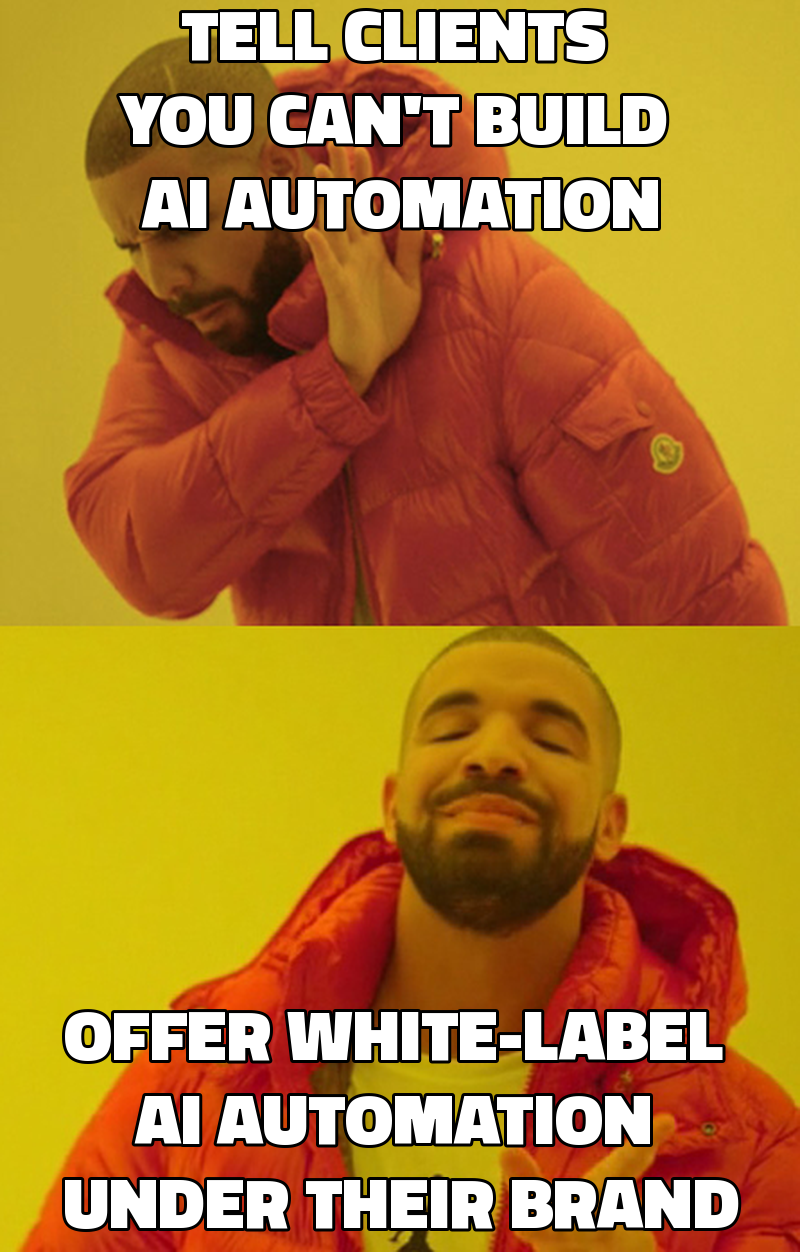
What is a white-label AI automation agency and why does it fit no-dev marketing shops?
A white-label AI automation agency builds custom chatbots, workflow bots, voice assistants and integration pipelines for another agency’s clients, but all outward-facing communication uses the partner’s brand. The partner retains the client relationship, invoices the end client, and you receive a wholesale rate. This model solves three chronic pain points for agencies that lack developers:
- Lost revenue – agencies turn away AI projects because they cannot build them.
- Brand risk – agencies fear that outsourcing will be visible to the client.
- Pricing uncertainty – without technical expertise they either over-price or lose the deal.
According to a 2023 McKinsey report, agencies that added AI services saw an average revenue uplift of 12 % within six months. A Gartner survey from 2022 found that 45 % of agencies plan to add AI services by 2024, but 68 % cite "lack of technical talent" as the biggest barrier. The white-label model directly removes that barrier.
How to validate the partnership market before you build anything
- Run the 10-second site test – open the agency’s website, navigate to Services, and confirm that "development", "custom app", or "automation" are not listed. If they are missing, the agency likely has a gap you can fill.
- Check for trigger signals – look for recent job posts for contract developers, case studies mentioning a platform or chatbot, or public statements like "we partner with developers". These are high-strength signals that the agency is actively seeking a partner.
- Qualify with a short discovery call – use the three-gate framework (Volume, Budget, Live need). Ask:
- "How many client projects do you run at once that need custom automation?"
- "What budget range do your clients allocate for a build?"
- "Do you have a project right now that you can’t deliver in-house?"
- Score the prospect – pass all three gates → qualified; pass two → nurture; one or zero → drop.
Building a repeatable pilot workflow
A pilot is the trust mechanism. It should be small, fixed-scope, and priced to cover your cost while proving value.
| Pilot element | Typical range | Reason |
|---|---|---|
| Scope | 1-2 core automations or a single chatbot flow | Keeps effort bounded |
| Price (USD) | 2,000-5,000 | Matches agency’s client budget and your floor |
| Turnaround | 2-4 weeks | Fast enough to impress, realistic for a solo founder |
| Success metric | Delivered functional prototype that passes agency QA | Demonstrates capability |
Step-by-step pilot process
- Scope definition – use a one-page "Pilot Charter" that lists deliverables, timeline, acceptance criteria and payment terms.
- Fixed-price contract – include a 20 % deposit, 50 % on delivery, 30 % after agency signs off.
- Dedicated point of contact – assign a senior engineer (you or a lead contractor) who owns the end-to-end delivery. Cite RouteMate as an example of a full-stack SaaS built under this model.
- Shared status view – set up a simple Google Sheet or Notion page where the agency can see task status, blockers and next steps. Avoid building a custom dashboard until you have three paying partners.
- Delivery and hand-off – provide the finished artifact, a short training video, and a one-page "maintenance cheat sheet". Ask the agency to close the pilot and discuss a retainer.
Transitioning from pilot to ongoing retainer
Once the pilot succeeds, propose a retainer that gives the agency a reserved capacity of 15-20 dev hours per month. This converts sporadic pilots into predictable revenue.
| Retainer tier | Monthly price (USD) | Hours included | Ideal partner profile |
|---|---|---|---|
| Basic | 1,500 | 15 | Agencies with 1-2 projects per month |
| Growth | 2,200 | 25 | Agencies scaling to 3-5 projects |
| Premium | 3,000 | 35 | Agencies with steady pipeline and need for rapid iteration |
Why a retainer works
- Guarantees you are not scrambling for new pilots every month.
- Gives the agency a predictable cost line item.
- Locks in capacity, preserving the low-concurrency advantage.
Pricing the wholesale deal
The wholesale rate should sit between 50 % and 70 % of the agency’s client bill. A practical formula:
Wholesale rate = Client bill × 0.55 – 0.65
Add a minimum floor of $1,500 to ensure the project covers overhead. For a $4,000 client bill, the agency pays you $2,200 (55 %). This aligns incentives: the agency keeps a healthy margin while you receive a sustainable fee.
Legal and operational safeguards
- NDA & non-circumvent – standard one-page agreements suffice; enforcement across borders is costly, so focus on relationship quality.
- IP ownership – contract that the agency owns the deliverable IP, you retain the right to reuse generic components.
- Service Level Agreement (SLA) – define a maximum turnaround (e.g., 4 weeks for pilot, 2 weeks for minor tweaks) and a bug-fix window of 14 days post-delivery.
Marketing the white-label partnership
- Create a partner landing page – highlight "Invisible dev arm for agencies", showcase case studies (RouteMate, a SaaS for logistics), and list the pilot process.
- Leverage LinkedIn – target Founder, CEO and Head of Delivery titles in the US, UK and AU. Use the "10-second site test" as a hook in the first message.
- Email sequence – Day 0: Intro with pain-point headline; Day 3: Share McKinsey statistic; Day 7: Offer free scoped proposal (not a free build); Day 14: Invite to pilot discussion.
- Referral incentives – give existing partners a 5 % discount on their next retainer for every new agency they introduce that signs a pilot.
Managing capacity and avoiding the "flaky freelancer" trap
The biggest competitive edge is reliability. Follow these rules:
- Cap active partners at 5 – each partner gets a dedicated "dev bucket" of 20-30 hours per month.
- Maintain a sprint backlog – treat each partner’s pilot as a sprint item, with clear start and end dates.
- Track utilization – if you exceed 80 % capacity, pause new onboarding until a slot frees up.
- Automate internal ops – use Zapier or Make.com to route new pilot requests into a ClickUp board, auto-assign tasks and send status emails.
Scaling beyond the first cohort
When you have three paying partners and a stable retainer stream, consider:
- Hiring a senior contractor – to increase capacity without losing low-concurrency culture.
- Building a lightweight partner portal – a password-protected Notion space that aggregates all pilot charters, status sheets and invoices.
- Expanding service catalog – add AI-generated content pipelines, voice-assistant integrations for Amazon Alexa and Google Assistant, and custom data-pipeline automation using Airflow.
- Geographic expansion – replicate the model in Canada and New Zealand, where time-zone overlap is similar and agencies also lack dev resources.
Comparison of partnership models
| Model | Visibility to client | Margin for agency | Typical risk |
|---|---|---|---|
| White-label dev (this guide) | Invisible | 55-65 % of bill | Delivery reliability |
| Reseller of off-the-shelf SaaS | Visible | 30-40 % of subscription | Limited customization |
| Joint venture dev studio | Co-brand | 40-50 % of revenue | Governance complexity |
Frequently asked questions
How much upfront investment do I need to start the white-label agency?
You need a laptop, a reliable internet connection, a credit card for SaaS tools (Zapier, Notion, ClickUp) and a modest marketing budget of $1,000-$2,000 for LinkedIn ads. No office space or full-time staff is required at launch.
What technical skills are essential for delivering AI automation projects?
Proficiency in Python, Node.js, and API integration is core. Familiarity with OpenAI’s GPT-4 API, Google Dialogflow, and AWS Lambda for serverless functions covers most use cases. Low-code platforms like Bubble or Webflow can speed up front-end work.
How do I protect my IP while remaining invisible to the end client?
Include a clause that the agency owns the final deliverable IP, but you retain a reusable component library. Use a watermark-free code repository (e.g., private GitHub) that only the agency’s project manager can view.
Can I charge the end client directly and still stay white-label?
That defeats the white-label premise. The agency must invoice the client; you invoice the agency at the wholesale rate. This keeps the agency’s brand front and centre.
What if a partner wants to switch to an in-house team after a few pilots?
Treat the pilot as a proof of concept. Offer a knowledge-transfer package (documentation, code walkthrough) for a fixed fee. This can become an additional revenue stream.
How do I handle multiple pilots that overlap in timeline?
Use a Kanban board with swimlanes per partner. Prioritize pilots by expected revenue and deadline. If capacity is exceeded, negotiate a later start date or suggest a phased delivery.
Is it safe to rely on a single point of contact for all deliveries?
Yes, as long as you have a backup contractor who can step in. Document the delivery process in a SOP so any qualified engineer can pick up the work without breaking continuity.
What are the red flags that an agency is not a good fit?
If they already list development as a service, have an in-house dev team, or outsource to a named partner publicly, the gap is already filled. Also avoid agencies with dormant social feeds or those that operate from low-cost offshore locations.
Next steps checklist
- Run the 10-second site test on 20 target agencies.
- Create a one-page Pilot Charter template.
- Set up a shared status sheet in Notion.
- Draft NDA & non-circumvent agreement (one page).
- Launch LinkedIn outreach sequence with the first message referencing the McKinsey AI adoption stat.
- Book discovery calls and apply the three-gate qualification.
"The fastest way to win agency partners is not to promise the cheapest price, but to guarantee you’ll never miss a deadline." – internal best practice note
Conclusion
Launching an AI automation white-label agency is a disciplined, step-by-step process that hinges on market validation, a tight pilot framework, and a capped partner roster. By keeping capacity low, delivering under a strict turnaround band, and protecting the agency’s brand, you turn a common pain point – "we can’t build AI" – into a recurring revenue engine. Follow the roadmap, iterate on the pilot template, and watch your partner network grow without ever needing a sales team of your own.
AI automation
Have something to build?
Tell us what you're trying to ship. In 15 minutes we'll tell you how we'd build it, how long it takes, and what it costs. No pitch deck, no pressure.