
How to Launch an AI Automation Agency as a White-Label Partner

How to start an AI automation agency? First, define a narrow, repeatable pilot service that solves a specific client problem, then lock in a reliable white-label development partner who works under your brand, and finally build a sales funnel that targets 5-15 person marketing agencies that lack in-house engineers.
Key takeaways
- Offer a fixed-scope AI pilot (e.g., chatbot or workflow automation) priced $2,000-$5,000 to win trust fast.
- Partner with a silent dev arm that signs NDAs, provides a shared project dashboard, and guarantees 15-20 dev hours per month for retainer work.
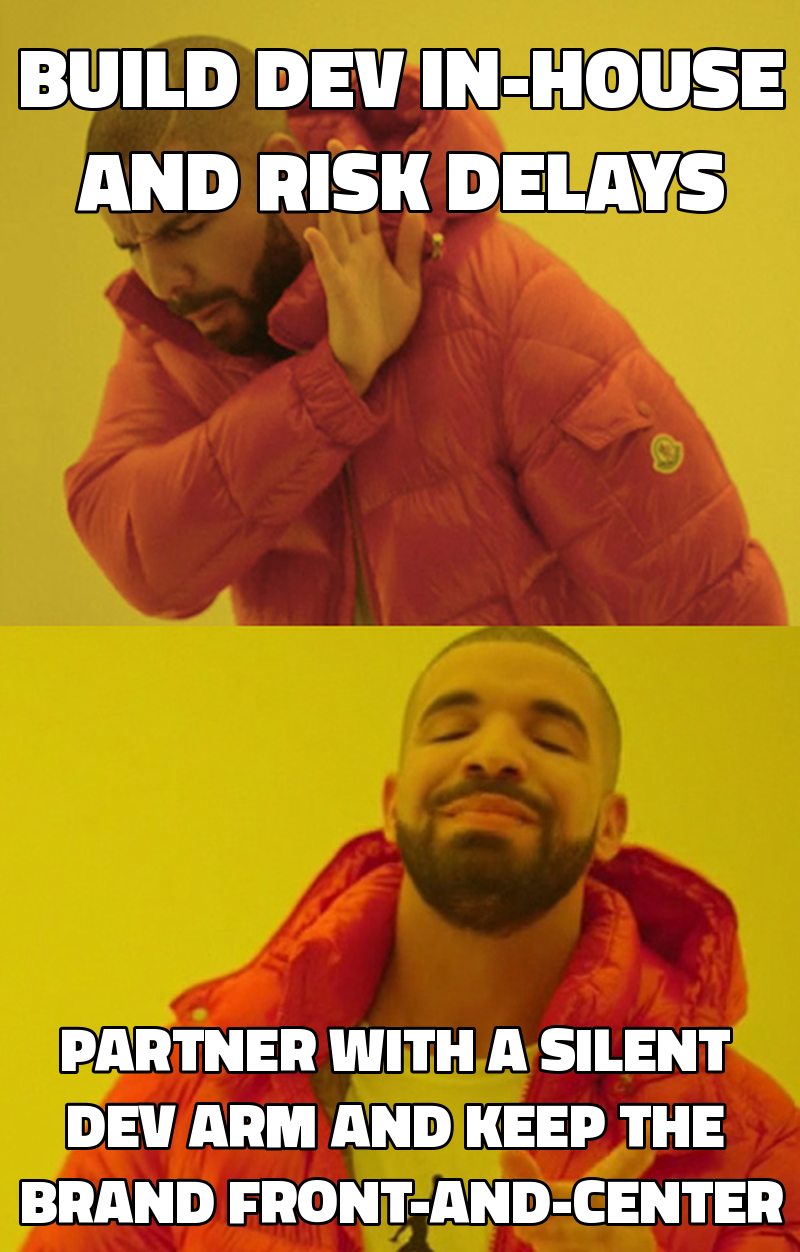
- Position the service as invisible: the agency keeps the client relationship and margin while you deliver the code.
- Use a capped partner program (5-7 agencies) to protect reliability, the core competitive edge.
- Quote with a clear turnaround band (e.g., 2-3 weeks for a pilot) to avoid “fastest possible” overpromises.
- Leverage AI platforms (OpenAI, Anthropic, LangChain) and integration tools (Zapier, Make) to accelerate delivery.
Why a white-label AI automation agency makes sense now
The global AI services market is projected to reach $1.2 trillion by 2028, according to a Gartner forecast. McKinsey reports that agencies that add AI-driven automation see revenue uplift of 20-30% within the first year because they can upsell high-margin tech projects to existing clients. For agencies of 5-15 people, hiring a full-time engineer costs $120k-$150k per year, a spend that is hard to justify when build volume is sporadic. A white-label partner eliminates that cost while providing the technical depth needed for voice assistants, custom back-ends, and SaaS prototypes.
Step 1 – Validate the market gap inside target agencies
- Run the 10-second site test: visit the agency’s website, check the Services page. If “development” or “custom apps” are missing, you have a gap.
- Look for trigger signals:
- Case study showing a platform or automation deliverable but no engineers listed.
- Public statement like “we partner with developers”.
- Recent job post for a contract developer.
- Announcement of a new client that needs a chatbot or workflow.
- Use LinkedIn Sales Navigator to filter founders/CEOs in the US, UK, AU with headcount 5-15 and the above signals.
Step 2 – Design a pilot service that sells itself
| Pilot Feature | Typical Client Pain | Delivery Time | Price (USD) |
|---|---|---|---|
| AI-powered chatbot for lead capture | Missed leads after office hours | 2 weeks | 2,500 |
| Zapier-style workflow automation (e.g., CRM → email → reporting) | Manual data entry errors | 3 weeks | 3,500 |
| Voice-enabled FAQ bot (Google Dialogflow) | No phone support for small businesses | 3 weeks | 4,000 |
| Custom analytics dashboard (Low-code on Bubble) | No insight into campaign ROI | 4 weeks | 5,000 |
Each pilot is a fixed-scope contract with a clear deliverable and a single success metric (e.g., 30% increase in qualified leads). Offer a scoped proposal (not a free draft) that outlines milestones, acceptance criteria, and a $500-$1,000 refundable deposit to cover initial engineering time.
Step 3 – Choose the right silent dev partner
The partner must meet three non-negotiables:
- White-label guarantee – NDAs and non-circumvent clauses.
- AI expertise – Proven work with OpenAI, Anthropic, LangChain, and voice platforms.
- Capacity caps – No more than 10 active agency partners to keep delivery reliable.
Synthisia’s “Silent Dev Arm” checks these boxes. It has shipped RouteMate, a full-stack SaaS for workflow automation, and runs on AWS Lambda + PostgreSQL, giving you a proven stack to reference in proposals.
Step 4 – Build the partnership contract and pricing model
| Item | Minimum | Typical Range | Notes |
|---|---|---|---|
| Project value (USD) | 500 | 5,000 | Pilot projects stay under $5k to keep risk low. |
| Your share of agency bill | 50% | 70% | Wholesale rate ensures agency keeps margin. |
| Minimum floor per project | 1,500 | – | Below this the delivery overhead erodes profit. |
| Monthly retainer (dev hrs) | 1,500 | 2,500 | Covers 15-20 hrs of overflow capacity. |
The contract includes:
- Fixed-scope pilot with defined milestones.
- Wholesale rate clause: agency invoices client at their price, pays you the agreed %.
- Retainer add-on after pilot success.
- SLA: 95% on-time delivery, 2-revision limit.
Step 5 – Create a sales and onboarding engine
- Cold outreach – Use a 3-touch email sequence referencing the agency’s recent case study and the missing dev capability.
- Discovery call script – Ask the three qualification gates (Volume, Budget, Live need). Record answers in a shared Notion table.
- Pilot proposal template – Include a one-page scope, timeline, success metric, and pricing.
- Onboarding checklist – NDA, partner portal invite (ClickUp board), project kickoff call, and first sprint plan.
- Project dashboard – Start with a simple shared Google Sheet that tracks status, milestones, and QA sign-off. Upgrade to a ClickUp dashboard once you have 3+ partners.
Step 6 – Deliver the pilot with AI-first engineering practices
- Prompt engineering – Use OpenAI’s
gpt-4ofor content generation, LangChain for orchestration, and Retrieval-Augmented Generation (RAG) for knowledge-base bots. - Low-code glue – Zapier for quick integrations, Make for multi-step flows, and Bubble for front-end prototypes.
- Testing – Automated unit tests with PyTest, integration tests via Postman, and user acceptance testing (UAT) with the agency’s account manager.
- Compliance – Ensure GDPR and CCPA compliance by anonymizing personal data, adding data-processing agreements, and storing data in EU-region AWS if the client is EU-based.
Step 7 – Convert the pilot into a retainer
After the pilot, schedule a review meeting. Show the KPI impact (e.g., 35% more leads). Propose a monthly escalation retainer that gives the agency a reserved 15-20 dev hours for any future AI or automation request. Highlight the benefits:
- Predictable cost for the agency.
- Immediate access to senior engineers without hiring.
- Ongoing innovation (new GPT-4o features, voice-to-text updates).
Step 8 – Scale responsibly
- Cap the partner count – Keep the active partner list at 5-7 agencies to maintain the reliability promise.
- Standardize SOPs – Document the pilot workflow, handoff process, and QA checklist in Confluence.
- Referral program – Offer a 5% commission on any new agency introduced by an existing partner.
- Continuous learning – Allocate 5% of monthly revenue to training on emerging AI models (Claude 3, Gemini) and integration platforms.
Comparison of partnership models
| Model | Brand visibility | Margin for agency | Delivery risk | Typical cost to agency |
|---|---|---|---|---|
| In-house dev | High (own team) | Low (salary overhead) | Medium (resource constraints) | $120k-$150k per engineer annually |
| Freelance/Offshore | Medium (named contractor) | Variable (hourly markup) | High (missed deadlines) | $30-$70 per hour |
| White-label silent dev | Low (partner invisible) | High (50-70% wholesale) | Low (capped capacity, SLA) | $1,500-$2,500 per project + retainer |
Real-world example: RouteMate rollout
Synthisia built RouteMate for a UK SEO agency that needed a custom workflow to auto-populate client reports from Google Analytics, HubSpot, and Ahrefs. The pilot was a 3-week automation priced at $3,200. The agency reported a 28% reduction in manual reporting time and signed a $1,800/month retainer for ongoing feature upgrades. Within six months the agency added two more AI pilots, generating $12k of recurring wholesale revenue for Synthisia.
Common pitfalls and how to avoid them
- Free first deliverable – Instead of giving away a full draft, offer a 1-hour prototype or a detailed scoped proposal.
- Undefined turnaround – Set a fixed band (e.g., 2-3 weeks) and stick to it; use sprint planning in ClickUp to enforce.
- Over-onboarding – Track active partners in a simple Airtable view; when you hit 7 partners, pause new intake.
- Scope creep – Include a change-order clause that charges 20% of the original project value for any out-of-scope work.
- Compliance blind spots – Run a quarterly GDPR audit and keep a template DPA ready for each client.
Tools and platforms you should master
- AI model APIs – OpenAI, Anthropic, Google Gemini.
- Prompt orchestration – LangChain, LlamaIndex.
- Integration engines – Zapier, Make, Tray.io.
- Low-code front-ends – Bubble, Webflow, Softr.
- Project management – ClickUp (shared dashboard), Notion (knowledge base), Asana (task tracking).
- Version control & CI/CD – GitHub, GitHub Actions, Docker.
- Cloud hosting – AWS Lambda, Azure Functions, GCP Cloud Run.
- Compliance tools – OneTrust for privacy, DataMapper for DPA management.
Quick checklist for launching your AI automation agency
- Identify 3 target agencies using the 10-second site test.
- Sign NDAs with Synthisia’s Silent Dev Arm.
- Build a pilot service brochure (one-pager).
- Create outreach email sequence (3 touches).
- Draft the wholesale contract template.
- Set up a shared ClickUp board for project tracking.
- Run a pilot with the first agency and collect KPI proof.
- Convert pilot to retainer and start referral outreach.
Frequently asked questions
How much upfront investment is needed?
You need minimal cash outlay: a domain, a basic website, a ClickUp or Notion subscription ($10-$20 per month), and a modest marketing budget ($500-$1,000) for targeted LinkedIn ads. The biggest cost is the partner’s wholesale rate, which is covered by the first paid pilot.
What if the agency already has a dev partner?
Ask what the current partner can’t do. Most agencies struggle with AI-specific work, voice assistants, or custom back-ends. Position your silent dev arm as the specialist that fills that exact gap while the existing partner continues handling generic web builds.
How do I protect my brand if the partner is invisible?
Include a non-circumvent clause and a branding addendum that requires the partner to use only your agency’s logo and naming in all client-facing communications. Provide a white-label deliverable template that bears your branding.
Can I charge the client directly and pay the partner later?
Yes, that is the wholesale model. You invoice the client at your price, then pay the partner the agreed wholesale percentage (typically 50-70%). Keep clear accounting records to avoid tax complications.
What turnaround is realistic for a $3k pilot?
For a scoped chatbot or Zapier-style workflow, 2-3 weeks is realistic when you have a dedicated senior engineer and a clear sprint plan. Larger custom dashboards may need 4-5 weeks.
How do I handle support after delivery?
Offer a 30-day post-delivery support window included in the pilot price. After that, support is covered under the monthly retainer, which gives the agency a reserved block of dev hours for bug fixes and enhancements.
Is GDPR compliance required for US agencies?
If any client data includes EU citizens, GDPR applies regardless of where the agency is based. Use EU-region AWS or Azure, anonymize personal identifiers, and have a Data Processing Agreement in place. For US-only data, follow CCPA guidelines for California residents.
What metrics should I track to prove value?
Key metrics include lead conversion rate uplift, time-saved on manual tasks (hours per week), cost reduction per automation (USD), and client satisfaction score (NPS). Present these in a one-page impact report after each pilot.
AI automation
Have something to build?
Tell us what you're trying to ship. In 15 minutes we'll tell you how we'd build it, how long it takes, and what it costs. No pitch deck, no pressure.