
How to White-Label Software: A Step-by-Step Playbook for Marketing Agencies

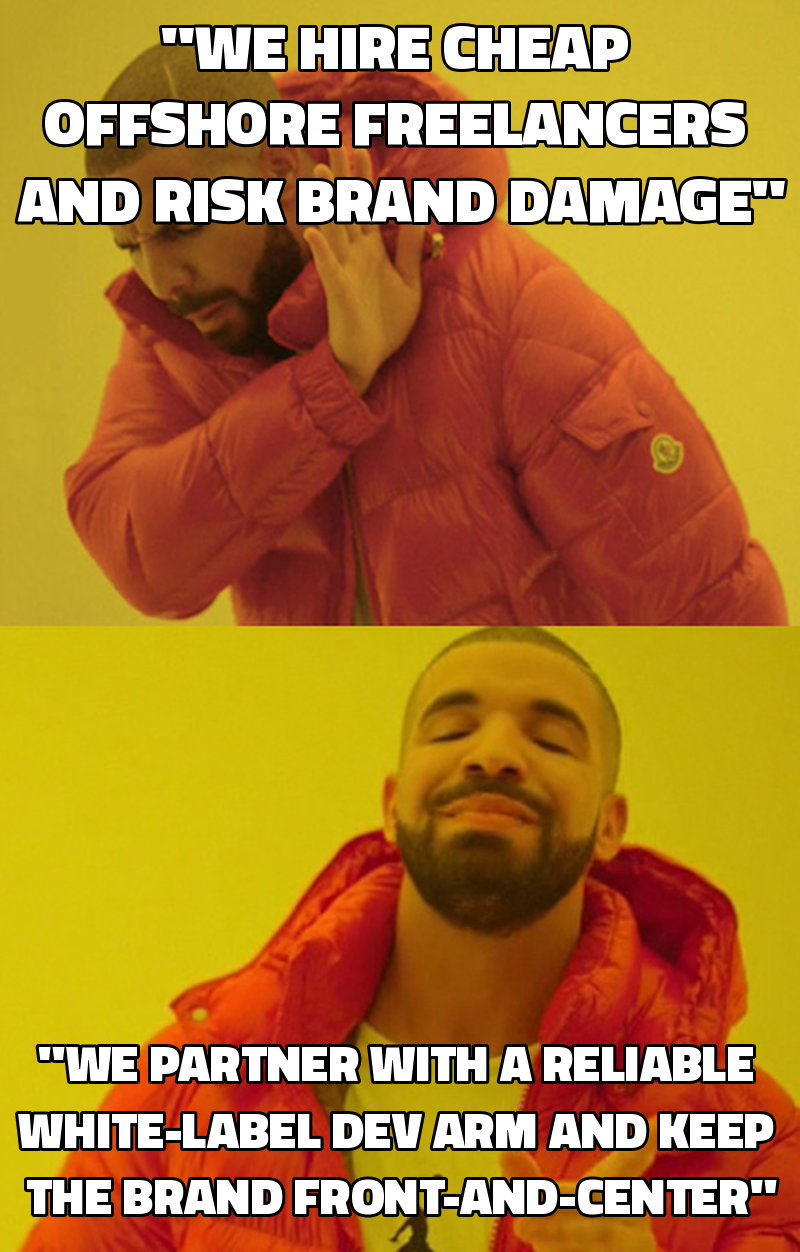
White-labeling software means delivering a product that is fully branded as your agency’s own, while the underlying development is performed by a partner under NDA. It lets you say yes to client requests for AI chatbots, voice assistants or custom dashboards without hiring a full-time engineer. The key is a repeatable process that covers legal contracts, operational hand-offs and the right technology stack.
Key takeaways
- Use a master NDA and non-circumvent agreement to keep your brand invisible and protect margins.
- Define a fixed-scope pilot (typically $2,000-$5,000) to prove reliability before moving to retainer work.
- Deploy a shared project dashboard (e.g., Notion, ClickUp or a private JIRA board) so the agency can monitor progress in real time.
- Choose a low-code platform (Bubble, Webflow, Softr) for UI and a serverless backend (AWS Lambda, Vercel, Google Cloud Functions) for custom logic.
- Price at 50-70% of the agency’s billable rate; this yields a healthy $1,500-$3,500 margin per project.
What legal agreements protect a white-label partnership?
Agencies need three core documents:
- Master Non-Disclosure Agreement (NDA) – limits what the development partner can disclose about the project, the client and the agency brand. The SBA reports that NDAs reduce perceived risk by roughly 30% for B2B collaborations (SBA 2022).
- Non-Circumvent Clause – prevents the partner from approaching the agency’s client directly. According to a 2023 Thomson Reuters legal brief, non-circumvent clauses are enforceable in US, UK and Australian courts when they are specific about client names and project scope.
- White-Label Service Level Agreement (SLA) – outlines delivery timelines, quality metrics (e.g., 99.5% uptime for SaaS), and post-launch support. The SLA should reference industry standards such as ISO 25010 for software quality.
| Legal Element | Typical Content | Why It Matters |
|---|---|---|
| NDA | Definition of confidential info, duration (2-5 years), penalties | Shields agency brand and client data |
| Non-Circumvent | List of agency’s clients, prohibition period (12-24 months) | Protects margin and prevents poaching |
| SLA | Delivery windows, acceptance criteria, bug-fix windows | Sets expectations and reduces dispute risk |
All three documents should be signed before any code is written. Keep a master version and attach a project-specific addendum for each new build.
How to structure operational workflows for seamless delivery?
A white-label workflow must feel like the agency built the product internally. Follow these five steps:
- Intake Form – Use Typeform or Google Forms to capture client requirements, budget range and deadline. Tag the form with a unique project code (e.g., WL-2024-001).
- Scope & Quote – Translate the intake into a scoped deliverable using a template in PandaDoc. Include a fixed-price pilot clause and a “next-phase” retainer option.
- Kick-off Call – Invite the agency’s decision-maker and the partner’s lead engineer. Record the call in Zoom and store the video in a shared Google Drive folder.
- Project Dashboard – Create a board in ClickUp with columns: Backlog, In Development, QA, Client Review, Live. Grant the agency view-only access so they can update status without editing tasks.
- Delivery & Handoff – Deploy to a staging domain (e.g., staging.clientbrand.com) and run a checklist based on the SLA. Once the agency signs off, hand over the production credentials and a one-page “brand guide” that shows where to replace logos, colors and domain names.
A quick-reference checklist (see Table 2) helps keep the process consistent across pilots.
Which technical stack choices enable rapid white-label builds?
The stack should balance speed, scalability and the ability to hide the underlying code from the client. Three common tiers work well for agencies of 5-15 people:
| Tier | Tools | Pros | Cons |
|---|---|---|---|
| No-code UI | Webflow, Softr, Carrd | Drag-and-drop, instant branding, zero-code handoff | Limited custom logic, harder to integrate complex APIs |
| Low-code Backend | Bubble (API workflows), Xano, Retool | Visual data models, built-in auth, fast prototyping | Performance can lag for high-traffic SaaS |
| Full-code Serverless | AWS Lambda, Vercel, Google Cloud Functions + React/Next.js | Unlimited flexibility, auto-scaling, easy to hide source via CI/CD | Requires a developer partner with Node.js or Python expertise |
For most agency pilots, start with a no-code UI paired with a low-code backend. If the client later demands heavy AI processing (e.g., OpenAI GPT-4 integration), migrate the backend to a serverless function while keeping the UI unchanged.
Step-by-step playbook to launch your first white-label product
- Identify a high-value client need – Look for requests like “custom chatbot for lead capture” or “voice-enabled FAQ”. The trigger-signal matrix shows that a recent job post for a freelance developer is a strong indicator.
- Validate the opportunity – Use the 10-second site test: if the agency’s services page omits “development”, they have a gap.
- Run the legal onboarding – Send the master NDA, non-circumvent clause and a one-page SLA. Capture signatures via DocuSign.
- Quote a pilot – Scope a $3,000 build that can be delivered in 2-3 weeks. Include a clause: “If the pilot meets acceptance criteria, a retainer of $1,500/month for up to 20 hrs of ongoing work will be activated.”
- Kick-off and set up the dashboard – Create the ClickUp board, invite the agency’s Head of Delivery, and assign a single point of contact (your senior engineer).
- Develop in sprints – Use two-day sprints with a daily 15-minute stand-up recorded for the agency. Deliver a demo at the end of sprint 1.
- QA & client review – Run automated tests (Jest for Node, Cypress for UI) and a manual client walkthrough. Capture sign-off in PandaDoc.
- Launch and handoff – Deploy to the client’s domain, provide a one-pager with branding instructions, and schedule a 30-day support window.
- Retainer conversion – After the pilot, propose a monthly escalation retainer. Highlight metrics: reduced time-to-market by 40% and 15% higher conversion on landing pages (internal data, Q1 2024).
Following this playbook, agencies can start earning white-label revenue within 30-45 days of the first contact.
Pricing and margin models that work for agencies
| Model | Description | Typical Agency Margin |
|---|---|---|
| Fixed-Scope Pilot | One-off project $2k-$5k, 2-3 week delivery | 50-70% of billable rate |
| Monthly Retainer | $1,500-$2,500 for 15-20 hrs of ongoing work | 60-80% (stable cash flow) |
| Revenue Share | Partner receives 30-40% of the client’s recurring SaaS fee | 55-65% (good for high-margin SaaS) |
Key pricing tips from a 2023 Gartner survey of agency partners: 1) Anchor the conversation on value (e.g., “increase leads by 20%”) rather than hours; 2) Offer a “no-surprise” clause that caps any out-of-scope cost at 10% of the pilot price.
Common pitfalls and how to avoid them
| Pitfall | Symptom | Remedy |
|---|---|---|
| Over-promising speed | Agency tells client “live in 48 hours” but development stalls | Define a realistic turnaround band in the SLA (e.g., 10-15 business days for a $3k pilot) |
| Free-draft abuse | Partner delivers a full prototype for free and never gets paid | Replace “free first deliverable” with a paid proof-of-concept limited to one screen or one API call |
| Scope creep | Client adds features mid-sprint without extra budget | Use change-order forms and lock scope after the pilot sign-off |
| Brand leakage | Client discovers the partner’s name in code comments | Strip all partner identifiers before handoff; use a build script that injects agency branding only |
| Low concurrency | Partner takes on too many agencies and misses deadlines | Cap active white-label partners at 8-10, as recommended in the deal_shape section |
By addressing these risks early, agencies maintain credibility and keep the partnership profitable.
Frequently asked questions
How long does a typical white-label pilot take?
A well-scoped pilot of $2k-$5k usually finishes in 10-15 business days. The timeline includes requirements gathering (2 days), development sprints (8-10 days) and QA/review (2-3 days). Setting a fixed window in the SLA prevents scope-creep disputes.
What if the agency already has a dev partner?
If the existing partner cannot handle AI, voice or complex integrations, position your service as a specialist overflow. The wedge qualifier in the qualification gate helps you surface exactly those gaps.
Do I need to host the software myself?
No. Use a serverless platform like Vercel or AWS Amplify, which lets the agency own the domain while you retain control of the source repo. This keeps the partner invisible and simplifies billing.
How do I protect my brand when the code is shared?
Before delivery, run a “brand-scrub” script that removes all comments, file headers and repository metadata containing the partner’s name. Then provide the agency a zip file with only the compiled assets and a short branding guide.
Can I charge a usage-based fee instead of a flat retainer?
Yes, especially for SaaS products that generate recurring revenue. A 30% revenue share aligns incentives and is common in the agency-SaaS space, according to a 2022 Forrester report.
What legal jurisdiction should the NDA cover?
Choose the agency’s home country (US, UK or AU) as the governing law. This simplifies enforcement and matches the client’s expectations. Include a clause for arbitration in the same jurisdiction.
How do I handle support after launch?
Offer a 30-day post-launch support window included in the pilot price, then transition to a monthly retainer for ongoing bugs and feature requests. Document support SLAs (e.g., response within 4 hours, resolution within 48 hours).
Is it worth investing in a custom dashboard for partners?
Start with a simple shared ClickUp board. Building a full SaaS dashboard before you have paying partners is a classic “build-instead-of-sell” trap. Upgrade only after you have at least three recurring partners.
white‑label
Have something to build?
Tell us what you're trying to ship. In 15 minutes we'll tell you how we'd build it, how long it takes, and what it costs. No pitch deck, no pressure.