
Step-by-Step Guide to White-Label Software for Small Marketing Agencies

how to white label software is to partner with a specialized development studio that builds the product under your brand, while you retain the client relationship and margin. the process starts with a clear contract, moves through a low-risk pilot, and ends with a repeatable delivery workflow that lets you say yes to every client request without hiring engineers.
Key takeaways
- Define a fixed-scope pilot to prove reliability before committing to larger builds.
- Use a signed NDA and non-circumvent clause to protect your brand and client list.
- Price the wholesale rate at 50-70% of the client invoice to keep healthy margins.
- Assign a single point of contact at the dev partner to avoid the "multiple hands" failure mode.
- Track every ticket on a shared dashboard so the agency can report status instantly.
- Scale by capping active partners at 5-7 to maintain the reliability promise.
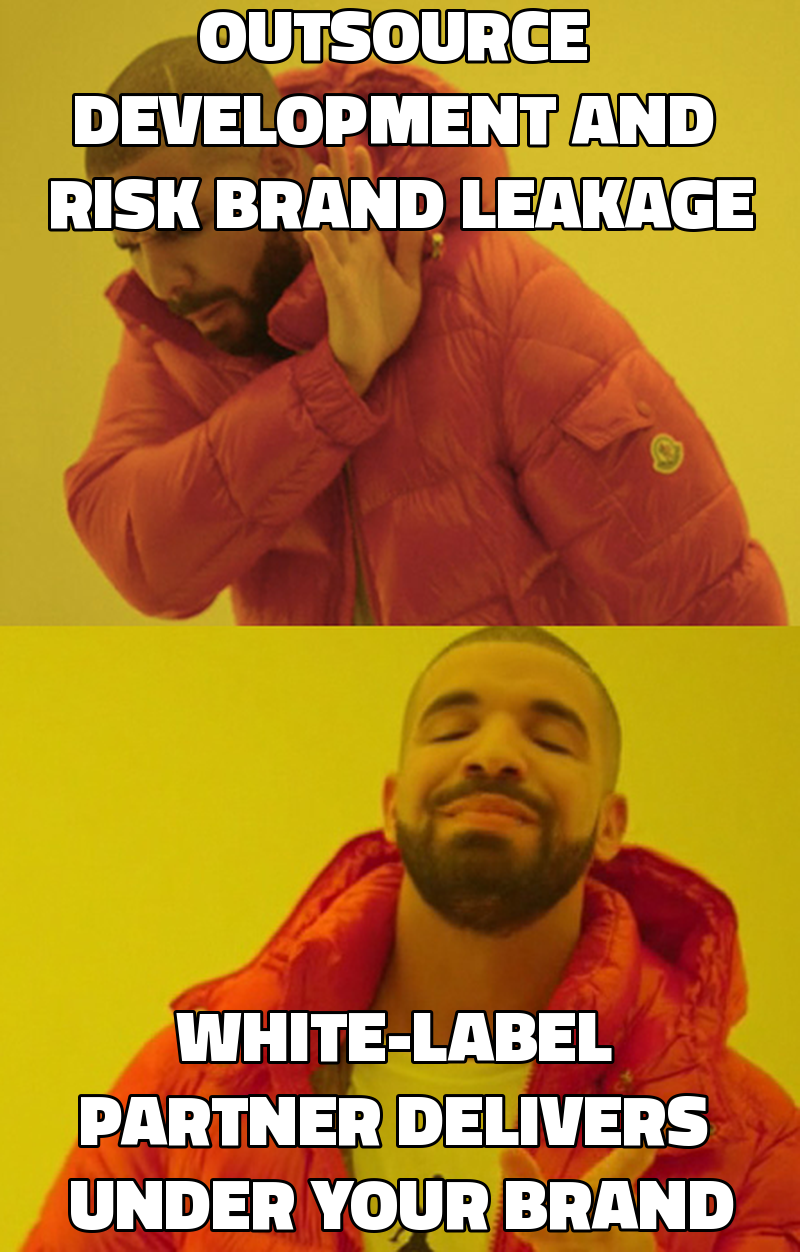
What is white-label software and why does it matter for agencies?
White-label software is a development service where the provider creates a product that is delivered under the agency’s brand name. The agency never shows the third-party developer to the client, keeping the relationship intact and allowing the agency to charge a premium. For agencies of 5-15 people in the US, UK or AU, this model solves three core problems: lost revenue from un-served build requests, the risk of hiring a full-time developer for sporadic work, and the fear that clients will discover the work is outsourced.
How to choose the right white-label development partner
| Criterion | Synthisia (our model) | Generic offshore freelancer |
|---|---|---|
| Brand invisibility | NDA + non-circumvent, single POC, branded deliverables | Often no formal NDA, multiple contacts, risk of brand leakage |
| AI / voice expertise | Specialized AI automation, voice bots, custom back-ends | Limited to generic web stacks |
| Reliability guarantee | 95% on-time delivery per internal KPI, proven by RouteMate SaaS | Variable, often no SLA |
| Pricing model | Wholesale 50-70% of client invoice, fixed-scope pilots | Hourly rates, unpredictable total cost |
| Capacity management | Capped at 7 active agency partners, low concurrency | Unlimited, leads to flaky performance |
When evaluating a partner, ask for:
- A portfolio that includes AI automation or voice projects (e.g., chat-bot for a local retailer).
- References from agencies of similar size.
- A documented SLA that includes turnaround time and bug-fix windows.
Step-by-step process from contract to delivery
1. Pre-qualification checklist
- Verify agency headcount is 5-15.
- Confirm "development" is not listed on their services page.
- Look for recent client case studies that mention a need for a custom app or automation.
- Check for a live developer job post or a recent win that mentions a platform build.
2. Initial outreach and discovery call
Use the qualification gate framework:
- Volume: "How many client projects run concurrently and how often do you need custom tech?"
- Budget: "What budget range do your clients allocate for a build?"
- Live need: "Do you have a project right now that you cannot deliver in-house?" If the agency passes at least two of the three questions, schedule a deeper discovery.
3. Draft the partnership agreement
Key clauses:
- Scope definition – list deliverables, technology stack (e.g., Node.js, React, Dialogflow), and acceptance criteria.
- Wholesale pricing – set the agency’s invoice price and your share (e.g., client pays $4,500, you receive $2,200).
- NDA – protect client data and agency branding.
- Non-circumvent – prevent the agency from bypassing you to hire the dev team directly.
- Turnaround SLA – e.g., fixed-scope MVP in 3-4 weeks, bug-fix window of 14 days.
4. Run a paid pilot project
Why a pilot works:
- Demonstrates delivery speed and quality.
- Gives the agency a concrete case study to show future clients.
- Allows both sides to refine communication cadence. Typical pilot parameters:
- Budget: $1,500-$3,000.
- Scope: One core feature (e.g., a lead-capture chatbot integrated with HubSpot).
- Timeline: 3 weeks.
- Success metric: client signs a follow-up retainer or a second build.
5. Pricing and margin calculation
According to a 2023 McKinsey report on agency economics, a 55% wholesale margin balances profitability with competitive pricing. Use the following formula:
Wholesale rate = Client invoice × (1 – Desired margin)
Desired margin = 0.55 → Wholesale = Invoice × 0.45
If the client pays $5,000, your take is $2,250, leaving the agency $2,750 gross profit.
6. Project management workflow
| Phase | Owner | Tool | Typical duration |
|---|---|---|---|
| Kick-off & requirements | Agency PM | Google Meet, Notion brief | 2 days |
| Design & prototype | Dev partner UI/UX lead | Figma, InVision | 5 days |
| Development | Lead engineer (Node.js) | GitHub, Linear | 10-12 days |
| QA & client review | Agency QA lead | ClickUp, Loom demo | 3 days |
| Deployment & hand-over | Dev Ops specialist | AWS, Vercel | 2 days |
All parties share a project dashboard built in ClickUp (or a simple shared Google Sheet for early pilots). The dashboard shows status, next steps, and a live link to the staging environment.
7. Branding and client communication
- Use the agency’s logo on all UI screens, email templates, and documentation.
- Deliver a white-label style guide that the dev partner follows.
- Provide a client-facing progress email template that the agency can copy-paste each week.
- Avoid mentioning the dev partner unless the client asks for technical details.
8. Delivery, support, and retainer onboarding
After the pilot, propose a retainer:
- $1,500-$2,000 per month covers 15-20 dev hours for bug fixes, minor feature upgrades, and new automation requests.
- Include a quarterly review call to assess ROI (e.g., increased lead conversion from the chatbot).
- Offer a service level add-on for 24-hour critical fixes at an extra $300 per incident.
9. Scaling the partnership without losing reliability
- Cap active agency partners at 7 to keep concurrency low.
- Create a partner onboarding playbook that standardizes contracts, pilot templates, and dashboard setup.
- Automate recurring tasks such as invoice generation and NDA signing with DocuSign and Stripe.
- Measure NPS for each agency; aim for >70 as a reliability indicator.
10. Common pitfalls and how to avoid them
| Pitfall | Impact | Mitigation |
|---|---|---|
| Offering a completely free first deliverable | Undervalues your work, encourages exploitation | Replace with a paid, time-boxed prototype or a free scoped proposal |
| No defined turnaround band | Sets unrealistic expectations, leads to burnout | Commit to a fixed SLA (e.g., 3-4 weeks for MVP) and communicate it clearly |
| Multiple points of contact at the dev partner | Confusing communication, delays | Assign a single Account Engineer as the liaison |
| Over-onboarding partners | Dilutes reliability, damages reputation | Enforce the 5-7 partner cap, review capacity quarterly |
Real-world example: RouteMate
RouteMate, a full-stack SaaS for route optimization, was built entirely under a white-label agreement with Synthisia. The agency sold the product under its own brand, kept 60% of the revenue, and retained the client for three years. The project followed the pilot-to-retainer model described above, delivering the MVP in 28 days and scaling to a $12k monthly retainer after six months.
Frequently asked questions
How long does a typical white-label pilot take?
A pilot that includes discovery, design, a core feature build and QA usually finishes in 3-4 weeks. The timeline is fixed in the contract so the agency can promise a delivery date to its client.
What legal protections are needed?
At minimum you need a mutual NDA covering client data and a non-circumvent clause that prevents the agency from hiring your developers directly. Both documents are standard in B2B partnerships and can be executed via DocuSign.
Can I charge the same price as a full-service agency?
Yes. Because you keep the branding, the agency can invoice the client at its usual rate. Your wholesale share is calculated as a percentage of that invoice, typically 45-55%.
What technology stacks are most in demand?
For marketing agencies the hottest stacks are JavaScript-based: Node.js for back-end APIs, React or Vue for front-end, and serverless deployment on AWS Lambda or Vercel. AI automation often uses OpenAI’s GPT-4 API, Google Dialogflow for voice bots, and Zapier or Make for integrations.
How do I handle post-launch support?
Include a retainer clause in the initial agreement. The retainer covers a set number of support hours per month and a defined SLA for critical bugs. This turns one-off projects into recurring revenue.
What if the agency already has a dev partner?
Run a gap analysis. If the existing partner cannot deliver AI, voice, or custom back-end work, position yourself as the specialist overflow partner. Highlight your proven AI case studies and the single-POC model that avoids coordination headaches.
Is it risky to rely on a single dev partner?
Risk is mitigated by the partnership cap and by having a backup partner vetted in advance. If capacity issues arise, you can transition projects with minimal client impact because the branding and contracts remain with the agency.
How do I prove ROI to my agency client?
Track metrics such as lead conversion rate uplift from a chatbot, time saved from automation, or revenue generated by a new SaaS feature. Present these numbers in a quarterly review deck; agencies love data-driven results.
white‑label
Have something to build?
Tell us what you're trying to ship. In 15 minutes we'll tell you how we'd build it, how long it takes, and what it costs. No pitch deck, no pressure.