
How to White-Label Software for Your Agency: A Practical End-to-End Workflow

White-labeling software means taking a third-party product, re-branding it, and delivering it to your clients as if it was built by your agency. It lets a 5-15 person marketing or SEO shop say yes to custom-backend, AI automation, or voice projects without hiring a full-time engineer. The process is a repeatable workflow that protects your brand, guarantees margins, and scales with a single accountable partner.
Key takeaways
- Identify client demand first, then match it with a white-label platform that supports branding and API access.
- Use a fixed-scope pilot (US$2,000-5,000) to prove reliability before moving to a retainer.
- Protect your brand with NDAs, non-circumvent clauses, and a shared project dashboard.
- Price your service at 50-70% of the client invoice to keep a healthy margin while remaining competitive.
- Leverage Synthisia’s Silent Dev Arm for AI automation, voice, and custom back-end work that no-code tools can’t handle.
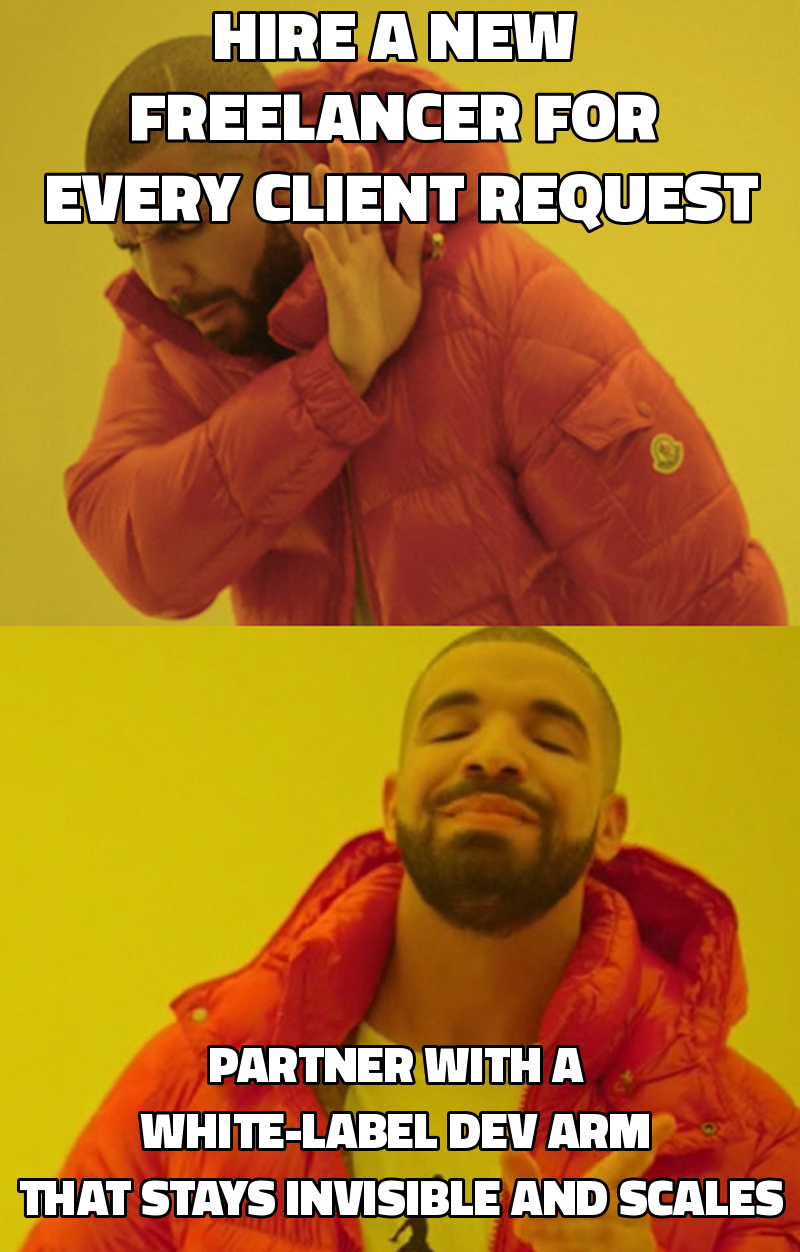
What is white-label software and why agencies adopt it
White-label software is a ready-made solution that a partner allows you to re-brand, customize, and resell under your own name. For agencies that sell SEO, branding, or social campaigns, the typical client now asks for chatbots, automated reporting dashboards, or voice assistants. According to Gartner, 57% of agencies plan to add white-label services by 2025, driven by client expectations for end-to-end digital experiences. The main benefits are:
- Revenue expansion – you keep the margin while the partner handles the heavy lifting.
- Brand integrity – the client sees only your agency’s name, reinforcing trust.
- Speed to market – most platforms provide pre-built modules that cut development time by 40% (Forrester, 2023).
- Risk mitigation – a fixed-scope pilot limits exposure before committing to larger builds.
Step-by-step workflow to white-label a SaaS tool
Below is the exact sequence we use with Synthisia’s Silent Dev Arm and can be replicated with any reputable partner.
1. Surface the client need
- Review the agency’s recent briefs or RFPs. Look for keywords: "chatbot", "automation", "voice", "custom dashboard".
- Use the 10-second site test: if the Services page lacks a development offering, you have a gap.
- Record the expected outcome (e.g., "Lead-gen chatbot that integrates with HubSpot and qualifies leads in real time").
2. Choose the right white-label platform
| Platform | Core strength | Branding options | API limits | Typical cost (USD) |
|---|---|---|---|---|
| Bubble (no-code SaaS) | Full-stack web apps | Custom domain, white-label UI | 1000 API calls/day | $25/mo |
| Voiceflow | Voice & conversational AI | Re-brand voice persona, custom launch icon | 5000 utterances/mo | $39/mo |
| Botpress (open source) | Self-hosted chatbot | Full CSS/JS control, custom branding | Unlimited (self-hosted) | Free + hosting |
| GPT-4 API (OpenAI) | Generative text & code | Wrap in your UI, add logo | 90k tokens/req limit | $0.03/1k tokens |
| Make (formerly Integromat) | Visual automation | White-label scenario names, custom webhook URLs | 10,000 ops/mo | $29/mo |
Select a platform that meets three criteria: (a) the client’s functional need, (b) the ability to hide the vendor’s branding, and (c) a pricing model that leaves room for a 50-70% margin.
3. Secure the partnership legally
- Sign an NDA that covers all technical documentation.
- Add a non-circumvent clause that prevents the agency from hiring the partner directly.
- Keep a master service agreement (MSA) that defines delivery SLAs, IP ownership (agency retains client-facing IP), and support responsibilities.
4. Brand and UI customization
- Domain & SSL – Point a sub-domain (e.g., app.youragency.com) to the white-label instance.
- Logo & color palette – Upload the agency’s brand assets in the platform’s theme editor.
- Copy & tone – Replace generic help text with agency-specific language.
- User onboarding flow – Add a welcome email from the agency’s domain using SendGrid or Mailgun.
Tools like Figma for design hand-off and Zeplin for style guide export keep the visual work consistent.
5. Integrate with the agency’s tech stack
- Connect the white-label product to the agency’s CRM (HubSpot, Salesforce) via Zapier or Make.
- If the client uses a WordPress site, embed the solution via an iFrame or a custom Gutenberg block.
- For voice assistants, publish the skill to Amazon Alexa and Google Assistant under the agency’s developer account.
6. Test end-to-end and document SOPs
- Run a functional test checklist: login, data flow, error handling, branding consistency.
- Record a short video walkthrough for the agency’s delivery team.
- Store test results in a shared Confluence page or Notion workspace.
7. Define pricing and packaging
| Package | Scope | Delivery time | Agency price (USD) | Partner cost (USD) |
|---|---|---|---|---|
| Pilot | One core feature + 2 integrations | 2 weeks | $3,000 | $1,200 |
| Standard | Full product + branding | 4-6 weeks | $7,500 | $3,500 |
| Retainer | Ongoing tweaks, 15-20 hrs/mo | Monthly | $1,500/mo | $600/mo |
The pilot follows the “fixed-scope paid pilot” model described in the ICP: a low-risk $2k-5k project that proves reliability. Once the agency is satisfied, upsell to the Standard package or a monthly retainer for continuous support.
8. Deliver to the client under your brand
- Provide a launch email from the agency’s address, linking to the white-label URL.
- Include a one-page “Product Spec” that lists features, support SLA, and contact info (the agency’s account manager).
- Offer a 30-day post-launch health check handled by the partner but reported through the agency’s dashboard.
9. Ongoing support and scaling
- Use a shared project dashboard (e.g., ClickUp or Monday.com) where the agency can view ticket status, version releases, and upcoming roadmap items.
- Schedule quarterly business reviews to discuss usage metrics, upsell opportunities, and any new client requests.
- Keep the partner’s concurrency low (max 4 active agency pilots) to maintain the reliability edge that differentiates you from cheap offshore freelancers.
Comparison of white-label vs. in-house build for a 5-person agency
| Factor | White-label partner | In-house hire |
|---|---|---|
| Upfront cost | $1,200-$3,500 per project | $80,000-$120,000 salary + benefits |
| Time to market | 2-4 weeks | 8-12 weeks |
| Brand risk | Low (partner invisible) | Medium (developer may expose internal processes) |
| Scalability | High (partner can add resources) | Low (limited by single hire) |
| Ongoing maintenance | Included in retainer | Additional engineering headcount |
How Synthisia’s Silent Dev Arm fits the workflow
Synthisia provides a single point of contact who owns the end-to-end delivery, from pilot to retainer. The team specializes in AI automation, voice, and custom back-ends that no-code platforms can’t handle. A recent case study – RouteMate – shows a full-stack SaaS built in 6 weeks for a UK growth agency, delivering a $12k monthly recurring revenue stream while the agency kept 65% of the margin.
Key Synthisia deliverables
- Full white-label development – we code, brand, and host under your domain.
- Project dashboard – a lightweight ClickUp view that shows sprint status, bugs, and release notes.
- Fixed-scope pilot – $2,500-$4,500, with a clear acceptance criteria checklist.
- Retainer model – $1,500/mo for 15-20 hrs of escalation capacity, perfect for recurring automation tweaks.
By partnering with Synthisia, you avoid the “freelancer ghosting” risk and gain a predictable delivery cadence that matches the agency’s client timelines.
Common pitfalls and how to avoid them
| Pitfall | Symptom | Prevention |
|---|---|---|
| Over-promising speed | Agency says "launch in 48 hours" but partner needs 2 weeks | Define a realistic turnaround band in the pilot agreement |
| Branding leakage | Client sees "Powered by Bubble" badge | Use the platform’s white-label mode and hide footer links |
| Scope creep | Client adds extra integrations mid-project | Lock scope in the pilot SOW and charge change orders per hour |
| Margin erosion | Paying partner more than 70% of client invoice | Negotiate volume discounts after the first three pilots |
| Support confusion | Client contacts partner directly | Route all support tickets through the agency’s dashboard |
Checklist for a successful white-label launch
- Validate client demand and budget (minimum $2k per project).
- Choose a platform with full branding control.
- Sign NDA and non-circumvent clause.
- Configure custom domain and SSL.
- Upload agency logo, colors, and copy.
- Build integrations to HubSpot, Shopify, or WordPress as required.
- Run functional test checklist and record SOP video.
- Prepare launch email and one-page spec sheet.
- Set up shared ClickUp dashboard for status visibility.
- Schedule 30-day health check and quarterly review.
Real-world example: From idea to launch in 4 weeks
- Week 1 – Discovery: UK SEO agency receives a request for a lead-gen chatbot that books meetings via Calendly. No dev team.
- Week 1 – Partner selection: Chooses Botpress (self-hosted) for unlimited branding.
- Week 2 – Branding: Uploads agency logo, sets custom domain
chat.youragency.co.uk, writes copy in agency tone. - Week 2-3 – Integration: Connects Botpress webhook to HubSpot via Make, adds Calendly API for booking.
- Week 3 – Testing: Runs 20 test conversations, fixes edge-case intents.
- Week 4 – Launch: Sends launch email, provides one-page spec, schedules 30-day health check.
- Post-launch: Agency bills client $5,000, pays Synthisia $2,200, retains $2,800 margin (56%).
The same workflow can be replicated for voice assistants (using Voiceflow), data dashboards (using Retool), or AI-generated copy tools (using OpenAI API wrapped in a custom UI).
Scaling the white-label practice
- Standardize templates: Create a reusable Figma component library for branding across all white-label products.
- Automate onboarding: Use a Make scenario that, when a new client is added in HubSpot, automatically creates a ClickUp project, provisions a sub-domain, and sends a welcome email.
- Measure KPIs: Track average pilot profit margin, time-to-launch, and client satisfaction (NPS). According to McKinsey, agencies that monitor these metrics improve margin by 12% YoY.
- Limit concurrency: Cap active pilots at 4 per quarter to keep delivery quality high – the same rule Synthisia follows.
Next steps for agency founders
- Run the 10-second site test on your own website.
- List the top three client requests you can’t currently fulfill.
- Book a 30-minute discovery call with Synthisia to discuss a paid pilot.
- Sign the NDA and start the pilot within two weeks.
By following this workflow you turn a revenue leak into a repeatable white-label engine, keep your brand front-and-center, and avoid the hidden costs of hiring full-time developers.
Frequently asked questions
How long does a typical white-label pilot take?
A pilot usually runs 2-4 weeks from kickoff to client-ready delivery. The timeline includes discovery (2-3 days), platform configuration (5-7 days), integration (5-7 days), testing (2-3 days), and launch preparation (1-2 days). Setting a fixed turnaround in the SOW protects both parties from scope creep.
What legal protections do I need when white-labeling?
At minimum you need a mutual NDA, a non-circumvent clause, and a master service agreement that defines IP ownership (the agency retains client-facing IP) and support responsibilities. Having these documents signed before any work starts reduces risk of the partner being poached later.
Can I white-label a product that already has a strong brand?
Yes, but you must verify that the vendor offers a true white-label mode that removes all branding, including footer links and “Powered by” badges. Platforms like Voiceflow and Bubble provide this; others like Intercom only allow limited re-branding.
How do I price the white-label service to stay competitive?
Aim for a margin of 50-70% of the client invoice. For a $5,000 client project, your cost to the partner should be between $1,500 and $2,500. Add a 10-15% buffer for change orders and support. This pricing keeps you competitive against cheap offshore freelancers while preserving healthy profit.
What if the client wants a feature that the white-label platform can’t provide?
Treat it as a change request. Either (a) develop a custom extension using the platform’s API (e.g., a custom Zapier action) or (b) move the request to a full-custom build under Synthisia’s Silent Dev Arm, billed as a separate project.
How do I keep the partner invisible to my client?
Use a custom domain, hide all vendor logos, and route all support tickets through your agency’s help desk (e.g., Freshdesk or Zendesk). In the launch email, reference only your agency’s name and contact details. The partner should never be mentioned in client-facing communication.
What metrics should I track to prove the white-label model works?
Key metrics include pilot profit margin, average time-to-launch, client NPS after delivery, repeat-project rate, and churn of partner contracts. McKinsey notes agencies that track these metrics improve overall profitability by 12% year over year.
Is a retainer worth it for occasional automation work?
If you receive at least one request per month, a retainer of $1,500 provides 15-20 hours of priority development, guaranteeing faster turnaround and a predictable cost for the agency. It also smooths revenue and strengthens the partnership with the white-label provider.
white‑label
Have something to build?
Tell us what you're trying to ship. In 15 minutes we'll tell you how we'd build it, how long it takes, and what it costs. No pitch deck, no pressure.