
How to Vet a White-Label Development Partner: 7 Red Flags to Spot

A white-label development agency builds custom software, AI automation, voice assistants and integrations under your agency’s brand, letting you keep the client relationship, the margin, and the reputation while you stay invisible.
Key takeaways
- Verify the partner’s portfolio matches the specific AI, voice or custom-backend work you can’t do in-house.
- Insist on a paid pilot with fixed scope before any long-term commitment.
- Look for a single accountable point of contact; multiple hand-offs are a warning sign.
- Check for clear NDA and non-circumvent language; vague contracts hide risk.
- Evaluate delivery speed against a defined turnaround band, not vague "fastest possible" promises.
- Use the red-flag checklist to reject partners who list development as a service on their own site.
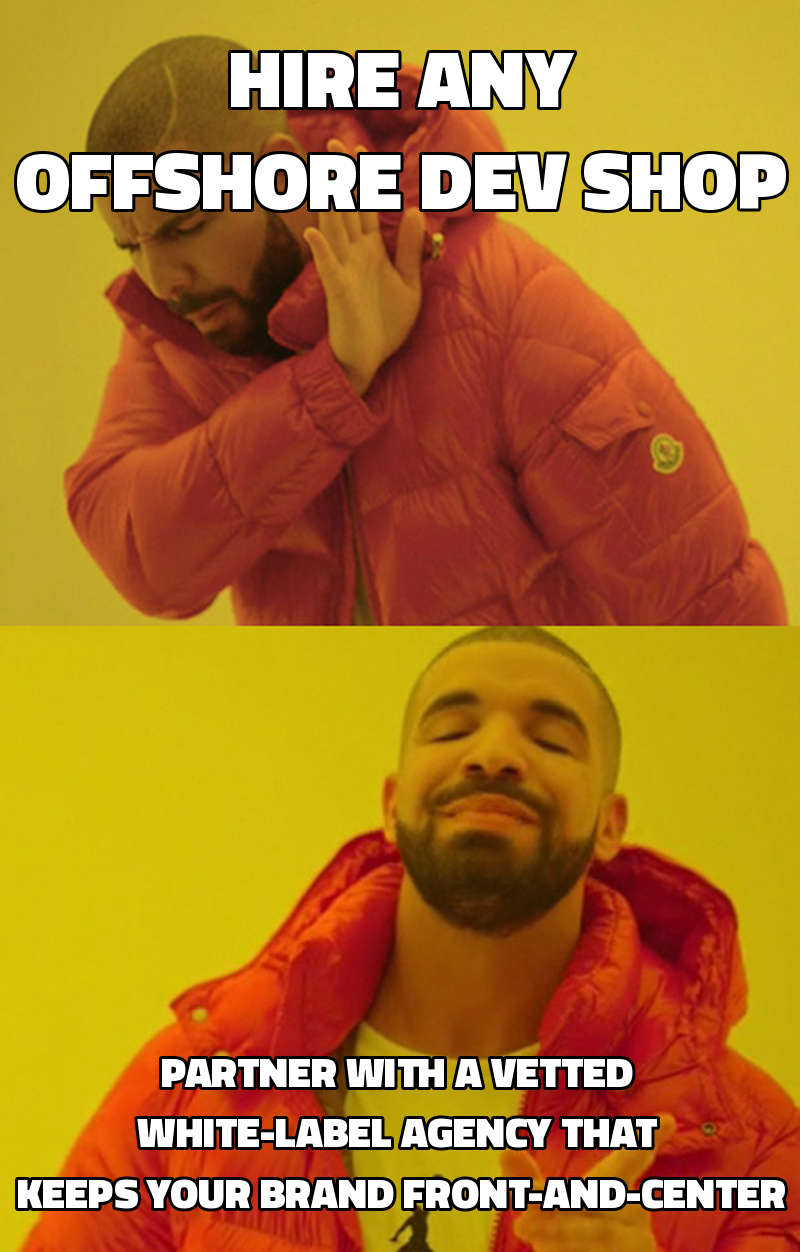
What is a white-label development agency and why does it matter for marketing firms?
Marketing, SEO and branding agencies often win client requests for chatbots, automation workflows or custom dashboards that exceed the limits of WordPress or no-code tools. A white-label development agency provides the technical muscle while you keep the brand front-and-center. This model lets you quote confidently, retain the margin, and avoid the cost of hiring a full-time engineer for sporadic demand. According to a 2023 Gartner survey, 62 % of mid-size agencies plan to outsource development to focus on core creative services.
How to spot the first red flag: No clear development portfolio
A credible white-label partner will showcase case studies that align with your client base – e.g., a SaaS onboarding bot for a UK fintech, a voice-enabled ordering system for an Australian retailer, or an AI-driven reporting dashboard for a US e-commerce brand. If the website only lists generic "web design" without technical depth, the partner likely cannot handle the AI or custom-backend work you need. Use the table below to compare a strong versus weak portfolio.
| Criterion | Strong white-label partner | Weak white-label partner |
|---|---|---|
| Case studies | Detailed technical write-ups, tech stack listed, measurable outcomes (e.g., 30 % reduction in manual processing) | Vague screenshots, no tech details, no ROI data |
| Client types | Mid-size SMBs in finance, health, retail, with documented ROI | Only small local businesses or hobby projects |
| Technology stack | Shows AI platforms (OpenAI, Cohere), voice APIs (Google Dialogflow, Amazon Polly), custom backend (Node.js, Django) | Only mentions "HTML, CSS" or generic "WordPress" |
Red flag #2: Development listed as a service on their own site
If the prospect lists "development" among its own services, the gap you are meant to fill does not exist. Your qualification test – the 10-second site test – tells you to skip such prospects. This saves you from a wasted sales cycle.
Red flag #3: No single point of contact (SPOC)
When a partner assigns multiple project managers, QA leads and account executives without a clear hierarchy, accountability evaporates. The risk of missed deadlines and quality slips rises dramatically. A reliable partner will give you one senior engineer or delivery lead who owns the end-to-end build.
Red flag #4: Vague or unlimited delivery promises
Phrases like "fastest delivery possible" or "we ship in a week" without a defined turnaround band are red flags. According to the 2022 Forrester Outsourcing Index, projects with undefined timelines overrun by an average of 45 %.
Red flag #5: Missing legal safeguards (NDA, non-circumvent)
A trustworthy white-label agency will sign a mutual NDA and a non-circumvent clause that protects your brand and client list. If the partner balks at these basics, they may later poach your clients or expose your involvement.
Red flag #6: Pricing focused on being the cheapest
If the partner’s pitch centers on under-cutting rates, you are likely dealing with a low-cost offshore shop that cannot sustain the quality or capacity you need. Your USP is reliability and deep AI expertise, not price competition.
Red flag #7: No proven pilot or reference project
A partner that refuses a small paid pilot or cannot provide references from agencies similar to yours is hiding performance risk. The pilot should be a fixed-scope, paid project of $2 000–$5 000 that demonstrates delivery speed, code quality, and communication.
Step-by-step checklist to vet a white-label development partner
- Run the 10-second site test – open the prospect’s website, check the Services page. If "development" appears, move on.
- Collect portfolio evidence – request at least three case studies that include tech stack, metrics, and client industry.
- Confirm a single point of contact – ask for the name, title, and direct email of the senior engineer who will own your work.
- Demand legal safeguards – send a mutual NDA and non-circumvent template; track response time.
- Set a fixed turnaround band – e.g., "standard fixed-scope build delivered in 10-14 business days".
- Negotiate a paid pilot – define scope, deliverables, acceptance criteria, and payment terms (e.g., 50 % upfront, 50 % on delivery).
- Check references – speak to at least two agency clients who have used the partner for AI or voice projects.
Comparison of pilot structures vs. full-scale contracts
| Aspect | Paid pilot (recommended) | Full-scale contract (risky) |
|---|---|---|
| Scope | Fixed, limited to one feature or automation | Open-ended, many modules |
| Payment | Up-front deposit, milestone at delivery | Monthly retainer without performance guardrails |
| Risk | Low – you test quality before committing | High – you may be locked into a flaky partner |
| Decision speed | 1-2 weeks to start | Weeks to months of negotiation |
How to use the checklist in a sales call
During the qualification call, ask the three gate questions from your qualification gate framework:
- Volume – "How many client projects require custom development each month?"
- Budget – "What is the typical budget range for a build you would outsource?"
- Live need now – "Do you have a project right now that needs AI or voice integration?" If the prospect answers positively to all three, move them to the pilot stage. If they miss one, keep them in nurture.
Real-world example: RouteMate partnership
Synthisia’s "Silent Dev Arm" partnered with a UK-based branding agency that struggled with AI chatbots. After a $3 500 pilot building a lead-gen bot on Dialogflow, the agency saw a 28 % increase in qualified leads for the client. The agency kept the brand front-and-center, paid a 60 % wholesale rate, and signed a $1 500 monthly retainer for ongoing escalation work. This case illustrates how the checklist filters out unreliable partners and accelerates revenue.
Frequently asked questions
What exactly does a white-label development agency do for my marketing firm?
A white-label development agency builds the technical solution – whether a chatbot, custom API, or AI-driven dashboard – and delivers it under your brand name. You retain the client relationship, set the price, and the partner stays invisible, allowing you to expand services without hiring engineers.
How can I be sure the partner won’t poach my clients?
Include a non-circumvent clause in the contract that prohibits the partner from contacting your clients directly for a defined period, typically 12 months. Pair this with a mutual NDA that protects any proprietary processes or branding you share.
Why is a paid pilot better than a free draft?
A paid pilot guarantees that the partner invests real engineering effort and that you receive a tangible deliverable. A free draft often leads to scope creep and undervalues the work, making the partner think you are a low-margin client.
What turnaround time should I expect for a typical fixed-scope build?
For a $2 000–$5 000 pilot, most reliable white-label partners deliver within 10–14 business days, assuming clear requirements and a single point of contact. Anything longer should be negotiated as a separate milestone.
How do I evaluate the technical depth of a partner without being a developer?
Ask for a technical breakdown of a recent project: the AI model used, the integration points, and the hosting environment. Request to see a short code snippet or architecture diagram. If they can explain these details in plain language, they have the expertise you need.
What red flags indicate a partner is offshore low-cost only?
If the partner emphasizes “offshore rates”, offers a 24-hour turnaround promise, or lists only India, Philippines or Pakistan as locations, they are likely focused on price over quality. Your target partners should be based in the US, UK, AU, or have a proven English-speaking team.
Can I use the same partner for both AI automation and voice projects?
Yes, but verify that they have proven experience in both domains. Look for case studies that mention OpenAI, Cohere, Google Dialogflow, Amazon Polly, or similar platforms. A partner that only does web design will struggle with voice-first experiences.
How many partners should I onboard at once?
Synthisia recommends capping active white-label partners at 5–7 to maintain reliability. Over-onboarding leads to the very flakiness you are trying to avoid and dilutes the dedicated support each partner receives.
This article is based on Synthisia’s internal partnership framework, industry surveys from Gartner (2023) and Forrester (2022), and real-world pilot data from the RouteMate case study.
white‑label
Have something to build?
Tell us what you're trying to ship. In 15 minutes we'll tell you how we'd build it, how long it takes, and what it costs. No pitch deck, no pressure.