
AI Automation Agency Business Model: A White-Label Blueprint for 5-15 Person Marketing Firms

AI automation agency business model: A white-label development studio partners with marketing, SEO, branding, and social agencies that lack in-house engineers, delivering custom AI, voice, and integration projects under the agency’s brand while earning 50-70% of the wholesale bill. This model lets agencies say yes to high-margin tech work without hiring developers, and lets the studio focus on repeatable pilots and retainers.
Key takeaways
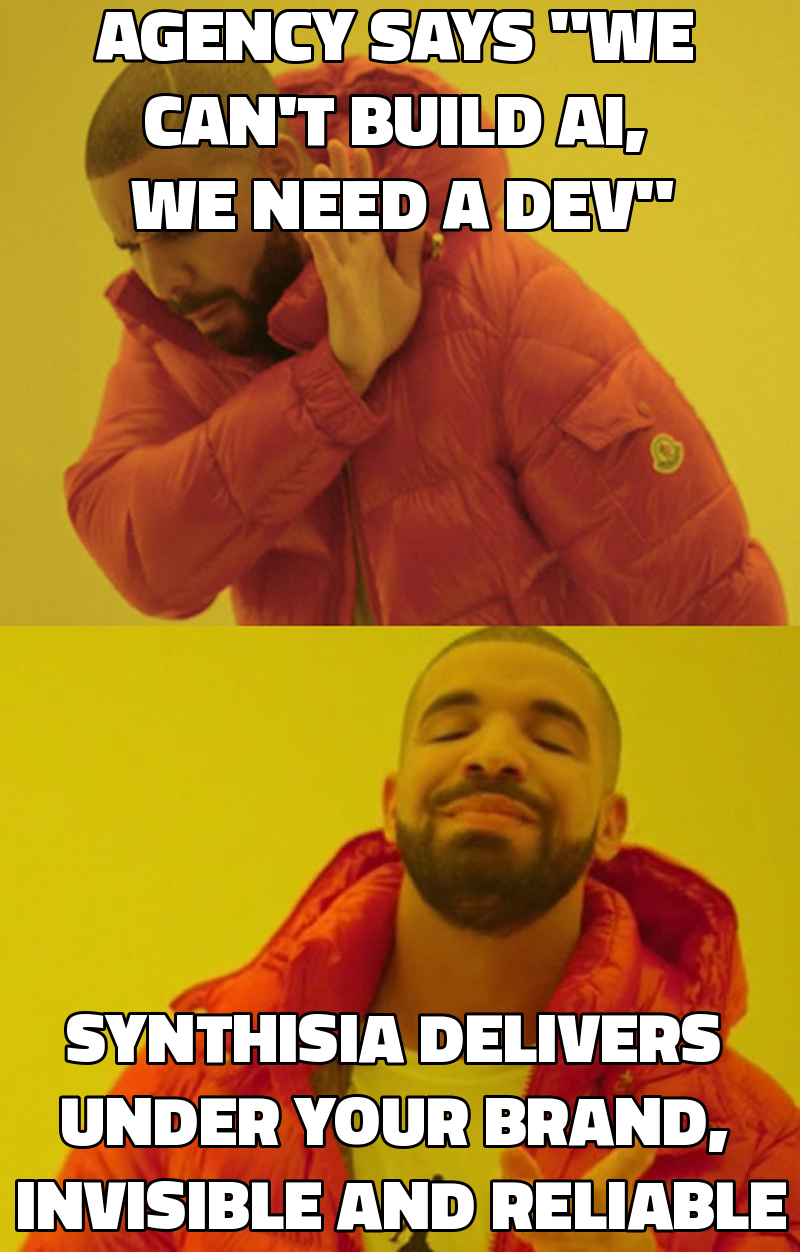
- White-label dev delivers under the agency’s brand, keeping the client relationship intact.
- Start with a paid pilot (USD 1.5-3k) to prove quality, then move to fixed-scope projects and a monthly retainer.
- Target agencies 5-15 staff in US/UK/AU; aim for 50-70% wholesale margin on $2k-$5k builds.
- Use a capped partner roster (3-5 agencies) to maintain reliability and avoid becoming a flaky freelancer.
- Core tech stack: Python (FastAPI), LangChain, Google Vertex AI, Zapier, Make, and a shared Notion or ClickUp dashboard for status transparency.
- Contract essentials: NDA, non-circumvent clause, fixed turnaround SLA (e.g., 2-3 weeks for a $3k pilot).
What is an AI automation agency business model?
Searchers often ask "what is an AI automation agency business model". In this context it is a B2B service company that builds AI-powered tools, chatbots, workflow automations, voice assistants, custom back-ends, for other agencies that sell marketing services but have no developers. The studio works behind the scenes, delivering code, models, and integrations that the agency can brand as its own. Revenue comes from a wholesale markup on each project and a recurring retainer for overflow capacity.
According to a 2023 Gartner survey, 30% of digital transformation initiatives now involve AI, and 45% of mid-size agencies report losing clients because they cannot deliver AI solutions. This gap creates a sustainable demand pipeline for white-label partners.
How to design a white-label partnership structure
Agencies care about three things: brand integrity, predictable margins, and reliable delivery. A partnership contract should therefore include:
- Wholesale pricing clause – the agency pays a fixed rate (e.g., $2,500) while billing its client at $4,500, preserving a 55% margin.
- Non-circumvent & NDA – protects the studio’s IP and ensures the agency does not poach the dev team.
- Service Level Agreement (SLA) – a defined turnaround (e.g., 10-15 business days for a $3k pilot) and a single point of contact.
- Escalation retainer – after the pilot, a $1,500/month retainer guarantees 15-20 dev hours for ongoing tweaks, priority support, and new feature work.
A simple contract template can be built in HelloSign or DocuSign, and the legal language can be vetted by a boutique firm such as Cooley LLP (US) or Taylor Wessing (UK).
Step-by-step roadmap to launch the agency
| Phase | Action | Tool/Resource | Timeline |
|---|---|---|---|
| 1 – Market validation | Run the 10-second site test on 20 target agencies; qualify via trigger signals. | Google Sheets, Hunter.io for email verification | 1-2 weeks |
| 2 – Offer definition | Finalise pilot scope, pricing matrix, NDA template. | Notion for documentation, Stripe for invoicing | 1 week |
| 3 – Outreach & demo | Personalized video outreach (Loom) + case study of RouteMate SaaS. | LinkedIn Sales Navigator, Vidyard | 2-3 weeks |
| 4 – Pilot execution | Deliver a scoped chatbot or Zapier automation; collect feedback. | GitHub, Vercel, Zapier, Make.com | 2-4 weeks |
| 5 – Retainer upsell | Propose monthly escalation retainer; set up shared ClickUp dashboard. | ClickUp, QuickBooks | Ongoing |
| 6 – Scale cap | Add a second partner only after 80% utilization; keep concurrency ≤ 3 active pilots. | HubSpot CRM | 3-6 months |
Key milestones: Close the first pilot within 30 days of first contact, achieve a 90% on-time delivery rate, and secure a retainer from at least 60% of pilot clients.
Pricing and profit margins for white-label deals
The deal shape in the ICP defines a project value range of $500-$5,000. To protect profitability, enforce a minimum floor of $1,500 per project; anything below erodes overhead.
| Project Size | Wholesale Cost (USD) | Client Bill (USD) | Studio Share % |
|---|---|---|---|
| Small pilot (≤ $2k) | $1,200 | $2,500 | 48% |
| Mid-size build ($2k-$4k) | $1,800 | $4,000 | 55% |
| Large custom ($4k-$5k) | $2,500 | $5,000 | 50% |
Retainer model: $1,500/month covers ~15-20 dev hours, translating to $75-$100/hr effective rate, well above the offshore average of $30-$45/hr (according to a 2022 PayScale report). This pricing protects the studio from race-to-the-bottom competition.
Building the delivery engine (tools, tech stack, team)
Even a solo founder can ship production-grade AI projects by leveraging low-code and managed services:
- Backend: FastAPI on AWS Lambda (cost < $0.10 per 1M requests) or Google Cloud Run.
- AI models: OpenAI GPT-4o, Google Vertex AI PaLM 2, or Anthropic Claude 3 for chat, summarisation, and classification.
- Automation: Zapier, Make.com, or n8n for workflow orchestration.
- Voice: Google Dialogflow CX + Twilio Programmable Voice.
- Project tracking: ClickUp shared workspace with client-visible status columns.
- Version control: GitHub with protected branches; use GitHub Actions for CI/CD.
- Testing: PyTest for unit tests; Cypress for end-to-end UI.
Hiring: start with a senior full-stack contractor (hourly $80-$120) and a prompt engineer (hourly $60-$90). As revenue stabilises, convert the contractor to a part-time employee (benefits via Deel for international compliance).
Marketing and sales to attract agency partners
Agencies search for terms like "white label AI development" and "agency dev partner". A focused inbound funnel includes:
- Landing page optimized for the keyword “white-label AI automation for agencies”. Use the headline: “Add AI-Powered Solutions to Your Service Menu Without Hiring a Developer”.
- Case study: RouteMate SaaS – built a multi-tenant SaaS for a UK SEO firm in 4 weeks; the agency kept 60% margin.
- LinkedIn ads targeting titles from the ICP (Founder, Managing Director, Head of Delivery) in the US/UK/AU.
- Webinars: “How to Turn Every Client Request into a $3k Project” – co-hosted with a known agency such as Single Grain.
- Email sequence: 3-touch cadence using Woodpecker; first email cites the Gartner AI adoption stat, second shares a 2-minute demo video, third offers a free scoped proposal.
Managing contracts, NDAs, and risk
Even though NDAs are table-stakes, the real risk is delivery failure. Mitigate by:
- Fixed-scope contracts – clearly list deliverables, acceptance criteria, and change-order process.
- Milestone payments – 40% upfront, 30% at beta, 30% on final sign-off.
- Escrow for large projects – use Escrow.com to protect both parties.
- Insurance – a professional liability policy (e.g., Hiscox) covering up to $1M for AI-related errors.
- Documentation – maintain a Confluence knowledge base for each partner, including API keys, data handling procedures, and compliance notes (GDPR for UK/EU clients, CCPA for US).
Scaling while keeping low concurrency
The biggest competitive edge is reliability. To avoid becoming a “flaky freelancer”, enforce a partner cap of 4-5 agencies at any time. Use a simple utilization dashboard:
- Current active pilots (green)
- Retainer capacity (yellow)
- Overflow queue (red) When utilization exceeds 80%, pause new outreach and focus on delivering existing commitments.
Hiring a part-time project manager (via Remote.com) can automate status updates, freeing the founder to focus on business development and AI research.
Comparison of partnership models
| Model | Brand Visibility | Revenue Share | Risk | Typical Use Case |
|---|---|---|---|---|
| White-label (our focus) | Agency front-ends client | 50-70% wholesale | Low (fixed scope) | Agencies lacking dev talent |
| Referral (pure lead gen) | Studio stays invisible | 10-20% per lead | Very low | Agencies already have dev partner |
| Joint venture | Co-brand, shared P&L | 30-50% each | Medium (shared cost) | Long-term product co-creation |
Pricing matrix for typical AI automation projects
| Scope | Deliverables | Turnaround | Wholesale Cost | Client Bill |
|---|---|---|---|---|
| Chatbot prototype | 1-2 intents, webhook integration | 10 days | $1,200 | $2,500 |
| Workflow automation (Zapier/Make) | 5-7 steps, error handling | 2 weeks | $1,800 | $4,000 |
| Voice assistant (Twilio) | IVR flow, NLP intent mapping | 3 weeks | $2,500 | $5,000 |
| Custom backend API | CRUD endpoints, auth, DB schema | 4 weeks | $3,200 | $6,500 |
“The best white-label partner is the one that disappears after delivering a flawless product, leaving the agency to claim the win.” – internal note, Synthisia Ops.
Frequently asked questions
How do I convince an agency to trust a white-label dev partner?
Show a paid pilot with clear milestones, share a case study (e.g., RouteMate), and provide a single point of contact. Agencies value risk reduction more than price; a $1,500 pilot proves capability without large upfront commitment.
What if the agency already has a dev partner?
Ask a wedge qualifier: "What can your current partner not do?" If they lack AI, voice, or custom backend expertise, position your studio as the specialist overflow that complements, not replaces, their existing provider.
How many hours can I realistically allocate to a $3k pilot?
A well-scoped pilot should require 20-30 dev hours plus 5-10 hours of project management. At $80/hr contractor rates, the wholesale cost is around $2,400, leaving a healthy margin while staying within the $1,500 floor rule.
Do I need to build my own SaaS dashboard for partners?
No. Start with a shared ClickUp view or a simple Google Data Studio report. Building a full SaaS dashboard before you have paying clients is the classic “build-instead-of-sell” trap.
How do I handle data privacy for EU-based agency clients?
Implement GDPR-by-design: store data in EU-region Azure, use encryption at rest, and include a Data Processing Addendum in every contract. A compliance checklist can be managed in Confluence.
What is the ideal retainer size for ongoing escalation?
$1,500/month covers about 15-20 dev hours, which matches the average overflow volume for a 10-client agency. Adjust up or down based on the partner’s historical pilot conversion rate.
Can I scale beyond four partners without losing reliability?
Yes, but only by adding dedicated project managers and standardising SOPs. Each additional partner should increase headcount proportionally (e.g., 1 PM per 3 partners) to keep utilization under 80%.
How do I price AI-heavy projects versus low-code automations?
AI models (GPT-4o, Vertex AI) have per-token costs; factor these into the wholesale cost (e.g., $0.002 per 1k tokens). Low-code automations have negligible compute cost, so price mainly on labor and integration complexity.
Ready to turn every client request into a revenue-generating AI project?
AI
Have something to build?
Tell us what you're trying to ship. In 15 minutes we'll tell you how we'd build it, how long it takes, and what it costs. No pitch deck, no pressure.