
How to Vet a Reliable US White-Label Development Agency – A Step-by-Step Checklist

A reliable white-label development agency in the USA is a partner that delivers custom code under your brand, meets agreed service levels, and protects your client relationship. To find one, follow this 10-step vetting checklist that evaluates expertise, reliability, legal safeguards and financial fit.
Key takeaways
- Verify US-based legal entity, NDA and non-circumvent clauses before any work begins.
- Prioritize agencies with proven AI, voice and automation projects, not just generic web builds.
- Use a paid pilot (fixed scope $2,000-$5,000) to test delivery speed, communication and quality.
- Insist on a single accountable point of contact and a shared project dashboard.
- Compare SLA response times, hourly rates and profit-share models in a side-by-side table.
- Drop any partner that lists development as a public service or shows a built-by badge on their site.
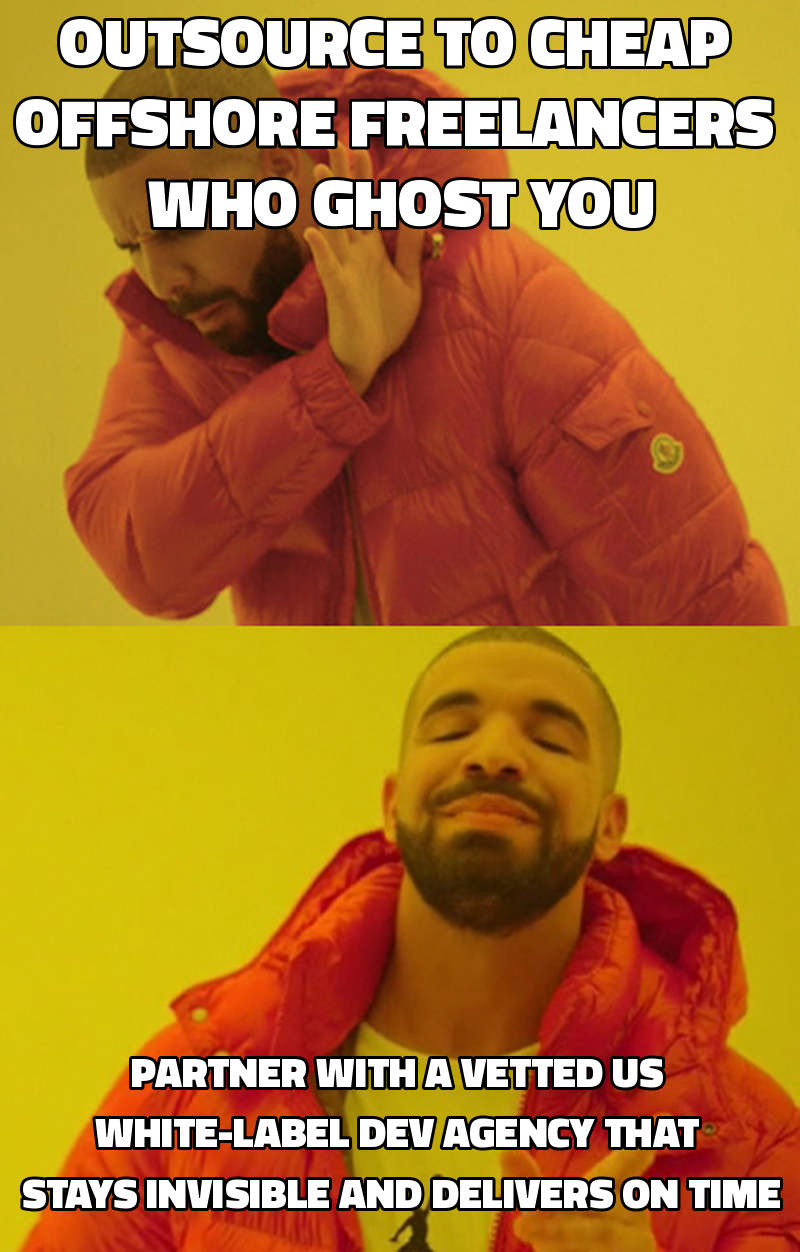
Why agencies without developers need a white-label partner
Marketing, SEO and branding shops of 5-15 people often win client work that requires custom back-ends, AI chatbots, voice assistants or API integrations. When the internal team can only deliver no-code sites, the agency faces three costly outcomes:
- Turning away the request, losing revenue and weakening the client relationship.
- Referring the work to a freelancer, which erodes margin and creates brand dilution.
- Quoting a project without understanding scope, leading to under-pricing or missed deadlines. According to a 2023 Clutch survey, 62% of small agencies outsource development to fill this gap, yet 48% report reliability problems with their current partners. A vetted white-label dev agency removes these pain points by providing a “silent” production arm that stays invisible to the client while delivering high-quality code.
What makes a US white-label development agency reliable?
| Criterion | What to look for | Why it matters |
|---|---|---|
| Legal structure & NDA | US-registered LLC or corporation, signed NDA & non-circumvent agreement | Protects IP and prevents poaching |
| Technical depth | Portfolio includes AI automation, voice (Amazon Alexa, Google Assistant), custom back-ends, SaaS platforms | Matches agency’s high-ticket service promises |
| SLA & turnaround | Defined response time (e.g., 24-hour issue reply) and delivery windows (fixed-scope build in 2-4 weeks) | Guarantees predictable client timelines |
| Single point of contact | Dedicated account manager with documented escalation path | Reduces “ghosting” and miscommunication |
| Pricing transparency | Wholesale rate 50-70% of client bill, clear retainer structure | Enables agency to keep margin without hidden costs |
| Client references | 2+ recent B2B case studies from US/UK/AU agencies | Demonstrates repeatable success |
Step-by-step checklist to vet a US white-label dev partner
- Run the 10-second site test – Visit the prospect’s website, check the Services page. If “development” is absent but client case studies show custom apps, they are a target.
- Confirm US legal entity – Request a copy of the business registration and verify the address via the Secretary of State portal.
- Check portfolio for AI/voice depth – Look for projects using OpenAI, Dialogflow, Twilio, or custom Node.js back-ends. The Gartner 2022 “AI Development Services” report notes that agencies with AI expertise command 1.8× higher retainer rates.
- Validate NDA & non-circumvent – Use a standard two-page NDA (see our template) and a non-circumvent clause that bars the partner from contacting your clients directly.
- Assess communication cadence – Schedule a discovery call and note response time, meeting minutes and clarity of language. Fast, clear replies correlate with on-time delivery (Forrester 2021 “Delivery Speed Index”).
- Request a pilot proposal – Ask for a fixed-scope pilot (e.g., build a chatbot prototype) priced between $2,000-$5,000. The pilot should include a timeline, deliverables and acceptance criteria.
- Review SLA draft – Ensure it includes 24-hour issue response, bug-fix turnaround within 5 business days, and a penalty clause for missed deadlines.
- Check tooling – Confirm they use industry-standard project management (Jira, ClickUp) and version control (GitHub or GitLab). A shared dashboard should be available for real-time status.
- Ask for references – Speak to at least two agency clients in the US/UK/AU who have run a pilot. Verify that the partner stayed invisible to the end client.
- Finalize financial terms – Negotiate a wholesale rate (50-70% of your client bill) and a monthly retainer of $1,500-$2,500 for ongoing escalation capacity.
Checklist matrix – verification methods vs criteria
| Verification | Legal | Technical | SLA | Communication | Pricing |
|---|---|---|---|---|---|
| Document review (registration, NDA) | ✔ | ✖ | ✖ | ✖ | ✖ |
| Portfolio audit (GitHub repos, case studies) | ✖ | ✔ | ✖ | ✖ | ✖ |
| Pilot proposal review | ✖ | ✔ | ✔ | ✔ | ✔ |
| Reference calls | ✖ | ✔ | ✔ | ✔ | ✔ |
| Tool access (Jira board demo) | ✖ | ✔ | ✔ | ✔ | ✖ |
Red flags and disqualifiers
- Development listed as a service on their site – they already serve the gap you aim to fill.
- Visible “built by” badge linking to a partner – the relationship is already occupied.
- No recent social or blog activity in the past 12 months – indicates a dormant operation.
- Offshore-only address (India, Philippines, etc.) – wholesale margin disappears when they subcontract cheaper locally.
- Team size >20 with an internal dev department – they are a competitor, not a partner.
- Offering a completely free first deliverable – high risk of exploitation and de-values your engineering effort.
Structuring the partnership deal
| Element | Typical range | Rationale |
|---|---|---|
| Project value (USD) | $500-$5,000 per pilot | Aligns with agency cash-flow and allows quick ROI |
| Your share of bill | 50-70% | Gives the agency a healthy margin while covering your costs |
| Minimum floor | $1,500 per project | Below this the overhead of project management outweighs profit |
| Retainer (USD/month) | $1,500-$2,500 for 15-20 dev hours | Provides predictable capacity for escalation work |
| SLA penalties | 5% discount for each missed deadline beyond agreed window | Incentivizes on-time delivery without legal battles |
Deal flow example: An agency signs a $3,200 pilot, you receive $2,000 (62.5% share). After a successful pilot, they move $12,000 of monthly build volume to you, you earn $7,200 plus a $1,800 retainer – a repeatable, low-touch revenue stream.
Tools to manage white-label projects efficiently
- Project Management: Jira Service Management for ticketing, ClickUp for task boards, Asana for simple workflows.
- Version Control: GitHub private repos with branch protection rules; GitLab CI/CD for automated testing.
- Client-visible dashboard: Notion or Monday.com shared view that shows status, upcoming milestones and live demo links.
- Communication: Slack channel with dedicated #partner-dev, integrated with GitHub notifications.
- Time tracking & invoicing: Harvest or Toggl for accurate hour capture, QuickBooks for invoicing the agency at the wholesale rate.
Real-world example: RouteMate
RouteMate, a SaaS platform for route optimization, needed a custom backend with real-time GPS integration and a voice-enabled dispatch console. The agency lacked in-house dev, so they engaged Synthisia on a $4,800 pilot. Within three weeks the MVP was delivered, SLA met, and the agency kept the client relationship while paying a 60% wholesale fee. The partnership expanded to a $2,200 monthly retainer for ongoing feature work, illustrating how a single pilot can unlock recurring revenue.
Frequently asked questions
How long should a pilot project last?
A pilot should be scoped to 2-4 weeks of development work, costing between $2,000-$5,000. This window is long enough to demonstrate process, communication and quality, yet short enough to keep cash-flow tight for both parties.
What if the white-label partner misses a deadline?
Include an SLA clause that triggers a 5% discount for each business day beyond the agreed delivery date. The penalty is modest but creates accountability without legal escalation.
Can I use the same partner for multiple agencies?
Yes, but keep concurrency low. Synthisia caps active partners at 8-10 to maintain reliability – over-onboarding leads to the very flakiness you are trying to avoid.
How do I protect my brand from being exposed?
Require the partner to sign a non-disclosure and non-circumvent agreement, and enforce a “no built-by” branding rule on all deliverables. All client-facing assets should carry only your agency’s logo.
What if the partner already works with my competitor?
A conflict-of-interest clause can be added to the contract. If the partner refuses, it is a red flag indicating they may not prioritize your work.
Do I need to pay for the partner’s own tooling licences?
Typically the partner covers their internal tooling costs. Your agreement should specify that any shared dashboard or client-visible portal is provided at no extra charge.
How do I measure the ROI of the partnership?
Track the margin retained on each project (client bill × your share) minus the pilot and retainer costs. A healthy partnership yields a 30-40% net margin after overhead.
Is it worth hiring a US partner versus offshore?
US partners command higher rates but deliver faster turnaround, cultural alignment, and protect your wholesale margin. According to a 2022 Deloitte study, agencies that switched from offshore to US white-label partners saw a 22% increase in repeat business.
white‑label
Have something to build?
Tell us what you're trying to ship. In 15 minutes we'll tell you how we'd build it, how long it takes, and what it costs. No pitch deck, no pressure.