
Find a Local AI Automation Agency That Works With Marketing Firms

If you type "ai automation agency near me" you’re looking for a local partner that can deliver white-label AI-driven builds while keeping your agency’s brand front-and-center. The fastest route is to combine a geo-targeted search, a vetted partner directory, and a quick qualification checklist that matches your agency’s size, workflow and revenue model.
Key takeaways
- Use a three-step process: geo search, vetted list, rapid qualification.
- Prioritise agencies that operate on a white-label model and sign NDAs with non-circumvention clauses.
- A fixed-scope pilot (US$2,000-5,000) is the safest way to prove fit before any retainer.
- Look for partners in the US, UK or AU that share your timezone overlap and billing currency.
- Track every prospect in a simple spreadsheet or CRM to avoid losing the pilot momentum.
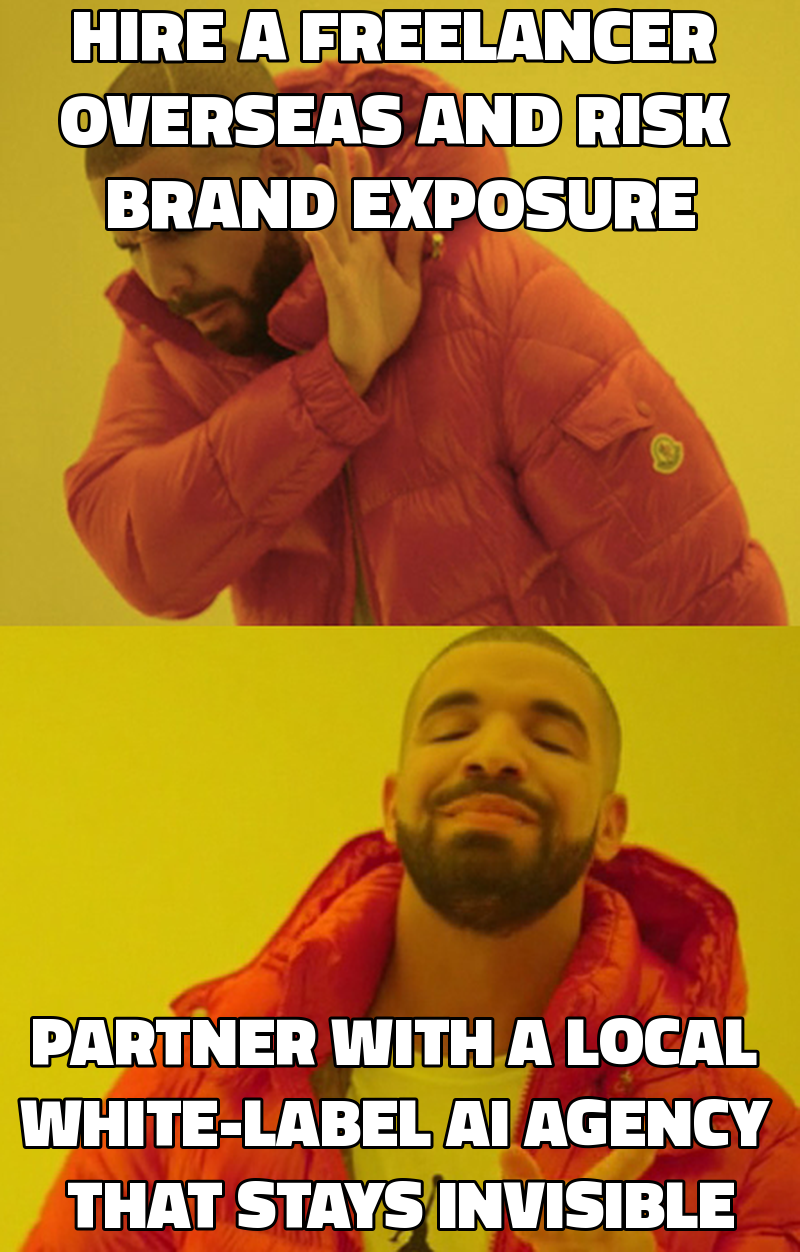
How do I start a geo-targeted search for an AI automation agency?
Most agency founders start with Google, but the query needs extra qualifiers to filter out offshore freelancers. Try these exact strings:
- "AI automation white label agency US"
- "AI development partner London"
- "Custom AI workflow agency Sydney"
- "White-label AI automation partner near me"
Add the city or state you operate in (e.g., "Boston AI automation partner") to force local results. The first page will usually contain:
- Boutique studios that advertise "white-label" or "partner" in the headline.
- Technology consultancies that list "AI automation" as a service.
- Agency directories such as Clutch, GoodFirms and Agency Spotter.
According to a 2023 Gartner survey, 68% of mid-size agencies plan to outsource AI development within 12 months, so the market is crowded but also competitive on reliability.
Which criteria matter most for marketing agencies with no in-house developers?
Your agency’s pain points are very specific: you lose revenue when a client asks for a chatbot, voice assistant or custom integration that you cannot build. The criteria below map directly to those pains.
| Criterion | Why it matters for a 5-15 person agency | Minimum acceptable level |
|---|---|---|
| White-label capability | Keeps your brand front-and-center, avoids client poaching | Signed NDA + non-circumvention clause |
| AI/automation expertise | Most client requests involve chatGPT-style bots, workflow automation, or voice AI | Proven projects in chatbots, Zapier-style automations, or custom ML pipelines |
| Fixed-scope pricing | Allows you to quote confidently without hidden overruns | Pilot price US$2,000-5,000 with clear deliverables |
| Timezone overlap | Reduces turnaround from weeks to days for US/UK/AU clients | 3-5 hour overlap with your core working hours |
| Dedicated account manager | One point of contact prevents the "ghost freelancer" problem | Single POC with SLA response <24h |
| Capacity limits | Low concurrency ensures the partner never becomes flaky | Max 3 active pilots per month |
A partner that checks all rows will align with the Silent Dev Arm model described in your ICP.
Where can I find vetted AI automation partners in the US, UK and AU?
The safest sources are industry-curated directories and community referrals.
- Clutch.co – AI Development Category – Filter by location (United States, United Kingdom, Australia) and look for the “White-label” badge.
- GoodFirms – Automation & AI Services – Use the “Partner” tag and sort by client reviews.
- Agency Spotter – AI & Machine Learning – Check the “Works with Agencies” filter.
- LinkedIn Groups – "AI for Marketing Agencies" and "White-Label Development Partners" have weekly posts from studios offering pilot discounts.
- Local tech meet-ups – In cities like San Francisco, London, and Sydney, meetup.com lists "AI for Business" events where boutique studios showcase case studies.
When you locate a studio, capture the following data in a spreadsheet:
- Company name
- City / country
- Core AI specialties (chatbot, voice, data pipelines)
- Pricing range for a 4-week pilot
- Client references (at least two recent SMB cases)
- NDA / non-circumvention status
How do I vet a potential partner quickly?
Your ICP includes a "10-second site test" – use it as the first filter.
Step 1 – Surface-level check (30 seconds)
- Open the homepage.
- Look for a clear "We build for agencies" tagline.
- Verify that "development" is not listed as a service on their own site – you want a gap, not a competitor.
If the site fails, discard.
Step 2 – Deep dive checklist (5 minutes)
| Item | How to verify |
|---|---|
| White-label claim | Search for case studies that show a partner logo hidden behind a client brand. |
| AI expertise | Look for blog posts, webinars, or GitHub repos about GPT-4 integration, Whisper voice, or custom Zapier connectors. |
| Pricing transparency | Request a one-pager with pilot cost; avoid partners that only give vague "custom quote". |
| Client roster | Confirm at least three SMB clients in the US/UK/AU – use LinkedIn to cross-check. |
| SLA & support | Ask for a response-time SLA; 24-hour reply is a good baseline. |
If any item is missing, ask for proof before moving to a call.
Step 3 – Live-need signal (call preparation)
Before the discovery call, check their recent activity:
- A job posting for a freelance developer on Upwork or Indeed.
- A LinkedIn post announcing a new client project that mentions "automation" or "custom platform".
- A public statement like "We partner with developers for custom builds". These signals indicate immediate demand, which is the best time to propose a pilot.
What should a pilot look like for a marketing agency?
A pilot must be low risk for both sides and prove the partner’s ability to stay invisible.
- Scope – One chatbot or one Zapier-style workflow that solves a specific client need (e.g., lead-capture bot on a landing page).
- Timeline – 2-4 weeks from kickoff to demo.
- Cost – US$2,500 flat fee, payable upfront. This matches the deal_shape minimum floor of US$1,500 and ensures the partner covers basic overhead.
- Deliverables – Prototype, source code (if you ever need it), and a short hand-over document.
- Success criteria – Client can launch the bot without additional development, and the agency can brand it as its own.
After a successful pilot, propose a retainer:
- US$1,500 per month for ~15-20 dev hours.
- Fixed-scope add-ons priced at 50-70% of the agency’s bill, as described in your deal shape.
How do I protect my brand while using a white-label partner?
The Silent Dev Arm model relies on three legal and operational safeguards.
- NDA with non-circumvention – Both parties sign a mutual NDA that explicitly forbids the partner from contacting your clients directly.
- Branding guidelines – Provide a style guide that the partner must follow for any UI, email templates or documentation.
- Project dashboard – Use a shared Google Sheet or a simple Notion board (no need for a full SaaS dashboard yet) where you track milestones, approvals and billing.
A quote from the 2022 McKinsey Global Institute notes that “clear contractual boundaries reduce partner churn by 30% for agencies that outsource development.”
Comparison of partner types you might encounter
| Partner type | Typical pricing | Turn-around speed | Branding control | Ideal for agencies of 5-15 staff |
|---|---|---|---|---|
| Offshore freelancer (India, Philippines) | $30-$60/hr | 1-2 weeks per feature | Low (often no NDA) | Poor – high risk of missed deadlines and brand leakage |
| Mid-size US dev shop (10-20 staff) | $100-$150/hr | 1-3 weeks per feature | Medium (may require co-branding) | Moderate – capacity may be high but cost erodes margin |
| Boutique white-label AI studio (US/UK/AU) | Fixed pilot $2-5k, retainer $1.5k/mo | 2-4 weeks for pilot, 1-2 weeks for small add-ons | High (explicit white-label clause) | Best – matches ICP, reliable, brand safe |
What are the red flags that a partner is not a good fit?
| Red flag | Explanation |
|---|---|
| Lists "development" as a service on their site | They are a competitor, not a partner |
| Shows a named dev partner on the footer | Gap already filled, no need for you |
| No client references from SMBs | Likely no experience with your target market |
| Operates out of a low-cost offshore geo | No wholesale margin, currency mismatch |
| More than 20 staff with an internal dev team | They already have capacity, procurement will be slow |
| Dormant social media (12+ months) | Not actively delivering, risk of missed deadlines |
How to structure the first outreach email
Subject: "White-label AI automation pilot for [Agency Name] – no brand exposure"
Body:
Hi [First Name],

I noticed that [Agency] recently announced a new client project involving a custom chatbot. We specialize in white-label AI builds for agencies like yours and keep the work completely under your brand.

Would you be open to a 2-week, $2,500 pilot that delivers a production-ready chatbot and a clear hand-over? No long-term commitment, and we sign an NDA with a non-circumvention clause.

If that sounds useful, let me know a quick 15-minute slot this week.

Best,
[Your Name]
Founder, Synthisia
Keep the email under 120 words, focus on the pilot, and mention the NDA to address the brand-exposure concern.
Frequently asked questions
How long does a typical pilot take?
A well-scoped pilot runs 2-4 weeks from kickoff to demo. The timeline includes discovery (1-2 days), development (10-15 days) and QA (2-3 days). This fits the fast-turnaround promise without over-promising.
What if the client wants the source code?
Under a white-label agreement you retain the source code and can host it yourself. The partner delivers the code in a zip file or a private GitHub repo with your branding.
Can I negotiate a lower pilot price?
The pilot price is set to cover the partner’s fixed overhead and guarantee priority. A discount is possible only if you commit to a 3-month retainer after a successful pilot.
How do I ensure the partner won’t poach my clients?
Include a non-circumvention clause in the NDA that penalises direct outreach to any client you introduced. Most reputable white-label studios accept this as standard.
What if the pilot fails to meet expectations?
Both parties agree on a success criteria checklist before work starts. If the criteria are not met, the partner refunds the pilot fee or offers a free remediation sprint.
Do I need to pay taxes on the partner’s invoice?
If the partner is based in the US, UK or AU and invoices in USD, you treat it as a normal service expense. Consult your accountant for local GST/VAT obligations.
How many pilots can I run simultaneously?
Because the Silent Dev Arm model caps concurrency at three active pilots, you should stagger starts to keep delivery quality high.
Is a retainer mandatory after the pilot?
No. The retainer is optional and only recommended once you have a predictable flow of AI projects. It provides a predictable monthly cost and priority scheduling. ```
AI automation
Have something to build?
Tell us what you're trying to ship. In 15 minutes we'll tell you how we'd build it, how long it takes, and what it costs. No pitch deck, no pressure.