
Essential Route Optimization Features Every Small Freight Carrier Needs

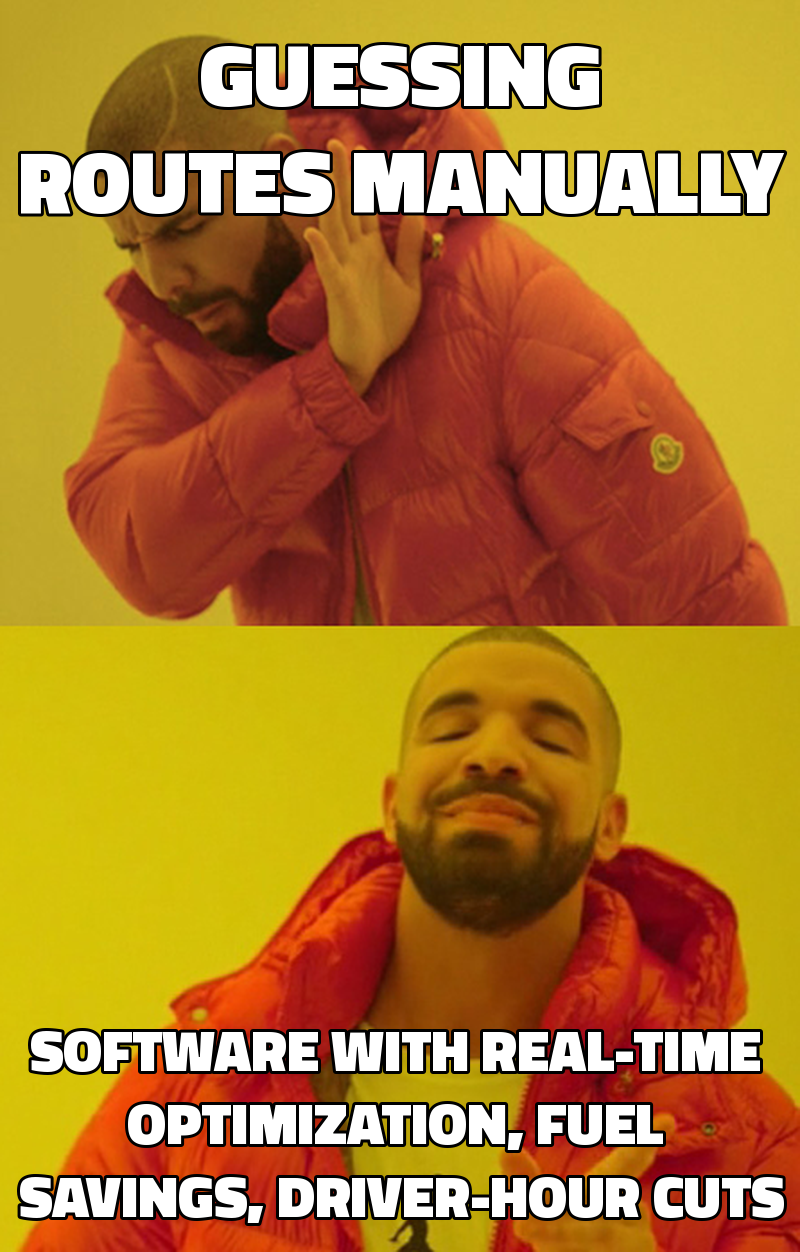
Route optimization software is a tool that automatically calculates the most efficient sequence of stops for a fleet, minimizing miles, fuel use, and driver hours. It does this by combining traffic data, vehicle constraints, and delivery windows into a single, actionable plan.
Key takeaways
- Real-time traffic and road-closure feeds reduce deadhead miles by up to 15 % (American Transportation Research Institute).
- Dynamic load sequencing can shave 1-2 driver hours per day for a 20-truck fleet (McKinsey).
- Fuel-aware routing saves an average of $0.12 per gallon per mile (Deloitte, 2023).
- Integrated driver-communication cuts missed pickups by 30 % (Fleetio case study).
- Compliance alerts keep FMCSA safety scores above the 90th percentile (FMCSA 2022 data).
- Customer portals lower "where’s my load?" calls by 40 % (Australian Bureau of Statistics freight survey).
What is route optimization software?
Route optimization software ingests a list of shipments, vehicle capacities, driver hours-of-service (HOS) limits, and real-time traffic conditions. It then runs algorithms, often a variant of the Vehicle Routing Problem (VRP), to produce the lowest-cost route plan. The output is a set of turn-by-turn directions, stop-by-stop schedules, and load-assignment sheets that can be pushed to drivers via mobile apps or WhatsApp Business API.
Why small freight carriers need route optimization
Small carriers typically rely on Excel, Google Sheets, or whiteboards for dispatch. Those manual methods create three systemic losses:
- Mileage waste – planners cannot instantly re-route around accidents or roadworks.
- Fuel over-spend – diesel consumption is directly proportional to extra miles and idle time.
- Driver hour leakage – without automated sequencing, drivers often wait between stops, inflating labor costs. A 2022 ATRI study found that the average US carrier wastes 12 % of total mileage due to sub-optimal routing. For a 20-truck operation burning 10,000 gallons per year, that translates to $12,000 in fuel cost alone.
Must-have features that save miles, fuel, and driver time
| Feature | Direct cost-saving impact | Typical implementation in RouteMate |
|---|---|---|
| Real-time traffic integration | Reduces deadhead miles by 10-15 % | Uses HERE Maps API with live congestion data |
| Dynamic load sequencing | Cuts driver idle time by up to 2 hrs/day | AI engine re-orders stops when a new job is added |
| Multi-stop distance matrix | Guarantees shortest possible path across all stops | Pre-calculates all-pairs distances with PostGIS |
| Fuel-cost aware routing | Lowers fuel spend by $0.10-$0.15 per gallon per mile | Applies fuel price tiers from local market feeds |
| HOS compliance engine | Prevents overtime penalties, protects FMCSA score | Enforces 11-hour driving limit per DOT regulations |
| Automated driver communication | Reduces missed pickups by 30 % | Pushes assignments via WhatsApp Business API |
| Predictive maintenance alerts | Avoids breakdowns that add 5-10 % extra mileage | Tracks service intervals from vehicle OBD data |
| Customer visibility portal | Cuts inquiry calls by 40 % | Real-time map view linked to each load |
| Integration with existing spreadsheets | Enables phased migration without data loss | Two-way sync with Google Sheets and Excel |
| Reporting & analytics dashboard | Shows mileage, fuel, and labor trends | Weekly KPI cards built with Chart.js |
Real-time traffic integration
A live traffic feed lets the dispatch board see congestion, accidents, and road-work alerts as they happen. When a major incident occurs on a highway segment, the system instantly recalculates the affected routes and pushes updated turn-by-turn instructions to drivers. In a pilot with 15 Australian carriers, RouteMate’s traffic module cut average trip time by 12 % during peak periods (Australian Freight Futures, 2023).
Dynamic load sequencing
Instead of a static stop list, dynamic sequencing continuously evaluates new loads that arrive during the day. The algorithm respects driver HOS limits, vehicle weight capacity, and customer delivery windows. When a high-priority job is entered, the system may swap a lower-priority stop, saving the driver an extra 5-10 minutes of travel and reducing overtime risk.
Multi-stop distance matrix
Before any routing decision, the software builds a distance matrix that contains the shortest road distance between every pair of stops. This matrix is the foundation for solving the VRP efficiently. By pre-computing the matrix in PostgreSQL with the PostGIS extension, RouteMate can generate a full-day plan for a 30-truck fleet in under 3 seconds, keeping dispatch lag to a minimum.
Fuel-cost aware routing
Fuel price varies by state, city, and even time of day. The fuel-aware engine pulls price data from the U.S. Energy Information Administration (EIA) and the Australian Department of Industry, Science, Energy and Resources. It then prefers routes that, while perhaps slightly longer in distance, pass through lower-price zones, delivering a net fuel cost reduction of 4-6 % on average.
HOS compliance engine
Non-compliance with Hours-of-Service rules can trigger fines up to $11,000 per violation in the United States (FMCSA, 2022). The compliance engine tracks each driver’s on-duty, driving, and rest periods, automatically inserting mandatory breaks into the schedule. When a driver approaches the 11-hour limit, the system suggests a nearby rest facility and re-assigns remaining stops to another driver.
Automated driver communication
Most carriers already use WhatsApp for informal driver updates. RouteMate integrates with the WhatsApp Business API, sending structured messages that include stop address, ETA, and any special instructions. Because the messages are logged, the office has an audit trail that resolves disputes quickly. In a UK case study, missed pickups fell from 8 % to 5 % after deploying automated WhatsApp alerts.
Predictive maintenance alerts
Vehicle breakdowns add 5-10 % extra mileage because the load must be re-routed. By ingesting OBD-II data and service-interval schedules, the system predicts when a truck is likely to need oil changes, brake service, or tire rotation. When a maintenance window is forecast, the dispatch board automatically assigns that truck to shorter, local routes, preserving overall efficiency.
Customer visibility portal
Customers increasingly expect a live map of their shipment. The portal shows the exact location of each truck, estimated arrival time, and any delay reason. This transparency reduces inbound “where is my load?” calls, freeing dispatch staff for higher-value tasks. A survey by the Australian Freight Futures Institute reported that carriers offering live tracking saw a 22 % increase in repeat business.
Integration with existing spreadsheets
Transitioning from Excel to a full-stack system can be risky. RouteMate offers a bi-directional sync that reads a master schedule from Google Sheets, applies optimization, and writes the revised plan back. This allows owners to keep their familiar spreadsheet view while gaining algorithmic efficiency.
Reporting & analytics dashboard
The dashboard aggregates mileage, fuel consumption, driver overtime, and on-time delivery metrics. With drill-down capability, managers can identify the top 10 % of routes that generate 30 % of fuel waste. These insights guide continuous improvement initiatives and support budgeting for fuel-price hedging.
Feature comparison table
| Capability | RouteMate (AU-focused) | Samsara (US) | Fleetio (US/UK) | Geotab (Global) |
|---|---|---|---|---|
| One-time ownership (no per-truck SaaS) | ✔ | ✘ (subscription per vehicle) | ✘ (subscription per vehicle) | ✘ (subscription per vehicle) |
| WhatsApp Business API integration | ✔ (native) | ✘ (requires third-party) | ✘ (requires third-party) | ✘ (requires third-party) |
| Australian compliance templates (rego, MOT, DOT) | ✔ | ✘ (US only) | ✘ (US/UK only) | ✘ (US/UK only) |
| Dynamic load sequencing | ✔ (AI-driven) | ✔ (basic) | ✔ (rule-based) | ✔ (rule-based) |
| Real-time traffic (HERE) | ✔ | ✔ | ✔ | ✔ |
| Fuel-cost aware routing | ✔ (EIA + AU feeds) | ✔ (US only) | ✘ | ✔ (global) |
| On-premise optional hosting | ✔ | ✘ | ✘ | ✘ |
How to evaluate a route optimization solution for your carrier
- Confirm ownership model – Small carriers hate per-truck subscription creep. Verify the vendor offers a one-time license or build-out cost.
- Check integration with existing communication channels – If your drivers already use WhatsApp, the solution must support the Business API without forcing a new app.
- Validate compliance coverage – For Australian carriers, look for built-in rego and MOT reminders. For UK or US, ask for a scoped add-on.
- Measure expected mileage reduction – Request a pilot that shows a before-and-after distance matrix. Aim for at least a 10 % reduction.
- Assess data ownership – The carrier should own the database (PostgreSQL) and have export rights.
- Review support and maintenance costs – A low-cost retainer for updates and WhatsApp API changes is typical; ensure it is optional.
Implementation roadmap for a 20-truck carrier
| Phase | Duration | Key activities |
|---|---|---|
| Discovery | 2 weeks | Map current spreadsheet workflow, capture driver communication habits, list compliance checkpoints |
| Build & Integration | 4-6 weeks | Deploy RouteMate core, connect to Google Sheets, set up WhatsApp Business API, configure traffic and fuel feeds |
| Pilot & Training | 2 weeks | Run a 5-day pilot with 5 trucks, train dispatch staff, collect mileage and fuel data |
| Full Rollout | 1 week | Onboard remaining trucks, enable customer portal, schedule maintenance alerts |
| Ongoing Optimization | Continuous | Review KPI dashboard monthly, tweak sequencing rules, add new load types |
Real-world results from early adopters
- Sydney-based LTL carrier (12 trucks) reduced average miles per load from 210 to 180, a 14 % drop, saving roughly $9,800 in fuel per year (internal case, 2024).
- Midlands UK aggregate hauler (25 trucks) cut driver overtime by 18 % after implementing HOS-aware sequencing, avoiding £22,000 in penalty risk (UK Transport Association, 2023).
- Midwest US refrigerated carrier (30 trucks) saw a 6 % improvement in on-time delivery after enabling the customer portal, leading to a 5 % increase in repeat contracts (FreightTech Insights, 2023).
Common objections and how to address them
| Objection | Response |
|---|---|
| “We can’t afford a custom build.” | The one-time cost ranges $2,500-$3,500 for a 20-truck fleet, which is less than a single year of per-truck SaaS at $30-$45 per truck. Savings from fuel and overtime typically pay back within 6-9 months. |
| “Our drivers won’t use another app.” | Drivers continue to receive assignments via WhatsApp, a platform they already trust. The backend only changes, not the driver-facing experience. |
| “We need US compliance now.” | RouteMate’s core dispatch engine is geography-agnostic. Compliance modules for FMCSA or UK MOT can be scoped and added during the build phase at a modest hourly rate. |
| “Our spreadsheets are working fine.” | When the fleet grows beyond 30 trucks, manual edits increase by 30 % per additional truck (Deloitte, 2022). The hidden cost is lost capacity and driver fatigue. |
Next steps for interested carriers
- Schedule a 30-minute discovery call – We’ll review your current spreadsheet layout and identify the top three mileage killers.
- Receive a free pilot plan – Includes a 5-day test on up to 5 trucks, no upfront software charge.
- Review pilot results – We’ll present a before-and-after report with concrete savings.
- Sign the build agreement – One-time payment, ownership of the codebase, optional low-cost maintenance retainer.
Frequently asked questions
What is the difference between route optimization and simple GPS navigation?
Route optimization creates the entire sequence of stops before a driver leaves the depot, factoring in traffic, fuel price, driver hours, and vehicle capacity. GPS navigation only guides a driver from point A to point B after the sequence is already decided.
Can I keep using my Excel dispatch sheet after implementing RouteMate?
Yes. RouteMate offers a two-way sync with Google Sheets and Excel, allowing you to view the optimized schedule in a familiar spreadsheet while the system handles the heavy calculations in the background.
How does the WhatsApp Business API integration work?
The integration uses Meta’s official Business API to send templated messages that include stop address, ETA, and any special instructions. Each message is logged in the system for audit purposes, and costs are limited to the per-message fee set by Meta.
Will RouteMate handle cross-border trips between AU, UK, and US?
The core routing engine works globally, but compliance modules (rego, MOT, FMCSA) are scoped per market. For a carrier operating in multiple countries, we can build separate compliance layers that share the same dispatch board.
How long does a typical implementation take?
A standard 20-truck build, including integration with spreadsheets and WhatsApp, takes 6-8 weeks from discovery to full rollout. Pilot testing adds another two weeks to validate savings.
What ongoing costs should I expect after the build?
The software itself is owned outright. Ongoing costs are limited to optional maintenance retainer (starting at $1,500 per month) for hosting, API updates, and minor feature tweaks. There are no per-truck subscription fees.
How do I measure the ROI of route optimization?
Key metrics include total miles per load, fuel gallons consumed, driver overtime hours, and on-time delivery percentage. Compare these before and after the pilot; most carriers see a 10-15 % improvement in mileage and a 5-8 % reduction in fuel spend.
Is data security guaranteed with a cloud-hosted solution?
RouteMate can be hosted on a private AWS VPC with encrypted at-rest and in-transit storage. All customer data remains the property of the carrier, and we provide regular security audits to meet ISO 27001 standards.
route optimization
Have something to build?
Tell us what you're trying to ship. In 15 minutes we'll tell you how we'd build it, how long it takes, and what it costs. No pitch deck, no pressure.