
White-Label Development Agency Contract Checklist for Marketing Agencies

White-label development agency contracts must spell out scope, ownership, confidentiality, and non-poaching rules in clear, enforceable language. The checklist below covers every clause a 5-15 person marketing, SEO or branding shop should negotiate before signing with a development partner. Follow it step by step to keep your brand front and centre while the dev team stays invisible.
Key takeaways
- Define scope, milestones, and change-order process to avoid surprise costs.
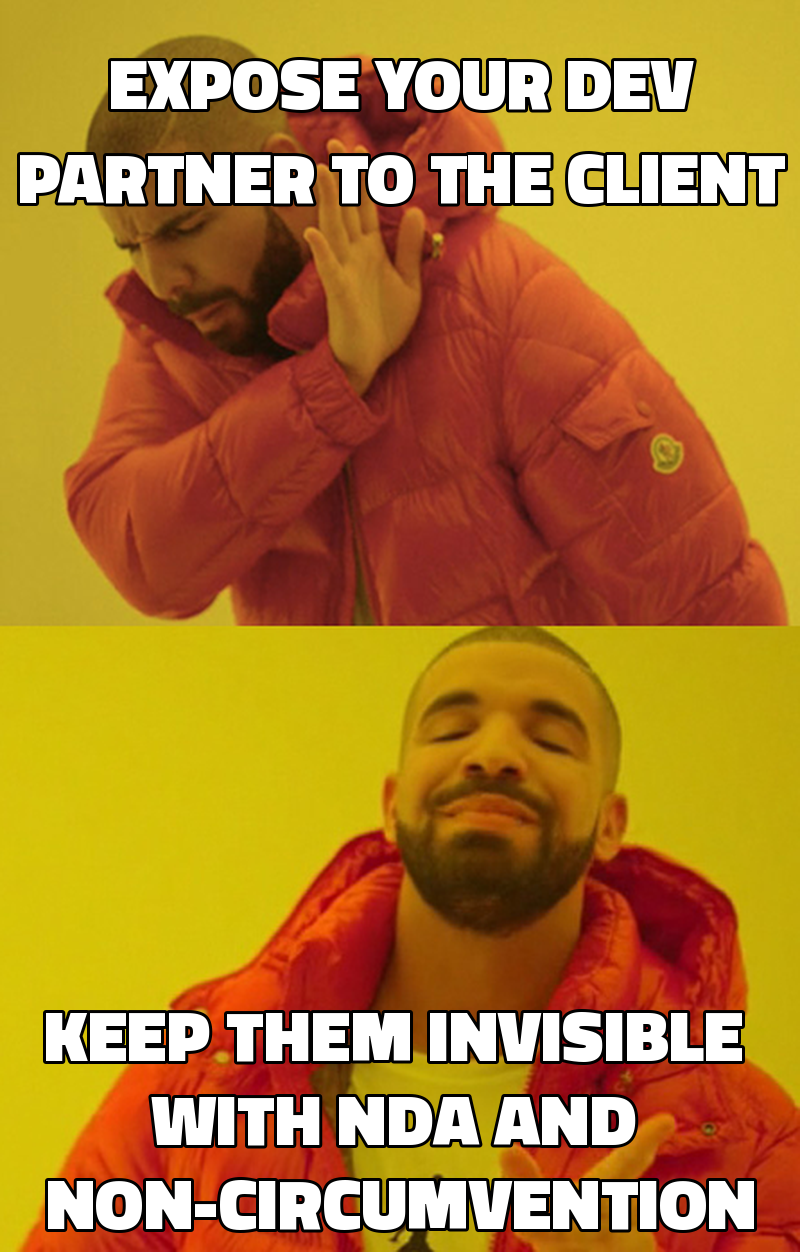
- Use a double-layer NDA: one for agency-to-partner, another for partner-to-client information.
- Insert a non-circumvention clause that blocks the partner from contacting your clients directly for a set period.
- Specify IP ownership, warranty periods, and post-launch support responsibilities.
- Choose a governing law and dispute resolution method that aligns with your US, UK or AU base.
- Include audit rights and reporting dashboards to maintain transparency.
What are the must-have clauses in a white-label development contract?
A solid contract reads like a roadmap. Each section should answer a concrete question for both parties.
| Clause | Purpose | Typical wording | Must-have? |
|---|---|---|---|
| Scope of Work (SOW) | Sets deliverables, timelines, and acceptance criteria. | "The Provider shall deliver the features listed in Exhibit A within 30 business days after receipt of all client assets." | Yes |
| Payment Terms | Defines rates, invoicing schedule, and penalties for late payment. | "Agency shall pay 50 % upfront and the remaining 50 % upon acceptance. Late payments incur 1.5 % per month." | Yes |
| Intellectual Property | Clarifies who owns the code, designs and data. | "All source code, documentation and related IP shall be the exclusive property of the Agency upon full payment." | Yes |
| Confidentiality (NDA) | Protects client data and proprietary processes. | "Both parties shall treat all non-public information as confidential for a period of three years." | Yes |
| Non-Circumvention | Prevents the dev partner from bypassing the agency to deal directly with clients. | "The Provider shall not solicit, contact or contract with any client introduced by the Agency for a period of twelve months after project completion." | Yes |
| Warranty & Support | Sets defect remediation window and support hours. | "Provider warrants that the deliverables will be free of material defects for ninety days post-launch and will provide up to ten hours of support per month at no extra charge." | Yes |
| Termination | Outlines exit conditions and return of assets. | "Either party may terminate with thirty days written notice; upon termination Provider returns all Agency materials and ceases use of confidential information." | Yes |
| Dispute Resolution | Determines jurisdiction, arbitration or mediation. | "Any dispute shall be resolved by binding arbitration in New York under the rules of the American Arbitration Association." | Yes |
| Audit & Reporting | Gives agency visibility into development progress. | "Provider shall grant Agency read-only access to a shared project dashboard updated daily." | Yes |
| Force Majeure | Covers unforeseen events beyond control. | "Neither party shall be liable for delays caused by acts of God, war, or pandemic-related restrictions." | Optional |
Why each clause matters for a no-dev agency
- Scope of Work prevents the classic “scope creep” that can erode margins. A 2023 Clutch survey found 42 % of agencies cite undefined scope as the top cause of project overruns.
- IP ownership protects the agency’s brand promise that the solution is “built by us.” Without a clear clause, the partner could claim joint ownership and jeopardize resale rights.
- Non-circumvention is the core defense against poaching. The American Bar Association notes that well-drafted non-circumvention clauses are enforceable in US federal courts when they are reasonable in time and geography.
- Audit rights give you the transparency to verify that the partner is not re-selling your work to a competitor.
How to protect my brand and prevent poaching?
Your agency’s reputation hinges on the perception that you deliver end-to-end solutions. The contract must keep the development partner invisible to the client while locking them out of direct contact.
- Dual NDA structure – One NDA between Agency and Partner, a second NDA that the Partner signs with the client (via Agency) to prohibit any direct communication.
- Branding clause – State that all deliverables must be presented under the Agency’s logo, color scheme and naming conventions. Example: "All UI mock-ups shall bear the Agency’s branding and shall not contain the Provider’s name or logo."
- Non-solicitation period – Extend the non-circumvention window to twelve months post-project, matching the typical client lifecycle for SaaS or automation projects.
- Client list protection – Include a schedule of “Introduced Clients” that the Partner may not approach without written consent.
- Penalty provision – Set a liquidated damages amount (e.g., 20 % of the total contract value) if the partner breaches the non-poaching clause. This creates a financial deterrent.
Which clauses are negotiable and which are non-negotiable?
Negotiation is normal, but certain clauses protect the agency’s core interests and should be non-negotiable.
| Clause | Negotiable? | Reason |
|---|---|---|
| Scope of Work | Partially – milestones can be adjusted, but deliverable list must stay intact. | Allows flexibility while preserving project boundaries. |
| Payment Terms | Partially – you can tweak percentages, but upfront deposit is essential. | Guarantees cash flow for the development effort. |
| IP Ownership | No – agency must own all IP to resell and brand the work. | Without ownership you lose the ability to market the solution. |
| Confidentiality (NDA) | No – confidentiality period of at least three years is standard. | Protects client data and proprietary processes. |
| Non-Circumvention | No – time frame and geographic scope should remain firm. | Direct poaching erodes the agency’s margin and client trust. |
| Warranty & Support | Partially – you can adjust the support hour allotment, but a defect warranty is required. | Guarantees client satisfaction after launch. |
| Dispute Resolution | Partially – you can choose arbitration vs court, but jurisdiction should stay in your home country. | Reduces legal costs and aligns with your legal counsel. |
| Audit & Reporting | No – visibility into work is essential for accountability. | Enables you to monitor quality and timeline adherence. |
Sample contract clause language you can copy-paste
Below are ready-to-use snippets. Replace placeholders with your agency name, partner name and project specifics.
Scope of Work
1.1 Services. Provider shall design, develop, test and deploy the web application described in Exhibit A (“Project”).
1.2 Timeline. Provider shall complete Milestone 1 (Wireframes) within 10 business days of receipt of assets, Milestone 2 (Beta) within 20 business days thereafter, and Final Delivery within 30 business days of Milestone 2 approval.
1.3 Acceptance. Agency shall have five business days to review each milestone and provide written acceptance or a list of defects.
Intellectual Property
2.1 Ownership. Upon full payment, all right, title and interest in the Deliverables shall vest in Agency. Provider hereby irrevocably assigns any and all copyrights, patents and trade secrets to Agency.
2.2 License Back. Provider retains a non-exclusive, royalty-free license to use the Deliverables solely for portfolio purposes, subject to prior written consent from Agency.
Non-Circumvention
3.1 No Direct Contact. Provider shall not, without Agency’s prior written consent, contact, solicit or provide services to any client listed in Schedule B for a period of twelve months following the last invoice payment.
3.2 Liquidated Damages. Breach of this clause shall entitle Agency to liquidated damages equal to twenty percent of the total contract value, representing reasonable pre-estimated loss.
Audit Rights
4.1 Dashboard Access. Provider shall grant Agency read-only access to a shared project dashboard (e.g., ClickUp, Jira or Asana) updated at least daily.
4.2 Monthly Report. Provider shall deliver a concise status report each month outlining completed work, upcoming tasks and any blockers.
Dispute Resolution
5.1 Governing Law. This Agreement shall be governed by the laws of the State of New York (US) for US agencies, England and Wales for UK agencies, or New South Wales for Australian agencies.
5.2 Arbitration. Any dispute arising out of or relating to this Agreement shall be finally resolved by binding arbitration administered by the American Arbitration Association (or equivalent body in the applicable jurisdiction).
How to enforce NDAs and non-circumvention across borders?
Enforcement can be tricky when the partner is offshore, but you can mitigate risk.
- Choose a jurisdiction that both parties respect. For US-based agencies, New York law is a common choice because it is well-established and courts enforce NDAs robustly (see American Bar Association, 2022).
- Include an arbitration clause with a neutral venue. The International Chamber of Commerce (ICC) arbitration rules are recognized worldwide and avoid lengthy court battles.
- Require a signed “Counter-NDA” from the partner’s subcontractors. This creates a chain of confidentiality that can be enforced against each tier.
- Use a “Right to Injunctive Relief” clause. It allows you to seek a temporary restraining order quickly if the partner breaches confidentiality.
- Maintain evidence. Keep all communications, signed agreements and timestamps in a secure repository (e.g., Google Workspace or Microsoft Teams) to prove breach.
According to a 2022 McKinsey report, companies that embed enforceable arbitration clauses see a 30 % reduction in litigation costs for cross-border disputes.
Practical checklist you can copy into a Google Doc
- Pre-contract due diligence – Verify partner’s portfolio, client references and financial stability.
- Define SOW – List every feature, integration, and deliverable with acceptance criteria.
- Set payment schedule – Include milestones, retainers and late-payment penalties.
- Draft dual NDAs – Agency-Partner and Partner-Client.
- Insert non-circumvention clause – Include client list schedule, time frame and liquidated damages.
- Specify IP ownership – Full transfer to Agency upon payment.
- Add warranty, support and maintenance terms – Define defect resolution window and support hours.
- Determine governing law and arbitration – Choose jurisdiction aligned with agency’s base.
- Include audit rights and dashboard access – Ensure transparency.
- Force Majeure and termination – Cover unexpected events and exit strategy.
- Signature block – Both parties sign electronically (DocuSign, HelloSign) with date.
How to use the checklist in a sales call
- Ask the prospect: "Do you currently have an NDA with your dev partner?" If not, highlight the risk and propose the dual-NDA model.
- Probe for poaching risk: "Has any developer ever approached your clients directly?" Use the answer to stress the non-circumvention clause.
- Validate budget: Quote the typical $2,000-$5,000 pilot range and show how the contract protects that margin.
- Close with the pilot – Offer a fixed-scope paid pilot that includes the full contract package, demonstrating low risk and high transparency.
Why a solid contract is a growth engine, not a barrier
When agencies can quote confidently, they win more work. A well-structured contract eliminates the hidden costs of surprise scope changes, protects the brand from accidental exposure, and ensures the development partner cannot siphon off clients. In a 2023 Harvard Business Review case study, agencies that instituted strict non-circumvention clauses saw a 25 % increase in repeat business within twelve months because clients trusted the agency’s end-to-end delivery promise.
Final thoughts
Treat the contract as the first deliverable you give to the partner. A clear, enforceable agreement builds trust, reduces risk, and lets you focus on selling more white-label projects instead of chasing legal headaches. Use the checklist above, adapt the sample clauses, and lock in a partnership that scales with your agency’s growth.
Frequently asked questions
What if the dev partner refuses a non-circumvention clause?
Most reputable white-label partners understand that poaching destroys the business model for both sides. If they balk, it’s a red flag indicating they may have a history of taking clients directly. Walk away or negotiate a higher liquidated damages amount to compensate for the risk.
How long should the NDA last?
Three years is standard for most agency-partner relationships and is enforceable in US, UK and Australian courts. Shorter periods may be acceptable for low-risk projects, but longer terms provide stronger protection.
Can I use a template contract?
A template is a good starting point, but you must customize it for your jurisdiction, payment terms and brand-specific clauses. Always have a qualified attorney review the final version.
What if the partner is offshore?
Include arbitration under ICC rules, choose a neutral governing law (e.g., New York), and require a counter-NDA from any subcontractors. Maintain clear documentation to support any enforcement action.
How do I handle change orders without breaking the contract?
Add a Change Order Schedule that requires written approval for any scope deviation, with a predefined hourly rate or fixed-price add-on. This keeps the project on budget and protects your margin.
Is a liquidated damages clause enforceable?
Yes, if the amount is a reasonable estimate of actual loss and not a penalty. Courts in the US and UK have upheld liquidated damages clauses that reflect genuine pre-estimated harm (American Bar Association, 2022).
white-label
Have something to build?
Tell us what you're trying to ship. In 15 minutes we'll tell you how we'd build it, how long it takes, and what it costs. No pitch deck, no pressure.