
Choosing a White-Label WordPress Agency: 5 Vetting Criteria for Marketing Firms

White-label WordPress development agency is a partner that builds custom WordPress sites, plugins, and integrations under your agency’s brand while you keep the client relationship and margin. It lets founders of 5-15 person marketing, SEO, branding or social agencies answer more client requests without hiring a full-time developer.
Key takeaways
- Look for proven WordPress expertise, not just a list of services.
- Verify a single accountable point of contact and documented SLA.
- Test the partner with a low-risk paid pilot before committing to larger builds.
- Ensure NDA, non-circumvent and brand-invisibility clauses are standard.
- Compare pricing structure, turnaround time and post-pilot support.
- Watch for red flags such as offshore-only teams, hidden subcontractors or lack of portfolio.
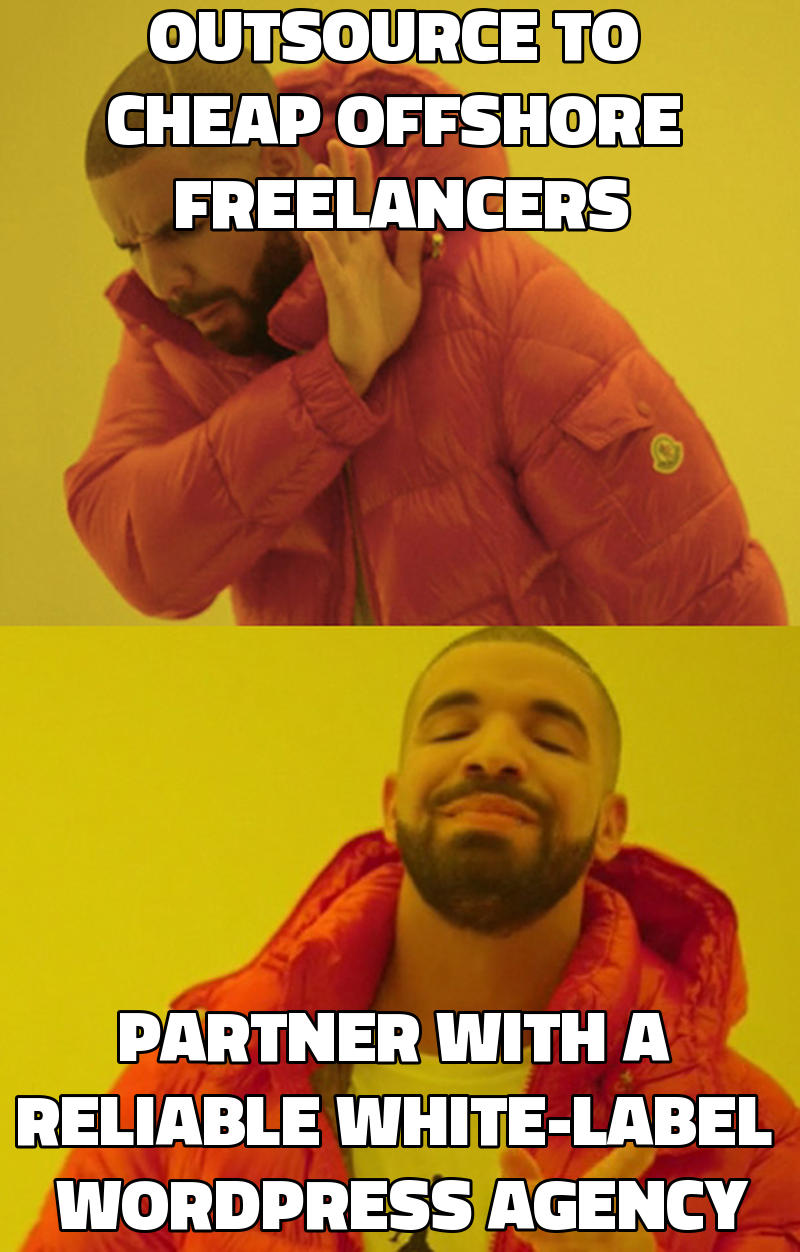
What is a white-label WordPress development agency?
A white-label WordPress development agency delivers fully coded WordPress solutions, custom themes, plugins, e-commerce stores, AI chatbots, voice assistants and API integrations, under the hiring agency’s brand. The client never sees the developer’s name, and the hiring agency invoices the client at its own rate. This model is common in the United States, United Kingdom and Australia where agencies charge USD or GBP and need a reliable technical back-end.
According to Clutch, 42% of small marketing agencies outsource development work, and 68% of those say reliability is the top factor when choosing a partner. The white-label model removes the need for a dedicated in-house engineer while preserving the agency’s brand promise.
Why agency owners need a vetted partner
- Revenue protection – Turning away a $3,000-$5,000 WordPress build means losing the client and future upsell opportunities. A vetted partner lets you say yes.
- Brand safety – Clients often fear that their project will be handed off to an unknown freelancer. A partner that signs NDA and non-circumvent agreements keeps your brand front and centre.
- Predictable delivery – Agencies with no dev staff struggle to estimate timelines. A partner with a documented turnaround band (e.g., 2-3 weeks for a fixed-scope site) reduces scope creep.
- Specialized capabilities – AI-driven chatbots, voice-activated navigation and custom back-ends are beyond the reach of most no-code shops. A white-label partner that specializes in these areas creates a competitive edge.
5 essential vetting criteria
| Criterion | What to ask | Why it matters |
|---|---|---|
| Proven WordPress depth | Request case studies of custom themes, plugins, and integrations built in the last 12 months. Ask for live URLs or staging access. | Demonstrates technical ability beyond template tweaks. |
| Single point of accountability | Identify the project manager or delivery director who will own the build from kickoff to launch. | Reduces the “ghosting” risk that plagues offshore freelancers. |
| Fixed-scope pilot process | Propose a $1,500-$2,000 pilot with a clear scope, deliverables and deadline. | Allows you to test quality, communication and speed before larger contracts. |
| SLA and turnaround guarantees | Ask for a written SLA that defines response time, bug-fix window and overall delivery window (e.g., 10-15 business days for a standard site). | Sets expectations and provides leverage if deadlines slip. |
| Brand-invisibility clause | Confirm they will sign an NDA and a non-circumvent agreement that prohibits them from contacting your client directly. | Protects your margin and prevents poaching. |
1. Portfolio depth and relevance
A solid portfolio should include at least three recent projects that match the type of work you sell, e.g., a SaaS landing page with custom authentication, a WooCommerce store with AI product recommendations, or a voice-enabled site using Google Assistant. Look for screenshots, client testimonials and, if possible, a brief technical write-up that mentions the stack (PHP 8, Gutenberg blocks, REST API, etc.).
2. Communication and project management tools
Ask which collaboration platform they use. Preferred tools for agencies in the US/UK/AU include:
- Asana or Monday.com for task tracking.
- Slack for real-time updates.
- GitHub or GitLab for version control.
- Client-facing dashboard (a simple shared view built in Notion or Airtable) so you can show progress without building a full SaaS portal. A partner that already integrates with these tools reduces onboarding friction.
3. Technical stack alignment
Your agency may sell AI automation. Verify the partner can work with:
- OpenAI API for chatbots.
- Dialogflow or Amazon Lex for voice assistants.
- Zapier or Make.com for low-code workflow glue.
- Custom PHP or Node.js micro-services for back-end logic. If they only do drag-and-drop page builders, they will not meet your AI/voice requirements.
4. Pricing transparency
The typical wholesale rate for a $2,500-$4,000 WordPress build is 55%-65% of the agency’s bill. According to a 2023 report from the Agency Management Institute, agencies that keep a 60% margin on outsourced dev work see a 12% higher profit margin overall. Ask for a pricing sheet that outlines:
- Fixed-scope project rates.
- Hourly overflow rates (if any).
- Retainer pricing for ongoing escalation (e.g., $1,500 per month for 15-20 dev hours).
5. Support and post-launch maintenance
A reliable partner offers a 30-day bug-fix window included in the project price and optional monthly maintenance. Ask whether they provide:
- Security patches for WordPress core and plugins.
- Performance monitoring (e.g., New Relic or GTmetrix reports).
- Content migration assistance. These services reduce the chance of a client seeing a broken site after launch.
How to run a quick pilot with a new partner
- Define a narrow scope – Choose a single deliverable such as a custom landing page with a chatbot widget.
- Set a fixed price – $1,500-$2,000 is enough to cover design, development and a short QA cycle.
- Agree on milestones – 30% upfront, 40% at staging, 30% on launch.
- Use a shared project board – Create a board in Asana, invite the partner’s project manager, and set due dates.
- Measure outcomes – Track time taken, number of revisions, communication latency and client satisfaction.
- Decision point – If the pilot meets SLA, move to a larger build and discuss a retainer. If not, politely decline and keep the partner on a watch list.
Comparison: White-label agency vs freelance vs offshore shop
| Option | Cost per project | Typical turnaround | Brand visibility | Risk of missed deadlines |
|---|---|---|---|---|
| White-label agency (US/UK/AU) | 55-65% of client bill | 10-15 business days for standard site | Fully invisible, NDA standard | Low – dedicated account manager |
| Independent freelancer (global) | 45-55% of client bill | 2-4 weeks, varies by availability | May need to disclose name | Medium – freelancer may quit mid-project |
| Offshore shop (India, Philippines) | 30-40% of client bill | 3-6 weeks, often longer for revisions | Usually visible, no NDA | High – language barriers, time-zone delays |
The table shows why a vetted white-label agency, even at a higher percentage, delivers more predictable revenue and protects your brand.
Red flags to drop immediately
- Development listed as a service on their website – they are not a gap-filler.
- Named partner logos on their site – the partnership is already occupied.
- No engineering staff and only no-code tools mentioned – they cannot handle custom back-ends.
- Offshore-only location with rates under $15/hr – wholesale margin disappears.
- No public portfolio or case studies – you cannot verify quality.
- No NDA or non-circumvent clause – brand risk is too high.
Contract and pricing basics
- Wholesale agreement – You pay the partner a fixed rate (e.g., $2,000) and invoice your client at $3,500-$4,500.
- Minimum floor – Do not accept projects below $1,500 after overhead; the partner’s cost alone will exceed profit.
- Retainer option – After two successful pilots, propose a $1,500/month retainer that guarantees 15-20 dev hours for escalation work.
- Escalation clause – Include a clause that allows you to add additional hours at a pre-agreed hourly rate if scope expands.
- Termination rights – Both parties can end the agreement with 30 days notice if SLA breaches occur three times.
How to protect your brand during the partnership
- NDA – Must cover all project details, client names and proprietary processes.
- Non-circumvent – Prevents the partner from approaching your client directly for a set period (usually 12 months).
- White-label clause – Explicitly states that all deliverables will be presented under your agency’s name.
- Watermarked prototypes – During the pilot, ask for a watermarked staging site to avoid accidental client exposure.
Real-world example: RouteMate success story
Synthisia partnered with a UK-based SEO agency that needed a custom dashboard for client reporting. The agency had no dev staff and was losing $8,000-$12,000 in potential revenue each month. After a $2,000 pilot that delivered a fully functional WordPress plugin with API integration to Google Data Studio, the agency signed a $1,500/month retainer. Within three months, they added $15,000 in new revenue and kept their brand front-and-center for all client interactions.
Checklist for the first conversation
- Verify headcount (5-15) and active client count.
- Confirm “development” is NOT on their services page.
- Ask for three recent WordPress case studies.
- Request the name of the dedicated project manager.
- Discuss pilot scope, price and timeline.
- Review NDA and non-circumvent template.
- Align on post-launch support expectations.
By following this checklist you can quickly filter out unsuitable partners and focus on those that will extend your service catalog without compromising brand integrity.
Frequently asked questions
How long should a pilot project last?
A pilot should be limited to a single deliverable that can be completed in 2-3 weeks. The scope should be narrow enough to test communication, quality and turnaround, but valuable enough to demonstrate ROI for both parties.
What if the white-label partner misses a deadline?
Your contract should include an SLA that defines a penalty, such as a 10% discount on the invoice for each missed business day beyond the agreed window. This protects you from downstream client disappointment.
Can I negotiate the wholesale rate?
Yes. Most agencies start at 55% of the client bill, but you can negotiate lower rates for volume commitments or longer-term retainers. Be prepared to show projected project volume to justify the discount.
How do I ensure the partner doesn’t poach my clients?
A non-circumvent clause that covers direct contact for 12 months and a strict NDA are standard. Enforce them by keeping all client communication routed through your agency’s email and Slack channels.
What tools should the partner use for version control?
GitHub or GitLab are industry standards. Ask for repository access during the pilot so you can audit code quality and commit frequency.
Is it worth paying more for a US-based partner versus an offshore one?
While offshore rates are lower, the hidden cost of missed deadlines, communication lag and brand risk often outweighs the savings. For agencies that sell premium services, a reliable US/UK/AU partner preserves margin and client trust.
How many partners should I work with at once?
Start with one or two vetted partners and cap the active count at three. Over-onboarding leads to the flaky-freelancer problem you are trying to avoid.
What if my client wants a feature outside WordPress?
A good white-label partner will have experience with headless WordPress, REST APIs and can hand off to a specialist for non-WordPress components while still keeping the brand invisible.
white‑label
Have something to build?
Tell us what you're trying to ship. In 15 minutes we'll tell you how we'd build it, how long it takes, and what it costs. No pitch deck, no pressure.