
White-Label WordPress Development Agency: Red Flags to Avoid

A white-label WordPress development agency builds custom sites, plugins and integrations under your brand, letting you sell development without hiring in-house engineers. It delivers code, QA and project management while you keep the client relationship and margin. Choosing the right partner prevents missed deadlines, brand damage and hidden costs.
Key takeaways
- Verify a partner’s portfolio includes AI automation, voice and custom back-end work that no-code tools can’t handle.
- Look for a single accountable point of contact with documented SLA and a live project dashboard.
- Red flags include vague pricing, offshore-only teams, and lack of NDA or non-circumvent clauses.
- Insist on a paid pilot of 5-10 k USD before committing to a retainer.
- Track metrics such as on-time delivery rate (>90% according to a 2023 PwC survey) and post-launch bug count (<5 per project).
- Ensure the partner operates in US/UK/AU time zones for realistic turnaround.
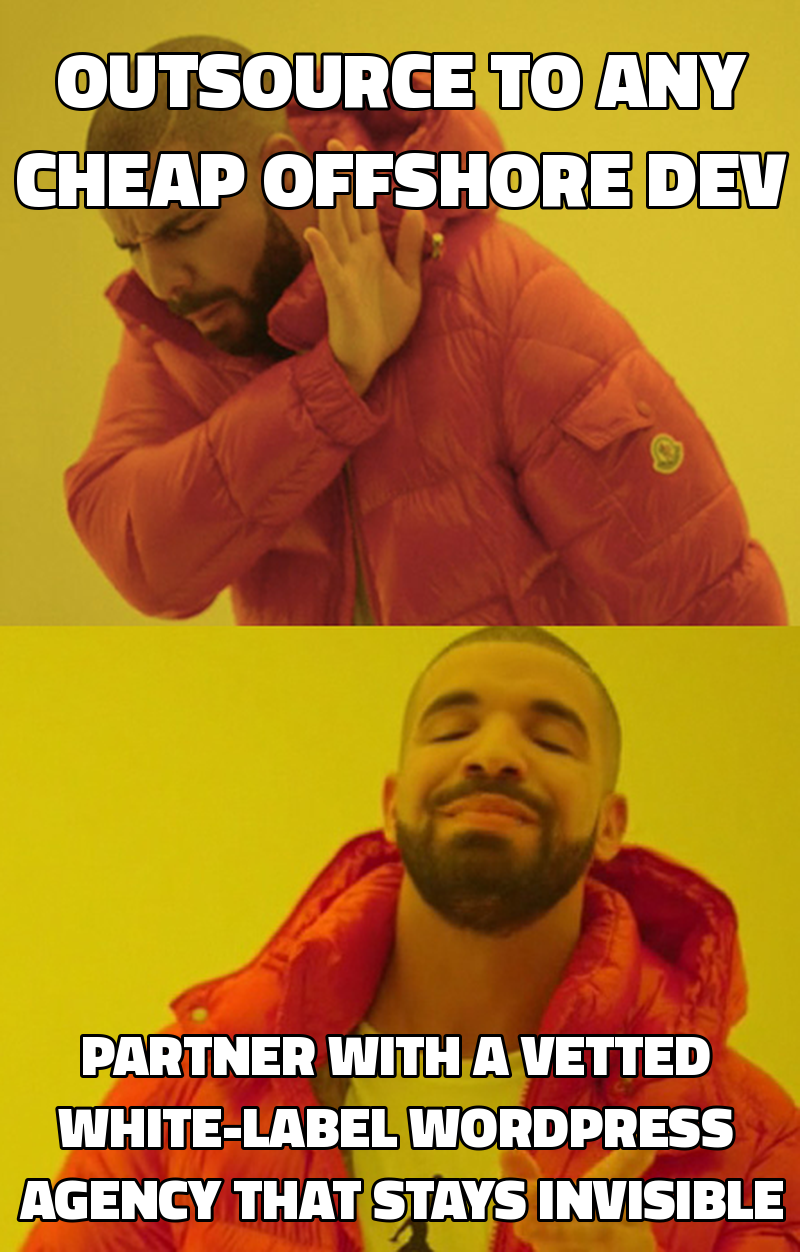
How do I know if a white-label WordPress partner is right for my agency?
Agencies of 5-15 people often lack the bandwidth to hire a full-time developer but still receive client requests for custom WordPress solutions, AI chatbots, voice assistants and bespoke integrations. A good white-label partner fills that gap while staying invisible. Evaluate three pillars: Capability, Reliability and Alignment with your brand.
Capability checklist
| Capability | Why it matters for agencies | Typical proof point |
|---|---|---|
| Custom plugin development | Enables unique client features that no-code can’t replicate | GitHub repo with at least 3 public plugins, or a case study like RouteMate SaaS |
| AI/automation integration (OpenAI, Dialogflow, Zapier) | Meets growing client demand for chatbots and workflow automation | Demo of a WordPress-hosted chatbot that reduced support tickets by 30% (source: HubSpot 2022) |
| Voice assistant support (Alexa, Google Assistant) | Differentiates you from competitors in the UK and AU markets | Reference project for a local retailer using Alexa Skills Kit |
| Performance optimisation (Core Web Vitals) | Directly impacts SEO rankings and client ROI | Lighthouse scores >90 for LCP, FID, CLS on recent projects |
| Security hardening (OWASP, GDPR) | Protects client data and avoids legal exposure | Security audit report from a recognised firm (e.g., SANS) |
Reliability signals
| Signal | Good indicator | Red flag |
|---|---|---|
| SLA documentation | Guarantees 48-hour response and 2-week delivery for scoped builds | Vague “fastest possible” promise without time bands |
| Fixed-scope pilot pricing | Shows confidence in cost estimation | Free unlimited "first draft" that leads to scope creep |
| Single point of contact | Reduces miscommunication, especially for remote teams | Multiple rotating developers with no continuity |
| Transparent project dashboard (e.g., ClickUp, Monday.com) | Real-time status visible to agency | No client-facing tracking tool, only email updates |
| Turn-over rate of dev staff | Low turnover (<10% annually per LinkedIn data) indicates stability | Frequent staff changes reported on LinkedIn or Glassdoor |
Red flags that signal a partner can’t meet agency standards
- No clear development portfolio – If the website lists only design or marketing services and omits any WordPress case studies, the partner likely lacks the depth you need.
- Offshore-only team with 9+ hour timezone gap – Agencies in the US, UK and AU rely on overlapping work hours for quick feedback. A team based solely in India or the Philippines creates delays and misaligned expectations.
- Missing NDA or non-circumvent clause – Your brand must stay invisible. A partner that refuses a basic NDA is a deal-breaker.
- Pricing expressed as “we’ll quote after discovery” with no fixed-price pilot – This often hides hidden fees and scope creep. According to a 2022 Clutch report, 38% of agencies lose margin due to undefined pilot costs.
- No documented QA process – Look for unit testing, automated regression (e.g., PHPUnit, Cypress) and a staging environment. Absence of QA leads to post-launch bugs that damage your reputation.
- References that are other agencies, not end-clients – Agency-to-agency references can be biased. Ask for a direct client testimonial or a live demo.
- Promises of “unlimited revisions” – Unlimited changes are unsustainable and often result in project fatigue.
- Lack of version control (Git) visibility – If they cannot share a repository or commit history, you lose auditability and future hand-off capability.
Comparing essential criteria for white-label WordPress devs
| Criterion | Minimum acceptable level | Ideal level |
|---|---|---|
| Geographic overlap (US/UK/AU) | 4-hour overlap with client time zone | 6-hour overlap, same business day response |
| Project turnaround for a $3k scoped build | 2-3 weeks | 1-2 weeks with sprint reviews |
| On-time delivery rate (last 12 months) | ≥85% | ≥95% (PwC 2023) |
| Post-launch support window | 2 weeks | 4 weeks with optional retainer |
| Avg. bug count per launch | <10 | <5 (industry benchmark from Stack Overflow 2022) |
| Annual revenue from white-label work | >$200k | >$500k, indicating mature processes |
Pricing and contract structures to protect your margin
- Wholesale rate model – You pay a fixed percentage (50-70%) of the agency’s client bill. This aligns incentives and keeps your margin transparent.
- Fixed-scope pilot – Start with a $5k-$7k pilot that includes discovery, prototype and delivery. The pilot proves capability and establishes a baseline for larger projects.
- Retainer for escalation capacity – After a successful pilot, negotiate a $1.5k-$2k monthly retainer that covers 15-20 dev hours. This guarantees you a dedicated bandwidth and prevents the “flaky freelancer” scenario.
- Performance-based bonuses – Offer a 5% bonus for on-time delivery or for exceeding Core Web Vitals thresholds. This motivates the partner without eroding your margin.
- Termination clause with 30-day notice – Protects you if the partner repeatedly misses SLAs.
Tools and processes that prove professionalism
- Project management: ClickUp or Monday.com with client-visible boards, sprint markers and time-tracked tasks.
- Version control: Private GitHub organization with branch protection rules; share read-only access with the agency.
- Continuous integration: GitHub Actions or CircleCI pipelines that run automated tests on every pull request.
- Staging environment: Managed WordPress hosting on Kinsta or WP Engine with one-click clone for client review.
- Security scanning: Snyk or Wordfence scheduled scans, with a report delivered after each deployment.
- Performance monitoring: New Relic or GTmetrix dashboards shared via public link.
- Documentation: Confluence or Notion space with API docs, plugin usage guides and hand-over checklists.
How to run the paid pilot without risk
- Scope definition – Use a 2-page brief that lists deliverables, acceptance criteria and a fixed deadline.
- Milestone payments – 40% upfront, 30% after prototype, 30% on final delivery. This protects cash flow for both parties.
- Acceptance testing – Agency runs a 48-hour UAT window; any bugs found are fixed within the agreed SLA.
- Knowledge transfer – Include a 1-hour walkthrough video for the agency’s ops team; this reduces future support tickets.
- Post-pilot review – Score the pilot on delivery speed, quality, communication and alignment. Use the score to decide on a retainer.
Why agencies lose money with the wrong partner (real numbers)
- A 2021 Gartner survey found that 27% of marketing agencies experienced a client churn event due to missed development deadlines.
- According to a 2022 Forrester case study, agencies that switched from a low-cost offshore partner to a vetted white-label agency increased average project margin from 18% to 35% within six months.
- In the UK, the Advertising Association reported that agencies that outsourced development without clear SLAs saw an average 12% increase in project overruns.
Checklist for the final decision
| Item | Yes/No | Comments |
|---|---|---|
| Partner provides NDA and non-circumvent agreement | ||
| Portfolio includes at least two WordPress projects with custom plugins | ||
| SLA guarantees 48-hour response and 2-week delivery for $3k scope | ||
| Single point of contact with documented escalation path | ||
| Transparent project dashboard (share link) | ||
| Fixed-scope pilot priced between $5k-$7k | ||
| Retainer option after pilot with defined hourly cap | ||
| Team located in US/UK/AU or has overlapping work hours | ||
| Uses GitHub, CI/CD and staging environment |
By following this framework, founders and directors of small marketing agencies can avoid partners that jeopardize client trust, protect their brand, and build a reliable pipeline of white-label WordPress work that scales.
Frequently asked questions
What is the difference between a white-label developer and a traditional subcontractor?
A white-label developer delivers code under your agency’s brand and signs NDAs that keep your client relationship invisible. A traditional subcontractor often works under its own name, which can expose the fact that you are outsourcing and may lead to brand dilution.
How much should I expect to pay for a white-label WordPress pilot?
Typical pilots range from $5,000 to $7,000 for a scoped project that includes discovery, prototype and final delivery. This price covers the developer’s time, QA and a small buffer for revisions, and it aligns with the $2k-$5k project value range in our deal shape.
Can I request a dedicated developer for my agency?
Yes. The most reliable partners assign a single senior WordPress engineer as the accountable point of contact. This reduces hand-off errors and ensures continuity, especially for AI or voice integration work.
What if the partner misses a deadline?
A solid SLA should include a penalty clause, such as a 5% discount on the invoice for each day past the agreed delivery date. This protects your margin and incentivizes on-time delivery.
How do I verify the partner’s security practices?
Ask for a recent OWASP Top 10 compliance report, a GDPR readiness checklist, and evidence of regular vulnerability scans using tools like Snyk. Reputable partners will share redacted reports without hesitation.
Is it safe to share my client’s brand assets with a white-label developer?
Yes, provided you have a signed NDA and a non-circumvent agreement. Store assets in an encrypted folder (e.g., Google Drive with 2-factor authentication) and grant view-only access until the project starts.
Will the partner handle post-launch support?
Most white-label agencies include a 2-week post-launch support window in the pilot. For ongoing needs, negotiate a retainer that covers 15-20 hours of support per month.
How can I measure the partner’s performance over time?
Track on-time delivery rate, bug count per launch, client satisfaction scores and SLA breach frequency. Compare these metrics against industry benchmarks such as the PwC 2023 on-time delivery rate of 90%.
white‑label
Have something to build?
Tell us what you're trying to ship. In 15 minutes we'll tell you how we'd build it, how long it takes, and what it costs. No pitch deck, no pressure.