
White-Label Casino Software Development: A Regulatory, Security & Integration Checklist for Agencies

White-label casino software development lets your agency deliver fully branded gambling platforms without hiring engineers. To succeed you must confirm that the partner holds a valid gaming licence, meets industry-standard security, and can integrate with your client’s payment, KYC and marketing stacks.
Key takeaways
- Verify the partner’s primary licence (Malta, Gibraltar, Curacao, UK) and ensure it covers the target market.
- Demand PCI-DSS, ISO-27001 and SOC 2 certifications plus regular penetration testing.
- Insist on documented APIs for payments, player wallets, KYC, CRM and analytics.
- Check the partner’s deployment model (cloud, on-premise, hybrid) matches your client’s latency and data-residency needs.
- Run a low-risk pilot with fixed scope, clear milestones and a SLA that includes uptime and incident response.
- Look for a single point of contact and a transparent project dashboard to keep your brand front-and-center.
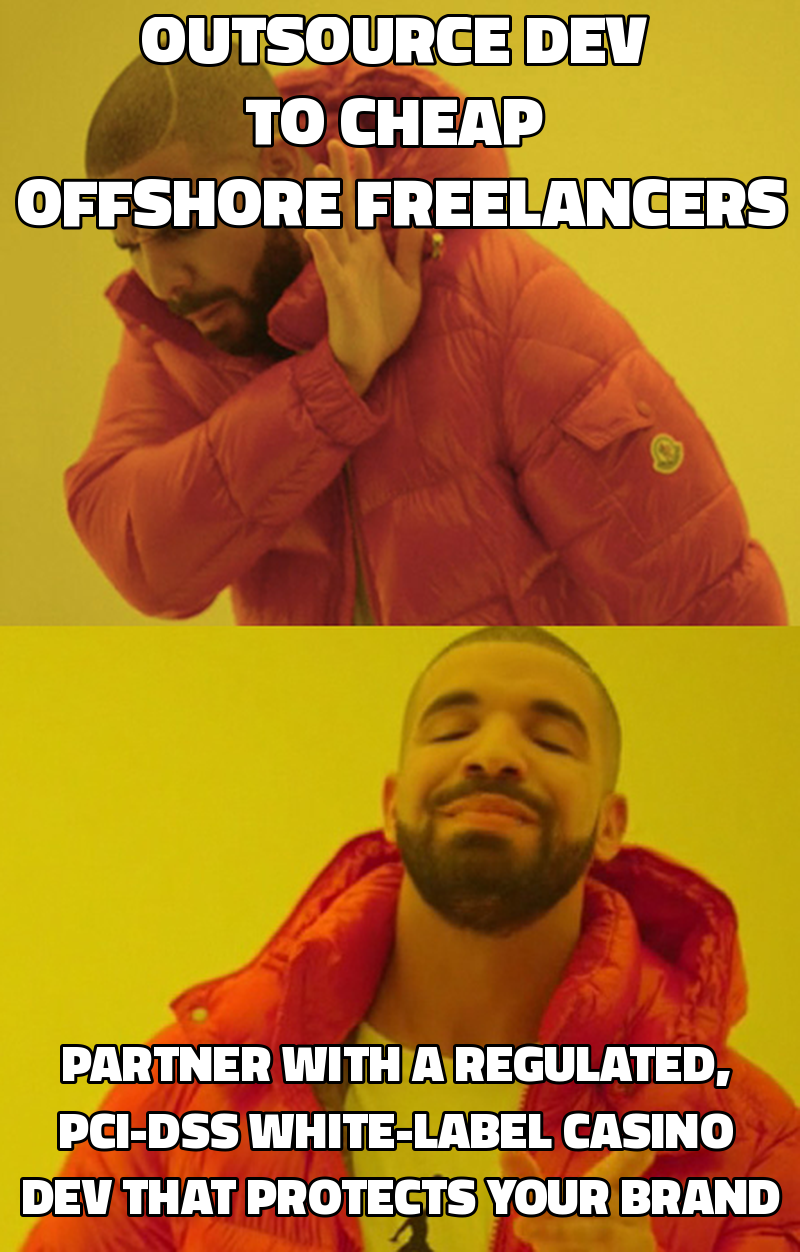
What is white-label casino software development and why does it matter for agencies?
Agencies that sell marketing, SEO or branding services often receive client requests for custom gambling portals, loyalty apps or AI-driven betting assistants. Building these in-house requires specialised knowledge of gaming law, payment processing and real-time odds feeds – expertise most small-to-mid-size agencies lack. A white-label partner provides a ready-made, fully licensed platform that the agency can brand as its own, allowing you to say yes to high-margin projects without expanding your payroll.
Regulatory compliance checklist
- Primary licence jurisdiction – Confirm the partner’s core licence and whether it is recognised in the client’s target market. For example, a Malta Gaming Authority (MGA) licence is accepted across the EU, while a UK Gambling Commission (UKGC) licence is mandatory for UK players.
- Scope of the licence – Some licences cover only sports betting, others include casino, poker and live dealer games. Verify the game types you need are covered.
- Geographic coverage – Ensure the partner can legally operate in the United States (e.g., New Jersey, Pennsylvania) if you have US clients. Look for state-specific licences or a partnership with a US-based operator.
- Compliance documentation – Request the latest compliance audit, AML/KYC policies and a copy of the licence certificate.
- Regulatory reporting – The partner should provide APIs or dashboards for real-time reporting to regulators (e.g., transaction logs, player activity).
Top casino licensing jurisdictions
| Jurisdiction | Typical licence fee (USD) | Minimum capital requirement | Player market reach |
|---|---|---|---|
| Malta Gaming Authority (MGA) | 35,000-70,000 per year | 1.25 M | EU, UK, Australia |
| UK Gambling Commission (UKGC) | 100,000-200,000 per year | 2 M | UK |
| Curacao eGaming | 20,000-30,000 per year | 500 K | Global (except US) |
| Gibraltar | 50,000-80,000 per year | 1 M | EU, UK |
| New Jersey Division of Gaming Enforcement (NJ DGE) | 50,000-100,000 per year | 1 M | US (NJ) |
Security standards checklist
- PCI-DSS compliance – Required for handling credit-card payments. Look for Level 1 certification if you expect > 300,000 transactions per year.
- ISO-27001 – Demonstrates a formal information-security management system.
- SOC 2 Type II – Shows operational controls over security, availability, processing integrity, confidentiality and privacy.
- Penetration testing – Quarterly third-party tests with a written remediation plan.
- Data encryption – AES-256 at rest and TLS 1.3 in transit for all player data.
- Fraud detection – Integrated machine-learning models for real-time risk scoring.
- Incident response SLA – Defined response time (e.g., 30 minutes for critical breaches) and communication protocol.
Security feature comparison
| Feature | Required | Recommended | Optional |
|---|---|---|---|
| PCI-DSS Level 1 | ✔ | ✔ | |
| ISO-27001 | ✔ | ✔ | |
| SOC 2 Type II | ✔ | ✔ | |
| AES-256 encryption | ✔ | ✔ | |
| TLS 1.3 | ✔ | ✔ | |
| Real-time fraud AI | ✔ | ✔ | |
| Bi-annual pen test | ✔ | ✔ | |
| DDoS mitigation service | ✔ | ✔ | |
| Blockchain audit trail | ✔ |
Integration & technology compatibility checklist
- API documentation – OpenAPI (Swagger) spec for payments, player wallets, game catalog, bonus engine and analytics.
- Payment gateway support – Stripe, PayPal, Worldpay, local e-wallets (e.g., Paytm for India). Verify tokenisation for PCI compliance.
- KYC/AML providers – Integration with Jumio, Onfido or Trulioo for identity verification.
- CRM & marketing stack – Ability to push player events to HubSpot, Marketo or custom data lakes via webhooks.
- Game provider SDKs – Compatibility with leading RNG providers such as NetEnt, Evolution Gaming, Pragmatic Play.
- Deployment model – Choose between AWS, Azure or private data centre. Confirm latency benchmarks for live dealer streams (< 150 ms round-trip).
- Versioning & rollback – Git-based release pipeline with blue-green deployment to minimise downtime.
- White-label branding assets – CSS/JS theming, custom domain support, email templates and logo replacement.
How to evaluate a partner’s development process
| Evaluation area | What to ask | Red flag |
|---|---|---|
| Project management | Do you use Scrum, Kanban or a hybrid? How are sprint reviews shared with the agency? | No defined methodology, ad-hoc updates only via email |
| Quality assurance | What % of code is covered by automated tests? Do you run regression suites on each release? | Manual testing only, no test coverage metrics |
| Documentation | Is there a living API portal with Swagger UI? Are change logs published for each build? | Out-of-date docs, missing version history |
| Support SLA | What are response times for critical vs non-critical tickets? | No SLA or vague “next business day” promise |
| Scaling plan | How does the platform handle traffic spikes (e.g., major sporting events)? | No auto-scaling, single-node architecture |
Pricing and contract considerations for agencies
- Wholesale rate vs retail markup – Typical partner wholesale rates range from 50 % to 70 % of the end-client invoice. Ensure the contract specifies a minimum floor of $1,500 per project to cover delivery costs.
- Fixed-scope pilot – Start with a $2,000-$5,000 pilot that includes a prototype, functional spec and one integration (e.g., payment). This proves capability and locks in the SLA.
- Retainer model – After a successful pilot, negotiate a monthly retainer of $1,500-$2,500 for 15-20 dev hours of overflow work.
- Termination clause – Include a 30-day notice period and a hand-over provision for source code and documentation if the partnership ends.
- Intellectual property – Confirm that all custom code is owned by the agency (or licensed exclusively) to protect your brand.
Red flags and disqualifiers to watch for
- No valid gaming licence or licence limited to jurisdictions you don’t serve.
- Absence of PCI-DSS, ISO-27001 or SOC 2 certifications.
- Generic “we build anything” pitch without a technical spec sheet.
- Lack of a dedicated account manager; you are routed to a generic sales inbox.
- Pricing based solely on “cheapest solution” without clear cost breakdown.
- No transparent project dashboard – you cannot track progress in real time.
- History of missed deadlines or public complaints on forums such as G2 or Trustpilot.
Running a low-risk pilot with a white-label partner
- Define scope – One game module (e.g., slots), one payment integration and basic player registration.
- Set milestones – Requirements gathering (2 days), prototype demo (5 days), QA sign-off (3 days), launch (2 days).
- Agree on SLA – 99.5 % uptime, 30-minute critical incident response, weekly status calls.
- Use a shared dashboard – Tools like ClickUp or Monday.com with a public view for the agency.
- Document acceptance criteria – Clear pass/fail conditions for each deliverable.
- Post-pilot review – Measure delivery speed, code quality, communication and compliance evidence. Decide whether to scale to a retainer.
Quick checklist for agency decision-makers
- Partner holds a licence in the client’s target market (MGA, UKGC, Curacao, etc.)
- PCI-DSS, ISO-27001 and SOC 2 certifications are current
- Penetration test report less than 6 months old
- API docs include Swagger spec for payments, KYC, CRM
- Deployment option meets latency and data-residency needs
- Fixed-scope pilot cost between $2k-$5k with clear milestones
- SLA includes 99.5 % uptime and 30-minute critical response
- Single point of contact and shared project dashboard
- Intellectual-property clause assigns code ownership to the agency
“Choosing the right white-label casino partner is less about price and more about regulatory legitimacy, security rigor and seamless integration.” – (adapted from a 2023 Malta Gaming Authority compliance guide)
Frequently asked questions
What licensing does a white-label casino partner need for US players?
A partner must hold a state licence for each jurisdiction (e.g., New Jersey Division of Gaming Enforcement, Pennsylvania Gaming Control Board) or operate through a tribal compact. A generic offshore licence like Curacao does not cover US players and can lead to regulatory penalties.
How can I verify a partner’s security certifications?
Request copies of the latest PCI-DSS Level 1 Attestation of Compliance, ISO-27001 certificate and SOC 2 Type II report. Verify the issuing auditor (e.g., BSI, Deloitte) and check the report date – it should be within the past 12 months.
What is a realistic turnaround time for a custom casino build?
For a fixed-scope pilot (one game, one payment gateway) most reputable partners deliver within 3-4 weeks. Larger multi-game portals with live-dealer integration typically require 8-12 weeks.
Can I brand the platform completely as my agency?
Yes, a true white-label partner provides CSS/JS theming, custom domain mapping and white-label email templates. Ensure the contract states that all branding assets are owned by your agency.
How do I protect my agency’s margin from partner poaching?
Include a non-circumvent clause and a minimum wholesale margin (e.g., 55 %). Use a shared dashboard that logs every request, making it harder for the partner to bypass you.
What ongoing support should I expect after launch?
Look for a support SLA that covers 24/7 incident response, regular patch updates (at least monthly), and a quarterly security audit. A retainer model often includes a set number of support hours per month.
Is it safe to store player data in the partner’s cloud?
Only if the partner’s cloud environment complies with GDPR, CCPA and the relevant gaming regulator’s data-residency rules. Verify that they use encrypted storage and have a documented data-breach notification process.
How do I measure the ROI of a white-label casino project?
Track metrics such as average revenue per user (ARPU), conversion rate from registration to first deposit, and churn after 30 days. Compare these against the agency’s margin after partner wholesale costs to calculate net profit.
white‑label
Have something to build?
Tell us what you're trying to ship. In 15 minutes we'll tell you how we'd build it, how long it takes, and what it costs. No pitch deck, no pressure.