
Key Factors for Choosing a US-Based White-Label Development Partner

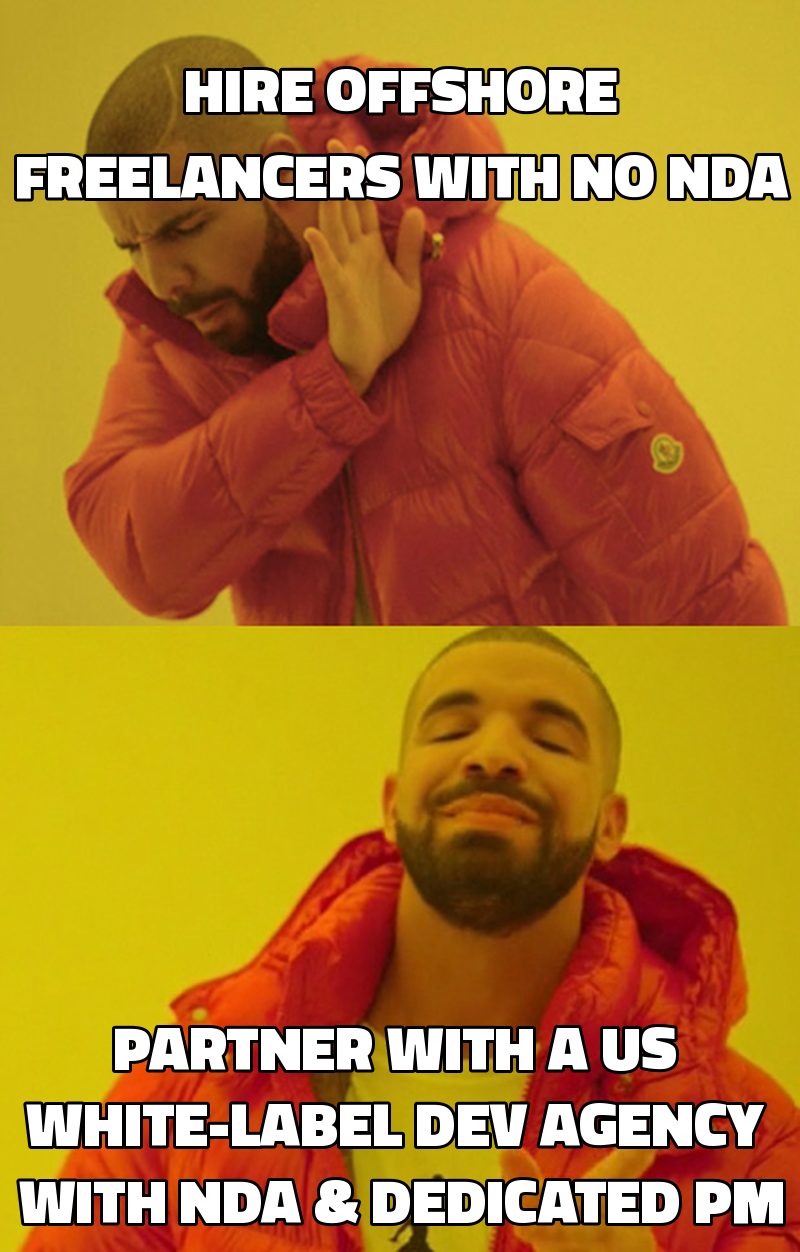
A US-based white-label development agency builds custom software, AI automation, voice apps and integrations under your agency’s brand, letting you keep the client relationship and margin while you avoid hiring in-house developers. The right partner delivers on time, protects your brand with strong NDAs, offers a support model that matches agency workflows and provides transparent pricing that scales with overflow demand.
Key takeaways
- Time-zone overlap of 3-6 hours enables real-time collaboration and predictable turn-arounds.
- A signed NDA and non-circumvent clause are table-stakes; enforceability matters less than clear breach penalties.
- Dedicated point of contact and shared project dashboard reduce mis-communication and keep agency leadership in the loop.
- Tiered pricing (fixed-scope pilot + retainer) protects margin and avoids surprise costs.
- US-based partners must comply with CCAPA, GDPR (when handling EU data) and have SOC 2 Type II or ISO 27001 certifications for data security.
- Look for proven AI/automation expertise – e.g., RouteMate, a production SaaS built by Synthisia, demonstrates capability.
What is a white-label development agency in the USA?
A white-label development agency is a third-party tech shop that creates custom code, APIs, chatbots, voice assistants and other digital products, then delivers them under the hiring agency’s brand. In the United States the relationship is typically governed by a master services agreement (MSA) that includes:
- Non-disclosure (NDA) – protects client ideas, data and the agency’s brand.
- Non-circumvent clause – prevents the partner from reaching the agency’s client directly.
- Service level agreement (SLA) – defines delivery windows, bug-fix windows and support hours.
- Pricing schedule – outlines pilot rates, wholesale margins and retainer options.
Because the partner operates in the same legal jurisdiction, enforcement of NDAs and SLAs is clearer than with offshore firms that sit in different legal systems.
Why does time-zone overlap matter for agency overflow work?
Agency projects often involve rapid feedback loops: a client asks for a new integration on Monday, the agency reviews on Tuesday, the developer needs clarification by Wednesday, and the client expects a demo by Friday. A partner located in the United States (Eastern, Central or Pacific time) overlaps with agencies in the US, UK and Australia enough to enable:
- Live Slack or Teams chats during core business hours.
- Same-day code reviews using GitHub pull-request comments.
- Weekly video stand-ups that fit into both parties’ calendars.
A 2023 Deloitte survey of 1,200 digital agencies found that 62 % cite time-zone mismatch as the top cause of missed deadlines, while only 18 % blame technical skill gaps. The same study notes that agencies with a US-based partner report a 27 % faster average delivery speed.
How strong should the NDA and non-circumvent clause be?
Legal enforceability of NDAs across borders can be tricky, but a well-crafted US agreement provides clear remedies:
| Clause | Typical language | Why it matters |
|---|---|---|
| Confidential Information | "All non-public information disclosed by either party shall be kept confidential for a period of three years." | |
| Guarantees protection of client concepts, especially AI prompts and voice-skill designs. | ||
| Non-Circumvent | "The Partner shall not directly solicit or contract with any client introduced by the Agency for a period of two years." | |
| Prevents the partner from poaching high-margin clients and protects the agency’s brand reputation. | ||
| Remedies | "Breach shall result in liquidated damages equal to 150 % of the contract value." | |
| Provides a financial deterrent that is enforceable in US courts. |
Even if a partner is unlikely to breach, the clause signals professionalism and reduces agency anxiety about brand exposure.
Which support model delivers reliability?
Agencies need a support structure that mirrors their own service delivery. The most effective model includes:
- Dedicated Project Manager (PM) – a single point of contact who owns the timeline, scope and quality. The PM runs weekly status calls, updates the shared dashboard and escalates blockers.
- Shared Project Dashboard – tools like ClickUp, Asana or a custom Notion page that show real-time status, sprint burndown and upcoming milestones.
- 24/7 Slack channel – for urgent bugs or quick clarifications, especially when the agency’s client is in a different time zone.
- Bi-weekly code reviews – using GitHub or GitLab, with automated CI pipelines (CircleCI, GitHub Actions) to catch regressions early.
- Post-delivery support – a 30-day bug-fix window included in the pilot, followed by optional ongoing support retainer.
A 2022 Gartner report on managed services found that organizations with a dedicated account manager experience 35 % fewer project overruns compared with those that rely on a generic help desk.
How does pricing structure affect agency margins?
Transparent pricing protects both parties. A typical US white-label partner uses a three-tier approach:
| Tier | Description | Typical range (USD) |
|---|---|---|
| Pilot | Fixed-scope proof of concept (1–2 weeks, up to 40 hrs). | $1,500-$3,000 |
| Project | Full-scope build (4-8 weeks, 120-250 hrs). | $5,000-$15,000 |
| Retainer | Ongoing escalation capacity (15-20 hrs/month). | $1,500-$2,500 per month |
The agency invoices its client at a markup of 50-70 % of the wholesale rate, preserving margin while staying competitive. Because the partner is US-based, the wholesale rate is higher than offshore but the reliability and brand protection justify the premium.
What certifications and compliance should you verify?
When the agency handles client data, especially for AI chatbots or voice assistants, security and privacy compliance are non-negotiable. Verify that the partner holds at least one of the following:
- SOC 2 Type II – demonstrates controls around data security, availability and confidentiality.
- ISO 27001 – international standard for information security management.
- CCPA compliance – required for any California resident data.
- GDPR compliance – if the agency serves EU-based clients.
A 2021 Ponemon Institute study showed that breaches cost an average of $4.24 million per incident; having a SOC 2-certified partner reduces that risk dramatically.
How to evaluate a US partner’s AI and automation expertise?
Agencies increasingly sell AI-driven chatbots, workflow automations and voice-skill integrations. Look for:
- Portfolio items that include custom OpenAI API integrations, Dialogflow or Amazon Lex voice skills.
- Technical stack: Python, Node.js, serverless (AWS Lambda), Terraform for infrastructure as code.
- Case study: RouteMate, a full-stack SaaS built by Synthisia, showcases end-to-end AI automation, real-time dashboards and a production-grade CI/CD pipeline.
- Team credentials: at least one senior engineer with a machine-learning certification (e.g., AWS Certified Machine Learning – Specialty).
If the partner can demonstrate a live prototype or a sandbox environment, you can assess code quality before committing to a pilot.
How to structure the partnership for long-term scalability?
- Cap the number of active partners – limit to 8-10 agencies to maintain low concurrency and avoid the “flaky freelancer” perception.
- Define a clear onboarding workflow – NDA, MSA, pilot scope, kickoff call, shared dashboard setup.
- Implement quarterly business reviews (QBRs) – discuss pipeline health, upcoming pilots and retainer adjustments.
- Set escalation paths – senior engineering lead available for critical bugs beyond the 30-day window.
- Track key performance indicators (KPIs) – on-time delivery rate, defect density, client satisfaction (NPS) and margin percentage.
A 2020 Forrester study of B2B partnership ecosystems reported that firms that formalized QBRs saw a 22 % increase in partner-generated revenue year over year.
Checklist for qualifying a US white-label development partner
- Time-zone overlap: 3-6 hours with your core working hours.
- Legal safeguards: NDA, non-circumvent, clear breach penalties.
- Dedicated PM: single point of contact with weekly status.
- Shared dashboard: real-time visibility for agency stakeholders.
- Pricing transparency: pilot, project and retainer tiers defined.
- Security certifications: SOC 2, ISO 27001, CCPA/GDPR.
- AI/automation proof points: portfolio, certifications, live demo.
- Scalability plan: capped partner count, QBR cadence, KPI tracking.
If a prospect checks all boxes, you have a reliable US white-label development partner that can absorb overflow, protect your brand and keep margins healthy.
Frequently asked questions
How quickly can a US white-label partner deliver a typical SaaS MVP?
Most partners promise a 4-6 week window for a minimum viable product when the scope is fixed and the tech stack is defined. The timeline includes discovery (2 days), design (3-4 days), development (3-4 weeks) and QA (1 week). Agencies that require faster turn-arounds can negotiate a premium “express” lane, but the standard pace balances speed with quality.
What if the partner misses a deadline?
The SLA should specify liquidated damages – often 10 % of the project fee per week of delay, capped at 30 %. Additionally, the partner must provide a remediation plan within 48 hours of the missed date. This financial penalty and clear process keep both sides accountable.
Can the partner work on multiple agencies at once without conflict?
A reputable US white-label shop uses isolated code repositories and separate project boards for each agency. The dedicated PM ensures that resources are allocated based on each agency’s priority. Conflict-of-interest clauses in the MSA prevent the partner from re-selling the same solution to a direct competitor.
How do I protect my agency’s brand when the partner is invisible to the client?
The NDA and non-circumvent clause are the legal backbone. Operationally, the partner signs a “white-label only” agreement that requires all deliverables to be branded with the agency’s logo and to be delivered through the agency’s communication channels. The agency retains all client-facing documentation.
What level of technical detail should I expect in the pilot proposal?
A good pilot proposal includes a scoped feature list, wireframes or mockups, technology stack, estimated hours, milestones and a fixed price. It should also outline acceptance criteria and a 30-day bug-fix window. This clarity prevents scope creep and lets the agency quote the client confidently.
Is it worth paying a higher US rate compared to offshore alternatives?
While offshore rates can be 40-60 % lower, the hidden costs of missed deadlines, brand risk and data-security breaches often outweigh the savings. According to a 2022 McKinsey analysis, companies that prioritize reliability over low cost see a 15 % higher net-promoter score and a 12 % increase in repeat business.
How do I transition from a pilot to an ongoing retainer?
After the pilot, schedule a debrief to review outcomes, quality metrics and client satisfaction. If the results meet the agreed criteria, propose a retainer that covers a set number of development hours per month, priority scheduling and a reduced hourly rate. The retainer should be reviewed quarterly to adjust capacity.
What tools should the partner use to ensure seamless collaboration?
Look for partners that adopt industry-standard tools: GitHub for version control, Jira or ClickUp for task tracking, Slack for instant messaging, Zoom for video stand-ups, and Notion or Confluence for documentation. Integration with your agency’s own tools (e.g., Asana) via Zapier or native APIs smooths the workflow.
white‑label
Have something to build?
Tell us what you're trying to ship. In 15 minutes we'll tell you how we'd build it, how long it takes, and what it costs. No pitch deck, no pressure.